











 Adversarial Training
Training with deliberately challenging inputs to make AI models more robust and accurate.





7 terms
Adversarial TrainingTraining with deliberately challenging inputs to make AI models more robust and accurate.

 Alignment
The process of making AI behavior and outputs conform to human intentions and ethical standards.

 Answer Verification
The process of checking each important claim in an answer against permitted sources and flagging anything unsupported.

 Attention
A mechanism that allows AI models to weigh the importance of different pieces of information.

 Attention Mechanism
A technique that helps AI models focus on relevant parts of their input data.

 Authoritative Evidence
A relevant, trusted, permitted, and current source you can rely on when checking a claim.

 Autoregression
A statistical approach that predicts future behavior from past outcomes in time-series data.
4 terms

 Backpropagation
A method for training artificial neural networks by adjusting weights in response to error rates.

 Backward Chaining
A reasoning method that starts with a goal and works backward to identify a path to the solution.

 Bandit Optimization
A strategy that balances exploring new choices with exploiting options known to produce rewards.

 Beam Search
A search algorithm that efficiently identifies the most likely sequences of outcomes in a model.
3 terms

 Chain-of-Thought
A prompting strategy that encourages AI to break complex problems into more manageable steps.

 Completion
The output an AI produces in response to an input or prompt, completing a sentence or thought.

 Coreference Resolution
An NLP task that determines which words or phrases refer to the same entity in a text.
5 terms

 Data Augmentation
A technique that expands training data by adding modified copies or synthetic examples.

 Data Mining
The practice of examining large datasets to uncover new information and hidden patterns.

 Decoding Rules
Guidelines that dictate how a language model translates its internal representations to output.

 Dependency Parsing
Analyzing the grammatical structure of a sentence to understand relationships between words.

 Distributed Training
A method where AI model training is spread across multiple computers or servers.
4 terms

 Entity Annotation
The process of labeling text with information about entities, enhancing data structure.

 Entity Extraction
Identifying and classifying named entities in text into predefined categories.

 Evaluation Metrics
Quantitative measures used to assess the performance and effectiveness of AI models.

 Extractive Summarization
Creating summaries by extracting key sentences or fragments directly from the source text.
5 terms

 Feature Extraction
Identifying and isolating useful information from data to improve model training and performance.

 Few-Shot Learning
The ability of a model to learn and generalize from a very small number of examples.

 Fine Tuning
The process of adjusting a pre-trained model to perform well on a specific task or dataset.

 Fine-Grained Control
The capability to precisely adjust the output or behavior of an AI model based on specific criteria.

 Forward Chaining
A logical reasoning method that starts with known facts and applies rules to reach new conclusions.
2 terms

 Generation
The process of producing new content, such as text or images, based on learned patterns and data.

 Greedy Algorithms
Optimization algorithms that make the locally optimal choice at each step to find a global optimum.
2 terms

 Hallucination
When AI generates information that is not grounded in reality, often because of limitations in its training data.

 Heuristics
Problem-solving approaches that rely on practical methods or shortcuts to reach a solution.
2 terms

 Inference
The phase in which a trained model makes predictions or decisions from new, unseen data.

 Information Extraction
The process of automatically extracting structured information from unstructured data such as text.
1 term

 Joint Probability
The probability that two events happen at the same time in a probabilistic model.
1 term

 Knowledge Representation
The way AI systems model, store, and retrieve knowledge to solve complex tasks.
2 terms

 Linguistic Annotation
The process of adding metadata about linguistic features to text so it can be analyzed.

 Low Rank Adaption (LoRA)
A technique for fine-tuning large models in a memory-efficient and computationally efficient way.
3 terms

 Markov Decision Process
A mathematical framework for modeling decision-making in situations with random outcomes.

 Masked Language Modeling
A training technique in which some words in the input are hidden and the model predicts them.

 Multitask Learning
Training one AI model on multiple tasks at the same time by leveraging what those tasks share.
1 term

 Named Entity Recognition (NER)
The process of identifying and classifying key entities in text into predefined categories.
5 terms

 Offline Reinforcement Learning (RL)
A reinforcement learning approach that learns optimal actions from a fixed dataset without further interaction with the environment.

 One-Shot / Few-Shot
Learning techniques in which a model uses one example or a small number of examples, respectively.

 One-Shot Learning
A model's ability to learn new information or a new task from a single example or a few examples.

 Online Learning
A training approach in which a model updates continuously as new data arrives.

 Overuse Penalty
A technique that discourages repetitive or overly similar responses from generative AI models.
6 terms

 Part-of-Speech Tagging (POS)
The process of labeling each word in a text with its corresponding part of speech.

 Pre-training in AI
The initial phase in which a model learns from a large, general dataset before task-specific training.

 Prompt
Text given to an AI model to elicit a specific type of response or output.

 Prompt Engineering
The practice of crafting prompts that communicate effectively with AI models and elicit desired responses.

 Prompt Injection
A technique that uses specially crafted inputs to influence or manipulate an AI system's behavior.

 Proximal Policy Optimization (PPO)
A reinforcement learning algorithm that balances exploration with exploitation during policy learning.
1 term

 Query
QueryA request for information or an action sent to a database, search engine, or AI model.
4 terms

 Regularization
Techniques that help prevent overfitting by penalizing model complexity during training.

 Reinforcement Learning from Human Feedback (RLHF)
A training approach that refines models using feedback from human evaluators.

 Response Quality
A measure of how well an AI system's responses meet standards for relevance, coherence, and accuracy.

 Retrieval Augmented Generation (RAG)
An approach that combines relevant retrieved information with generative models to produce informed responses.
8 terms

 Scaling Laws
Observed patterns showing that AI model performance improves predictably as model size increases.

 Self-Attention
A mechanism that lets a model weigh the importance of different parts of its input relative to one another.

 Semantic Annotation
The process of adding semantic metadata to content so AI systems can understand and process it more easily.

 Semantic Similarity
A measure of how closely two pieces of text are related in meaning, often used in NLP tasks.

 Sequence Generation
The process of producing an ordered series of items, such as words in generated text, from patterns an AI model has learned.

 Staleness
When information that was once correct no longer applies because a date, product, or policy has changed.

 Supervised Fine-Tuning
The process of improving a model on specific tasks through further training with labeled data.

 System Prompt
Internal instructions that guide an AI model's behavior and influence how it processes and responds to input.
4 terms

 Text Classification
The task of assigning text to predefined categories, as in spam detection and sentiment analysis.

 Topic Modeling
A statistical method for discovering abstract topics in a collection of documents to support content organization and discovery.

 Training
The process of teaching a machine learning model to make predictions or decisions, typically with a large dataset.
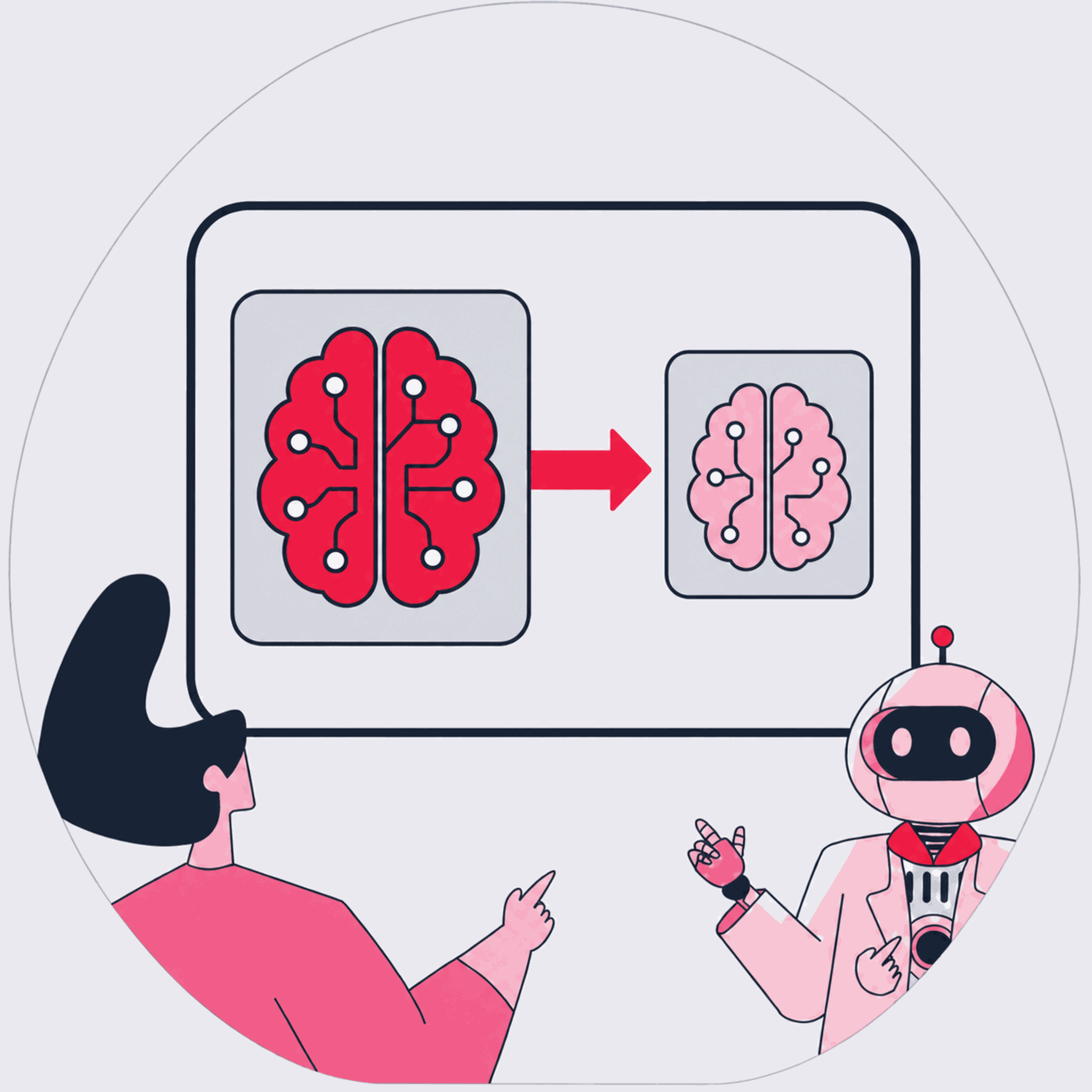
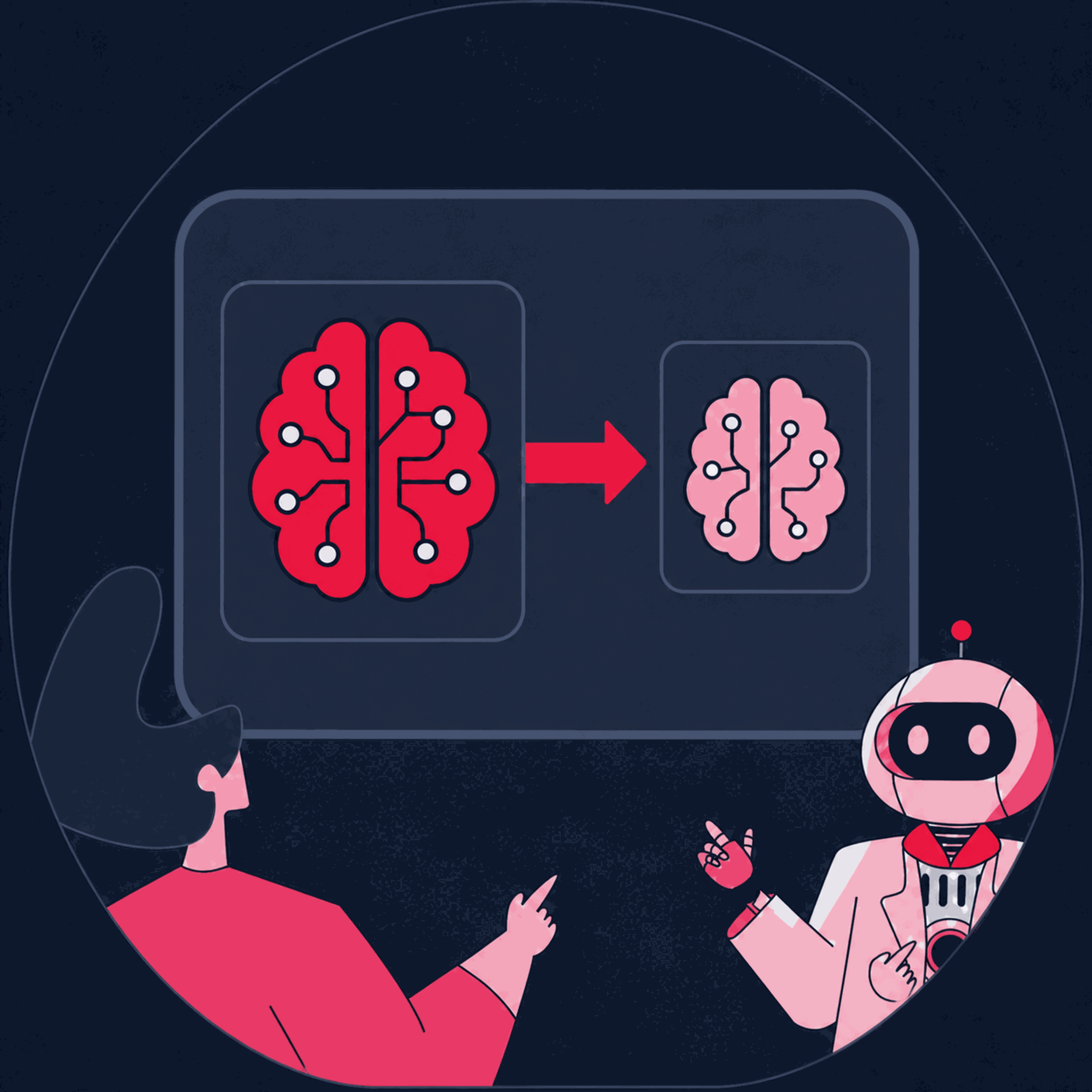 Transfer Learning
A machine learning approach that applies knowledge gained from one problem to a different but related problem.
1 term

 Upstream Sampling
A generative AI technique that produces multiple outputs and selects the best one by a chosen set of criteria.
3 terms

 Validation
The process of evaluating a model on separate data that was not used in training to estimate its accuracy.

 Variation
Different phrasings that express the same intent or meaning, which matters when modeling natural language variation.

 Vector Representation
The encoding of words or phrases as numerical vectors so AI models can compare them and perform mathematical operations.
1 term
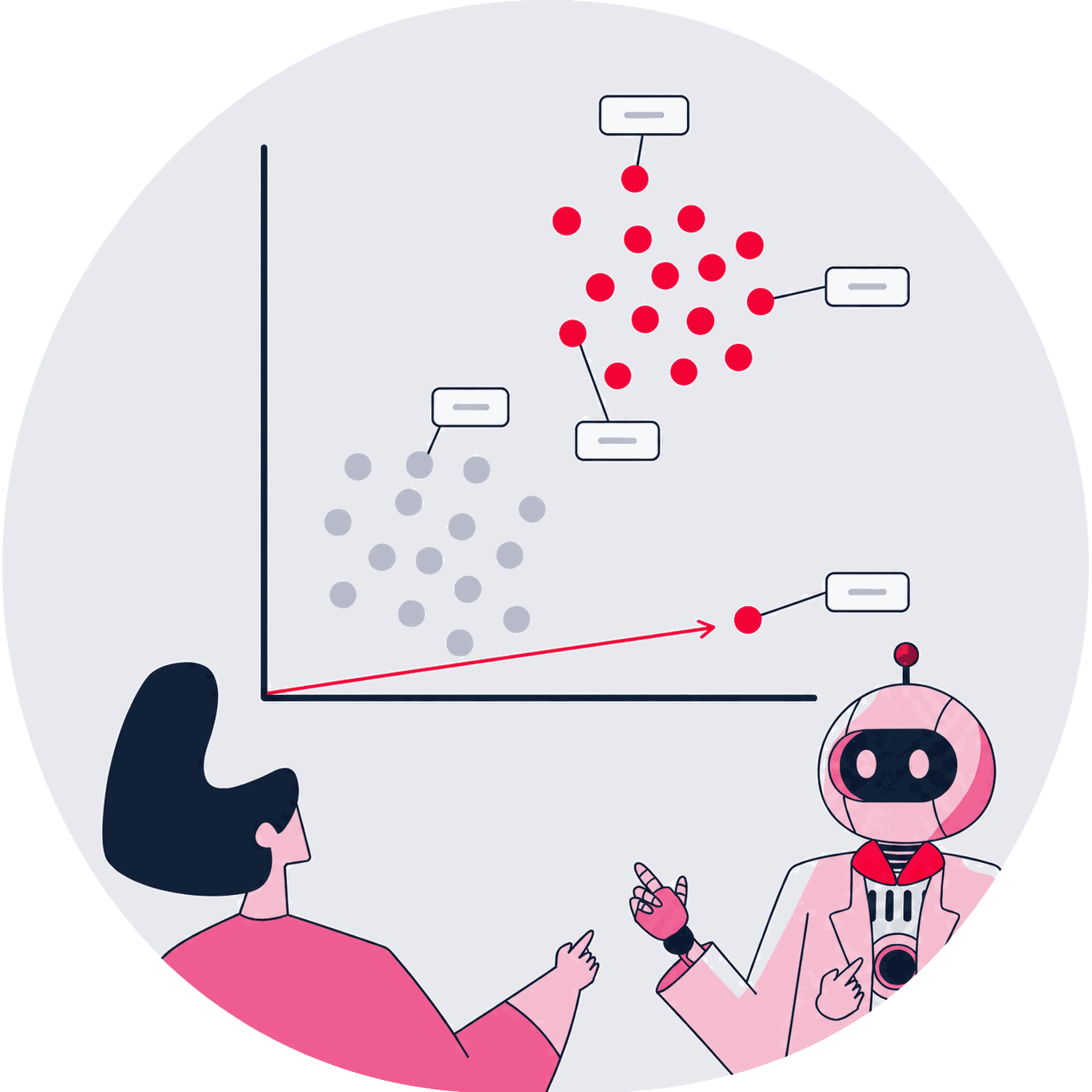
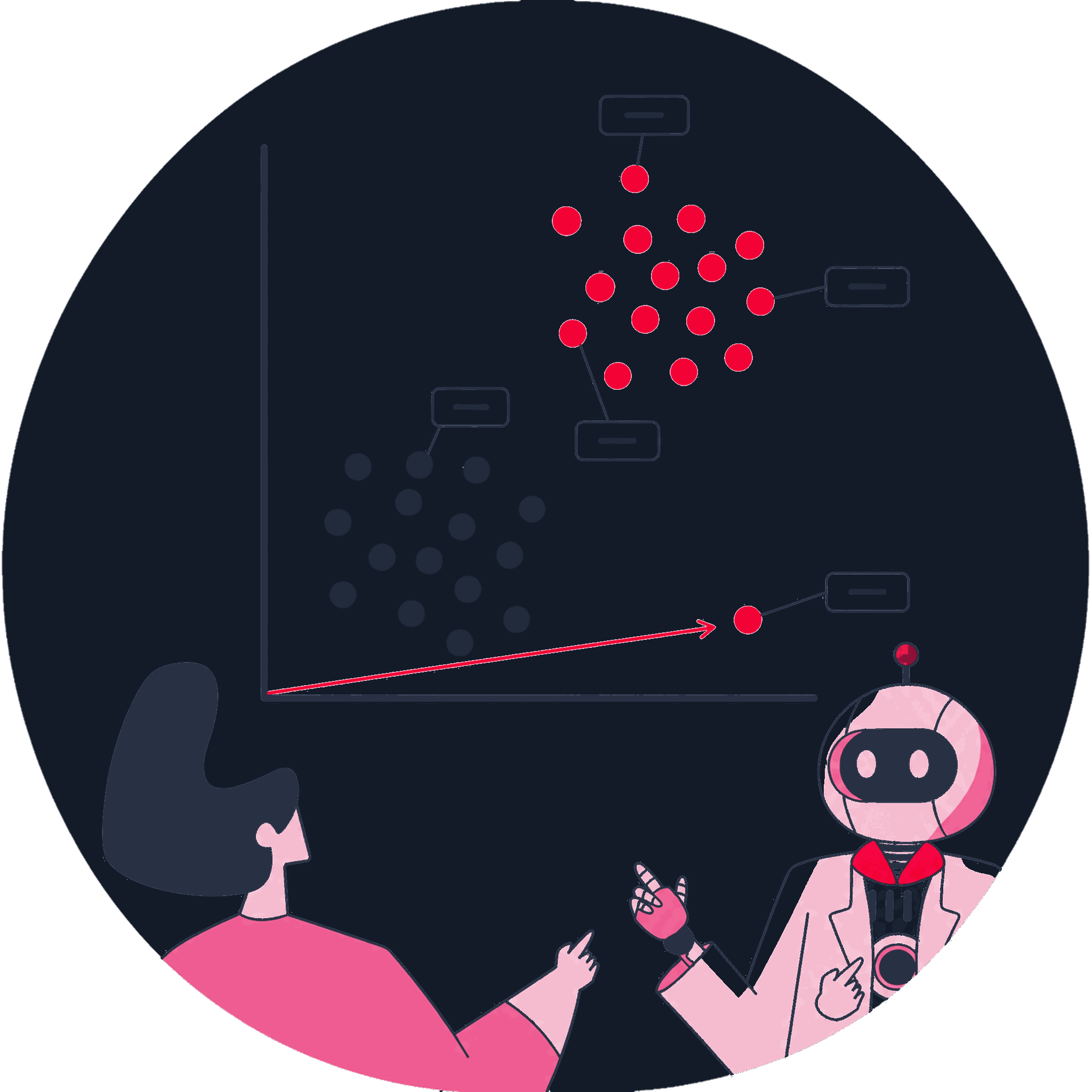 Word Embedding
An NLP technique that represents words as vectors in a high-dimensional space to capture semantic similarity.
1 term

 Zero-Shot Learning
A model's ability to perform tasks it was not explicitly trained to do, demonstrating generalization.