


AI Consulting Services
Make AI decisions that hold up in production
A convincing demo doesn't tell you whether the idea is worth funding or whether the finished system can be run safely at a cost you can live with. We help you make that call, then define the evidence, controls, and ownership around the work that moves forward.
Start with the question in front of you. The 13 capabilities below cover the path from an early decision to a system people can use and operate, with a clear boundary and handoff for each engagement.

Some of the 500+ brands we've worked with
Selected brands we’ve worked with across industries.








 GeneraliGlobalCase Study












 Albaraka TürkGlobalCase Study














































 OdeabankGlobalCase Study
















Four connected pillars
Start with the decision in front of you
The four pillars organize the work without adding another layer of navigation. A team weighing its first use case needs different help from one preparing a release, investigating a failure, or trying to improve adoption, so the 13 capabilities are grouped by the decision they support.
Decide & Govern
What should we do, are we ready, and how will we control it?


Build & Integrate
What production capability will we create?


Assure & Operate
Can we trust, secure, release, and run it?


Adopt & Scale
Will people use it correctly and create value?

Before the build
A good demo still leaves the hard questions open
Moving from a prototype to a production AI system means putting deterministic tool contracts, evaluation protocols, access control, and operational ownership in place before the system reaches real work.
We work with enterprise teams to design, build, and operate bounded AI systems that integrate into existing workflows and data pipelines without compromising safety or data privacy.
Before release
Name the decisions that stay with people
Enterprise AI succeeds when every tool call, permission, and human decision gate is explicit. We help organizations prioritize high-impact use cases, establish evaluation benchmarks, and implement cost and latency controls before rollout. Our Zeo AI Blog goes further into the technical and practical questions behind this work.
You can check that before you talk to us. The 87 engagements under these 13 capabilities set out 348 delivery steps, and every one of the 348 names both the AI assist and the owner who signs that step off. All 87 also name the standards the work answers to. That comes to 205 references across seven published frameworks, among them ISO/IEC 42001, the NIST AI Risk Management Framework, the EU AI Act, and the OWASP Top 10 for LLM Applications.
Yigit Konur, Generative AI Consultant & Strategist
A note from Yigit
A note on the people side of this work, and the product experience behind it.
What excites me about this work is what it means for the people doing it, not just the technology behind it. When a team can capture what makes human thinking valuable and pair it with the processing power AI brings, that's a real opening: for companies ready to move first, and for the people on those teams who get to spend more of their time on the creative and judgment-heavy parts of the job. That's what our Generative AI Consultancy is built to deliver.
We started with our own company. Our consultants now work through more than 100 automation workflows running in production. They're routed through a vendor-agnostic LiteLLM layer that handled over 90,000 production requests and 120M+ tokens in a recent reporting period. That has moved more than 700 consultant hours a month off repetitive execution and onto work that needs judgment. Validation checkpoints, human review, and monitored execution logs are mandatory across all of it.
We've built on experience at Zeo going back to 2011, and over the last five years we've been building our own software products and putting real effort into solving problems with AI rather than just talking about it. That work is what lets me say, with some pride, that we bring you more than marketing advice. I'm looking forward to working with you on your AI transformation and helping you build something that's genuinely yours and genuinely competitive.

What happens after the first conversation
Four steps run from framing the need to reviewing what follows delivery. What each one covers depends on the engagement, and we agree that boundary before work starts.
Frame the need
We agree the problem, test feasibility, estimate the resources and likely cost, and define the scope that goes into the quote.

Get the project ready
We make sure the right people, resources, tools, and working setup are in place before delivery starts.
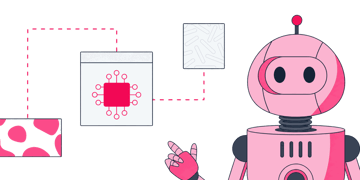
Develop and tune the approach
The work may include change and data consulting, model selection, and optimization, depending on the scope.
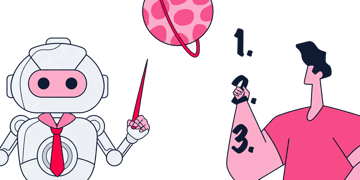
Review what follows
We revisit model behavior through audits and safety and ethics checks, with ongoing support and maintenance carried through the agreed scope.


Inside our own team
Five Zeo consultants on what AI is changing in their work
Every operational consultant at Zeo has secure LLM access and training, and AI sits inside the daily work. Five of them came through our AI Bootcamp and wrote down what they expect it to change.


I see generative AI having an enormous effect on daily life and on every industry it touches. As the technology develops, the range of uses will keep widening across creativity, problem-solving, and innovation. We can already see that range in realistic image, video, and music production, pharmaceutical research, and design. I expect the effect on industries to become profound. E-commerce, healthcare, finance, and many other sectors will be able to create more engaging, personalized experiences and make their processes more efficient.
The ability to produce unique content and solutions will open new possibilities and increase efficiency.

Generative AI has the potential to transform SEO, digital marketing, and many other sectors. I expect it to play an important role in our lives in the near future, with more personal experiences, more effective marketing, faster interpretation of data, and quicker action. Products and services will improve. Processes such as customer communication will become more efficient, and organizations that fail to keep up will fall behind businesses that bring AI into their work.
Organizations should start planning the AI applications that make sense for their sector now.

We may be at a moment as significant as the computer revolution, with the potential to transform businesses and industries. Yet for many people, generative AI still means opening a tool such as ChatGPT for a task at work or in daily life. That is only the surface. Companies that integrate generative AI models into workflows and customer processes, and go beyond content production, will gain huge competitive advantages in the coming years.
I believe generative AI should be on the agenda of every board of directors as soon as possible.

I see artificial intelligence as the most exciting technology of both the present and the future. Its potential is unlimited, and we're still at the tip of the iceberg. AI is developing quickly, while much of what it could mean for different sectors remains unexplored. The effect on digital work is already substantial. In the years ahead, I expect breakthroughs that change how entire industries work.
AI's potential will keep expanding. No sector can afford to ignore the opportunity for efficiency and progress. We will keep discovering new dimensions, and I don't see a saturation point.

Work by major technology companies is likely to give generative AI a much wider role in the years ahead. It will create new dynamics in art and design, as well as in sensitive fields such as healthcare and finance. As the technology becomes part of daily life, the ethical and risk questions will grow with it. Being able to follow and experience those developments up close is what makes generative AI so exciting to me.
I look forward to seeing more uses of generative AI that benefit society.
AI Deployments
Case Studies
Real-world generative AI pipelines, LLM review intelligence, and enterprise search intelligence deployed across high-scale operations.


The people leading this work
Zeo has worked with more than 500 brands since the agency started in 2011, across six practices. Below are the leads for the one this page belongs to.






Tools we use
The AI engineering stack behind the work
Models, retrieval, evaluation and observability are separate layers of a working system. These are the ones we build and operate on.
Models and cloud platforms
- AnthropicThe hub's hero poses the central challenge: a convincing demo does not tell you whether an AI system can be run safely at an acceptable cost. Claude's extended thinking and tool-use capabilities serve as the primary model baseline across all 13 sub-service capabilities when evaluating whether a proposed system is ready for funding and production deployment.
- OpenAIAs the hub's third FAQ emphasizes, model and vendor selection requires systematic comparison rather than defaults. OpenAI provides the commercial baseline against which open-weights models and specialized APIs are evaluated across AI Strategy, AI Product Development, and Conversational AI engagements.
Agent and automation frameworks
- LangChainThe hub's second section insists that critical decisions stay with people. LangChain supplies the orchestration primitives and interrupt patterns that implement human approval gates across AI Application Development and AI Automation engagements.
- LlamaIndexEnterprise Knowledge Systems & RAG is a core hub capability addressing the first FAQ on data privacy and grounded retrieval. LlamaIndex maintains explicit source lineage from retrieved passage to original document, enabling auditability across enterprise knowledge implementations.
- n8nAI Automation & Workflow Transformation maps processes end-to-end before automating. n8n connects model decisions to business APIs with transparent exception handling and human approval steps across workflow transformations.
- LangGraphAI Agent Development moves beyond single-turn bots into multi-step agentic workflows. LangGraph provides the stateful graph representation needed to architect, test, and govern multi-agent coordination with explicit human-in-the-loop checkpoints.
- Credo AIAI Governance & Responsible AI requires formal frameworks that satisfy enterprise risk committees and regulatory standards like EU AI Act and ISO 42001. Credo AI translates governance requirements into continuous policy checks across models and vendor systems.
- PromptfooSupporting AI Security & Red Teaming and AI Evaluation & Assurance, Promptfoo runs automated adversarial tests and regression suites against prompt templates and model pipelines before production deployment.
- UnstructuredData Engineering for AI begins with clean document ingestion. Unstructured partitions complex PDFs, financial tables, and scanned documents into structured elements before embedding, resolving the primary failure point in enterprise RAG pipelines.
- MCP-ScanAs agentic architectures adopt Model Context Protocol (MCP) for tool connectivity, security boundaries expand to external tools. MCP-Scan audits server configurations and tool definitions for hidden prompt injection vectors prior to agent connection.
- Artificial AnalysisAnswering the hub's third FAQ on model and vendor selection, Artificial Analysis supplies independent, empirical metrics on intelligence, throughput, and pricing across frontier and open-source models, removing guesswork from model selection decisions.
Evaluation and observability
- DatadogAddressing the hub's fourth FAQ on containing API cost and latency in high-volume workloads, Datadog provides the infrastructure observability layer that tracks token usage, latency spikes, and operational health across AI Operations engagements.
- LangfuseThe hub promises clear handoffs with operating evidence. Langfuse captures end-to-end traces of model calls, prompt versions, and evaluation scores, supplying the evidence base required for AI Operations & Managed Services.
Safety and security testing
- Guardrails AIAnswering the second FAQ on hallucination reduction and policy enforcement, Guardrails AI sits between model outputs and downstream application logic, validating responses against schema and safety specifications before execution.
Related services
More ways Zeo can help
Next step
Deploy generative AI solutions with clear business value

Before the work starts
Questions buyers ask about AI consultancy
How do you handle enterprise data privacy and security in AI deployments?
We implement strict data-boundary policies. Customer data, proprietary documents, and workflow state remain within your dedicated VPC or private enterprise API tenant. We explicitly prohibit third-party model training on your inputs and establish role-based access control across retrieval pipelines.
How do you evaluate model accuracy and reduce hallucination risk in production?
We build domain-specific evaluation suites with golden datasets, adverse test cases, and trajectory traces. Each output is scored against automated evaluation protocols such as groundedness, relevance, and hallucination rate, then audited by human domain experts before production release.
How do you choose a model, vendor, or platform?
We compare models, vendors, and platforms against the use case and the constraints that matter to your organization, including behavior, integration, cost, latency, privacy, residency, risk, and ongoing operation. The recommendation keeps its assumptions and exceptions visible.
How do you contain API cost and latency in high-volume AI workloads?
We design caching layers, prompt-optimization pipelines, and model-routing architectures so lighter tasks can go to lighter models while more demanding work reaches stronger ones. Hard token budgets and rate limits are part of the design, so unexpected cost spikes are easier to contain.
What does the handoff look like, and how long can an engagement take?
Timing follows the scope. A focused advisory sprint may take about 2 weeks. A production system build may be closer to 8 weeks when more systems and evidence are involved. The handoff includes verified test traces, architecture runbooks, team training, and an explicit human handoff to your engineering leads.
Do you run AI inside your own delivery, or only advise on it?
We run it. Every operational consultant at Zeo has secure LLM access and training, and more than 100 automation workflows run in our production environment, routed through a vendor-agnostic LiteLLM layer. In a recent reporting period that layer handled over 90,000 production requests and 120M+ tokens. A content brief that used to take a consultant 20 to 25 minutes now comes back in under a minute, and the consultant spends that time on validation and strategic refinement.
The limits are worth stating plainly. Hallucination and verification risk are real, and they get sharper in regulated sectors, so validation checkpoints and human review are mandatory and execution logs are monitored. Adoption was the harder half. Our teams were learning the tools and implementing them at the same time, and some of that resistance took a while to work through.