


SEO Services
On-Page SEO Services

Some of the 500+ brands we've worked with
Selected brands we’ve worked with across industries.

















 GeneraliGlobalCase Study
















 OdeabankGlobalCase Study












































 Albaraka TürkGlobalCase Study








What we optimize
On-page SEO, page by page
Capabilities

Content& Keyword Optimization
Once intent mapping shows two of your URLs chasing the same query, this is where somebody finally decides which one keeps the job and which gets rewritten.

HTML& Structured Markup
Your engineering owners need this one when the shared template, rather than the copy, is producing duplicate H1s, stale canonicals, and link text that means nothing.

Internal Linking& Page Flow
Take the internal-linking route when a page is already strong and the actual problem is that nothing else on the site points a reader toward it.

User Experience& Engagement Signals
Engagement tracking says people arrive and leave, and nobody can say what task they came to finish. That gap is what this method starts by writing down.
Why it matters
A strong page needs relevance, structure, and usability
You can have the best backlink profile in your industry, but if the page itself is thin, slow, or misses search intent, it won't hold a top position. On-page SEO closes the gap between great content and measurable rankings.
How we work
Research, optimize, validate, iterate
We start with intent mapping and competitor SERP analysis. Each page is then written or tuned around a clear keyword target and reviewed through rankings, clicks, and engagement metrics as search behavior changes.
Scope and ownership
One page, one intent, and a reviewer who can say whether it landed
We agree the target query and the standard the page has to meet before anything gets rewritten.
We read the pages already ranking for your target queries for depth, structure, and the openings they leave, then review titles, headings, internal links, and body content against the intent the page is meant to serve. Zeo specifies the structured data, layout, media, and navigation changes that would make the page genuinely more useful; your content and engineering owners publish them and keep the editorial voice. Keyword positions, click-through rates, and on-page behaviour are read together afterwards, and a page that moved for reasons we cannot attribute is reported as exactly that.
The on-page working method
Map intent and competing pages
Before recommending anything, we read the pages already ranking for your target queries for depth, structure, and the openings they leave.
Define page-level improvements
We review titles, headings, and internal links against search intent.
Coordinate markup and page experience
Structured data where it earns its place, plus the layout, media, or navigation changes that would make the page genuinely more useful.
Track search and engagement signals
Keyword positions, click-through rates, and on-page behavior, watched to see what moved and where a second look is needed.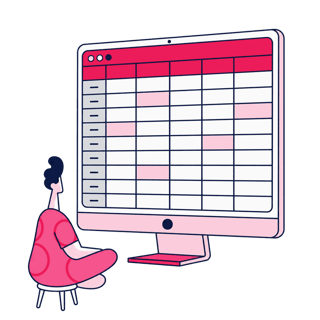


From our clients
What clients say about working with Zeo
Clients describing what the working relationship is like in practice.


We were working with a global supplier on SEO before. Accessibility and process management were a little more difficult with these teams. At the same time, in terms of budget, global suppliers were more costly for us due to exchange rate differences and man-hours. When we started working with Zeo, we first went through an audit, fixing the results and problems. After these processes, we placed SEO in a strategic place for digital marketing and created an always-on SEO strategy for our brands and implemented it step by step.


As MediaMarkt, we have been working with Zeo for 6 years in a very tight and coordinated way to manage our SEO processes. We receive the highest level of feedback from Zeo on increasing and improving our organic traffic. It is very enjoyable to get fast support on all our issues 24/7 and to work with Zeo to better embrace and continuously improve our brand, and we recommend it to everyone.


We strictly follow the regulations and algorithms that can change at any time. We need to act quickly. At this point, Zeo has become a partner that meets all our expectations with its professional, innovative and solution-oriented approach. The Zeo team has become a stakeholder in success by looking at our optimization processes and our brand as their own value. As the Acıbadem Healthcare Group family, we would like to thank all the Zeo team, who work tirelessly, constantly improve, and do not compromise on keeping their energy high under all circumstances!


Besides increasing our website's visibility in the UK with ZEO, the experienced team that closely follows its work and has extensive experience in its field has always made us feel like we are in the right place for SEO. We are on the right track with ZEO in a highly competitive country and sector.


We talked to a number of agencies while we were planning our website's infrastructure migration, and we ended up with Zeo. They start by understanding the problem, then bring fresh approaches to solving it better. Communication is strong, and they support you at whatever point you turn out to need it. Every minute we spend working with them convinces us further that we made the right call. If you're looking for someone to sort out the digital side, you're in the right place.

When we moved from our old corporate website to an e-commerce site, we partnered with Zeo for the migration and all the SEO work that followed. Since 2018, we have ranked 1st for 250 of the 500 highest-volume keywords we track, and on the first page for 483.

With Zeo, we increased the number of new users from organic traffic by 39%. Because we work in a niche sector, they continue to provide detailed solutions and optimizations in coordination with our marketing team.
Selected SEO
Case Studies
Long-running organic programmes across retail, finance and publishing. Each write-up covers what we found, what we changed, and what moved.


The specialists behind this SEO work
Zeo's SEO work goes back to 2006, when we started what we call the first SEO blog in the MENA region. The consultants shown here are doing that work today, matched to what this page covers.

Samet Özsüleyman
SEO Manager

Metehan Urhan
New Business & Partnership Manager

Yağmur Bayram
Sr. SEO Analyst

Hande Parmaksız
SEO Manager

Elif Naz Akan Karakoç
Senior SEO Executive

Sena Önder
Senior SEO Executive

Sinem Bakır Yavaş
Senior SEO Executive

Bensu Tınastepe
Senior SEO Analyst

Gülşah Şahin Özkan
Senior SEO Analyst

Ali Özgün Öz
SEO Executive

Ruhan Tiryaki
Senior SEO Analyst

Emir Kağan Kahveci
SEO Analyst

Can Mutioğlu
Senior SEO Executive

Deniz İmre Temiztürk
Content Specialist

Ataberk Yüzat
SEO Executive
Tools we use
The SEO stack behind the work
Every audit, crawl and rank report comes out of a tool someone has to know well. These are the ones our team works in day to day.
SEO platforms and research suites
- SemrushWe check search volume and intent for the term a page is meant to rank for, since sometimes the page was written for a keyword that never had real demand. That confirmation happens before we touch the content, so the rewrite is aimed at a query worth winning.
- AhrefsWe pull the internal link report for the page to see how many links point to it, what anchor text they use, and from where. That map is what the internal-linking recommendation is built on, since a page missing links from its own category rarely earns much authority.
Technical SEO, crawling and site speed
- Screaming FrogWe crawl the page's template family to see which title tags, heading levels, and canonical signals are set correctly and which were inherited wrong from the CMS default. One fix at the template level usually clears the same issue across every page that shares it.
Content optimization and AI writing
- Surfer SEOWe score the page's structure, heading pattern, and topic coverage against whatever is currently ranking for its target query, not a generic template. The gaps it flags are what we close before calling the rewrite finished, so the page matches what that specific searcher expects.
- ClearscopeWe build a Clearscope report against the page's specific target query and check the draft against the terms it surfaces, not a generic keyword list. A grade that is missing a term the top results all cover is usually a section the page genuinely does not address yet.
- MarketMuseWe run the page through MarketMuse's topic model to see how its depth compares to the cluster it is supposed to belong to, and where it is leaving an obvious gap a competitor already fills. Closing that gap is usually what content optimization means here in practice.
- FraseBefore we rewrite a section, we pull the outline Frase builds from the pages currently ranking for the target term, then compare it against what the page covers now. Sections the top results all include but this page skips are where the rewrite starts.
- GrammarlyOnce the content rewrite is drafted, we run it through Grammarly for grammar, clarity, and tone consistency before it goes back to the client for approval. It catches the mechanical errors that would undercut the credibility of an otherwise well-optimized page.
- CopyscapeBefore a rewritten page goes live, we run it through Copyscape to confirm the new content is not inadvertently echoing the source material or a competitor's page too closely. It is a final check, not a drafting tool, so it runs after the content is otherwise done.
- NeuronWriterOn pages where the Surfer and Clearscope scores disagree, we run NeuronWriter as a third read on term coverage against the same target query. Agreement across two of the three is usually enough to settle which terms actually belong in the rewrite.
Search engine and CMS essentials
- Google Search ConsoleWe pull impressions, clicks, and average position for the page's target queries, since a page with strong impressions but a weak click-through rate is usually a title or meta description problem, not a ranking problem. That distinction decides whether the fix is content or metadata.
- Yoast SEOOn WordPress builds, we set the finalized title tag, meta description, and canonical through Yoast rather than editing template files directly, so the change is visible to the client's own editors afterward. It is the implementation layer, not where the metadata gets decided.
- Rank MathWhen a WordPress site already runs Rank Math instead of Yoast, we implement the same title, meta, and schema changes there rather than asking the client to switch plugins. Matching their existing setup is what keeps the handoff simple for whoever maintains the site after us.
Next step
Tell us what you are trying to rank

FAQ
On-page SEO questions
What are on-page SEO services?
How does on-page SEO differ from technical SEO?
How long does on-page SEO take to show results?
How do you optimize title tags and meta descriptions?
How is on-page SEO consulting priced?
Pricing depends on the breadth of your page inventory, taxonomy structure, and content optimization requirements. Engagements vary based on whether we provide strategic briefs for your editorial team or end-to-end optimization of metadata, internal links, and structured data across key commercial templates.