


Model Customization & Fine-Tuning · Build
Domain Adaptation
Domain adaptation earns a deployment decision only when specialist gains are measured beside general-capability regression, operating cost, and the work required to refresh the behavior.
Domain adaptation focuses on the language, formats, and recurring tasks that define specialist work. We compare it with the current prompt or RAG baseline and weigh the local gain against general regression, operating cost, and the refresh burden. Months later, the versioned experiment ledger still shows which run produced which number, the domain and general results still sit apart, and the deployment boundary names your domain owner's next refresh trigger.

Some of the 500+ brands we've worked with
Selected brands we’ve worked with across industries.







 GeneraliGlobalCase Study









 OdeabankGlobalCase Study








































 Albaraka TürkGlobalCase Study




























On this page
The run order, and who signs each step off
How we work
The domain specification, experiment history, general-capability checks, and refresh assumptions stay connected throughout the work.
Describe the specialist behavior precisely
We document the terminology, required formats, recurring task behavior, and known failures, with representative and critical cases a domain reviewer can inspect. Your domain owner confirms which error categories matter enough to fix.

Keep each adaptation run separate
We agree the data recipe and baseline, then record every run, configuration, assumption, and exception under its own version. Your domain owner approves the permitted examples before each run starts.

Read domain gains beside general losses
Held-out tests measure domain-task change, terminology and format accuracy, and general-capability regression across the important slices. Your domain owner decides whether the trade-off is worth deploying.

Draw the operating boundary
Limitations, the deployment boundary, refresh triggers, and who is on the hook for the next review go into one record. Your domain owner accepts the trade-offs and the next refresh trigger.



Named artifacts you keep
What you get
The handover separates the specialist behavior gained in this version from its general-capability trade-offs, cost, and maintenance obligations.
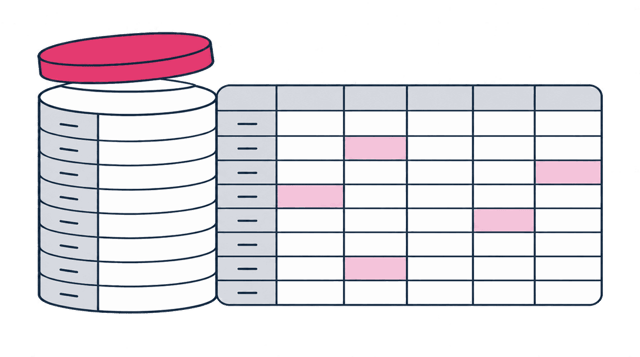
Dataset
Domain data and terminology card
Approved tasks, specialist terms, required formats, error categories, source notes, and usage constraints in one reviewed reference.
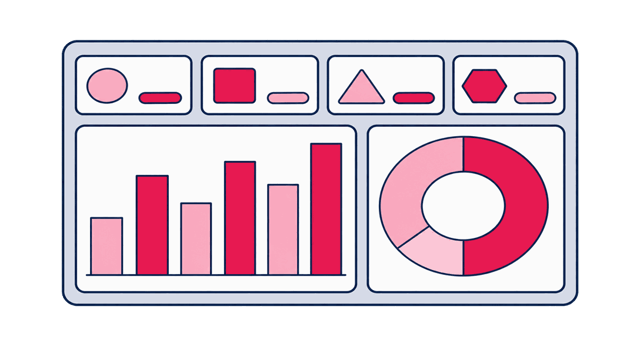
Dashboard
Baseline and experiment ledger
Baseline, data recipe, adaptation runs, configurations, assumptions, and exceptions kept under their correct versions.
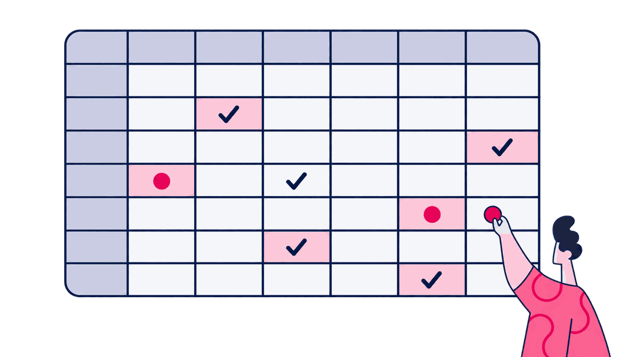
Matrix
Domain and general-capability comparison report
Held-out domain and general results shown separately, including critical slices, limitations, cost, and observed regressions.
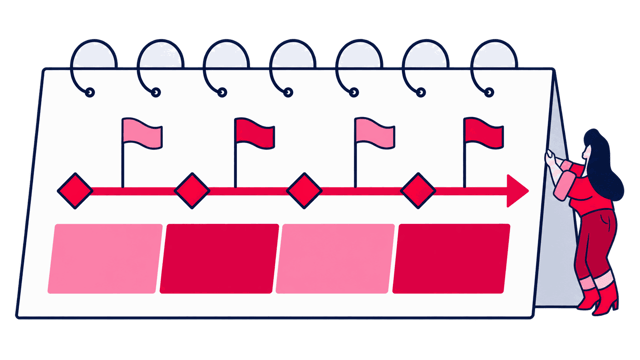
Roadmap
Limitations, deployment boundary, and refresh plan
Approved use, known limitations, refresh assumptions, review triggers, and the accountable owner.


Scope and honest limits
When to bring us in
The model has a specific problem with your domain, and the behavior matters enough to justify both an experiment now and a refresh decision later.
A good fit when
- Specialist terms and required formats fail in repeatable ways, so the model keeps breaking a domain task your team can name.
- Prompting or retrieval has a documented baseline, and the remaining errors may require adaptation.
- You can provide examples with usage rights and keep held-out domain and general cases separate.
- Terminology and format errors recur in the same tasks, but no testable target says which behavior the adaptation must change.
- The prompt or RAG baseline is documented, while data recipes and adaptation runs are not versioned against it.
- Held-out domain results improve, yet nobody can see whether general-capability regression erased the useful gain.
- A version looks ready to deploy, but its cost, refresh triggers, and accountable owner are still outside the operating boundary.

Better handled as other work when
- You need fine-tuning to stay current as facts or policies change, but adaptation cannot act as a live knowledge source.
- Domain examples lack documented permission, so your designated legal review must settle their use before any adaptation run.
- You need production operation or adjacent implementation included, but neither is part of the adaptation experiment unless scoped separately.
If one of these is closer to your situation, start here instead: See model customization services
Engineers who ship production AI
This is the part of Zeo that writes and ships code. Our senior engineers build agents, chatbots, and RAG pipelines, along with the automation and data work around them, and they keep operating those systems once they're live. We've worked with more than 500 brands since 2011.







Tools we use
Tools behind this work
 Fireworks AI
serves the adapted model so its real operating cost can be measured
 Confident AI / DeepEval
scores the adapted model against the error taxonomy that defines success
 Hugging Face
the base models and training scripts the adaptation run fine-tunes directly
 MLflow
tracks each run's results against the prompt or RAG baseline it must beat
 DVC
DVCversions training data against the checkpoint it produced for audit later
 Tonic
Tonicfills sparse specialist-data gaps with synthetic examples, real data protected
Adjacent work
Where this leads

Build
Fine-Tuning Dataset Curation
Domain adaptation requirements define the specific prompt-completion pairs and validation distributions curated from internal enterprise documents.

Build
LLM Fine-Tuning & Model Customization
Targeted terminology and stylistic adaptations are trained into model weights using parameter-efficient fine-tuning techniques.

Assurance
Model Selection & Baseline Benchmarking
Baseline benchmarking identifies which foundational open-weight model provides the optimal starting point for specialized domain adaptation.


Next step
Test the specialist gain and its cost

Before you decide