


AI Workflow Automation
An automation step you cannot stop or revise is not run responsibly, so we give each decision the least-complex adequate mechanism and keep its exceptions, approvals, reconciliation, fallback, and owner visible end to end.
We map a defined workflow, decide where fixed rules are sufficient and where AI is useful, then build the approvals, exception paths, reconciliation, and monitoring needed to operate it responsibly. The process owner receives a tested future-state workflow, an authority record, exception controls, and release conditions they can monitor, stop, and revise.

Some of the 500+ brands we've worked with
Selected brands we’ve worked with across industries.







 GeneraliGlobalCase Study









 OdeabankGlobalCase Study








































 Albaraka TürkGlobalCase Study




























On this page
The run order, and who signs each step off
How we work
Every stage of the workflow stays understandable, from the first map through the operating handoff.
Map the current flow
We trace tasks, decisions, handoffs, volumes, current performance, and known exceptions. The map shows where work stalls and which controls already matter. The process owner confirms the mapped boundary before redesign starts.

Choose the right mechanism
We compare fixed rules, AI judgment, and human review for each decision. The least-complex adequate option wins, especially where a deterministic rule is safer. The process owner approves each choice between a rule, AI, or human review.
Connect controls and exceptions
We implement approvals, review queues, reconciliation, fallback behavior, and required system connections around the future-state flow. The control owner approves the routing before exceptions reach production.
Test and stage the handoff
We test both representative and adverse cases to check whether side effects reconcile, then prepare the dashboard and runbook for the operating owner. The operating lead accepts the release conditions and stop points.


Named artifacts you keep
What you get
You’ll find the maps, decisions, controls, and operating evidence that explain the automation start to finish.
Roadmap
Current-to-future workflow map with exception paths
Side-by-side maps of the existing workflow and the proposed flow, including decisions, handoffs, exceptions, and control points.
Matrix
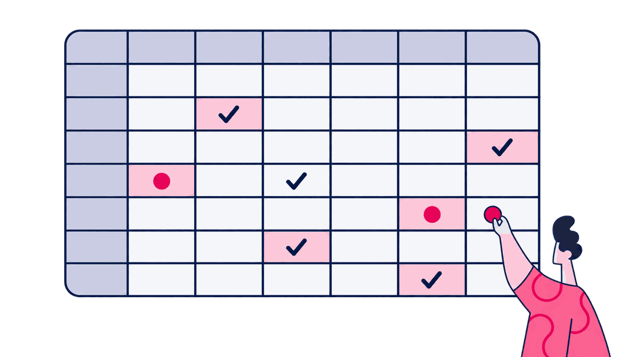
Rule, AI, and human authority record
A record of where rules, AI, and people act, plus the authority attached to consequential steps.
Test evidence
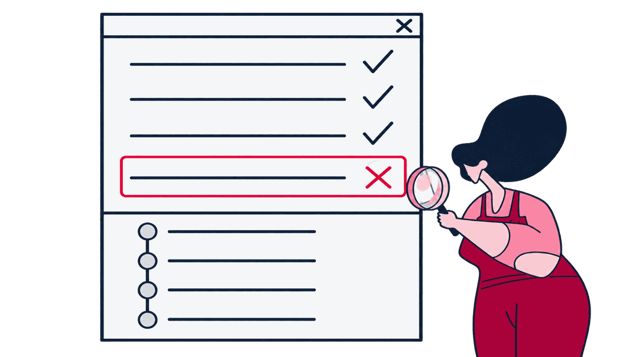
Control, exception, and reconciliation case pack
The approval, reconciliation, fallback, and exception rules paired with representative and adverse test cases.
Dashboard
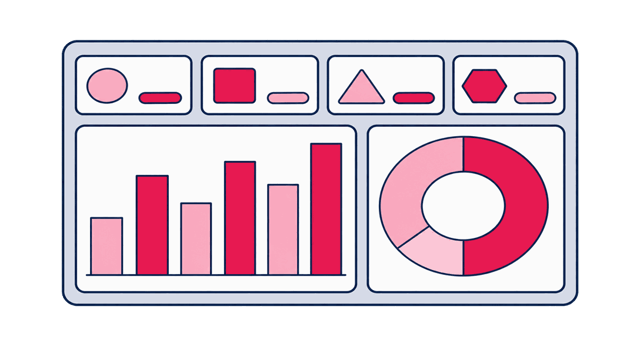
Monitoring and exception-response playbook
The operating view and instructions for monitoring flow, investigating exceptions, and stopping or escalating the automation.


Scope and honest limits
When to bring us in
A defined process with enough real examples to separate routine flow from exceptions is the right starting point.
A good fit when
- Your process has an owner and a target outcome, but the boundary still shifts whenever one team hands work to another.
- Transaction samples show the routine path, while exception cases reveal decisions the written business rules do not settle.
- Teams keep proposing AI judgment for steps a fixed rule could handle, so the mechanism choice needs evidence rather than preference.
- The workflow's current performance is known in pieces, but nobody has mapped tasks, decisions, handoffs, and stalls end to end.
- A future-state flow exists, yet rule, AI, and human boundaries still blur at consequential decisions.
- Exceptions already reach people informally, but nobody has connected approvals, review queues, reconciliation, fallback, and monitoring.
- Representative and adverse cases can be run, though the operating owner still lacks release conditions, a dashboard, and a runbook.

Better handled as other work when
- You want to automate before the process owner, rules, or intended outcome are defined. Process discovery should settle those questions first.
- The proposed design uses AI where a deterministic rule is safer and clearer. That decision needs redesign before implementation.
- You need Zeo to operate production or fix adjacent systems after handoff. Those duties require a separate delivery scope.
If one of these is closer to your situation, start here instead: View the parent service
Engineers who ship production AI
This is the part of Zeo that writes and ships code. Our senior engineers build agents, chatbots, and RAG pipelines, along with the automation and data work around them, and they keep operating those systems once they're live. We've worked with more than 500 brands since 2011.

Aybüke Göktuna
Senior SEO Analyst

Can Mutioğlu
Senior SEO Executive

Yiğit Konur
Founder & Chief Strategy Officer

Burak Pehlivan
Co-founder & CEO

Ezgi Gülsen Yaylı
SEO Manager

Mehmet Aktuğ
Co-Founder & COO

Deniz İmre Temiztürk
Content Specialist
Content we've produced on this topic
Tools we use
Tools behind this work
 Anthropic
handles the ambiguous workflow steps fixed rules cannot cover alone
 n8n
n8nbuilds the workflow skeleton around triggers, approvals, exceptions, and reconciliation
 Mastra
adds stateful agent behavior only where the workflow truly needs it
 Datadog
monitors workflow health, error clusters, and reconciliation mismatches
 Guardrails AI
checks AI outputs before they are allowed to advance the workflow
Adjacent work
Where this leads

Build
Intelligent Document Processing
Files arriving in inconsistent formats at the front of the future-state flow make that intake step its own problem, with a document taxonomy, field confidence rules, and a review queue.
Advisory
AI Process Discovery & Automation Assessment
Choosing between a rule, AI, and human review assumes the process boundary is settled. A boundary that moves at every handoff needs the observed map and opportunity backlog first.
Build
Agentic Process Automation
When the mechanism comparison lands on a decision that varies too much per case for any fixed rule, the next step is a permission boundary and a tested stop path.


Next step
Pick one real workflow

Before you decide