


SEO Services
E-commerce SEO Services

Some of the 500+ brands we've worked with
Selected brands we’ve worked with across industries.























 GeneraliGlobalCase Study






















What we optimize
SEO across the shopping journey
Capabilities

Category& Collection Pages
When demand mapping points at a shelf your merchandising team can actually stock year round, the category is the page worth building. Thin ones just split the catalog further.

Product Page& PDP Optimization
PDP work is the priority when the page looks fine and the product data behind it doesn't, showing an old price or a variant that sold out last week.

Faceted Navigation& Filter SEO
Crawl waste in the store audit usually traces back to facets. Choose this one when size, color, and sort combinations are minting URLs nobody meant to publish.

Product Schema& Rich Results
Schema is deliberately downstream of PDP work. Markup that quotes a price the catalog no longer holds goes stale on its own, whatever the validator says about it.
Why it matters
Catalog complexity creates search gaps
Products change, inventory moves, and someone in merchandising reshapes a category on a Tuesday afternoon. With no rules covering any of that, ordinary work quietly produces duplicate pages, broken internal paths, and good products a search engine cannot find.
How we work
Prioritize the pages that can influence revenue
We prioritize categories and products using margin and search demand, then address the technical blockers that are specific to online stores. Organic revenue sits alongside rankings in the performance review.
Scope and ownership
Catalog rules that hold when merchandising reshapes a category on a Tuesday
We agree which categories and products are worth the work before any template, filter, or redirect rule changes.
We read category structure, product pages, filters, site speed, crawl health, inventory states, and platform behaviour for where organic visibility is leaking, then match commercial queries to the categories and products that can carry them. Zeo specifies the PDP content, structured data, internal linking, faceted-navigation, and performance changes; your platform and merchandising owners implement them inside the store's own release process. Reporting is by category and product across traffic, rankings, and organic revenue, and it stays explicit about which movements a catalog change can reasonably be credited with.
Working through a catalog
Audit the store and catalog
Category structure, product pages, filters, site speed, crawl health, inventory states, and platform behavior, read for where organic visibility is leaking away.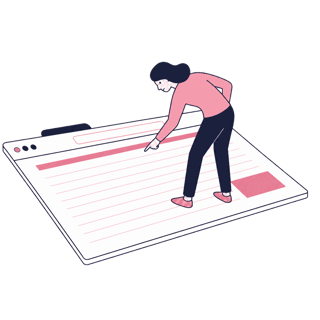
Map demand to the catalog
Matching commercial queries to categories and products.
Define product and technical changes
PDP content, structured data, internal linking, faceted navigation, and performance, written up so a search engine can work through the catalog more efficiently.
Track organic store performance
We watch traffic, rankings, and revenue by category and product, so you can see which changes moved with better store performance.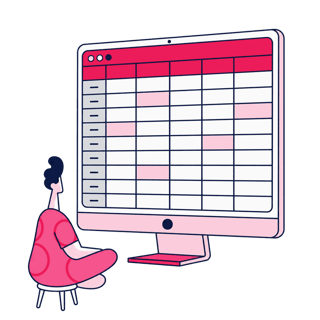


From our clients
What clients say about working with Zeo
Clients describing what the working relationship is like in practice.


We were working with a global supplier on SEO before. Accessibility and process management were a little more difficult with these teams. At the same time, in terms of budget, global suppliers were more costly for us due to exchange rate differences and man-hours. When we started working with Zeo, we first went through an audit, fixing the results and problems. After these processes, we placed SEO in a strategic place for digital marketing and created an always-on SEO strategy for our brands and implemented it step by step.


As MediaMarkt, we have been working with Zeo for 6 years in a very tight and coordinated way to manage our SEO processes. We receive the highest level of feedback from Zeo on increasing and improving our organic traffic. It is very enjoyable to get fast support on all our issues 24/7 and to work with Zeo to better embrace and continuously improve our brand, and we recommend it to everyone.


We strictly follow the regulations and algorithms that can change at any time. We need to act quickly. At this point, Zeo has become a partner that meets all our expectations with its professional, innovative and solution-oriented approach. The Zeo team has become a stakeholder in success by looking at our optimization processes and our brand as their own value. As the Acıbadem Healthcare Group family, we would like to thank all the Zeo team, who work tirelessly, constantly improve, and do not compromise on keeping their energy high under all circumstances!


Besides increasing our website's visibility in the UK with ZEO, the experienced team that closely follows its work and has extensive experience in its field has always made us feel like we are in the right place for SEO. We are on the right track with ZEO in a highly competitive country and sector.


We talked to a number of agencies while we were planning our website's infrastructure migration, and we ended up with Zeo. They start by understanding the problem, then bring fresh approaches to solving it better. Communication is strong, and they support you at whatever point you turn out to need it. Every minute we spend working with them convinces us further that we made the right call. If you're looking for someone to sort out the digital side, you're in the right place.

When we moved from our old corporate website to an e-commerce site, we partnered with Zeo for the migration and all the SEO work that followed. Since 2018, we have ranked 1st for 250 of the 500 highest-volume keywords we track, and on the first page for 483.

With Zeo, we increased the number of new users from organic traffic by 39%. Because we work in a niche sector, they continue to provide detailed solutions and optimizations in coordination with our marketing team.
Selected SEO
Case Studies
Long-running organic programmes across retail, finance and publishing. Each write-up covers what we found, what we changed, and what moved.


The specialists behind this SEO work
Zeo's SEO work goes back to 2006, when we started what we call the first SEO blog in the MENA region. The consultants shown here are doing that work today, matched to what this page covers.

Elif Naz Akan Karakoç
Senior SEO Executive

Samet Özsüleyman
SEO Manager

Ozan Ketenci
VP of Consulting & Strategy

Hande Parmaksız
SEO Manager

Ezgi Gülsen Yaylı
SEO Manager

Sinem Bakır Yavaş
Senior SEO Executive

Bensu Tınastepe
Senior SEO Analyst

Gülşah Şahin Özkan
Senior SEO Analyst

Ruhan Tiryaki
Senior SEO Analyst

Aybüke Göktuna
Senior SEO Analyst

Yağmur Bayram
Sr. SEO Analyst

Emir Kağan Kahveci
SEO Analyst

Mehmet Aktuğ
Co-Founder & COO

Deniz İmre Temiztürk
Content Specialist

Ataberk Yüzat
SEO Executive
Content we've produced on this topic
Tools we use
The SEO stack behind the work
Every audit, crawl and rank report comes out of a tool someone has to know well. These are the ones our team works in day to day.
SEO platforms and research suites
- SemrushWe map commercial search volume in Semrush against the category and product tree to find where high-intent queries have no matching page. Sometimes the page exists but sits too deep in the catalog to compete, and that shapes the internal linking changes we prioritize.
- AhrefsWe compare which competitor category and product pages rank for terms yours do not, then check whether the gap is a content problem or a links problem. That diagnosis decides what goes into the product and technical changes.
Technical SEO, crawling and site speed
- Screaming FrogWe crawl the full store in Screaming Frog to map every filter and sort combination a search engine can reach. That list is what decides which patterns get canonicalized, noindexed, or left alone before crawl budget is wasted on them.
- Schema AppWe manage product and review markup at the catalog scale in Schema App instead of hand-coding JSON-LD per template. Price, availability, and rating changes then stay in sync with the feed instead of drifting out of date on pages nobody revisits.
- BotifyFor catalogs too large for a desktop crawl, we use Botify's log file analysis to see which product and category pages Googlebot is actually visiting. That gap against what only sits in the sitemap is usually where the leaking visibility is.
- LumarWe schedule recurring Lumar crawls against the live catalog so a merchandising change that quietly breaks internal linking or creates a duplicate cluster gets flagged fast. That catch happens between audit cycles, not months after the fact.
- SitebulbWe use Sitebulb's crawl visualizations to show a merchandising team how many clicks deep the best-margin products actually sit. A picture of the link structure lands better in that meeting than a spreadsheet of crawl-depth numbers.
Keyword research and rank tracking
- Google Keyword PlannerWe cross-check Semrush's estimated commercial volume against Google's own Keyword Planner numbers for the highest-priority categories. That way the demand-to-catalog map we hand over does not rest on one vendor's estimate alone.
Content optimization and AI writing
- Surfer SEOWe run category descriptions and product page copy through Surfer against the pages already ranking for that term. That way the writing targets the structure competitors are actually being rewarded for, not a guess at word count.
Enterprise SEO and market intelligence
- SimilarwebWe check which categories and product lines pull the most estimated traffic for competitor stores in Similarweb. That tells us where a competitor's catalog investment is paying off, and our prioritization follows the same demand.
Search engine and CMS essentials
- Google Search ConsoleWe watch index coverage and crawl stats in Search Console to see which filter and pagination URLs Google is actually indexing. That is the evidence behind which combinations stay indexable and which get canonicalized or blocked.
- Google AnalyticsWe tie organic sessions to the revenue and conversion events already set up in GA4, broken out by category and product. That is what lets the performance tracking step report movement in orders, not just traffic.
Next step
Tell us what you are trying to rank

FAQ