


Zeo delivery method
Faceted Navigation & Filter SEO
Every filter state in a named class with one consistent rule, search exposure only where demand and stock hold, and no shopper control removed to tidy the crawl graph.
A shopper sees a handful of useful filters, size, color, brand, price, but a crawler can see every combination, sort order, and empty result as a separate URL, including thousands nobody meant to publish. We inventory the full filter grammar, decide which combinations actually earn search exposure, and align the routing and crawler directives so shoppers keep every control while the index only sees the combinations worth finding. We preserve the filter journey shoppers need, rein in the URL generators behind it, and give search exposure only to combinations that earn a lasting place in the catalog.

Some of the 500+ brands we've worked with
Selected brands we’ve worked with across industries.







































 AVVAGlobalCase Study








On this page
Stages and gates
How we do it
We start by documenting how filter URLs are made, then decide which states should become durable search destinations.
Inventory the full filter grammar
We trace every facet, value, sort, multi-select, pagination state, locale, and platform layer that can create or link a URL. Assigning a real owner to each parameter and confirming the estimate isn't missing a whole generator.
A parameter register with real examples, owners, and an honest estimate of how many states exist.

Separate navigation from search value
We compare combinations against real demand, stable inventory, existing category ownership, and a distinct shopper task. Making the index, navigation-only, canonicalize, block, redirect, or retire call for each state class.
Each state class gets one decision (index, navigation-only, canonicalize, block, redirect, or retire).

Align routing, links, and crawler directives
For every class, we specify how routing, internal links, HTTP status, robots, noindex, canonical, sitemap inclusion, pagination, parameter order, and empty results must work together. Deciding which instruction takes precedence when two rules genuinely conflict for the same URL class.
One precedence-based rule matrix shows the expected treatment and examples without asking one directive to undo another.

Publish only combinations that can hold their value
Each approved combination receives one stable URL, a useful assortment, a clear title and heading, contextual copy, internal links, structured data, and an inventory lifecycle. Verifying that demand and stock still support a permanent, indexable page before the combination is built.
The output is a short backlog of owned landing pages. Your platform can generate every facet pairing, and should not.

Test the weird states before rollout
We run normal, reordered, multi-select, sorted, paginated, empty, low-stock, localized, and malformed examples through the live template. Judging whether a boundary-test failure blocks the broader rollout or is an acceptable, documented exception.
A boundary report that catches traps and conflicts before a broad rule reaches the whole catalog.



AI enumerates and scores the URL space; people decide which states deserve a page.
AI crawls the live site to enumerate every facet, sort, and parameter combination actually generating a URL, scores filter-state combinations against demand and inventory signals so a person reviews a ranked shortlist instead of a raw parameter list, checks sampled URLs against the draft matrix to expose contradictory routing, linking, and index directives before release, prepares title, heading, and structured-data fields for approved combinations, and generates the full matrix of reordered, malformed, and low-stock edge cases to run through the live template. It never opens the index itself. We do not index an uncontrolled parameter universe or publish keyword-swapped combinations with no distinct shopper value, we do not invent product counts, availability, attributes, or hidden filter states, and we will not remove or conceal useful shopper controls to make the crawler graph look tidier.
Deliverables and acceptance
What you get
Four working artifacts turn an unruly filter system into a contract that product, engineering, merchandising, and SEO teams can maintain.

Architecture map
Facet decision register
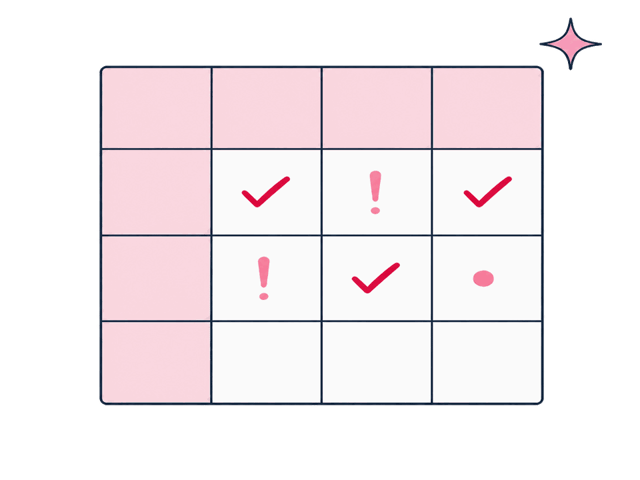
Decision matrix
Crawl & index rule matrix
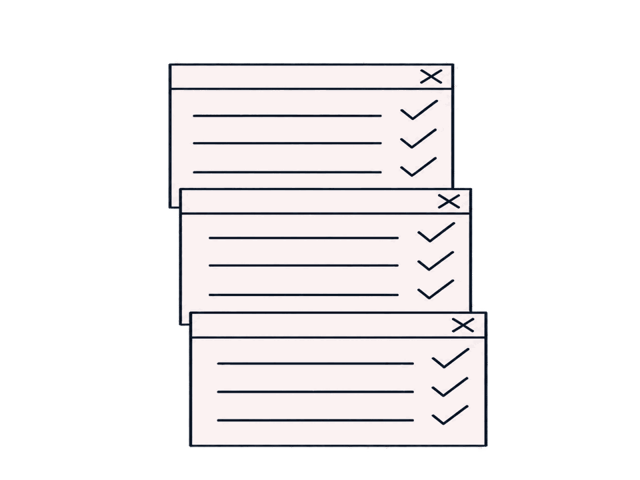
Prioritized backlog
Valuable combination backlog

Evaluation sheet
Boundary assertion report


We call it done when: The facet register, rule matrix, combination backlog, and boundary report are done when every state class names its examples, shopper purpose, search treatment, page owner, and review owner, the internal links, HTTP status, robots, noindex, canonical, sitemap inclusion, parameter order, pagination, and empty-state behavior agree for every class, every backlog candidate has distinct demand, one page owner, stable product rules, a minimum inventory threshold, and a defined lifecycle, and every representative state either matches its expected rule live or names the generator, owner, release, and rollback behind the failure.
Fit and readiness
When you need this
This work suits stores that need shoppers to narrow a catalog without letting each filter choice open another uncontrolled crawl path.
A good fit when
- Facets, sort controls, query parameters, and multi-select options produce more URL variants than the team can account for.
- A few combinations could serve a clear search need, but they sit inside a much larger pool of duplicates, thin assortments, and zero-result states.
- Internal links, routing, HTTP status, robots rules, noindex, canonicals, and sitemaps give crawlers conflicting instructions for the same filter state.

Better handled as other work when
- The plan is to index every possible combination, even when it lacks distinct demand, dependable inventory, or an accountable page owner.
- You can change one directive but cannot inspect and test the links, routing, status, canonical, and empty-state behavior around it.
If one of these is closer to your situation, start here instead: E-commerce SEO
We call it done when: Every filter state belongs to a named class with one compatible crawl, index, canonical, link, and empty-state rule. Valuable combinations have real demand and stock behind them. And shoppers never lose a useful control just to save crawl budget.
The specialists behind this SEO work
Zeo's SEO work goes back to 2006, when we started what we call the first SEO blog in the MENA region. The consultants shown here are doing that work today, matched to what this page covers.

Elif Naz Akan Karakoç
Senior SEO Executive

Sinem Bakır Yavaş
Senior SEO Executive

Sena Önder
Senior SEO Executive

Ali Özgün Öz
SEO Executive

Bensu Tınastepe
Senior SEO Analyst

Ruhan Tiryaki
Senior SEO Analyst

Yağmur Bayram
Sr. SEO Analyst

Emir Kağan Kahveci
SEO Analyst

Metehan Urhan
New Business & Partnership Manager

İlker Emir
Senior Performance Marketing Executive

İpek Ezer
Performance Marketing Executive

Onur Durdağı
Performance Marketing Executive

Sevda Yurtvermez
Performance Marketing Team Lead

Serap Yurtvermez
Performance Marketing Team Lead

Abdullah Tanıdır
Performance Marketing Team Lead
Content we've produced on this topic
Tools we use
Tools behind this work
 Semrush
checks durable demand before a filter becomes a landing page
 Screaming Frog
enumerates filter parameters, combinations, directives, and empty result states
 Botify
shows which filter states consume crawl attention repeatedly
 Oncrawl
compares crawler visits with indexable facet rules and inventory
 Google Search Console
identifies filter combinations already receiving distinct search demand
 Google Analytics
checks whether contained filters still help shoppers narrow products
Where this fits
Related services
E-commerce SEO
Category & Collection Pages
Filter parameter canonicalization and robot rules protect main category listings from duplicate content while allowing high-value search facets.

E-commerce SEO
Product Page & PDP Optimization
Faceted navigation passes filtered product attributes and internal link equity down to matching individual product detail pages.

E-commerce SEO
Product Schema & Rich Results
Dynamic filter state pages output tailored ItemList structured data reflecting current filtered pricing, brand, and availability.


Next step
Let's map the filter maze

Before we start