


Online shopping has grown fast as the world changes and the pandemic reshapes buying habits, creating serious competition among sellers on online marketplaces. Amazon, one of the world's largest marketplaces, had approximately 2.4 million active sellers in 2021, so competition among sellers is quite high.
Just as Google and other search engines rank results with an algorithm, large e-commerce sites like Amazon run a ranking algorithm behind the scenes. Amazon originally called this algorithm A9 and, with its latest improvements, A10. Amazon keeps refining it to surface the best product for each shopper. So if you want to grow your Amazon sales, you need to build out your store and optimize your product pages to match how the algorithm ranks listings. We'll call that optimization work Amazon SEO.
What is Amazon SEO?
Amazon SEO is the practice of optimizing your Amazon store and product listings to match the Amazon ranking algorithm. As with traditional SEO, some ranking factors are known and many others remain unconfirmed. Despite some disagreement on the exact number, the Amazon ranking algorithm is generally understood to weigh about 200 factors.
How Does Amazon Search Algorithm Work?
The Amazon search algorithm, known as A9 and now A10 in its most recent form, weighs a range of factors but centers on relevance and efficiency. As with other search engines, A10 compares the relevance of the page content you create against what the shopper is searching for, then surfaces the product that best matches the query. On the efficiency side, conversion rates and other performance evaluations come into play.
Amazon SEO: What are the Ranking Factors?
As mentioned above, Amazon is estimated to rank products by evaluating around 200 different ranking factors. Some of these factors are known, while others are kept secret. Here are the main known ranking factors.
- Product Title
- Product Description
- Price
- Product Images
- Store Name
- Bullet Points
- Search Terms
- Category Selection
- Conversion Rate
- Reviews
1 - Product Title
The product title is one of the first things customers notice on a listing page, so choose one that is simple, clear, and describes the product as accurately as possible. The Amazon Seller Central guide states that titles which are not created in line with its requirements may not rank in search results.
The main things to consider when creating a product title:
- Although Amazon recommends a maximum character limit of 80 for your title, best practices show that titles of 100 - 150 characters rank better.
- Include important details such as color and quantity in the product title.
- Capitalize the first letter of each word except conjunctions, and keep the rest of each word in lowercase.
- Use numerals rather than spelling numbers out (for example, 7 instead of seven).
- Include your targeted keywords in the product title wherever it makes sense.
- Use "-" or "|" symbols between details to make the title easier to read.
The main things to avoid when creating a product title:
- Do not write the whole title in capital letters.
- Do not use non-linguistic ASCII characters such as Æ, ©, or ®.
- Do not use subjective claims such as Best Sellers, Best Product, or Free Shipping.
- Do not include the seller name in the product title.
- Do not pack the title with more information than necessary.
- Avoid keyword stuffing.
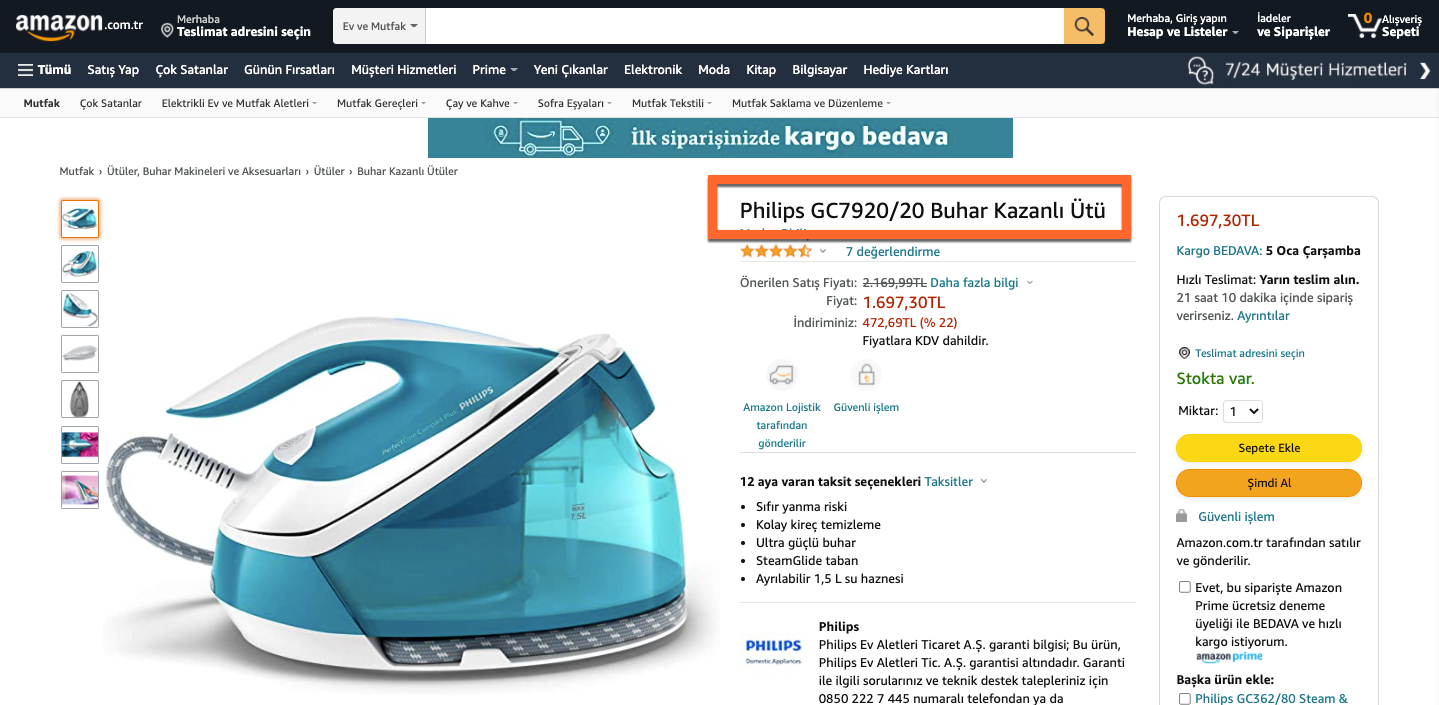
Amazon may apply different title rules by category, so you need to optimize your product title to fit the category your products are listed in.
2 - Product Description
The product description is one of the most important ranking factors. A well-optimized description helps you rank higher and lifts your conversion rate by convincing the user to buy.
The things to consider when writing a product description:
- Keep your descriptions short and clear.
- Include only accurate information in the descriptions.
- Use target keywords in the description without keyword stuffing.
- Never name competing brands in the description. Doing so can get your product removed from search results.
3 - Price
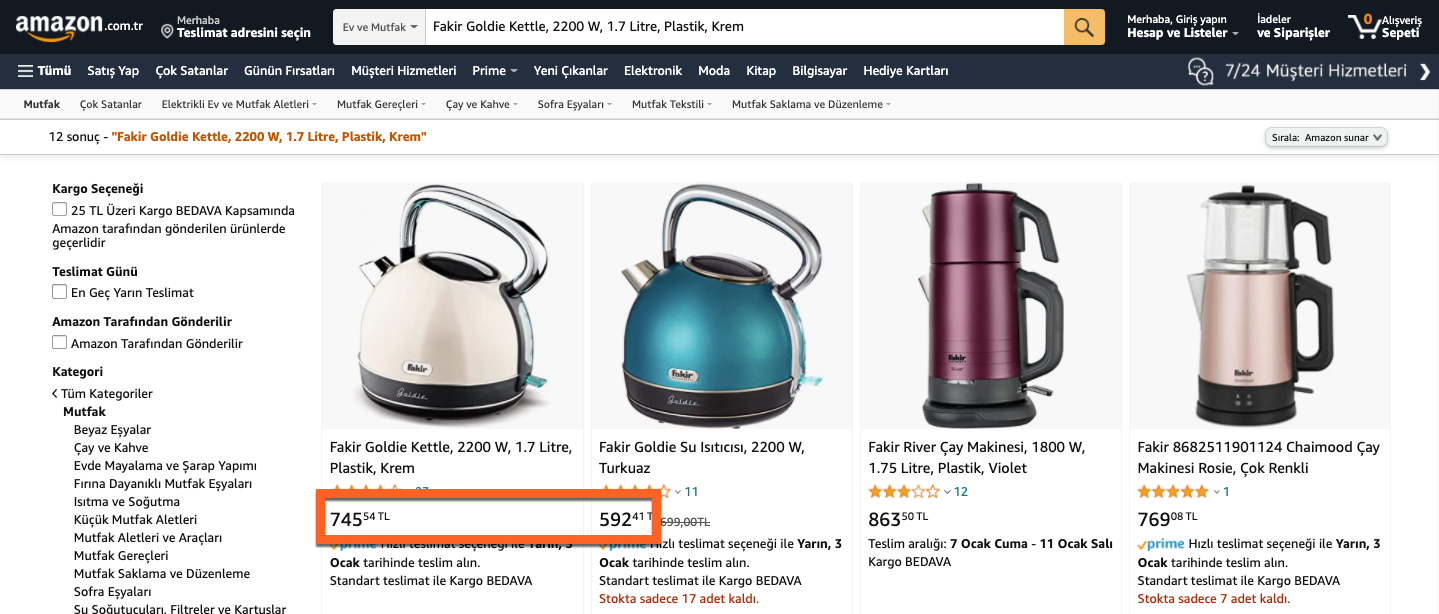
Product prices play an important role in the user's buying decision. On a highly competitive marketplace like Amazon, it pays to compare your prices against other stores selling similar products. If your price sits well above the average, your conversion rate will probably be lower than the stores you compete with. Selling similar products at a higher price than your competitors also results in lower rankings under the Amazon algorithm.
To grow your sales, study the stores that sell similar products and set your prices based on that competitor analysis.
4 - Product Images
Product images, like the product title, are among the first things users notice when deciding whether to buy. Quality, attractive product images convert better than poor-quality ones.
Product detail pages need at least one image. The Amazon Seller Central guide recommends adding 6 images and 1 video to your product pages.
Images should be clear, informative, and eye-catching. The first image you add is the one that gets ranked on search and category pages, so it should show only the product for sale on a white background. Other images can show the product from different angles or in use.
Other details to consider when adding product images:
- Images should be real photos that accurately represent the product being sold. Graphics, drawings, models, and similar renderings are not allowed.
- Images should be professional photographs with high image quality. Blurred or pixelated images will hurt sales.
- The image must match the product title.
- The image must use a white background (RGB 255, 255, 255).
- The product must cover at least 85% of the image.
- Images must be in JPEG, TIFF, PNG, or GIF format.
- Images must not contain inappropriate elements such as nudity.
5 - Store Name
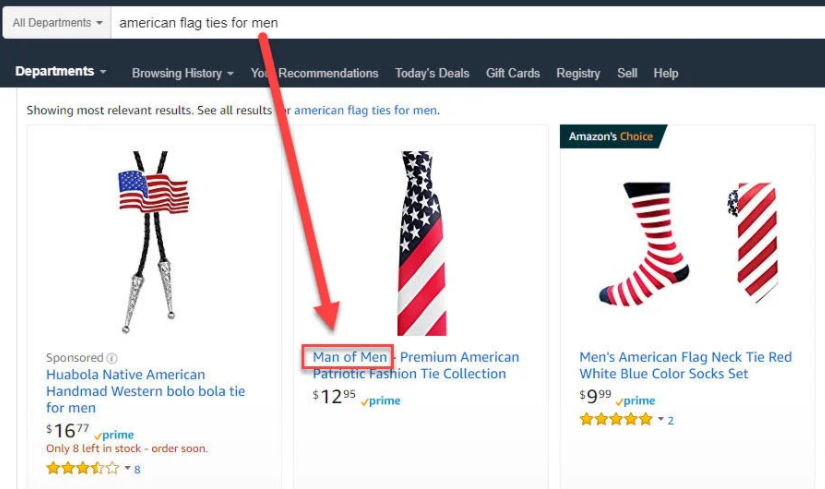
The keywords you use in your store name affect how you perform in Amazon search results. Building a store name around the products you sell can give you a ranking advantage.
For example, the search results below show what shoppers see when they search for American Flag Ties for Men. The Man of Men store, in the second row, targets that query by including men in its store name. Remove men from the search, and the Man of Men store's position changes.
6 - Bullet Points
Bullet points are the descriptive text added to product detail pages as a bulleted list. Because they're the first place users look for information about a product's features, write them in simple language the user can understand, without keyword stuffing. Complicated, keyword-heavy bullet points hurt the user's purchase decision and drag down your conversion rate.
Seller Central guidelines state that each product should have a maximum of 5 bullet points, with the description staying under 1000 characters.
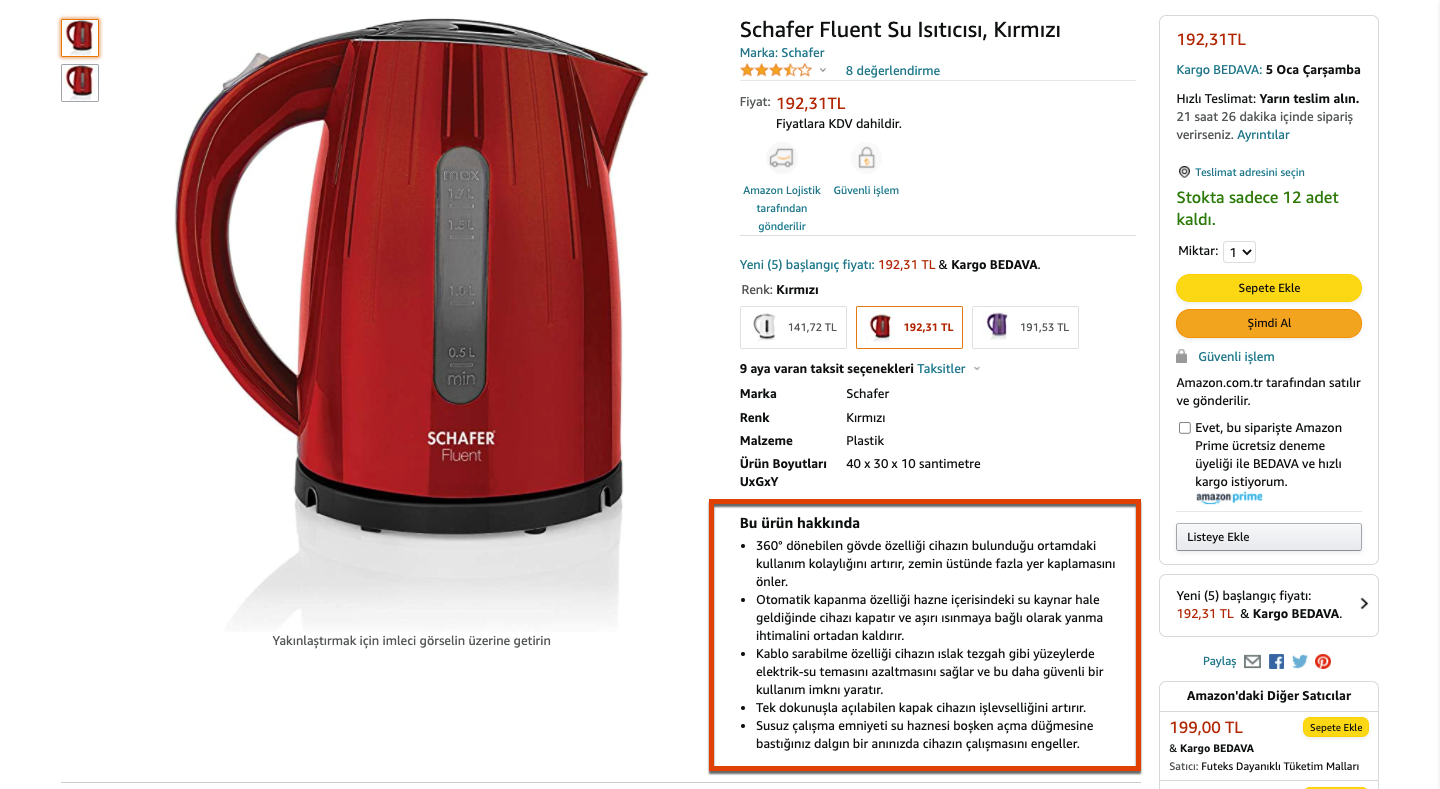
Keywords in bullet points affect your Amazon ranking positions just as they do in SEO, but well-written bullet points naturally include keywords anyway. So focus on giving users useful information in your bullet points rather than stuffing them with keywords.
7 - Search Terms (Backend Keywords)
Search terms are hidden keywords the Amazon algorithm uses to better understand what a product is about. As "hidden" suggests, these keywords are invisible to the user but visible to the bots. According to Seller Central, keep the following in mind when choosing search terms:
- Do not exceed the 250-byte length limit.
- Include alternative, synonymous words that users might search with.
- Include different spelling variations.
- Include abbreviations and alternative uses.
- You can write everything in lowercase.
- You do not need punctuation marks such as ";", ":", "-".
- Put spaces between words.
- Do not repeat words in the search terms field.
- You do not need to include words like "a", "for", "with", "and", etc.
- Use either the singular or the plural form of a noun, not both.
Amazon gives you 50 bytes of space across 5 different lines for search terms. Below is an example of search terms for a bamboo cutting board.
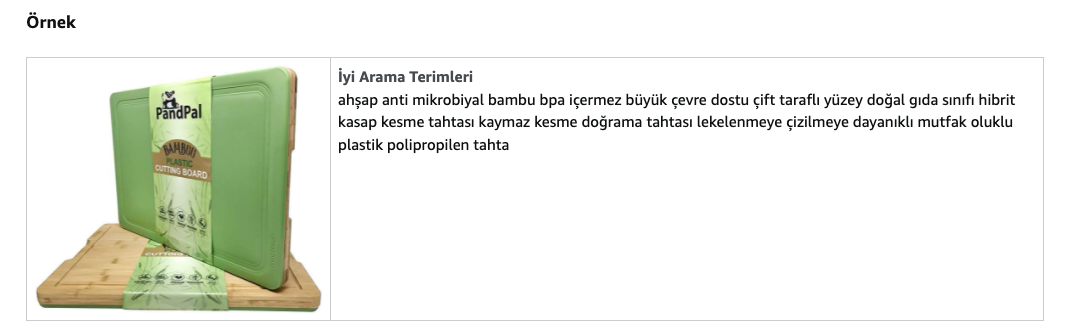
8 - Category Selection
Choosing the right category is critical for conversion. Products added to the wrong category will not rank, which hurts your sales. Make sure the products you sell sit in the right category; you can check which categories your competitors use for the same or similar products to find the right one more easily.
Amazon policy also requires some products to meet certain certification standards before they can be sold. To sell those product groups, you need to meet the necessary conditions. For example, selling organic food on Amazon requires submitting an approval application; once your product is reviewed and meets the conditions, it goes up for sale. Many other products and categories, such as batteries and chargers, baby car seats, baby sleeping mats, squeeze-and-drop toys, slime, and magnetic sand, are subject to additional restrictions. You can find detailed information about all categories and products that require approval from Seller Central.
9 - Conversion Rate
Conversion rate is one of Amazon's performance-based ranking factors. The more a product detail page gets clicked, the more sales it makes, and Amazon's algorithm reads that as user interest, so it highlights the product and moves it toward the top. Rather than optimizing your product pages against the Amazon algorithm directly, you can strengthen your listing to lift your conversion rate instead.
For example, if you're selling at a higher price than your competitors, instead of stuffing keywords into your descriptions to stand out, you can bring the price closer to normal levels with discounts and similar tactics, which highlights the product and increases the conversion rate through more sales.
In addition, some studies have shown that no optimization you make is as important as sales.
cannot make you stand out. If you haven't made any improvements to your profile but the algorithm ranks you higher, you can assume that your conversion rate is higher than your competitors.
To check your conversion rate, track the Unit Session Percentage value under Business Report in Seller Central, which measures purchases per page view. If this value is lower than you expected, it's worth optimizing your page against the other ranking factors covered here.
10 - (Reviews)
Reviews are among the most important performance-based ranking factors after conversion rate. E-commerce shoppers trust other users more than they trust sellers when deciding whether to buy. A strong review history can meaningfully increase sales, while a history of bad reviews can hurt sales just as seriously, so it's worth doing what you can to earn good reviews.
The Amazon ranking algorithm positions products with high reviews near the top. Tests show that products rated 4 stars and above rank higher in Amazon search results than products rated below 4 stars.

Tools You Can Use for Amazon SEO:
There are many tools you can use to strengthen your Amazon sales performance. Here are the main Amazon SEO tools.
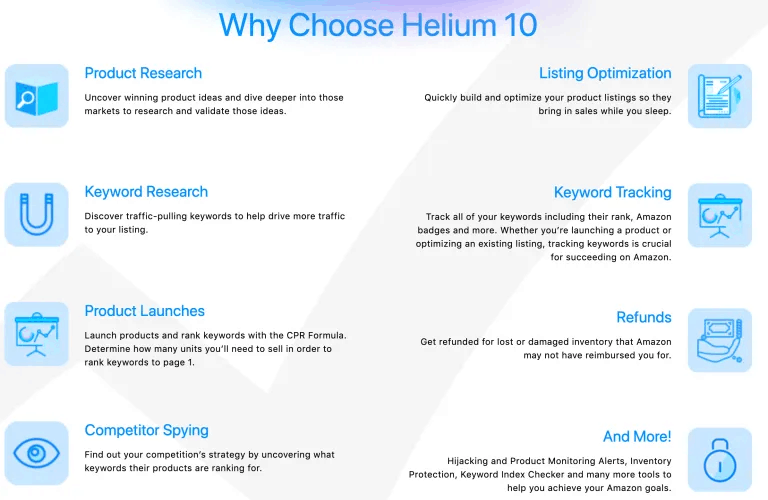
1 - Helium 10
Helium 10 is one of the tools you can use to grow Amazon sales, and it bundles many tools in one place. It gives sellers one-stop tracking and management for product research, keyword research, listing optimization, operations, and marketing. It also includes a keyword analysis tool and a keyword tracking tool you can use for Amazon SEO. Depending on your business's needs and size, you can pick from different Helium 10 packages to support your Amazon sales.
2 - Seller App
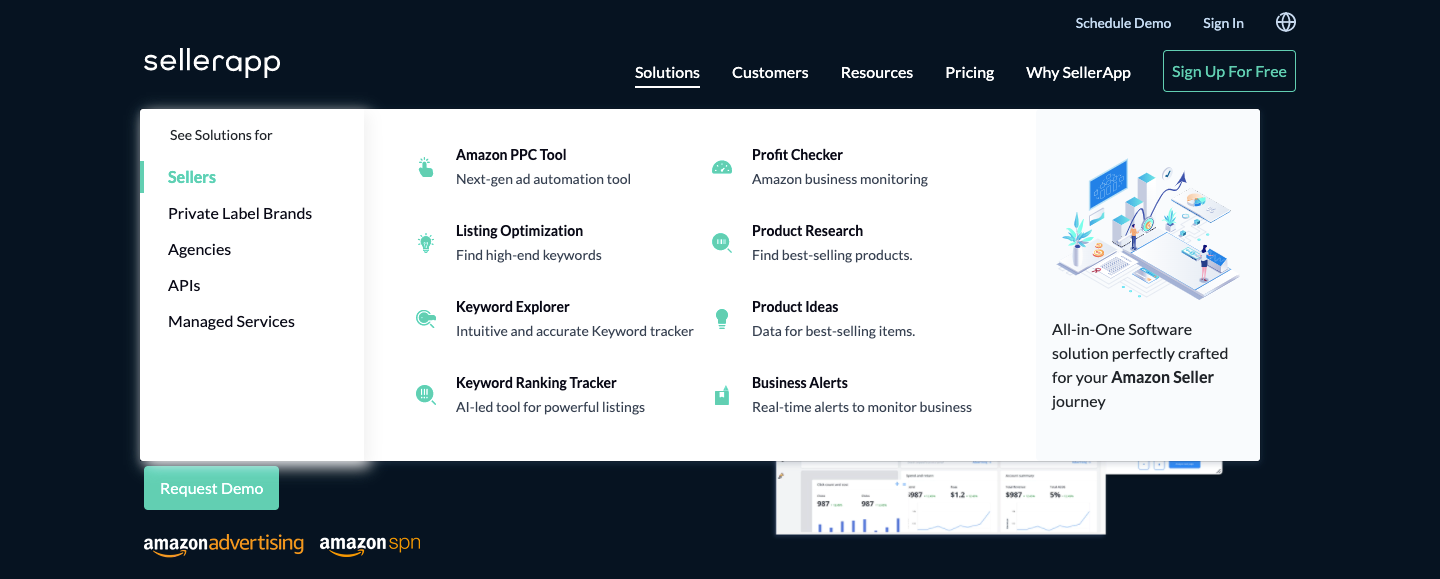
Seller App is another tool that supports Amazon sales. With it, you can run keyword analysis and track positions for the queries you're targeting. Seller App also gives users useful data for PPC campaign management.
3 - Seller Labs
Seller Labs is a comprehensive tool built to support your Amazon sales. It lets you manage your Amazon store from a single platform and closely track performance changes. The tool also includes a keyword analysis feature with detailed data such as keyword volume and estimated sales. Running keyword analysis with Seller Labs lets you measure your performance on the queries you're targeting and support your Amazon sales.
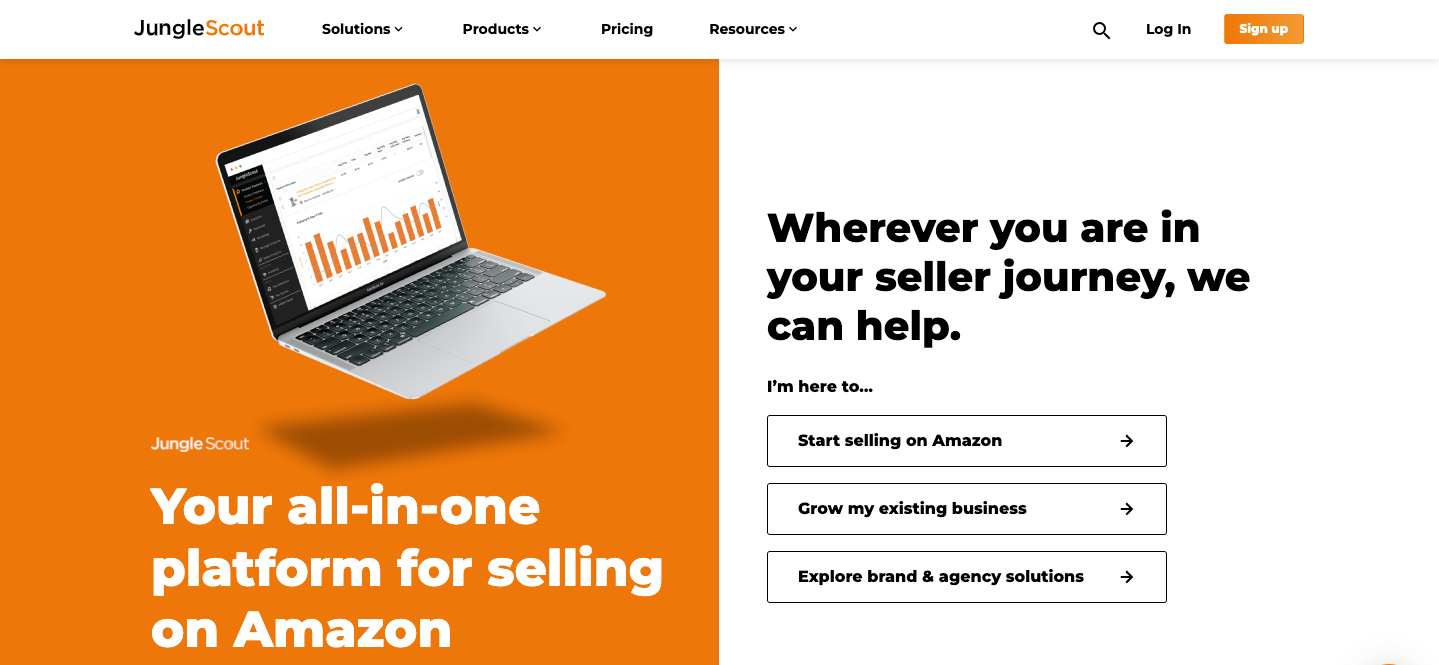
4 - Jungle Scout
Jungle Scout started out as a product research tool and has grown into a highly advanced platform with many helpful features. With it, you can handle inventory management alongside product page optimization, managing your Amazon store from a single platform.
Among Jungle Scout's most popular tools are Supplier Database and Opportunity Finder. Supplier Database helps you find the right supplier for your product and get detailed supplier evaluations. Opportunity Finder is one of the most useful tools for product research: it surfaces keywords with high opportunity scores so you can stand out from your competitors and find new sales opportunities.
5 - AMZScout
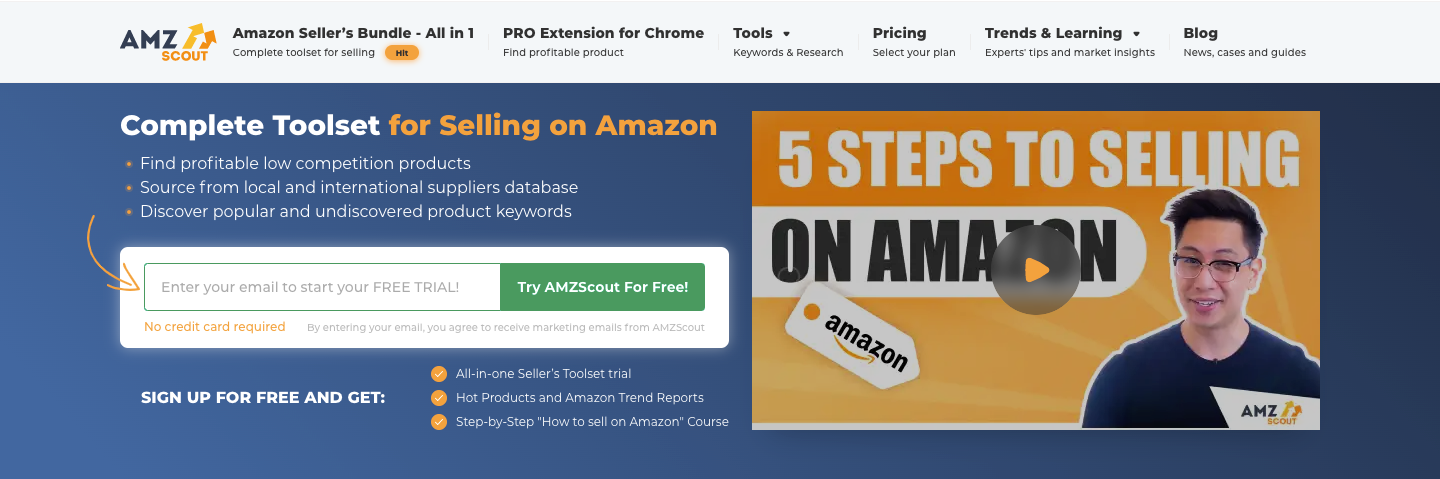
AMZScout, one of the popular Amazon tools, lets you research products to identify profitable ones and improve your listings' performance.
AMZScout offers 2 packages, PRO Extension and Amazon Seller's Bundle. It's especially suited to beginner and low-budget Amazon sellers, and you can try the trial version to see what the tool offers before committing.
Conclusion:
In summary, the Amazon ranking algorithm doesn't work all that differently from Google's; both are built around giving the user the most relevant result. As an Amazon seller, you should work important, searchable information into your product pages, run keyword analysis, and optimize for relevance. You can also lift your Amazon conversion rate by communicating well with customers and delivering quality service. And you can support your Amazon sales and get ahead of your competitors by using tools built for Amazon SEO and inventory management.
Sources:
https://www.businessofapps.com/data/amazon-statistics/
https://www.sellerapp.com/blog/amazon-product-listing-guide/
https://sellercentral.amazon.com/gp/help/external/GYTR6SYGFA5E3EQC
https://sellercentral.amazon.com/gp/help/external/help-page.html?itemID=51
https://sellerinteractive.com/blog/amazon-seo-guide/
https://www.wordstream.com/blog/ws/2018/05/17/amazon-seo
https://www.brandingturkiye.com/dunyanin-en-degerli-100-markasi-2021/
https://influencermarketinghub.com/amazon-seo-tools-services/


