


E-commerce has picked up significant momentum as digitalization and internet use keep rising. Shifting user behavior has driven demand for online shopping, and that demand has intensified competition among e-commerce sites. To keep up, e-commerce sites now need to focus on delivering a superior user experience, which increasingly means making extensive use of artificial intelligence.
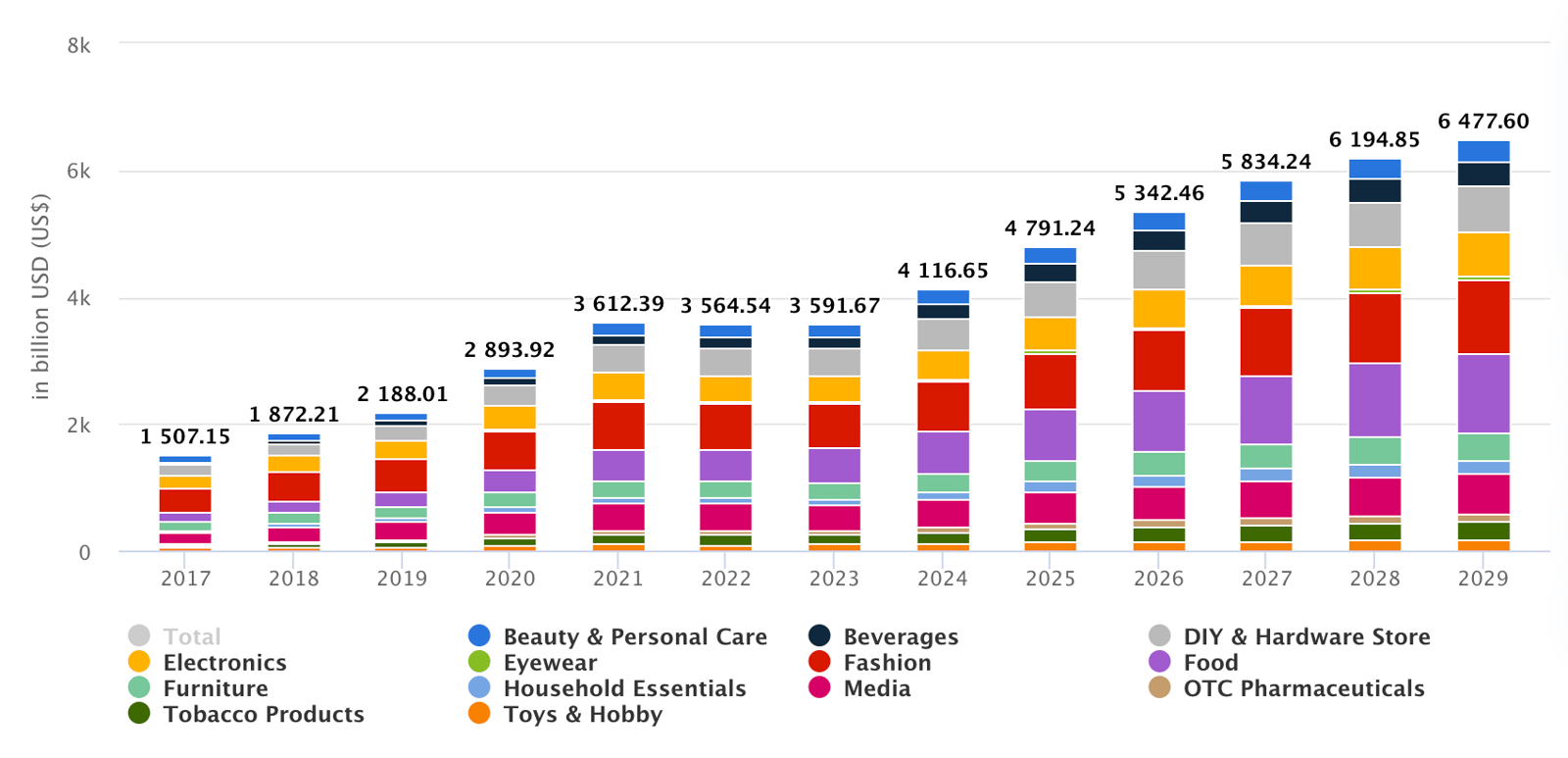
Below is a chart from Statista showing the growth of e-commerce revenue over time. Revenue has been climbing steadily, and analysts predict roughly 10% growth every year until 2029, a reminder of how costly it is to fall behind in e-commerce.
In this article, I'll walk through AI applications in the growing e-commerce sector and share some examples.
What are the Benefits of Using AI in E-Commerce?
Using artificial intelligence in e-commerce benefits both businesses and customers. It can increase conversion rates by targeting the right audience with a personalized shopping experience, improve profit margins through dynamic pricing and inventory management, and support security through measures like fraud detection. In short, AI has real advantages for conversion rate, customer loyalty, and user experience, which is why it has become critical for e-commerce sites that want a competitive edge. Research shows that 87% of businesses believe that using artificial intelligence provides a competitive advantage.

Popular AI Applications & Examples
Content Creation
Content generation is undoubtedly one of the main uses of artificial intelligence in e-commerce. With AI models, especially ChatGPT, you can create almost any kind of content your site needs, from blog posts to category pages to product detail pages. Producing content faster and at higher quality helps you keep your website current and stay competitive, and giving customers more useful content can help you rank for more keywords and support your organic traffic.
Here are a few examples of using AI in content writing.
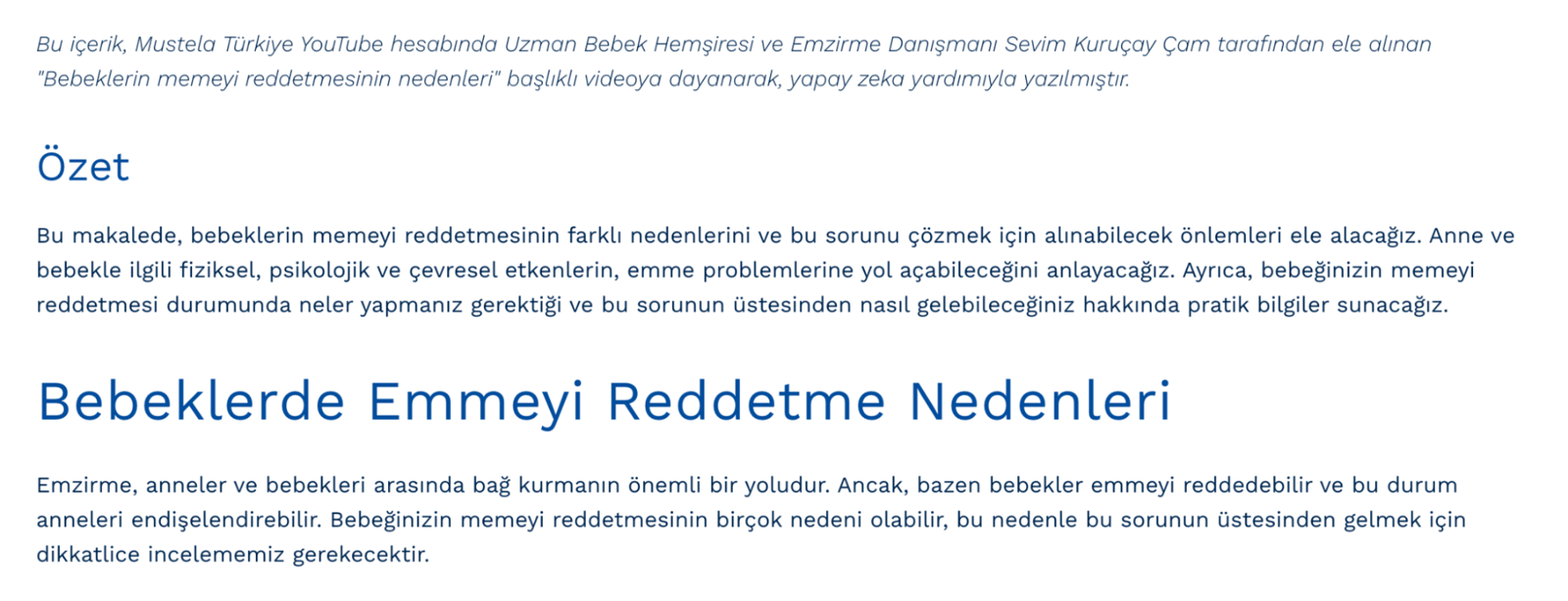
Related URL: https://www.mustela.com.tr/blogs/hamilelik/bebeklerde-emmeyi-reddetme-ve-nedenleri
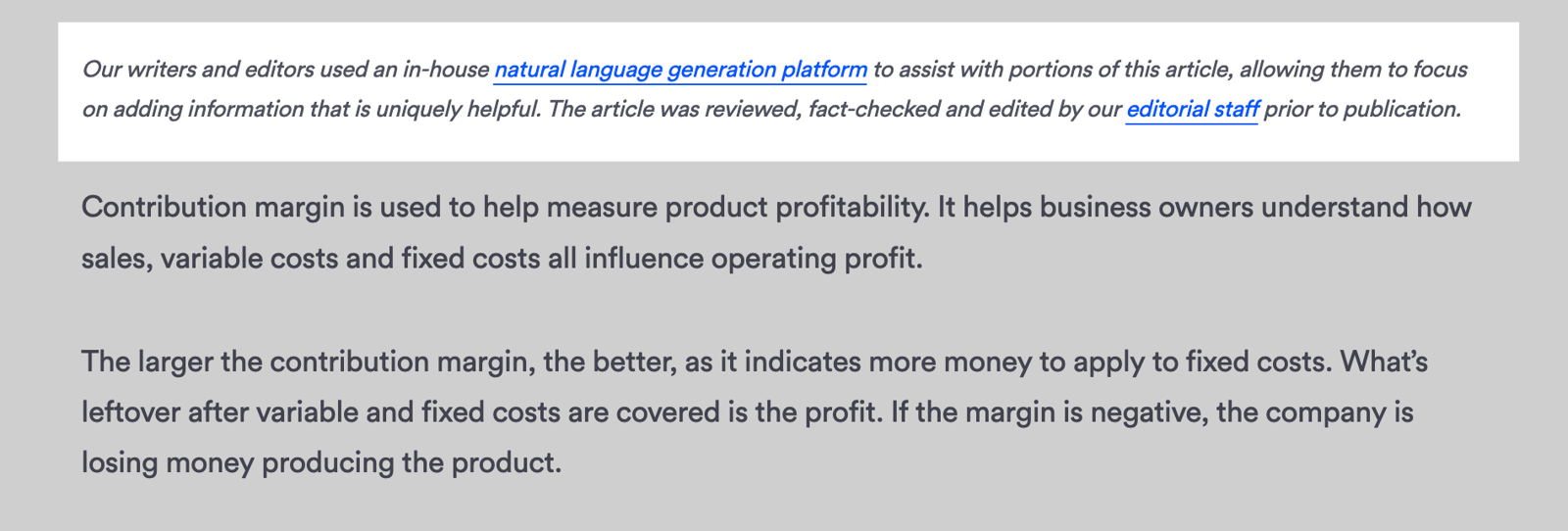
Related URL: https://www.bankrate.com/investing/contribution-margin/
Content Summarization
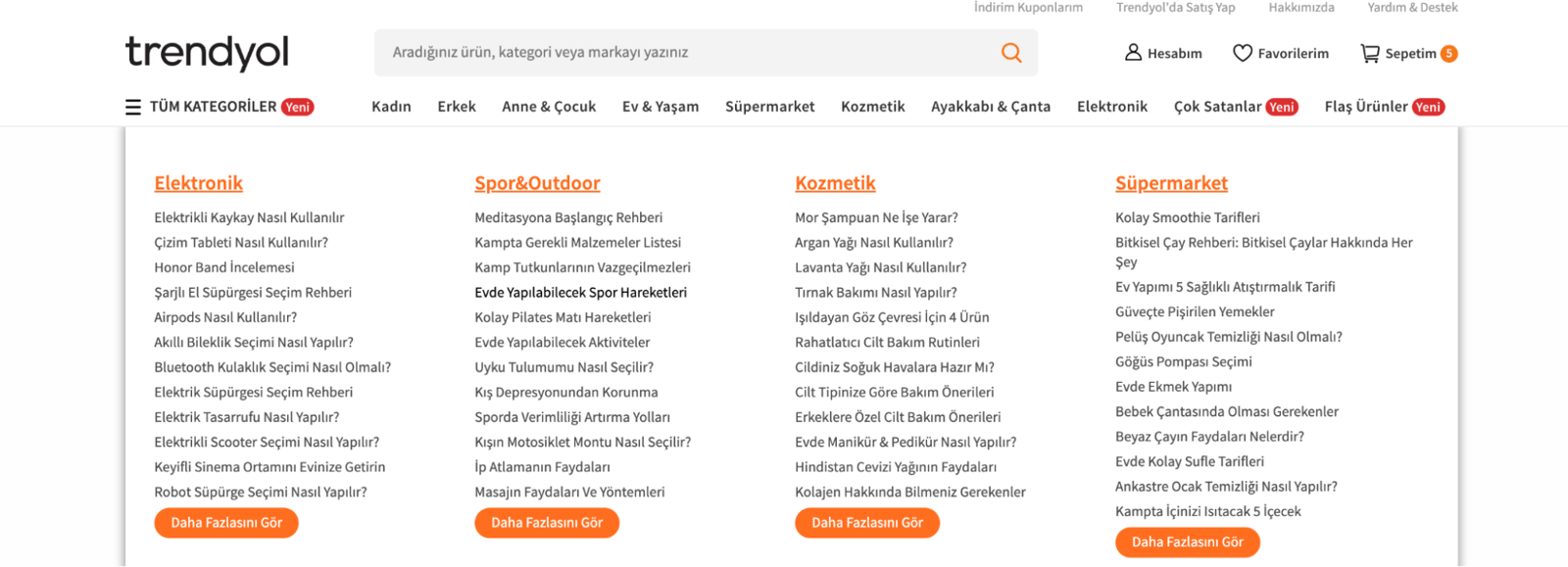
You might wonder what this has to do with e-commerce, but many e-commerce sites run blog pages on the same domain. You can use AI to summarize content you think will help your users, such as blog posts or guides, in just a few lines, and then present that summary in a section of the page to improve the user experience.
Comment Summarization
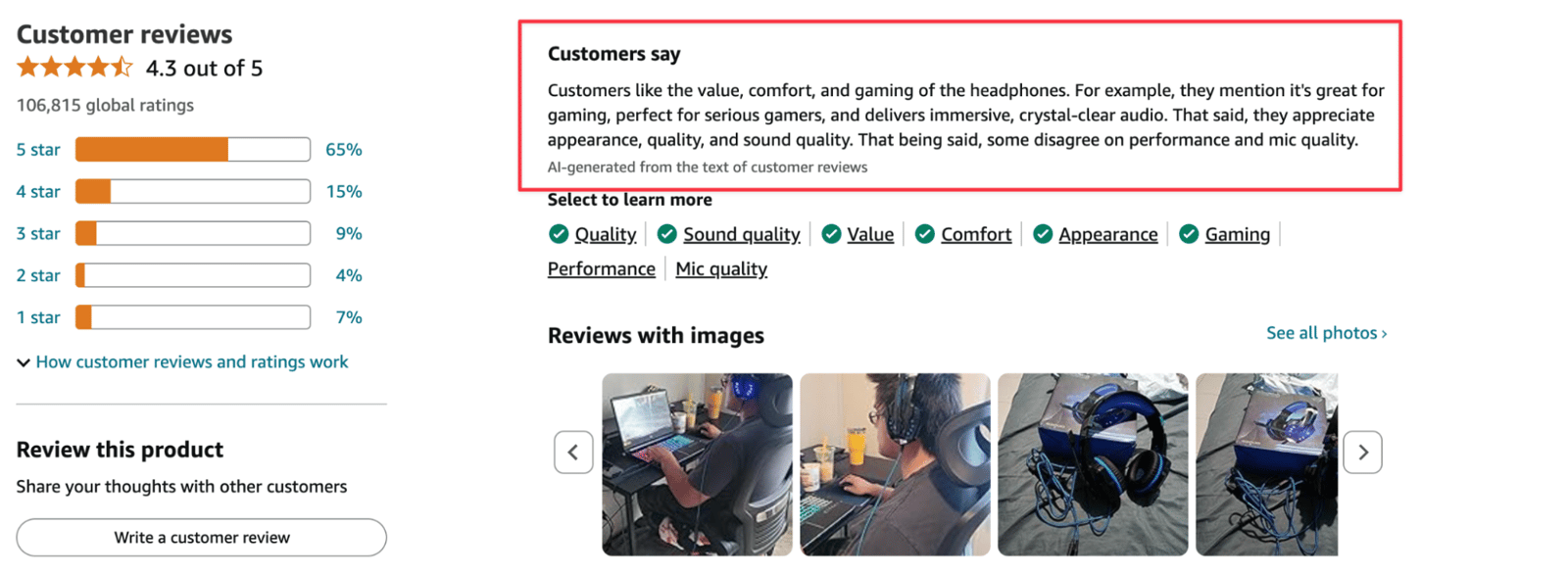
With AI, you can summarize product reviews on your e-commerce site and give users short, clear information about the product.
Amazon uses this approach to give customers a better experience by summarizing reviews. The results are not always perfect with this application, so it is worth noting when content was generated by AI, as Amazon does.
Chatbot
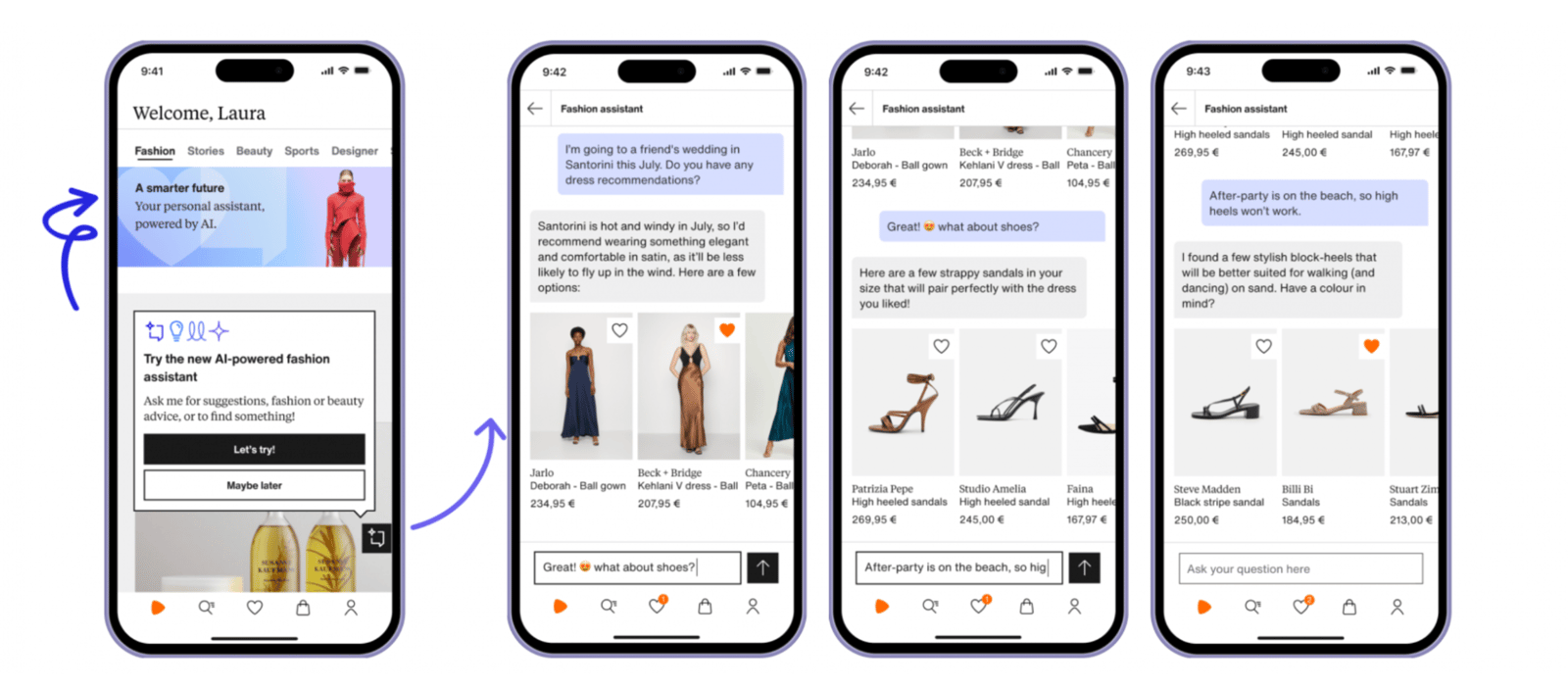
Chatbots and virtual assistants have been part of e-commerce for a long time now. Chatbot support is critical for e-commerce sites because it helps track customer demands, provide information, and step in on technical issues such as payment problems. AI-powered chatbots can help manage that support traffic as quickly as possible.
Zalando is one of the e-commerce sites offering AI-powered chatbot services. In addition to answering customer questions, Zalando's chatbot algorithm also offers extras such as fashion advice.
Frequently Asked Questions
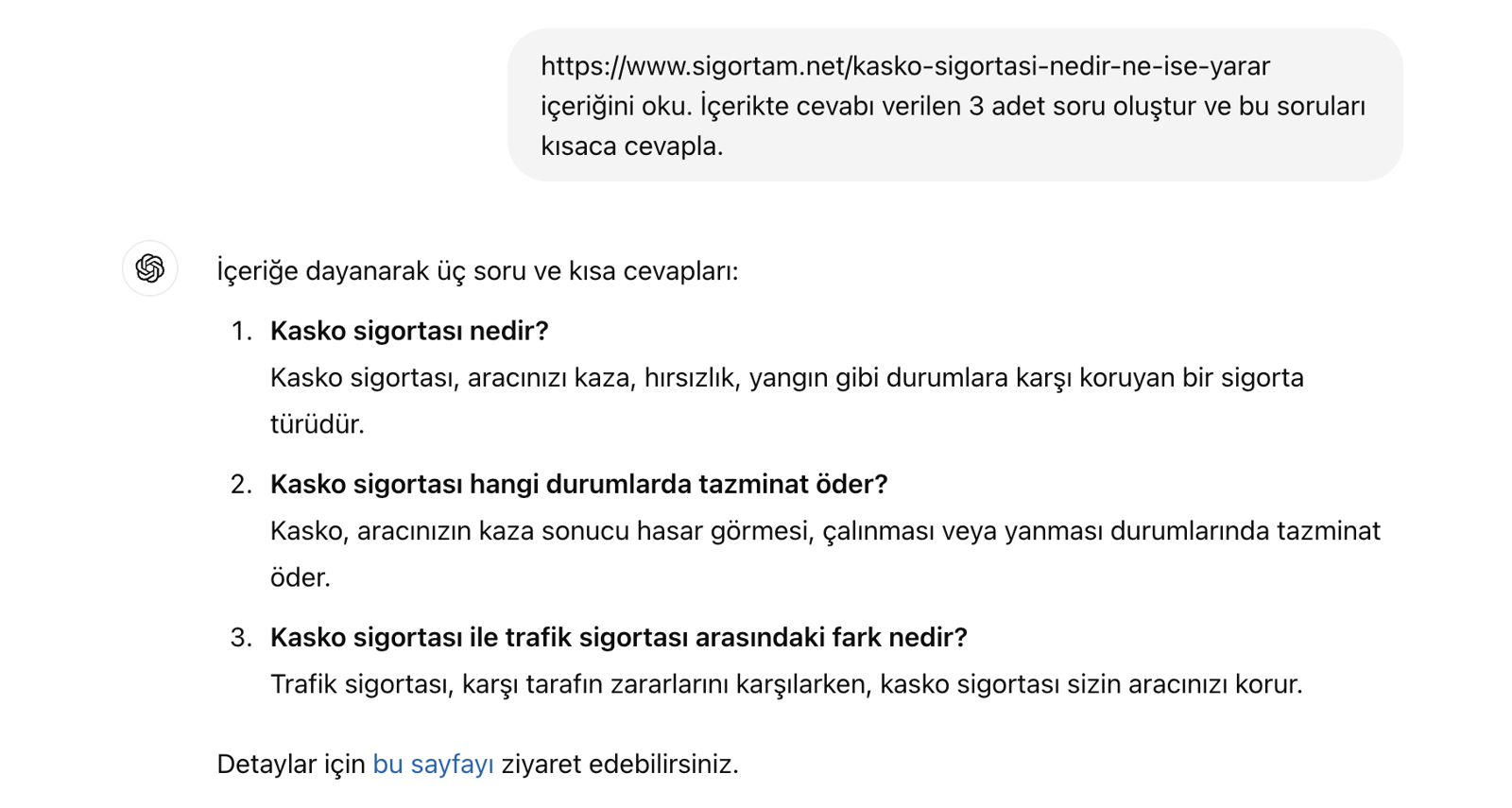
An FAQ section is a big benefit to users because it is generally easy to read and gives pinpoint answers. You can use artificial intelligence to identify and answer frequently asked questions for your web page, pulling useful questions and answers directly from the content you have already written and presenting that summary to users in FAQ format.
I asked ChatGPT to generate and answer 3 questions based on the content of the https://www.sigortam.net/kasko-sigortasi-nedir-ne-ise-yarar page, and the results were solid.
Personalized Product Recommendations
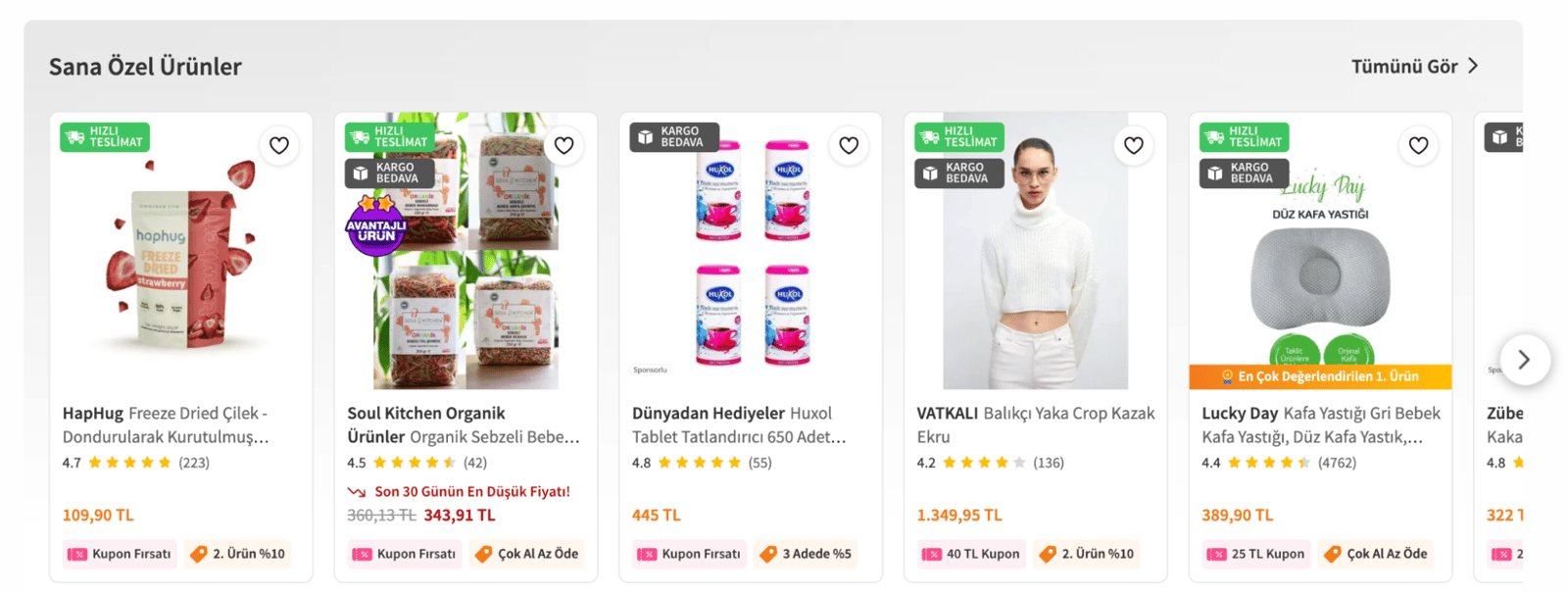
Personalized product recommendations are among the most widely used AI-powered features on e-commerce sites. By analyzing which products users have browsed and what interests them, you can recommend similar products and increase conversion rates.
Trendyol boosts sales and conversion rates by listing products you have previously viewed, along with similar products, under a “special products for you” section.
On Page Optimizations
AI support can help you quickly optimize on-page elements like titles, descriptions, and headings for e-commerce sites. With the right prompts, you can create SEO-compliant on-page elements that use a clear CTA, stay within character limits, and follow a clean heading hierarchy.
You can use the same AI tools to optimize on-page elements for multilingual sites too.

Image Searches
Image recognition technology adds real value to e-commerce by personalizing and speeding up the shopping experience. Users can upload a photo of a product and quickly find the same item or something similar, which especially helps in visual categories such as fashion and home decor. Image recognition can also suggest alternatives when a product is out of stock, which keeps purchases moving. Together, these features improve the user experience and increase sales, giving e-commerce platforms a competitive edge.

Spam & Fake Comment Detection
NLP algorithms can spot fake comments by analyzing language structure, word choice, sentence length, and emotional tone. If your site gets a large volume of comments, sorting through them by hand is not realistic. AI can analyze thousands of comments quickly and flag which ones to remove based on signals such as IP address, comment frequency, and user information, which also helps protect your site from spam attacks.
Conclusion
AI applications benefit e-commerce in many areas, from user experience to operational efficiency, and help sites stand out from the competition by automating processes such as content production and SEO. By keeping up with what artificial intelligence makes possible, you can help steer where the sector is heading and support your own sales.


