


This year, we at Zeo Agency welcomed leading figures from digital companies such as Google and Facebook, prominent agencies, and digital marketing tools to the sixth Digitalzone conference. The event took place on 18-19 October 2018 at the Istanbul Radisson Blu Hotel in Sisli. Unlike previous years, the first day focused on content marketing, while the second covered performance marketing and technical topics. At the end of each day, well-known figures from Turkey's digital marketing industry answered attendees' questions. We would like to thank the approximately 700 attendees and speakers who joined us over the two days. In this article, we share the conference highlights and speaker presentations. Enjoy the recap!
Rıza Selçuk Saydam – Framework of building successful products: Understand, Identify, Execute
Rıza from the Facebook Messenger team opened Digitalzone with a presentation on the core elements of successful product development. Below are our detailed notes on his approach to these processes and Facebook's distinctive company culture:

- Company culture is the most important force connecting people and enabling a company to succeed.
- The mottos displayed on posters throughout Facebook's offices have a strong influence on its company culture.
- Facebook chose a Hacker Company culture partly because the idea of a hacker encourages people to examine complex problems from perspectives others may overlook and to develop alternative solutions.
- Facebook has also adopted a culture of Empathy, including an emphasis on connection speeds. To understand the experience of people with slow internet connections around the world, the company limits its internal internet speed to 2G on Tuesdays.
- The Messenger Lite app grew from this focus on empathy and was designed to work reliably on slow connections around the world.
- Successful product management has three basic elements: Understand, Identify, Execute.
- Understanding the purpose and objectives matters more than the metrics. Metrics are not the objectives themselves; they help us measure progress toward them. We must therefore keep asking why.
- Defining a team's main objective and purpose also defines its mission. When setting that objective, it is important to ask each team member, agree on the purpose together, and decide how to measure it.
- Identifying problems is equally important. We must review previous projects to understand what worked and what did not.
- It is vital to identify problems that have already occurred or may arise in the future from a human perspective.
- The final step is for teams to come together, embrace the agreed objectives, and work to achieve them. We must build trust by communicating with both the team and the people who use our app. The trust created through good communication helps us build a good product at the end of the process.
Laura Crimmons – The Successful Content Marketing Campaign Blueprint
Laura Crimmons, founder of Silverthorn Agency, drew on her experience across different sectors in The Successful Content Marketing Campaign Blueprint. Laura said that PR and Content Marketing cannot offer guarantees because too many variables are involved. Here are our brief notes on the campaign guidelines and variables she discussed:
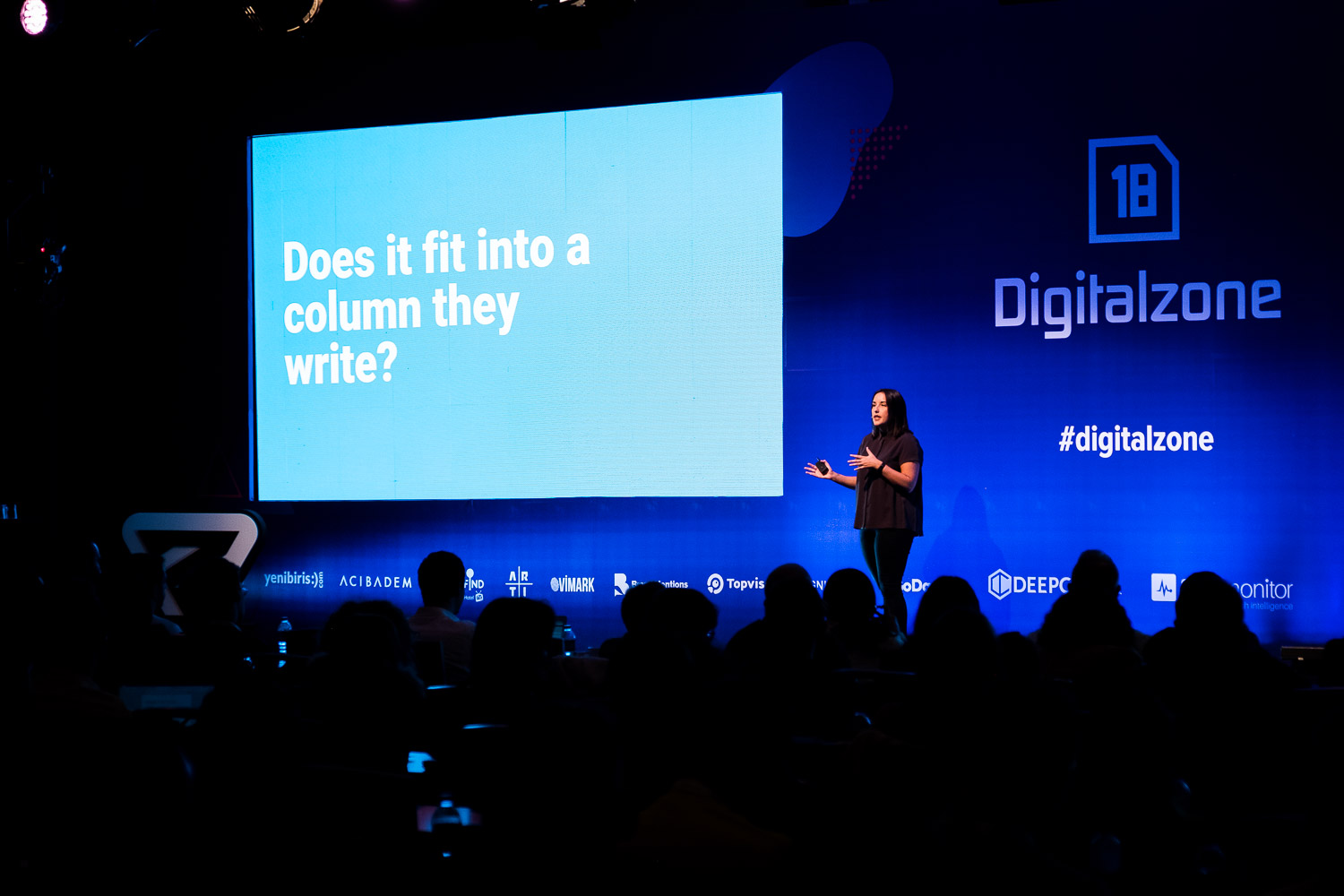
-
Timing: On which days should I write?
-
Consider special occasions and trending dates that attract attention from journalists and the media, including religious days, holidays, and cultural events.
-
Credibility: What makes a brand credible?
-
Protect the privacy and confidentiality of workspaces and meetings under GDPR.
-
Bring expert perspectives into the website or service.
-
Interest: Why should I care about this campaign?
-
Check whether someone has already covered the subject.
-
Confirm that the subject falls within the person's area of interest.
-
Define your target audience accurately. For example, check whether the person has tweeted or written an article about the subject.
-
Set clear boundaries for the subject.
-
Emotional reaction: How does this story make me feel?
-
The feelings you create can produce results that stay with people throughout their lives. For example, content about wars often appears on the front page because pain signals importance.
-
Decide whether you should evoke an emotion and whether that emotion should be positive or negative.
-
Work with emotions that prompt people to respond and take action.
-
Influencing people: How can I have an impact?
-
Create case studies in which you can measure the effect on people. For example, you could study difficulties in the workplace.
-
Shareability: How can we encourage more interaction?
-
Always account for the human factor.
-
Use the popularity of one story or piece of content to build interest in the next.
-
Check whether people can share it on social media.
-
Try to tell your story within Twitter's 280-character limit.
-
Images: Which images should I use?
-
Every story needs images.
-
Consider how people will share those images, since every platform may not support a high-definition image at the same quality.
-
Always add descriptions to images.
-
Use video as well as still images.
Laura concluded with a practical series of recommendations:
- Show that you have done your research.
- Use the recipient's name when contacting a specific person.
- Find a balanced tone that is neither too friendly nor too cold.
- Do NOT send press releases as PDF files, since this limits how journalists can use them.
- Support your content or news with reliable data, and make that data easy to share.
- Present contact information clearly, including an e-mail address, liaison name and number, and address.
- Proofread everything with one final review.
Sam Marsden – Efficient AF: Automating SEO Reporting With Google Data Studio
DeepCrawl SEO & Content Manager Sam Marsden explained why SEO reporting needs automation in an increasingly competitive environment and described how to put it into practice. Here are our notes from his talk:

- Automation makes routine daily work faster and easier while producing more consistent insights.
- Sam explained how the DeepCrawl team automates reports with Google Data Studio and Zapier.
- Google Data Studio was announced in 2016. With connections to more than 100 connectors, it can transfer a wide range of data into reports.
- Google Data Studio has spread rapidly since its release.
- Its ease of use and extensive selection of connectors make it stand out for report automation.
- Google Data Studio lets you import an Analytics account and create a dashboard with the data you need. The dashboard updates continuously, so you do not have to return and pull the data again.
- The paid tool Supermetrics can simplify this process and make it easier to import third-party sources into Google Data Studio.
- After setting up automation in Google Data Studio, you can use Zapier to automate notifications such as alerts and e-mails.
- Zapier can transfer DeepCrawl data to Google Sheets, which then passes the data to Data Studio.
- Bringing Search Console and DeepCrawl data into Google Data Studio lets you show XML sitemap issues, crawl errors, and indexed pages alongside DeepCrawl crawl results.
- Finally, you can use a Google Calendar alert to schedule crawls in DeepCrawl.
Lexi Mills - Turning PR SEO and Content Marketing Stunts Into Successes
Lexi Mills, co-founder of Shift6, joined us at this year's Digitalzone conference to present Turning PR SEO and Content Marketing Stunts Into Successes. Here are the highlights:

- Lexi began by noting that PR, or Public Relations, has a poor reputation. In her view, genuine PR creates truth while staying as far from fraud as possible.
- She emphasized the need to present big ideas in an acceptable way. By working with subject-matter experts, we can focus on ideas that attract or even spark the community's interest.
- A story must be credible. To achieve that, she recommended the following:
- Move quickly.
- Plan according to your budget.
- Choose images carefully.
- Divide projects across multiple launch areas.
- Make sure backlinks point directly to your site. Using another site as a bridge creates unnecessary clutter.
- Learn about artificial intelligence.
- Review keywords and identify those that are trending. Google Trends offers a simple way to do this.
Lexi first emphasized the strong relationship between investment, search, and trends. She then argued that successful PR work should focus on consistent facts, empower publishers to produce PR, and develop effective ideas through quick, simple methods.
Matthew Kay - Beyond keywords: How To Create Content That Matches Your Buyer’s Journey
Matthew specializes in SEO, PPC, and content-led digital PR campaigns. He is the Operations Director of Aira, a UK-based digital marketing agency. Here are our notes from his presentation:
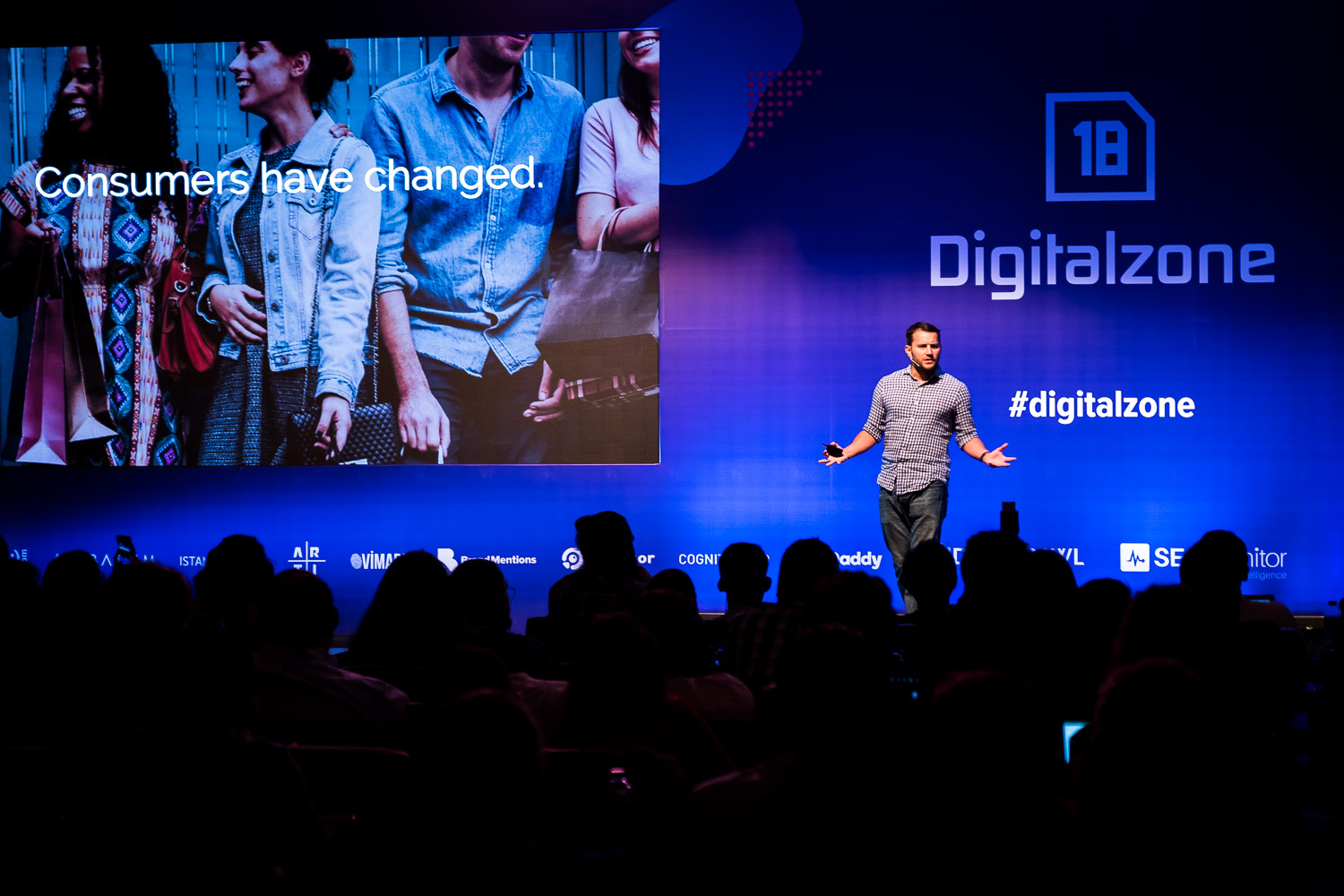
- Consumer audiences are becoming more sophisticated each day. The growth of online channels has been a major factor in changing modern consumer behavior.
- Three elements stand out when learning about customers: Awareness, Evaluation and Decision Making.
- Consider a website that receives too little traffic. We might first ask whether social media management software could increase that traffic, then research which tool to choose. This is how we become aware.
- We then evaluate the advantages and disadvantages of those tools.
- Finally, we make a decision about what to do and which concrete steps to take. The research and evaluation stages remain important parts of that decision-making process.
- When time and resources are limited, it may make sense to focus directly on decision-making because this stage is closer to the buying phase, or the Conversion phase.
- Targeting also plays an important role in content strategy. After choosing our primary keywords, we must identify secondary keywords related to those primary keywords or topics. For example, if the primary keyword is “The White House”, a secondary keyword could be “President of USA”.
- Various SEO tools can help us derive secondary and long-tail keywords from our seed / primary keywords. We can then organize this large keyword pool into subject-based cluster structures.
- Once the clusters are defined, we should keep words with similar meanings or contexts together in the same relevant piece of content to avoid keyword cannibalization.
- We must then recategorize the clusters according to the intent behind visitors' or customers' searches. It is not always 100% possible to know a user's exact intent, so search results pages (SERP) can help us understand it.
- We should also include Google Ads data throughout these processes.
- The same search queries can produce different results on a SERP, depending entirely on why the user is searching.
- Gap analysis helps us identify keywords that have not been placed in a cluster.
- We should then use remarketing to bring back visitors who reached our site through our content.
- In summary, start content creation with gap analysis to identify gaps and opportunities. Next, build a flowchart and map keywords so you can prioritize them. Organize your content into clusters alongside related alternatives. Some visitors will arrive only to find information and then leave, so the ultimate goal is to guide them through the awareness, evaluation, and decision-making stages.
Alen - Jelco Todorov - Using Jobs-to-be-done to Win More Customers
SEOMonitor Marketing Manager Alen Todorov opened his presentation with the jobs-to-be-done theory, which he had begun exploring 2 years earlier. Here are the details:
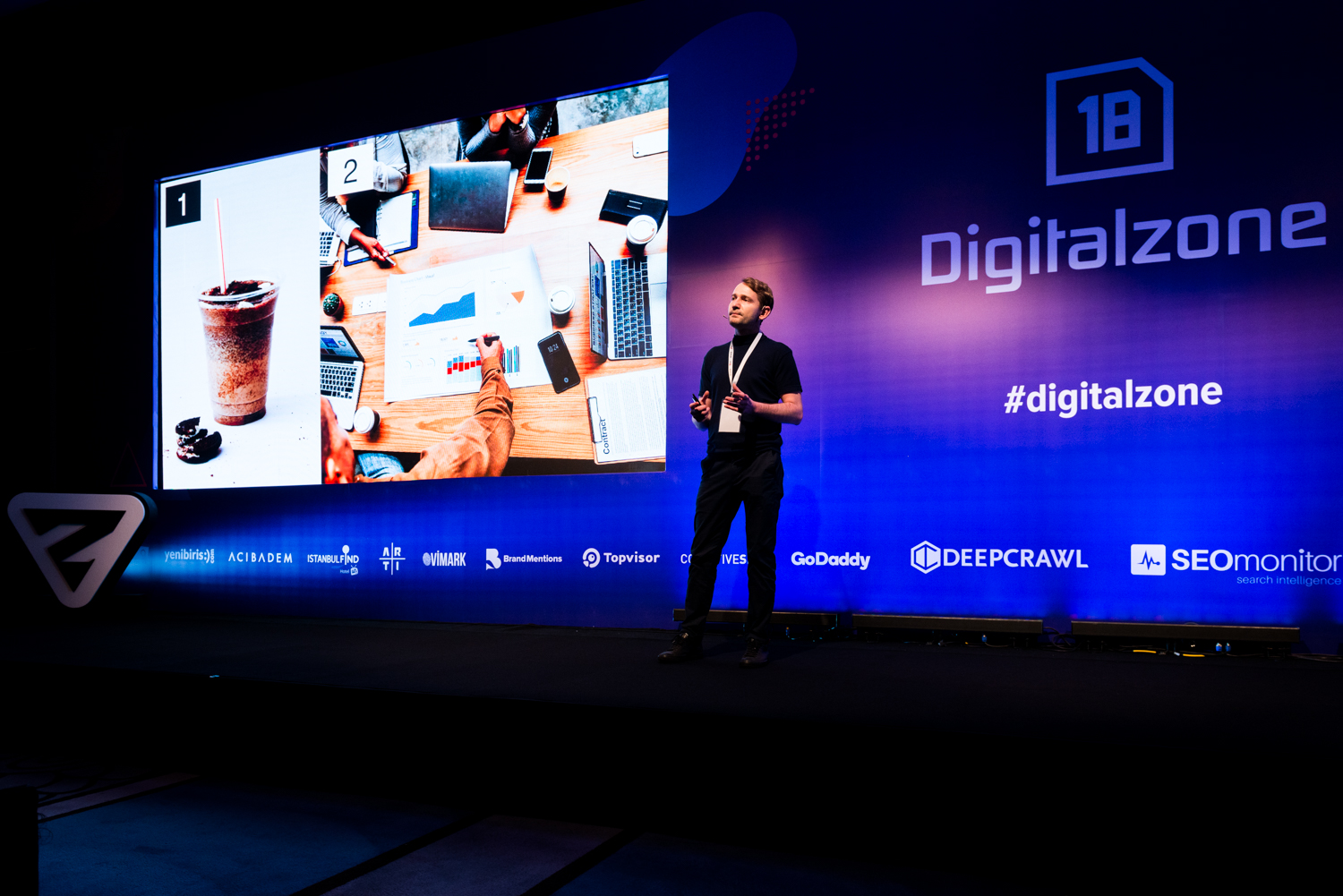
- Alen used a milkshake case study to explain the ’jobs-to-be-done‘ idea. A fast-food franchise selling hamburgers wanted to increase milkshake sales and studied each customer who bought one: “Arrived early in the morning” “Came alone” “Ordered that with milkshake” etc. The data showed that these customers were spending time in traffic and buying a milkshake to stay occupied or “to do something”. Alen's point was that they were not buying the product itself, but the service the product provided.
- He then described how SEOmonitor applied this example. SEOmonitor provides graphs and data, but understanding them and drawing insights can be difficult or time-consuming. The team asked, “How can we make this process more user-oriented?” and “What our user would like to 'buy here', which led to the launch of SEOmonitor's new tool, Signal.
- Signals provide instant visibility forecasts, comparisons with competitors for a given keyword group, and predictive insights that can be compared with the previous week or month.
- The Signals section continuously updates its data in a feed, allowing you to share selected information instantly with the people you choose.
- The feature is also easy to use on mobile platforms.
Phil Nottingham - How to Increase Content Marketing ROI with Video
Phil began his presentation by saying that video was no longer a strategy because it was everywhere. Here are the most notable points we recorded:
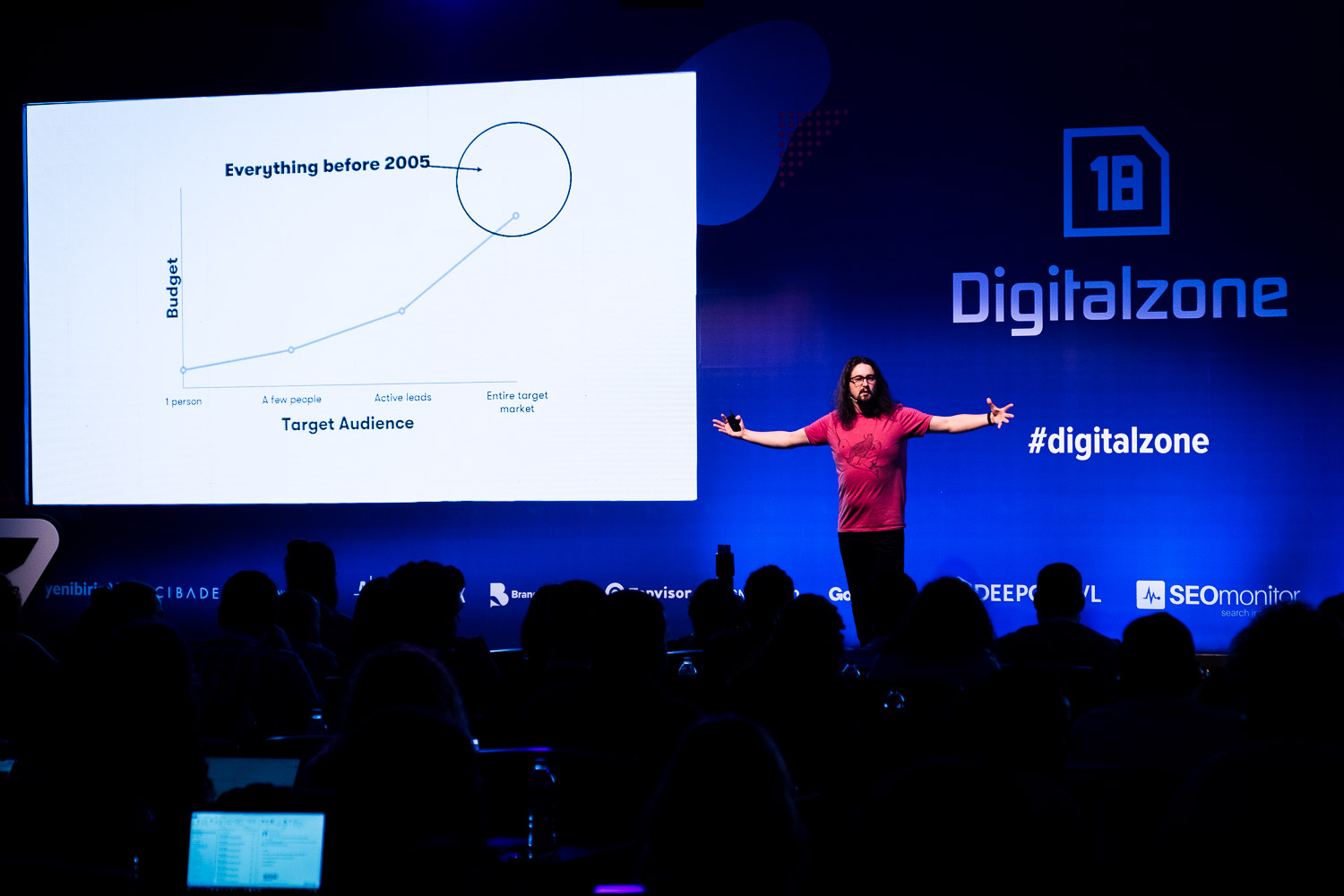
- Facebook, Youtube, Vimeo, Instagram, Pinterest, Snapchat, and Linkedin had all become video platforms.
- If you can't produce a video, Phil says ‘you're missing the ship!
- Users can now think of online video as the new TV.
- You need to produce more videos that are shorter and offer better content.
- When planning video content, consider three main parameters: acquisition, conversion, and retention.
- Platform choice matters. You need to know whom and what you can target on each platform. For example, Instagram may not be useful for video content aimed at a 65-year-old. Ask two questions: “Does your target audience use that platform?” and “Will your target audience interact with your content on that platform?”
- For video SEO, Search Console can measure traffic to your videos.
- Creating a separate page for every video allows you to measure results accurately.
- If you have a gallery, create a dedicated page for it and give that page extra attention.
- Video searches are generally more common than information searches.
- Video production can either create demand or meet existing demand. Content based on searchers' wishes and intent satisfies demand. Videos for PR, influencer marketing, and advertising can create demand.
- We tend to think of video as content with both visual and audio elements, but platforms may emphasize one over the other depending on how people use them. Music is the most popular content on Youtube, so audio is more prominent there. Visuals matter more on Facebook because the platform allows people to watch videos without sound.
- When developing a Youtube strategy, look for opportunities in search results where high-volume queries return low-quality or outdated videos.
- The two most important questions in a successful video content strategy are whether your Youtube channel creates value and whether your videos genuinely mean something to your audience.
- Treat a video's main thumbnail like a movie poster. It should encourage the user to click.
- Going viral does not matter by itself. View count is not the same as the number of people who interact with a video, and the same applies to likes.
- E-mails containing video create 3 times more conversions.
- Video is one of the most measurable content sources.
Yiğit Konur - Using Machine Learning for Content Strategy That Works for SEO KPIs
Yigit, founder of event organizer Zeo Agency, was a jury member for the Search Awards in Europe and the USA. His presentation examined a Machine Learning approach to SEO and content strategy, with particular attention to technology development in the SEO industry. Here are our notes:
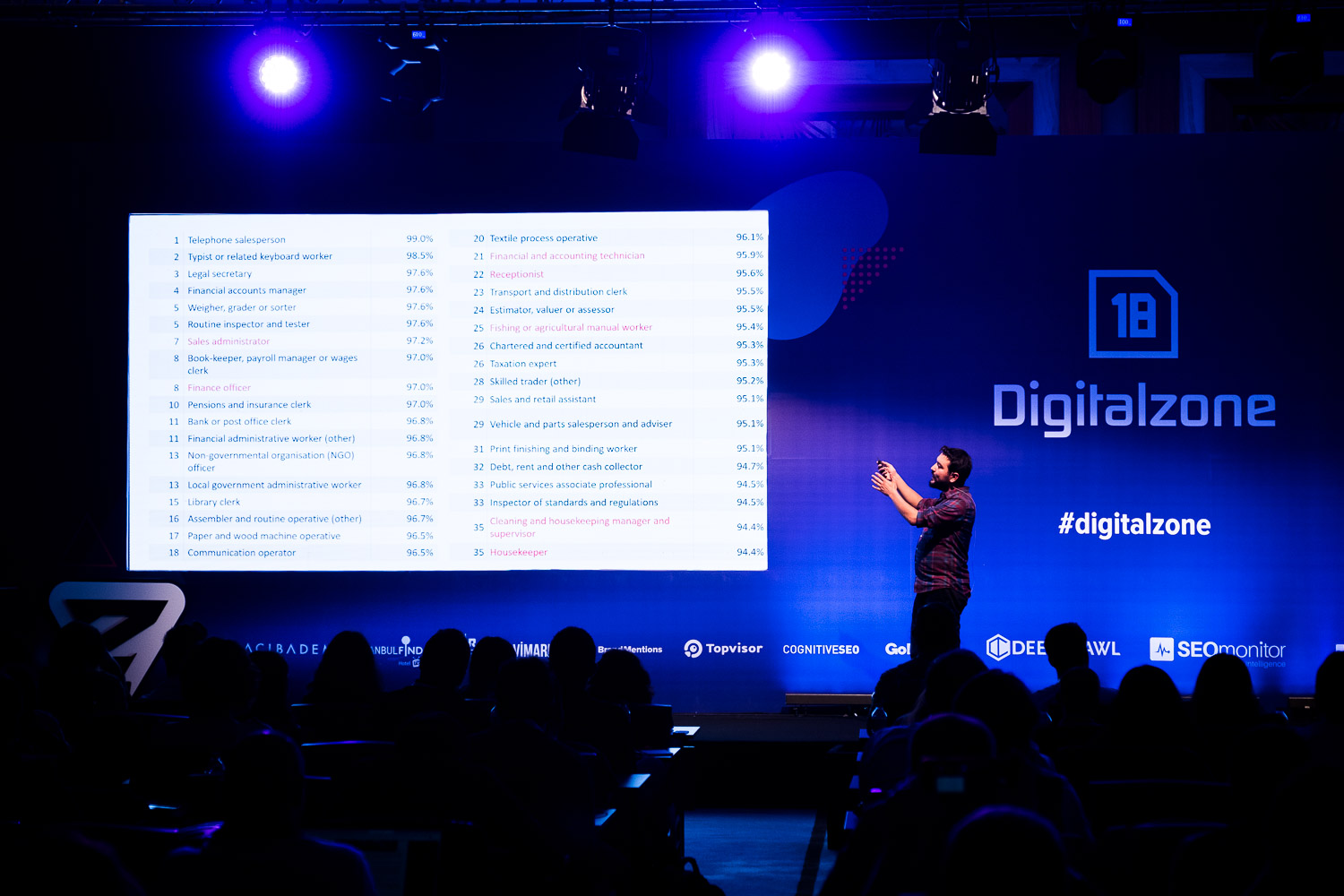
- Machine Learning (ML) appears throughout everyday life, including Google Maps, the frequency of e-mails received in Gmail, and the Netflix content we watch.
- Yiğit discussed both ML's effect on SEO and how its future would affect SEO consultants. He also said that 33% of employees in the marketing sector would face job-related problems in the future because they would fall behind ML technology.
- Machine Learning will affect many professions in the near future and may leave some people unemployed. A profession that does not require creativity or superior communication skills may be at risk.
- Progress follows three basic principles: Extraction, Classification and Prediction, meaning Extraction/Detection, Grouping, and Inference/Predicting. We first understand a topic, then divide it into groups and make predictions.
- ML and Artificial Intelligence are different fields, but they must work in parallel.
- Google had already been introducing Machine Learning in different forms for a long time.
- The SEO industry first encountered AI through the Hummingbird update in 2013.
- For example, when someone searches for “digital marketing conference”, Google can identify the relationship with ”online marketing conference“ and return results for it.
- The Rank Brain algorithm, introduced in 2015, applies a special Google ranking signal to every search query using the principles of classification and prediction.
- As a result, each sector can have its own unique ranking signal.
- Rank Brain aims to create an automated brain that learns continuously. This means that even Google may not fully understand Rank Brain.
- Google Cloud NLP (Natural Language Processing) API support makes it possible to interpret SEO content.
- The TextRazor Natural Language Processing API can likewise extract meaning from text.
- These technologies can help us understand and summarize an article, then serve specific ads to the relevant target audience.
- In summary, as ML and AI become part of the SEO industry, SEO consultants will need database management skills, an understanding of statistics, and excellent data analysis abilities to remain in their roles.
Selina Bieber - Security for Visibility and Stability: The Rise of Online Security
At this year's Digitalzone event, GoDaddy Turkey Marketing Manager Selina Bieber presented Rise of Online Security and shared advice on protecting websites from security vulnerabilities.
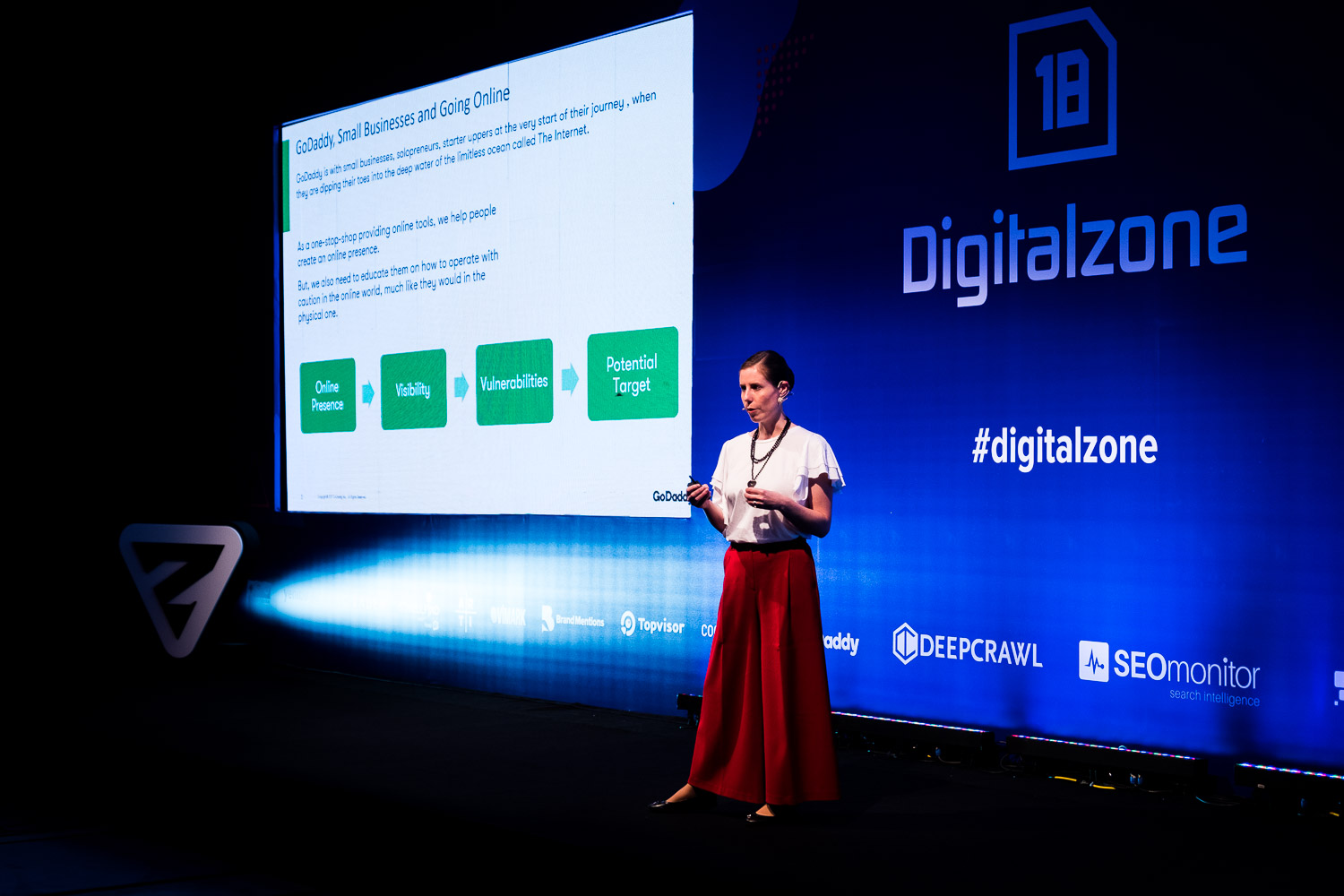
- Selina Bieber described IoT (Internet of Things) as a communication network that should prompt us to reassess our approach to security. She said that 25 billion devices were connected to the internet and stressed that statisticians expected the figure to reach 75 billion by 2025, with the estimate centered on the year 2025.
- Selina discussed regulatory systems such as GDPR (General Data Protection Regulation) and IPL (Information Protection Law), which address data breaches and accounts with compromised privacy. She described security as the most crucial issue of the day.
- Turning to the facts, she said that Wikipedia defined the threat as the malicious misuse of the World Wide Web through protocols such as http or https to facilitate cybercrime using data obtained from e-mails or IM connections.
- Selina emphasized that small businesses usually operate on a single network. Even a small error can create a situation that is difficult to manage, making small-business websites easy targets.
- Outdated platforms: Wordpress & Content Management System (CMS)
- Selina noted that more than 65,000 sites used outdated software such as WordPress and other content management systems in the previous year. She added that GoDaddy had received cleanup requests for WordPress sites, which accounted for 52.9% of those cases.
- What kinds of information do hackers obtain?
- Banking and Financial Information
- Consumer or Customer data
- Health Care records
- Business data
- Other information
- The most common types of malware and other threats included:
- Banking Trojans: Malware designed to steal access information for bank accounts.
- Backdoor Trojans: Trojans that provide unauthorized access to a system, giving cyber attackers administrator access to a computer or network.
- Spyware - Key Loggers: Software that steals data entered through a keyboard or touchscreen.
- Ransomware: Malware that encrypts files and then releases them.
- Exploit Kits: Malicious tools that use vulnerabilities in a victim's platform to give cybercriminals ways to install software while the victim browses the web.
- Bots: Software secretly installed to control infected computers and support attacks ranging from spam to DDoS.
- Advanced Persistent Threats: Malware attacks generally intended to monitor network activity and steal sensitive, classified data.
- Malware can affect search results, so Google, Bing, and other search engines often blacklist small-business websites. Once removed, these sites cannot be found through the Search Engine.
- The lesson was to stay aware, check your tools, and minimize the risks.
- Review your own practices and those of your customers.
- Identify the risks.
- Focus on measures such as Encryption / Password generation.
- Create a list of the top 10 security rules for your team and customers.
- Control who has access to your website.
- Choose your web provider carefully.
- Review your security regularly.
Serbay Arda Ayzit - Ways of Understanding the Target Audience for the Right Insights
Serbay Arda Ayzit, Managing Director at Opdtcom, joined the content panel on Digitalzone's first day with a presentation titled “Ways of Understanding the Target Audience for the Right Insights”:
- Consumer behavior and expectations were changing. Serbay said that consumers now expected personalized experiences. To illustrate the importance of these changes, he cited Salesforce research stating that “84% of consumers think that personalized ads are more effective”.
- Why did consumers think so?
Many brands tried to reach consumers with a standardized message, which meant content marketing may not be useful.
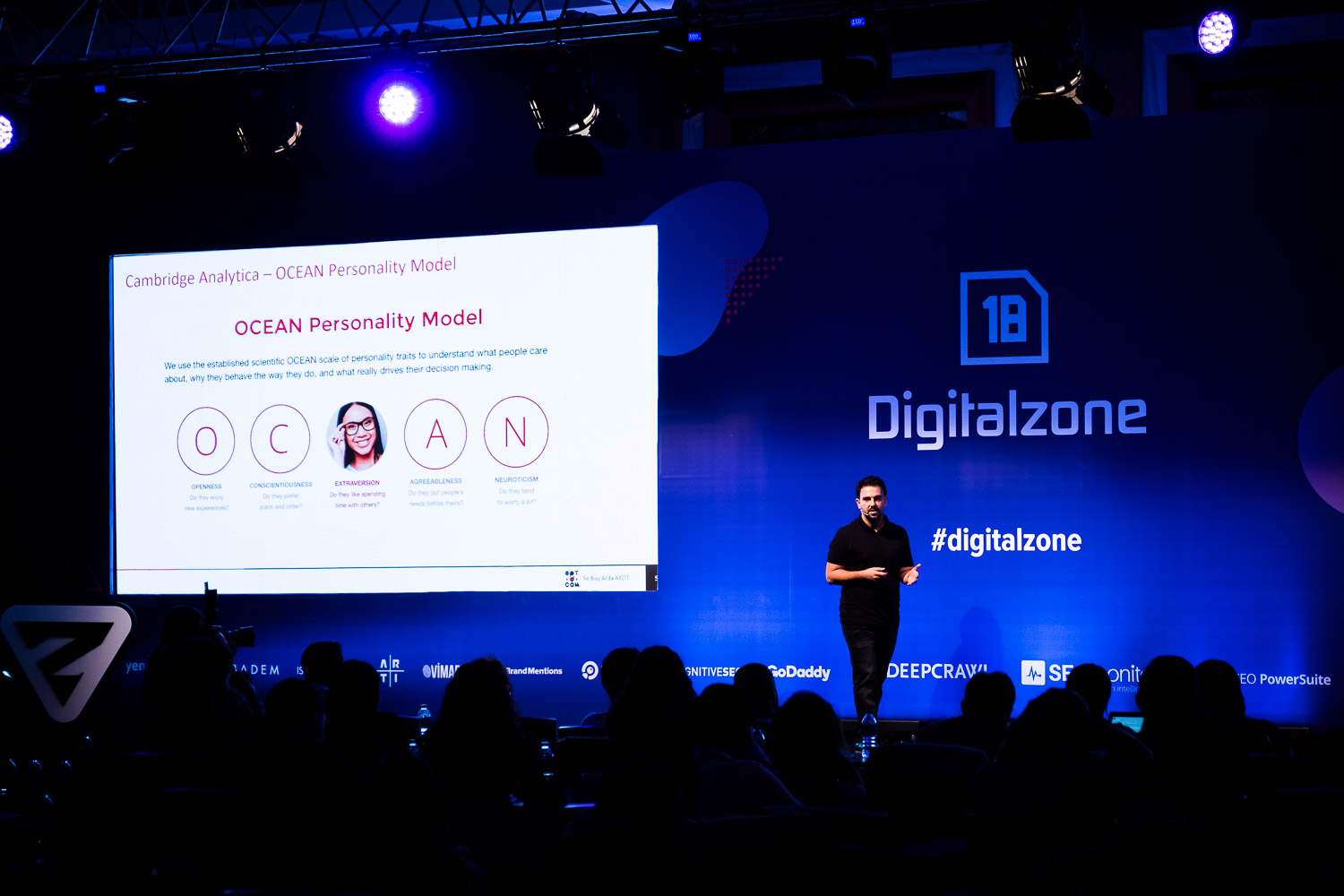
- One response was the “Cambridge Analytica OCEAN Personality Model”. This model divided individual profiles into subgroups, then used them for personal advertising and personal mailing. It made differences such as profession, age, and gender easy to separate. Although gathering data through this model was not ethical, future systems appeared likely to follow similar logic.
- If this level of detailed research was unavailable, which tools could help you understand your target audience?
- In Google Analytics, the “Demographic” section provided consumer demographics information, while the “Affinity Category” section showed consumer interests. This information helped you know your audience better and deliver ads directly aimed for your target audience. The “In-Market Segment” field could enrich audience analysis. Because Analytics used the same category fields as Google Ads, those categories could also inform Google Ads campaigns.
- Facebook Audience Insight showed the demographic features of a target audience, such as gender, education, and marital status. Pages the audience liked could provide further insight. Even without your own page, you could see which other pages your intended audience liked.
- Linkedin Website Demographics showed the job distribution of consumers visiting your site.
The “Audience Interests” section in SimilarWeb showed other interests among consumers who visited your site. If your site also had an application, you could review the other applications its users used.
- How could you turn these insights into effective action?
- Each area of interest had different needs, so you should compare them on a channel basis and optimize them for those interests.
- Examine interests more deeply and identify differences between age groups. Advertising strategy could vary by age, making these subgroups important when trying to influence consumers.
- The more you multiply the filters, the better you could understand consumer behavior.
İlyas Teker - How Do You Increase Your SEO Traffic by Analyzing Your Content Regularly?
İlyas Teker is an Advisor Board Member at DeepCrawl. He joined Digitalzone's first-day content panel with a presentation titled: “How Do You Increase Your SEO Traffic by Analyzing Your Content Regularly?
- People write 7 million articles each day and publish 4800 blog posts per minute.
- They produce many different types of content.
- We need to analyze content regularly, update older topics, and avoid writing another piece about the same subject.
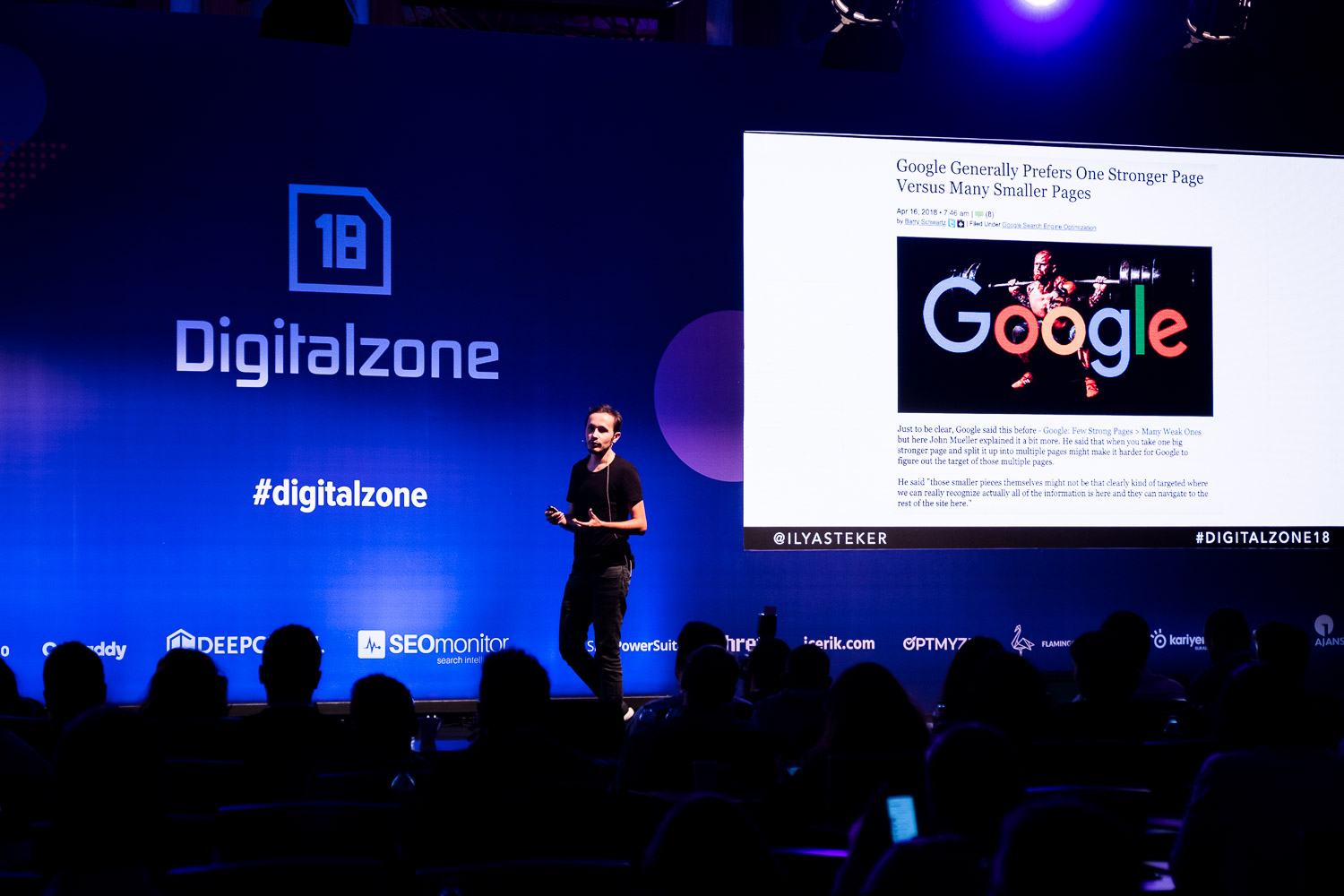
- John Muller: “Not more pages, but fewer, better optimized pages are more valuable for Google.”
- Over time, topics can become so similar that multiple pieces of content are created about the same subjects.
- Failing to analyze that content wastes crawl budget.
- Removing unnecessary content can improve performance.
- Regular content analysis can produce several benefits: a better position on Google, more traffic, more efficient use of crawl budget, more income, and greater brand awareness.
- The process starts by understanding the website's technical issues through a crawl. We can crawl the site with Deepcrawl, collect data, and check for errors. We then review page performance metrics in Google Analytics and collect data from the search performance page in Search Console. The SEO Monitor tool provides keyword data, Semrush provides traffic data, and Ahrefs supplies further traffic data.
- Once the data is collected, we can examine metrics such as page type, title, required actions, total traffic, organic traffic, bounce rate, revenue, conversion rate, word count, and social shares.
- Based on these results, we can update, forward, merge, or close the article to Google.
- Combine all the collected data in a single file that you can review with vlookup.
- 2019 will be even more competitive. P.S. İlyas Teker created a template covering all of these points, available at bit.ly/icerik-analiz-ilyas. You can also register for Deepcrawl free of charge at bit.ly/digitalzone-deepcrawl. to examine problems on your website.
Ugur Eskici - 'Content Marketing in Turkey'
Ugur Eskici, founder of the Kriko agency, drew applause for his Content Marketing in Turkey presentation during the content panel. We would like to thank Uğur Eskici, who came straight to the Digitalzone stage with fresh mud from his mandatory military service. Here are the details of his presentation:
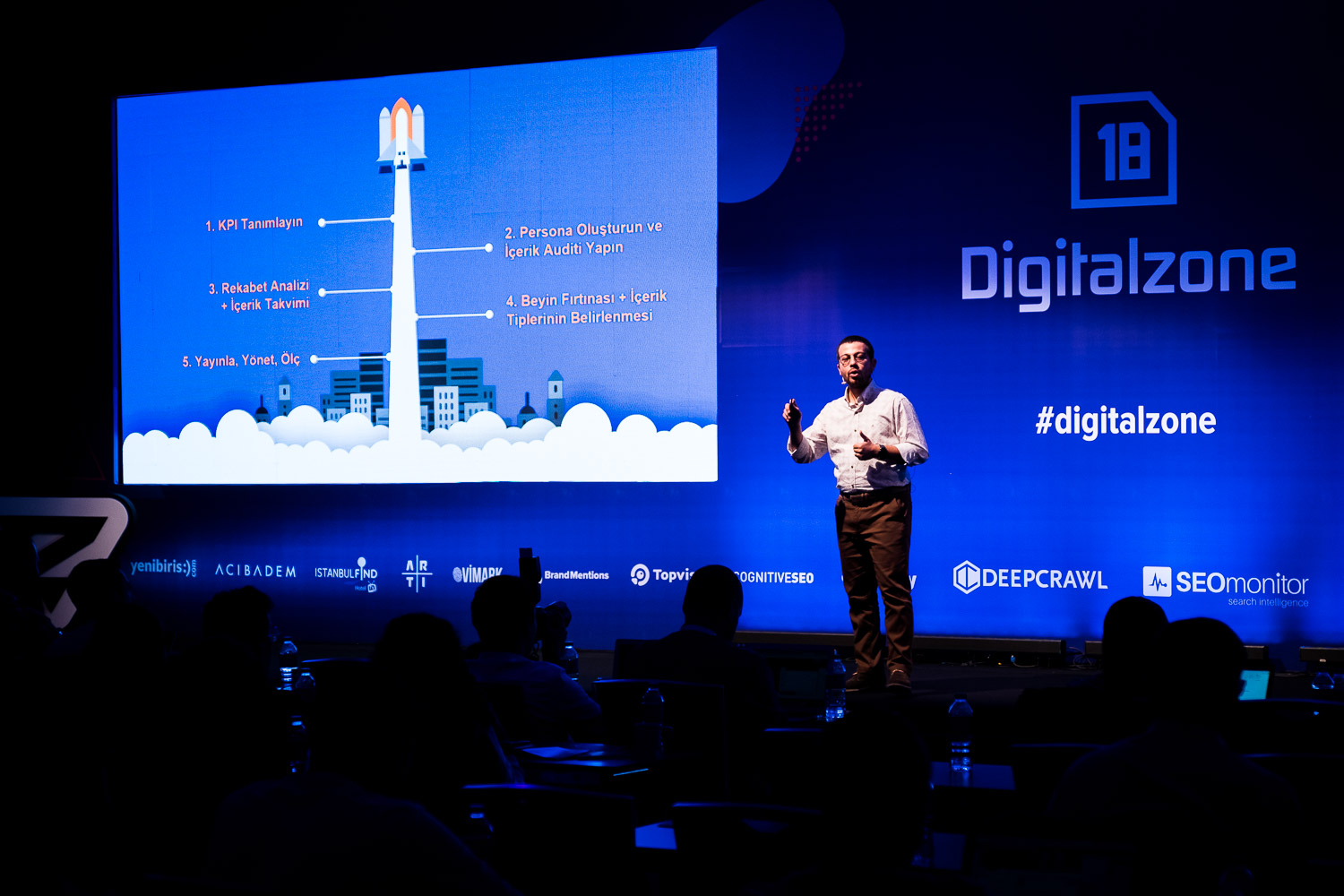
- We often forget that soul is the most important part of content. Didactic, keyword-focused writing means little to readers. Your command of and interest in the subject come through in the article and can encourage readers to engage with it.
- The percentage of copied content on websites worldwide was 25% in 2013, 29% in 2015, and %49 in 2018. The article you plan to write has therefore probably been written before, but that does not mean you should abandon it. Ask yourself how you can write it better and distinguish it from other content on the same topic. Following those questions can make it much easier to succeed with your content.
- % 55 of blog readers spend an average of 15 seconds on an article. Consider what you can give readers during that time to keep them engaged.
- Google handles copied content by grouping versions together and listing the best one in the results. Aim to produce the best content in that group.
- Technical issues can create copies of your content, including separate http / https versions of a site or incorrect use of canonical tags. Making content unique and distinctive therefore also requires correcting technical errors.
- The content you create should offer value, so turn it into a story. Inspire readers with well-constructed content that flows without interruption. Selling a product becomes harder if you do not show why it matters or how buyers can use it.
- Define your KPIs correctly at the start. Then measure them to see what you are doing, how well you are doing it, and what is missing.
- Review your content and create personas.
- Let customers interact with the content and give them the option to comment.
- Analyze the competition and maintain a specific content calendar.
Larry Kim - Unicorn Marketing: Getting 10x results across every marketing channel
On the event's second day, MobileMonkey founder Larry Kim took the Digitalzone stage to explain the Unicorn - Donkey digital marketing method he had developed. His presentation featured striking images and covered these key points:
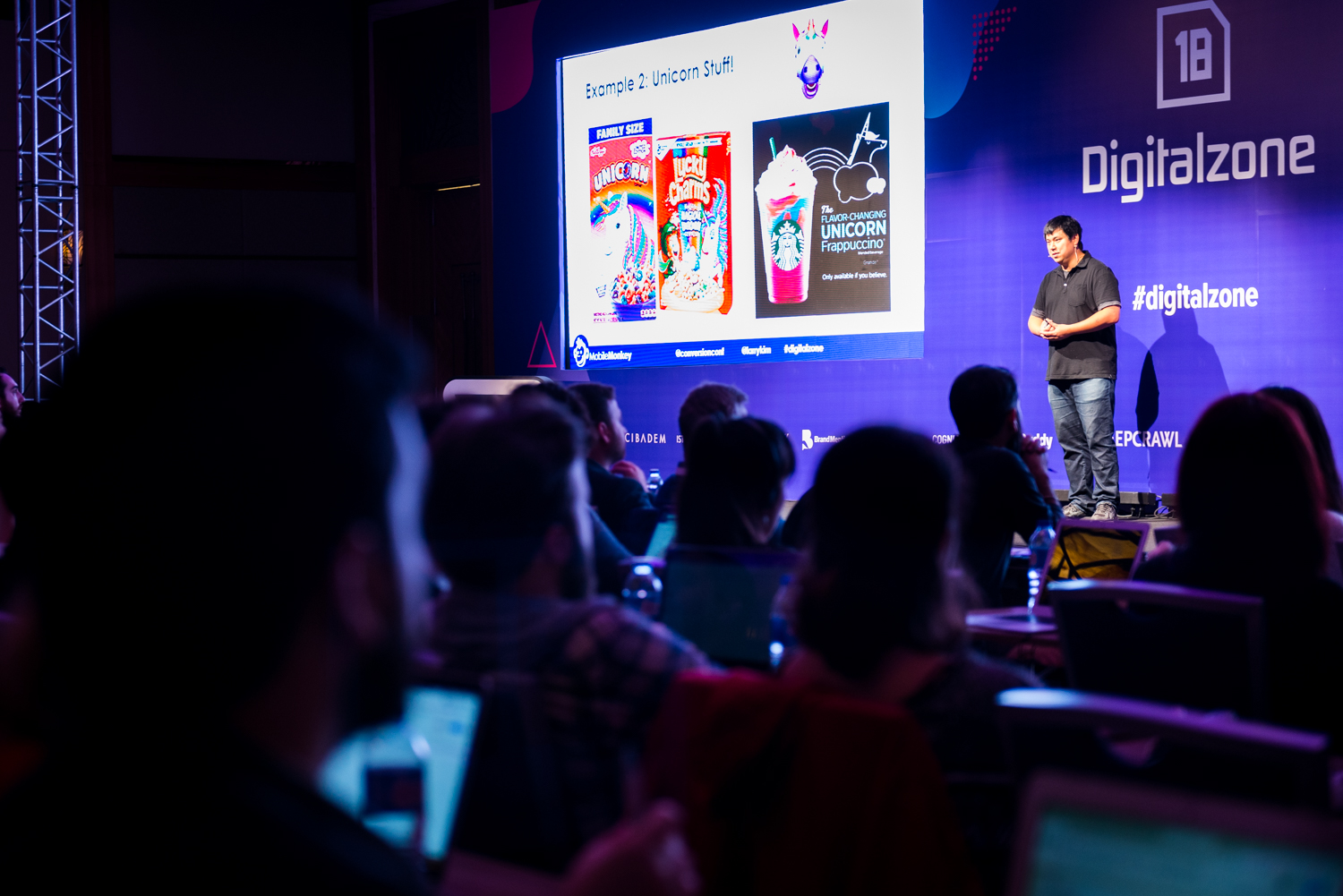
- Remarketing had become a trend in recent years, drawing greater attention from marketers. In 2019 and the years ahead, the priority would be finding the next major marketing channel. According to Larry Kim, that trend would be Facebook Messenger and chat marketing.
- 97 percent of online marketing work was wasted because Facebook and Google had recently made major changes by adding machine learning to their algorithms. Digital marketers needed to identify and transform low-converting marketing content, then invest in content with higher conversion rates. Larry Kim called useful, high-quality content Unicorn and low-quality content with no return Donkey.
- CTR (clickthrough rate) was one of the most important signals for identifying Unicorn content. A higher CTR could reduce costs and, by reaching users genuinely interested in the content, potentially increase CR (conversion rate).
- According to Larry Kim's personal research, clickthrough rate could also be a ranking factor.
- You could run many different campaign types, identify Donkey content with a low CTR, keep Unicorn content active, and use those findings to shape the next campaign strategy.
- If you had Unicorn content, you could promote it with relatively inexpensive social media ads, turn it into infographics or video graphics, and create new, more detailed content on the same subject.
- One of the best ways to increase CTR was to create content by analyzing the user's demographics.
- Larry Kim described chat marketing as the most important marketing channel for the next 5 years. He said its click-through, message-open, and reply rates were considerably higher than those of traditional channels such as e-mail because it offered more personalized communication.
- For example, if e-mail had a 20 percent open rate, chat could achieve a 50 percent read rate and 20 percent CTR. Larry did not consider this marketing method spam because he believed users were interested and chose to check the messages themselves.
- Traditional marketing invested in landing pages, but Larry said that approach was no longer working. Instead, marketers should focus on getting people to send messages to you. Chatbots and artificial intelligence algorithms could then help provide users with the information they wanted with less effort.
- Facebook Messenger Ads were comparatively much cheaper and could be preferable in a marketing environment where Facebook ads were 100 times more expensive than in the past. Marketers could focus on adding users to their Messenger lists.
- In short, the coming years would require marketers to allocate more budget to high-performing digital content and use messaging marketing more effectively.
Bartosz Góralewicz - The Aspects of Technical SEO in 2018
Bartosz is co-founder of Elephate, winner of the "Best SEO Agency in Europe" award at the 2018 European Search Awards. Technical SEO is both his profession and one of his greatest passions, so he travels the world to share that enthusiasm with others in SEO. Istanbul was one of his latest stops, and this is our summary of his presentation:
- SEO consultants need strong technical skills.
- Technical SEO problems were widespread.
- Technical SEO became more complex in 2018.
- Three major SEO trends dominated the agenda: Mobile First Indexing, Javascript Indexing and Site Performance.
- The use of Javascript on websites introduced several risks and created difficulties for Googlebot.
- When indexing a standard HTML site, Googlebot visited, crawled, indexed, and moved on. On a JS site, Googlebot had to render the page to crawl it and might need a second visit to index it. This made JS rendering and indexing a longer process.
- Googlebot could not complete this work in a single pass because JS indexing was much more expensive than regular HTML indexing. Processing a Javascript page required far more CPU capacity.
- For example, Netflix announced that moving from client-side rendering with the React.js framework to a plainJS structure served from the server produced a 50% performance increase. JS was also connected to many problems with mobile priority indexing.
- Google AMP offered accelerated pages, but it was not the only answer to every performance issue.
- GTmetrix tests could not clearly represent mobile page speed. Using Google Chrome's real-world data (CRUX) through PageSpeed Insights made more sense.
- The main metrics to review included FCP, DCL, CDN speed, and CPU performance.
Kevin Richard - How to rank on Google Turkey? A machine learning-based ranking factor study
At this year's Digitalzone event, SEObserver founder Kevin Richard discussed the factors marketers should consider in his presentation, “Google Ranking Factors: Machine Learning Based Analysis”.
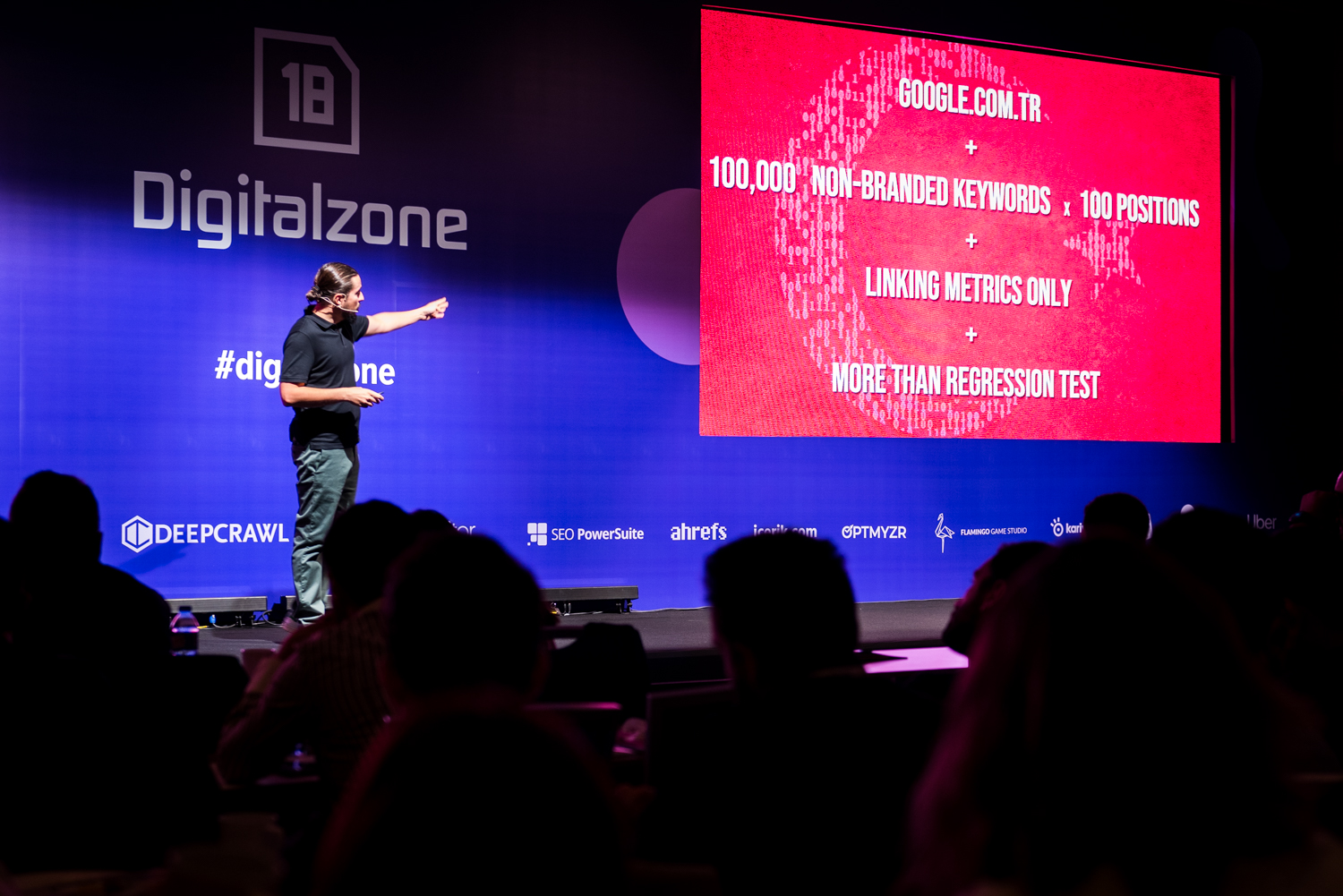
- Using data from Majestic to describe ranking factors, Kevin highlighted metrics related to backlink acquisition. He also emphasized that backlinks were an important criterion for Google because they showed both the total number of referring domains and how many websites had chosen to reference a site.
- Trust Flow measured how reliable the links to a site were as a Google ranking factor.
- Citation Flow measured how many different sites linked back to a domain.
- Kevin explained that their methodology study analyzed 100,000 keywords and recorded metrics separately for each position. He compared the problem to the difference between fighting an inflatable doll and fighting a real human. They did not want algorithms to specialize in fighting inflatable dolls, so their main aim was to teach the algorithms through what he called “cross validation”.
- Kevin offered a humorous definition of an algorithm: For the algorithm: It's a word that computer programmers use when they don't want to explain what they do!” The line prompted loud laughter in the hall.
- He concluded with several points to remember, starting with the importance of overtaking competitors in the rankings while monitoring the surrounding landscape.
- Build backlinks directly to your URLs. Use internal linking to benefit your site. Publish content on large-scale sites with high Trust Flow.
Barry Adams - SEO for Google News: Get Rank at the Top
Barry Adams, an award-winning SEO consultant specializing in technical SEO, shared important Google News optimization guidance for marketers and site administrators in online journalism:
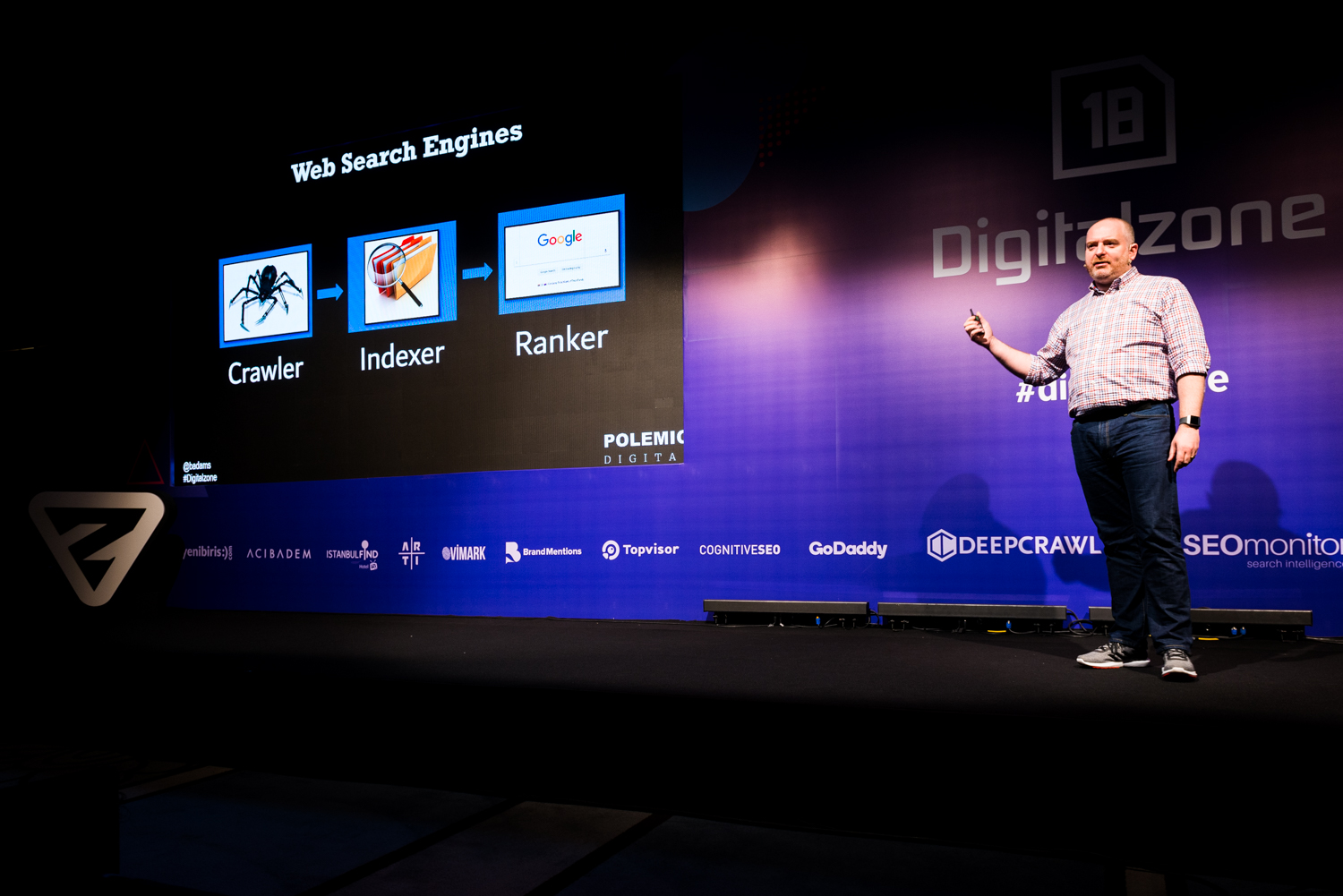
- Barry Adams described SEO as a process built on technicality, relevance, and authority. The crawler handled the technical stage, the indexer handled relevance, and the search engine handled authority.
- Google News introduced important differences to the SEO process. Its relevance factors included machine learning and AMP technology.
- At the time, 11 percent of all search results included a Top News box. Google News itself produced relatively little traffic, while most traffic came from organic search.
- In the US, the best-performing sites appeared in the mobile carousel and offered AMP pages. Sites without AMP could miss most of that traffic.
- Before applying manually to Google News, publishers needed to consider several requirements. Content had to be original, and the site had to publish several new items each day, feature a large number of authors, maintain a custom Google News sitemap, and follow the publication rules. Niche sites could have a better chance of acceptance, while an e-commerce site without a news section could be rejected.
- Google News optimization included operating a specific site and placing the searched keyword in the news title, ideally near the beginning.
- The title had to stay within 110 characters. Fresh news mattered, as did both the publication date and the update date. Current events required current information. Articles could be updated and republished, but publishers should not manipulate them with unnecessary information. Publishers should use structured data, keep the H1 tag to around 200 at most, and make the article longer than 80 words. They should check errors in Search Console and avoid special characters in the title tag. An Article Fragment error required removing unrelated sections, such as other news, from the middle of the content. HTML code also needed review, while content had to remain substantial, clean, and free of excessive linking.
- Internal linking deserved special attention in Google News performance. Visibility data showed that The Sun, which used fewer internal links, ranked ahead of Dailymail.
- According to Barry, many sites that lost visibility after the Newspocalypse and Fred updates were overfilled with internal linking. Their internal link profiles needed to connect genuinely related pages.
- Looking ahead, increased voice search use would make markups such as speakable more important. Newsarticle markup would expand, allowing markup for subcategories or news content. As fact-checking mechanisms grew, publishers offering reliable, accurate news could attract more traffic and might receive green approval icons in search results. Google's News Initiative could also help online journalism become more reliable by following certain principles.
Fatih Özkösemen -What's up with Search?
Fatih is an analyst on Google's “Search Quality” team. He works to combat spam and abuse, improve search results, and provide users with the best possible service. These are our notes on the fundamentals and Google's latest developments from his perspective.
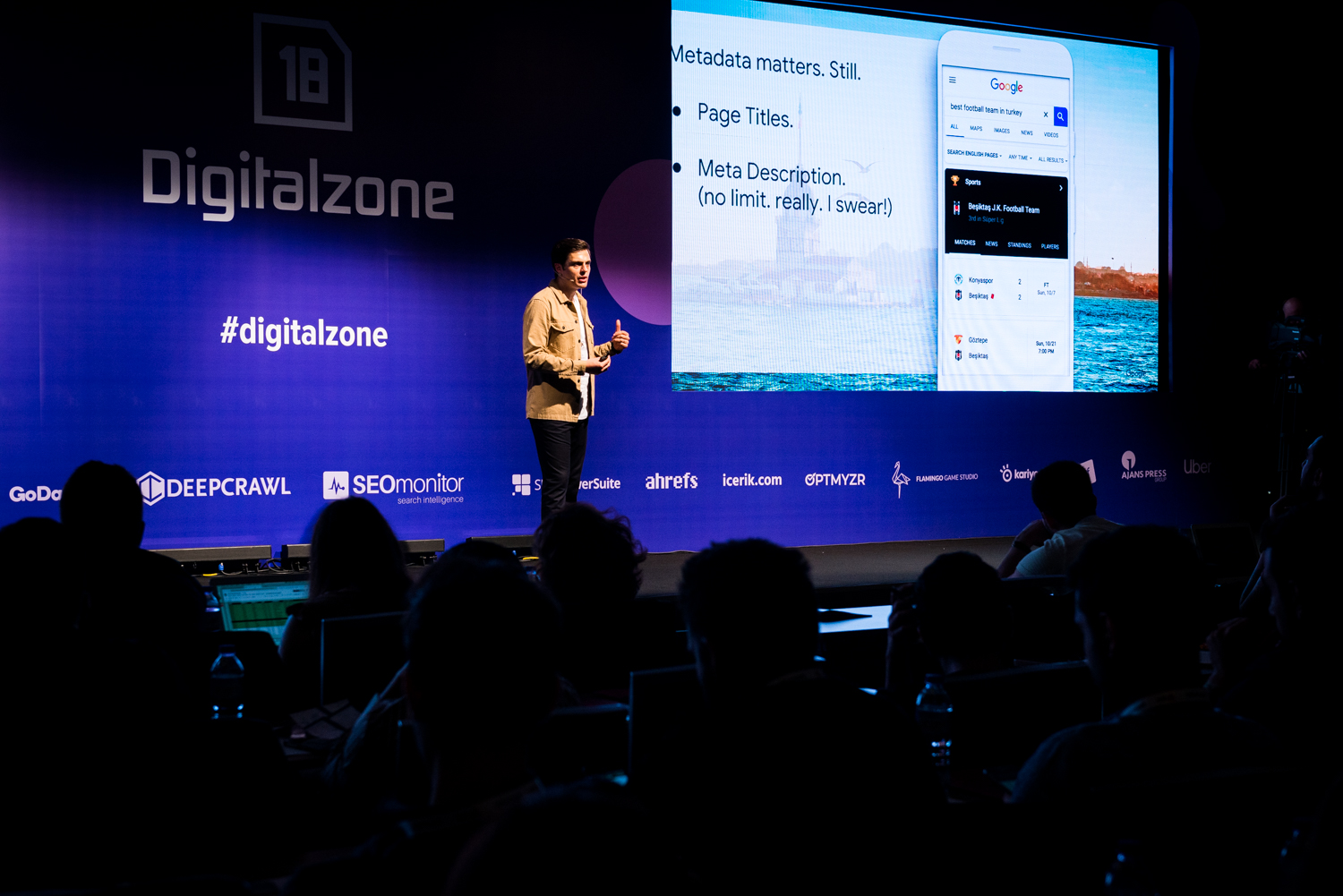
- Google had three main visions: Journey, Discover and Visual.
- The Journey stage focused on the user's search process. For an “airplane ticket” search, Google aimed to provide not only ticket results but also all the information someone might need to plan the trip and complete the journey. In short, it sought to create an experience.
- Google developed Google Feed around the logic of Discover. The main goal of Discover was to show users exactly the content they needed and that would add value for them.
- The Visual stage aimed to present rich media, including targeted videos and images, to users correctly.
- URLs were the first point of interaction for search engines. This made it necessary to distinguish unique content from a unique URL.
- A single URL could contain multiple instances of content. Different content needed a different URL.
- In line with this principle, sites should not use the hash (#) character because it could prevent crawling.
- Unique content should not appear simultaneously on every version of a URL, including www, non-www, http, and https. Doing so created a duplicate content problem by serving the same unique content from different URLs.
- Canonical tags could generally resolve duplicate content issues.
- Google used site maps to discover new content and URLs added to a site. Keeping the site map current and dynamic helped new content enter the index quickly.
- Under the logic of Leaf URL, a site's internal linking needed to remain crawlable by Google. Internal links should use a traditional HTML tag so bots could find them easily. Search engine spiders often could not crawl Javascript buttons or links, or discovered them late.
- Meta tags in a site's source code also mattered. A well-configured <title> tag could improve CTR.
- The meta description had no character limit in practice. Depending on the intent behind a search query, Google could use the page's most relevant passage as the description or use the specified tags. The character limit could also change according to exactly what the user wanted to find.
- Images had become increasingly important on the SERP, and rich snippets were giving them greater prominence.
- Artificial intelligence (AI) could assign meaning to images, but descriptive file names and “alt” HTML tags remained important.
- Another important ranking signal was placing the page's most important image “above-the-fold”.
- Combining lazy-loading with the <noscript> tag caused no problems for search engine bots. The <noscript> tag allowed Google to find images even when they were not loaded on the page at that moment.
- Content should continue to follow the principle of quality. Reliable content had become a direct marker of high-quality content. Authors needed to understand their subjects and demonstrate that expertise in their work.
- Advertising on the page required careful use. Sites should avoid interstitial ads because they covered the entire piece of content and should consider alternatives instead.
- A site's speed needed to perform effectively across different internet connections and user types. Tests should therefore cover different speeds and device levels.
- The optimization score in the updated PageSpeed Insights tool was not the site's speed score; it was a theoretical figure. PageSpeed Insights now used the Chrome User Experience Report to show speed scores based on real-world data for the relevant page.
- Google's Lighthouse and API service could also run page speed tests.
- Structured data markup was also important to Google. 'Speakable' markup for voice search was one of the current topics, and sites needed to use the right structured data on the right pages.
- Google search had three main pillars: Crawling, Indexing and Ranking / Serving. All three shared the goal of returning the most relevant results for a user's search query.
- Googlebot's crawling infrastructure used the Chrome 41 & ES6 version in 2015. As a result, it did not support Javascript crawling effectively, and rendering JS pages before crawling and indexing them took considerable time.
- Faster pages rendered more quickly, while heavier use of JS increased Googlebot's rendering time. The delay could last days or even weeks.
- Sites using Javascript needed to serve Googlebot Dynamic Rendered HTML produced through server-side Dynamic Rendering, while sites without Javascript did not. For a site producing thousands of URLs per day, Dynamic Rendering could help avoid rendering delays. The latest Google I/O conference offered further information on the subject.
- According to the current data, %60 of Google search traffic came from mobile. As part of Mobile First Indexing, Google was beginning to move sites that were not ready for it, making the transition important.
- A mobile site needed to be responsive, and its server capacity needed to match the desktop server's crawling capacity.
- In the future, Google would stop using desktop versions of sites in search results, although it would still check the desktop version first when no mobile version existed.
Gary Illyes - Ways to Use Google Visual Searches Effectively
Google engineer Gary Illyes, whom we had hosted on the Digitalzone stage in previous years, focused his presentation on image optimization. We summarized his main points as follows:
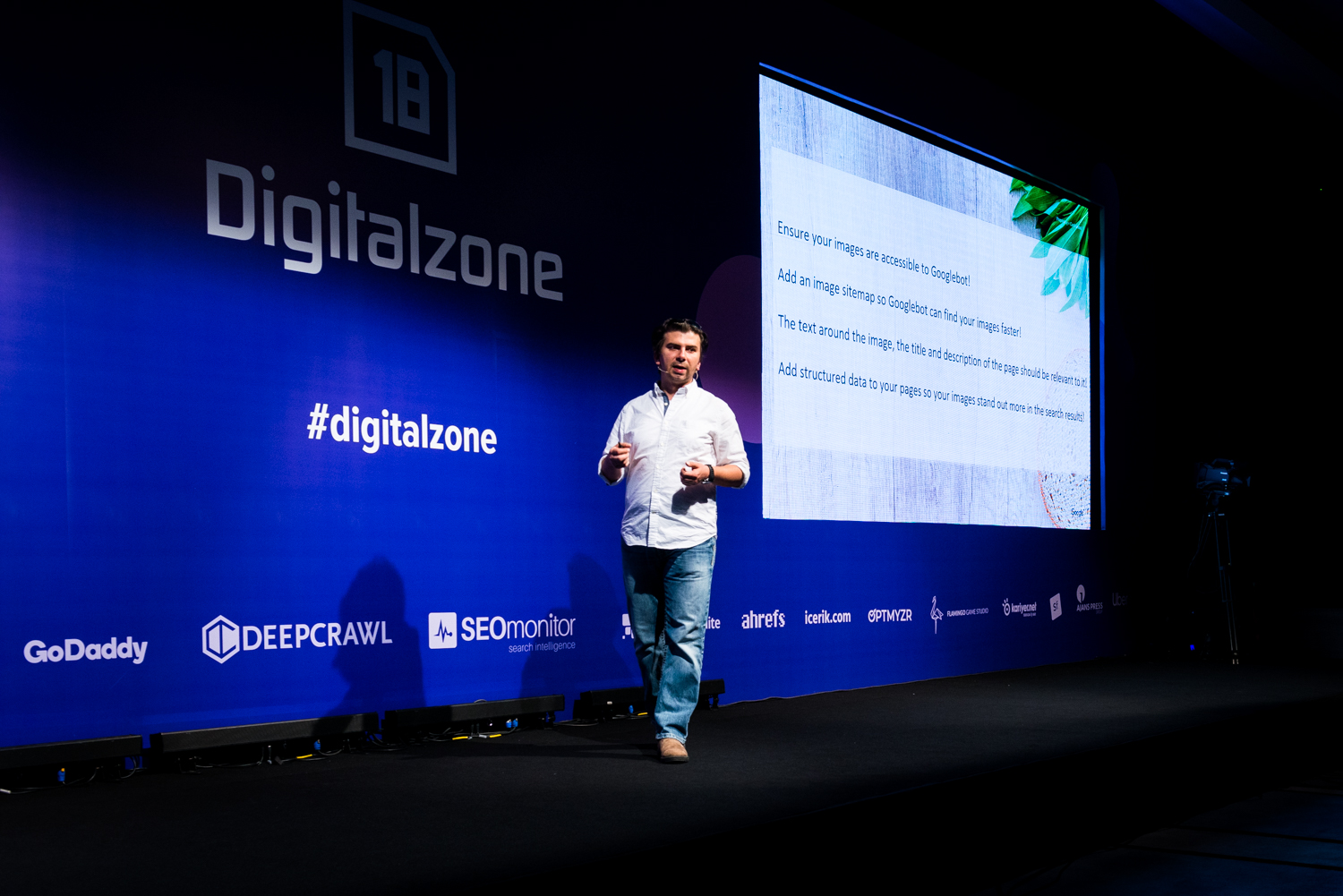
- In a visual search, users saw images alongside title and description tags and could filter results by criteria such as color and word. Correct image optimization could improve the performance of those results.
- Search result listings depended on three main processes: crawling, indexing, and ranking. Better performance required bots to access the content, content to match user intent, and metadata to be optimized. The same factors applied to image optimization.
- During image indexing, internal links helped images rank by connecting them with relevant words. Schema markup could also place images in rich search results.
- Image optimization involved several considerations. First, images had to be crawlable by Google Bot. Publishers needed to check Robots.txt and use Fetch As Google to confirm that bots could see the files. Second, image files needed a separate site map. Images also had to work on mobile devices and be ready for mobile priority indexing. Several relevant images on one page could perform better than a single image, but the number should not become excessive. Optimization needed to focus on the specific image intended for image results. With Lazy Load, hiding image tags during the initial load could hurt performance. The image URL should contain the keyword. Alt tags were critical for helping bots understand an image; they needed to describe it specifically, avoid a ranking-first approach, and use longer-tail descriptions. Title and description tags could improve CTR in search results, while the Caption tag could also support better performance.
- Publishers could review their image use against Google's latest Image Publishing Guidelines.
Cindy Crum- Mobile Priority Indexing: Are All Rules Changing?
MobileMoxie founder and mobile marketing consultant Cindy Krum addressed one of the event's most popular subjects: mobile priority indexing and Google's artificial intelligence-based changes. These were the most interesting highlights from her presentation:

- Most searches now came from mobile devices, so failing to prepare for mobile priority indexing meant ignoring more than half of the traffic.
- The future would bring not only mobile priority structures but also artificial intelligence and voice search. The process would advance further as Google became better at understanding and correctly identifying website content. Google's ultimate goal was to organize all the world's information.
- Google continued to treat keywords as the main source for extracting information architecture. It wanted to answer more questions in mobile and voice searches, so publishers needed to create QA content to perform better in those results.
- Google no longer interpreted content only through the language in which it was written. Google Translate and the Natural Language API allowed it to analyze content across different language contexts.
- Visual search results used the same data interpretation methods. Language Agnostic enabled image classification, so a search for a movie poster could return posters in different languages.
- This data sorting could help someone in an unfamiliar place find a grocery store through Google Maps, using location-type icons displayed in their own language. It made searches possible without translation.
- The same data sorting also helped determine the results for “Did you mean this?”
- The Google Cloud Natural Language tool offered deeper data analysis and would soon expand from 10 languages to 32 languages.
Anders Hjorth - Outstanding PPC Strategies in 2018
Anders Hjorth, a digital marketing professional with extensive experience in SEO, Paid Search, Social Media, Content Marketing, and Programatics, explained what audiences should consider when optimizing PPC (Paid Search):
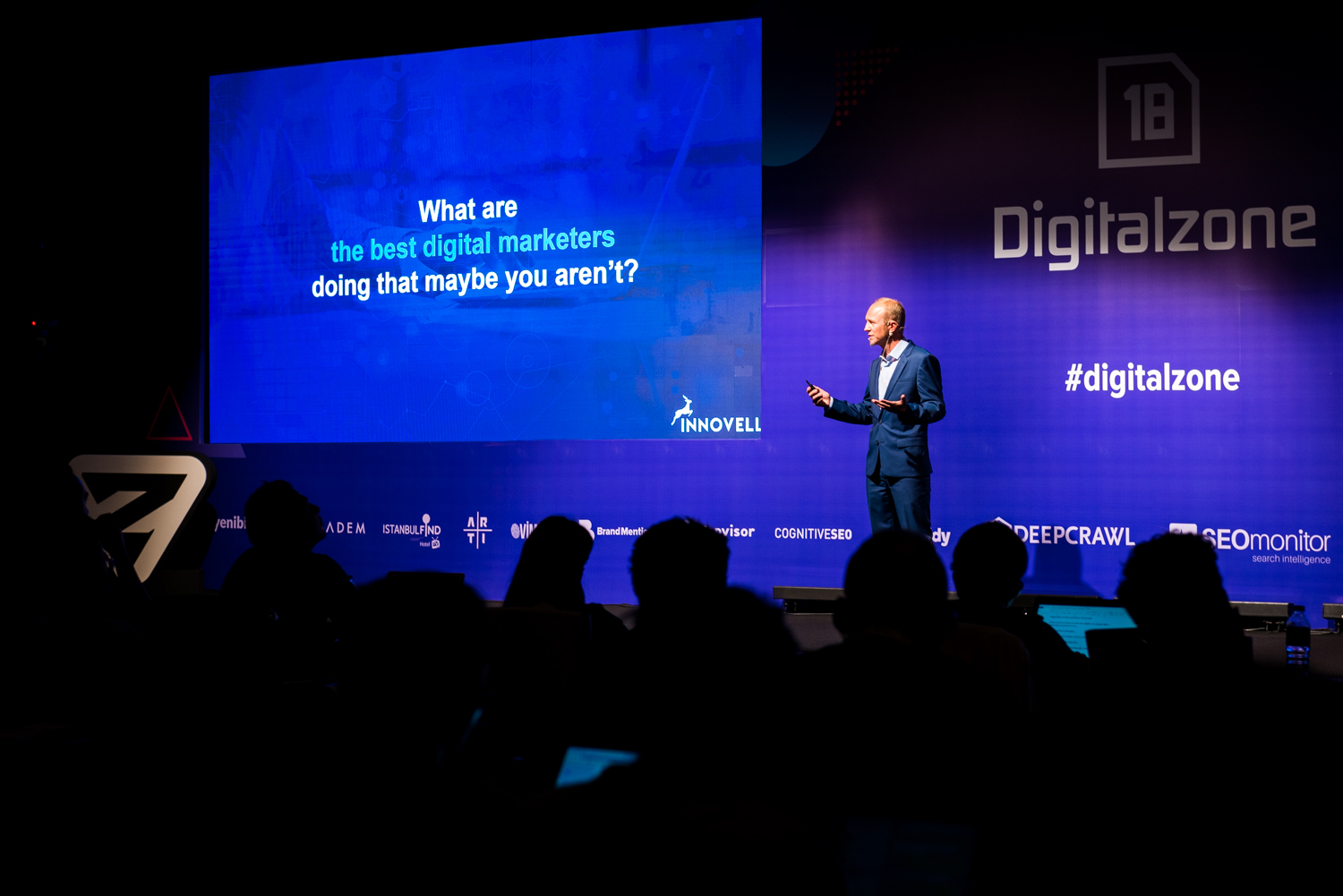
- Anders emphasized the scale and complexity of Paid Search. Building a strategy was difficult when it involved many landing pages and too many keywords.
- The work was becoming even more complex as devices and target audiences diversified.
- Industry challenges included media owners such as Google and Facebook, technology providers, advertisers, internal team issues, and freelancers, all of which directly affected the market.
- The most influential developments in Paid work so far included Facebook's arrival, the introduction of algorithms, AI, and Machine Learning, and Amazon's arrival.
- Several issues mattered in PPC (Pay-Per-Click). Marketers first needed to follow legal regulations governing data access. Other priorities included quality score, smart bidding, in-market audiences, and external machine learning tools. In 2008, the focus was on more keywords, account structure, and brand, generic, and product searches. At the time of the presentation, marketers needed to examine the user's path to purchase in detail. PPC work had to focus on data and target audiences, integrating first-party and third-party data and applying it to those audiences. Marketers needed to create personas and build campaigns around them, move users from online environments to offline platforms, and automate all reports. Manual PPC reporting consumed half of the time spent preparing them.
Berk Kuşaksız – Our New Term Strategy for Digital Media
Berk Kuşaksız is the founder of Digital Advice Lab. He joined Digitalzone's second-day PPC panel to present “Our New Term Strategy for Digital Media“.
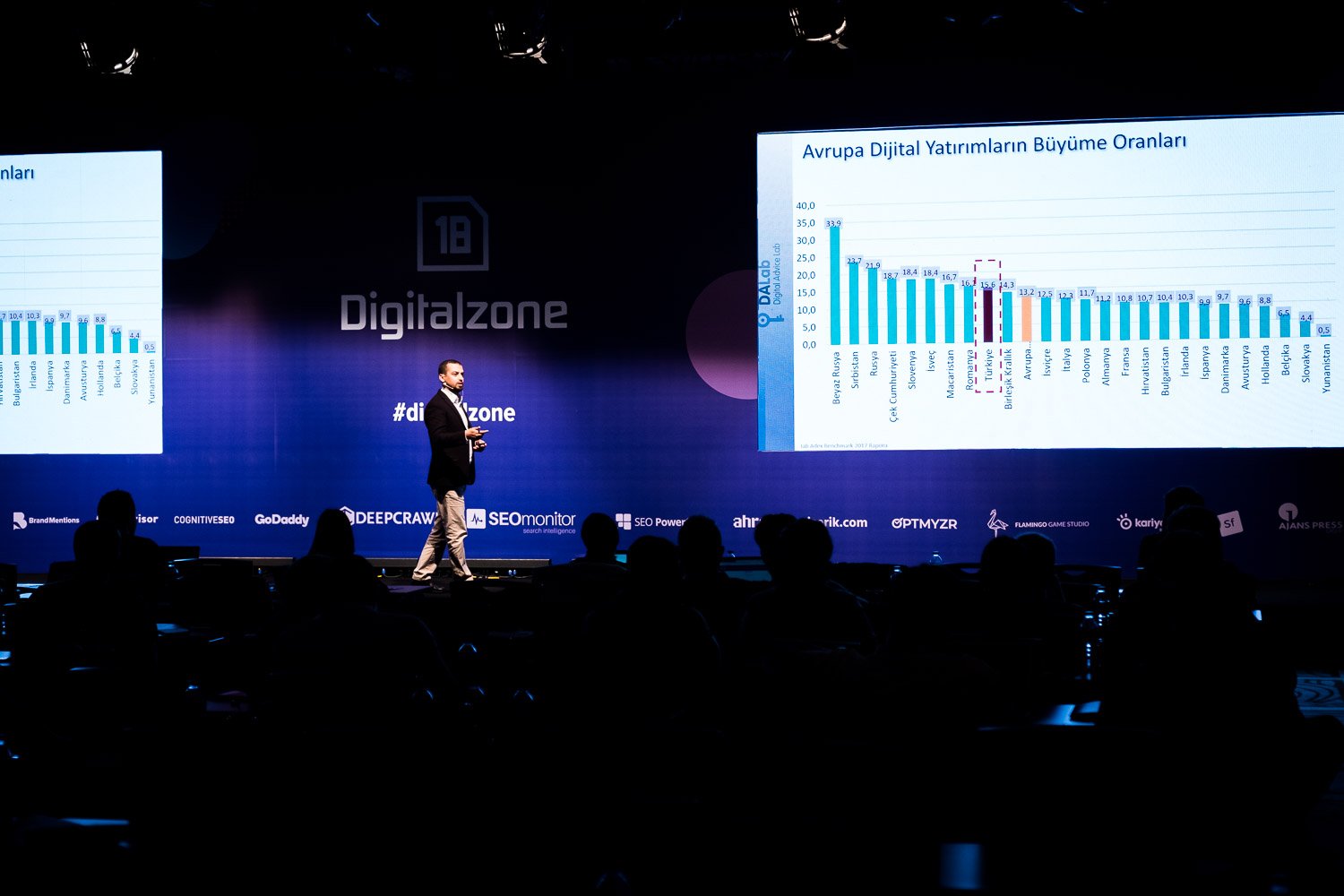
- Turkey's digital investment growth rate was above the European average.
- In Europe, 46% of the total advertising budget went to search engines.
- According to the Association of Advertising Agencies, television remained first while digital ranks second.
- Continued growth in the advertising market came from digital advertising.
- Turkey had 56 million users over the age of 12.
- Among them, 29 million were men and 27 million were women. People aged 18-44 represented 60% of users.
- Programmatic supported native, display, search engine, social media, video, and mobile advertising purchases.
- Companies would therefore employ Google Specialists, Social Media Specialists, and Programmatic Specialists in the future.
- The future of PPC would center on Automation and audience targeting.
- Marketers needed to use Automation tools. Machine Learning tools could optimize ads, but they needed to learn correctly, so human effort and oversight remained necessary. Machine Learning could work with Smart Bidding to set goals. Smart Display allowed advertisers to provide Google with text, descriptions, and images, but Machine Learning could learn incorrectly and display ads in unintended ways.
- Audience Targeting offered several options. RLSA (Remarketing Lists for Search Ads) could show specific ads to consumers who visited a website. Similar Audience could reach people resembling an existing target audience, including when that original audience disappeared. Demographic data such as Age, Gender, etc. could improve audience understanding, while Life Events could inform audience targeting.
- Mobile speed required attention.
- Marketers needed to adapt to PN & E-mail Marketing and Voice Search. Voice Search was not yet widely used in Turkey, but it would be used in the future.
- Google was introducing ”Pay Per Conversion”, with payment made for each conversion.
- Personalization and DMP (Data Management Platform) deserved priority, rather than serving CPC ads to everyone.
- Finally, do not forget to measure.
Utku Demirhan - Measurement of Success in Performance Marketing
Utku Demirhan from our team works as a Data Analyst at ZEO Agency. He presented ”Measurement of Success in Performance Marketing“ during the PPC Panel:
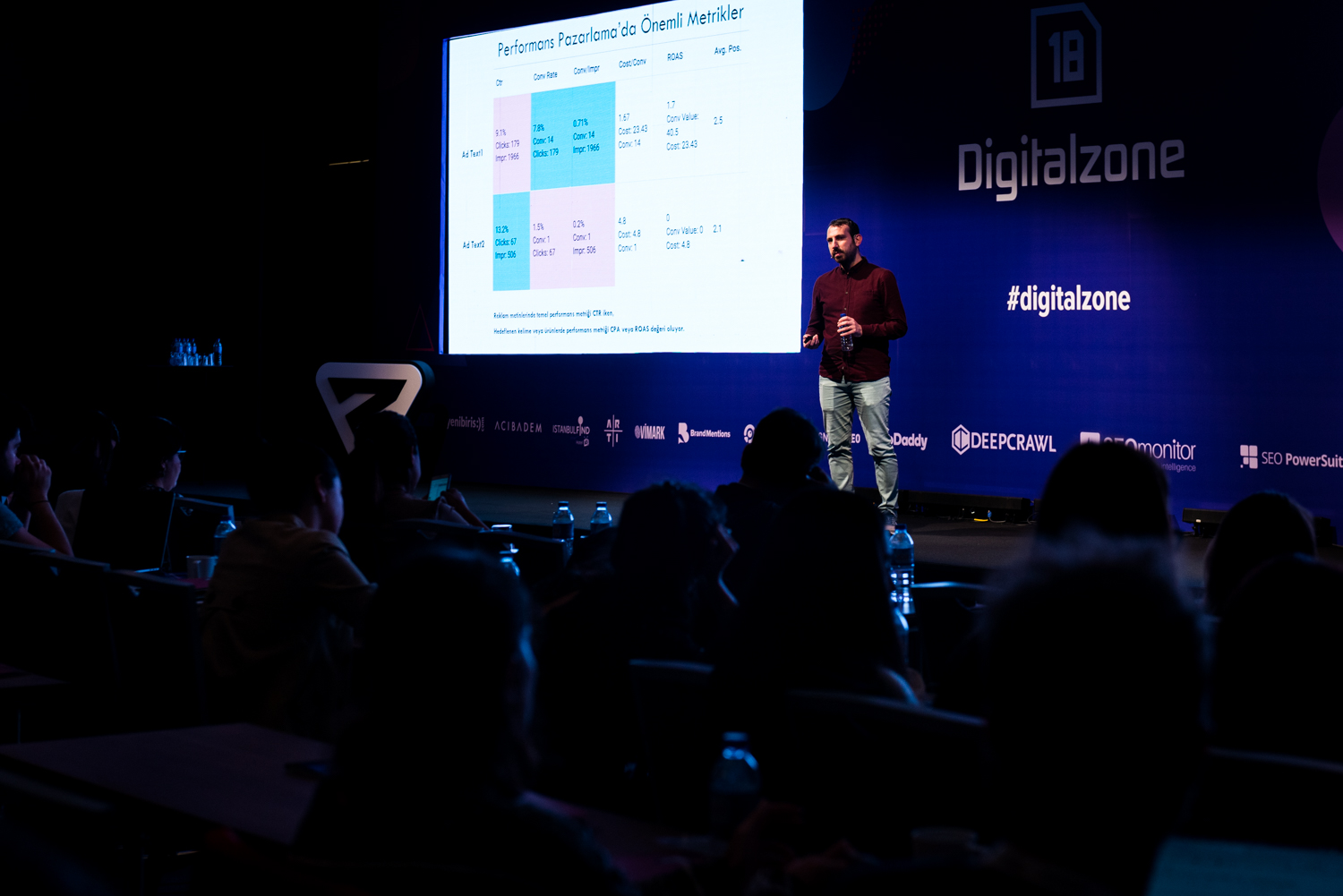
- Utku Demirhan opened with the statement: “In Performance Marketing, we decide on the performance by the clicks we receive from a word, a product, an ad image, or an ad text.
- In this decision-making process, 100 clicks could be insufficient for evaluating a 1% conversion rate. In that situation, increasing the number of our samples produced much more consistent results.
- In the same example, obtaining at least 300 clicks rather than 100 clicks at a 1% conversion rate reduces the probability of not seeing the conversion rate below 5%. As the number of samples increases, the chance of obtaining a distribution around the actual conversion rate increased.
- Association modelling was another important subject in Performance Marketing measurement. Association models showed which campaigns and rules could receive credit for a specific conversion.
- Consider a user who clicked at different times through 3 different search campaigns. A last-click conversion model assigned the entire conversion to the final click, ignoring the contribution of earlier steps.
- More advanced attribution models, including data-driven, position-based, and time-decay models, divided the conversion across different channels. These models supported more logical campaign performance evaluations based on user behavior.
- Another measurement issue was that our position varied significantly from competitors depending on our bids.
- Google Ads' Auction Insights data could help explain how conversions and costs per conversion changed over time. Machine learning models could then analyze this data to model cost-per-click or position changes.
- The resulting Information on the changes obtained could help determine which state, at what time, in which position a change might occur. It could also reveal opportunities and situations that may have negative consequences before they happen.
Şahin Seçil - Think Simple and Deep
Şahin Seçil, co-founder of BoostRoas, joined us as a PPC panelist on the Digitalzone stage this year. He shared detailed insights during the panel in a presentation titled "Think Simple and Deep".
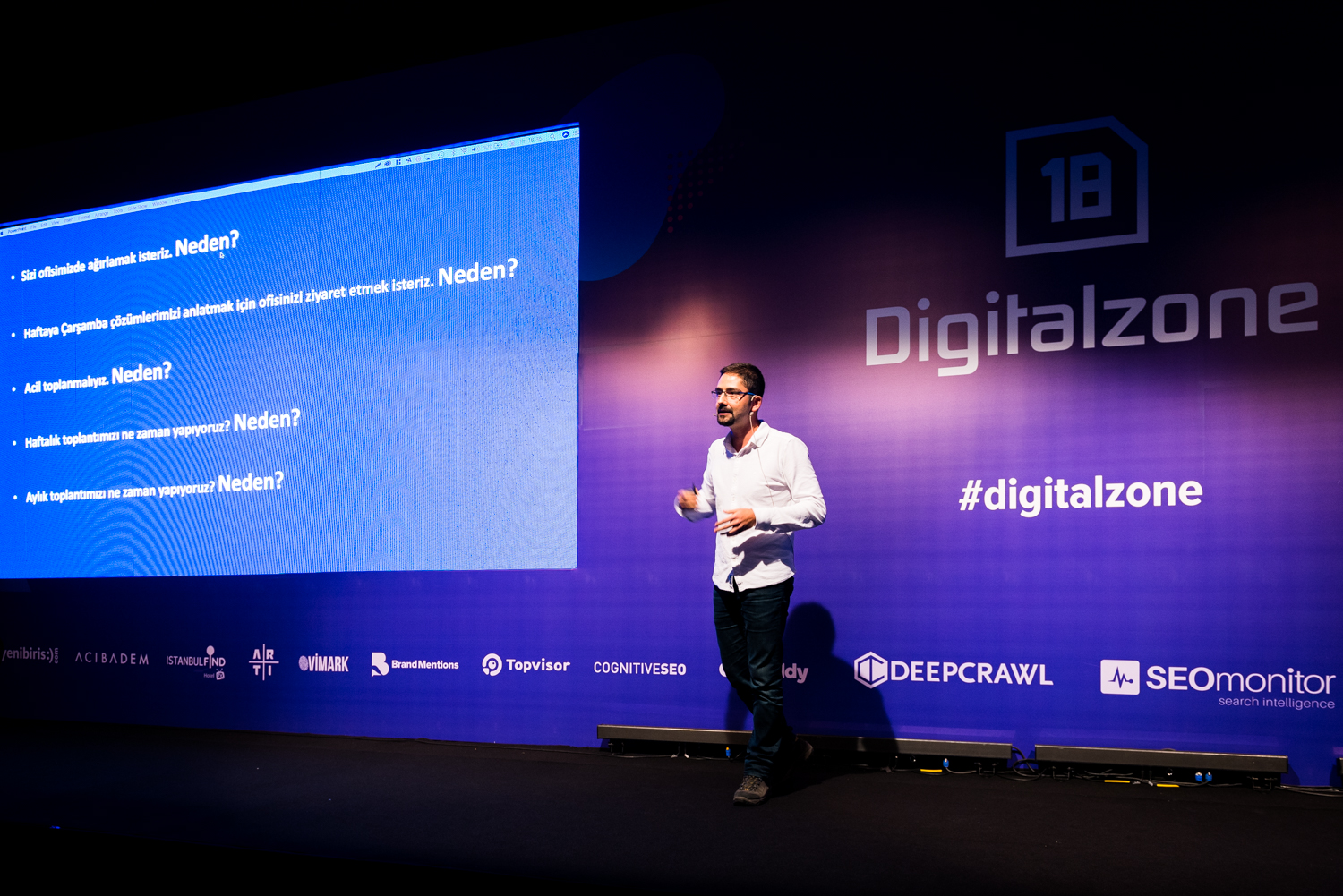
- Şahin emphasized the role of teamwork in maintaining efficiency. Sharing ideas, he said, allowed us to act faster while also pausing to analyze the source of a problem before applying a solution, so we would not face the same issue repeatedly.
- Şahin argued that working more efficiently did not require spending 45 hours per week in the office. Instead, we should challenge our taboos and consider different methods.
- ”You must differentiate as much as you can and then identify the causes of your own problems."
- Returning to a point from the start of his presentation, he again encouraged us to examine every problem from different angles, think simply, and take substantial action.
- Search results needed separate reviews. Desktop, mobile, and tablet searches should each be checked individually before creating a detailed analysis.
- Understanding how users responded could produce accurate results.
- As the final speaker in the Digitalzone journey, Seçil noted that our lives included many practices, but not all of them suited our personalities or schedules. He then shared his own advice on creating a space that worked for us.
With all the Digitalzone 18 presentations complete, we brought two highly productive days to a close. It was time for the Zeo team to celebrate. On behalf of the Zeo family, we would like to thank you for taking the time to read this extensive recap. We hope you found it useful.

You can help this information reach more people by sharing our article with anyone interested in digital marketing. Follow the #digitalzone hashtag to read opinions about the conference, and share your own thoughts about the article in the comments section.
We are already looking forward to next year's Digitalzone.
Our heartfelt thanks go to everyone who was part of the event!


