


What the Report Covers
This report compares the UAE Apparel & Fashion industry in Q4 2021 and Q4 2022. It covers trends and predictions for 2023, along with changes in traffic volume, website traffic shares, channel usage, user intent, and keyword searches.
The Apparel & Fashion sector improved after pandemic restrictions were lifted, despite the pandemic’s earlier negative impact. Continued growth in online shopping is expected to support the apparel market. Manufacturers can now sell through a much broader range of channels and reach customers globally. This expanding customer base is expected to accelerate growth in garment manufacturing. Rising per capita income, favorable demographics, and a shift toward branded products are also likely to increase market demand.
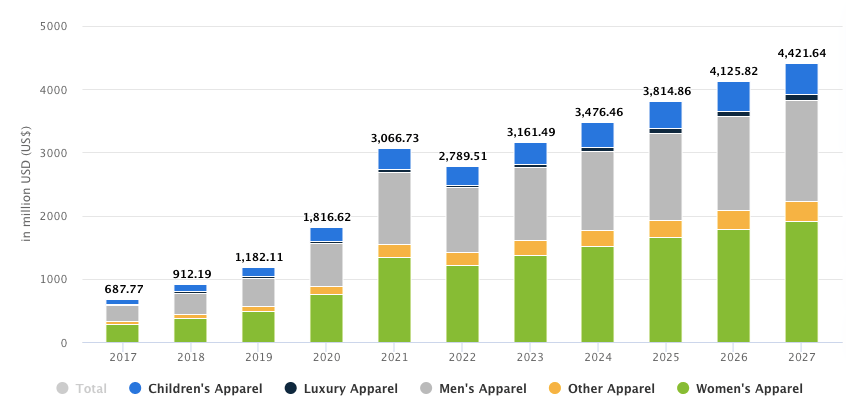 Source: Statista
According to Statista, revenue in the Apparel segment is estimated to reach US$ 3,162.00 million in 2023. With an expected annual growth rate of 8.75%, the market is projected to reach US$ 4,422.00 million by 2027. The segment is also expected to have 5.5 million users by 2027. Revenue in 2020, when pandemic restrictions intensified, was lower than in 2021 and 2022. The 2021 increase, while the pandemic was still affecting the market, may reflect demand for online shopping.
The Fashion segment shows a similar pattern:
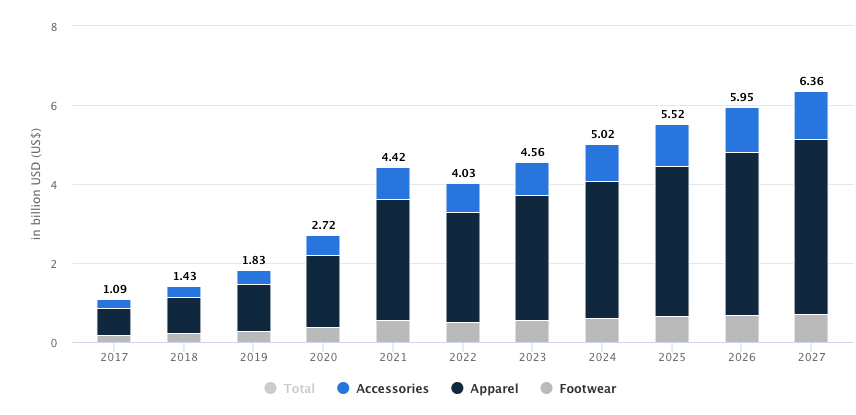
Source: Statista
Revenue in the Fashion segment is estimated to reach US$4.56 billion in 2023. With an expected annual growth rate of 8.65%, the market is projected to reach US$6.36 billion by 2027. The segment is also estimated to have 6.7 million users by 2027.
Apparel & Fashion is one of the sectors where e-commerce can be biased. Brands can improve the customer experience by listing models’ body measurements in photos, offering AR-supported solutions, encouraging realistic and constructive product reviews, and presenting complete product information clearly and accurately.
During crises such as Covid-19, businesses used social media for marketing communication and expanded their presence across platforms to stay connected with customers. Online shopping was already established before the pandemic, but it became even more common during this period. Businesses therefore need to maintain their digital assets and continue their digital marketing efforts so they can adapt more effectively during future disruptions.


