


Like most people, we type dozens of queries into search engines every day, since they've become part of daily life. Those queries can serve many different purposes: finding information, locating an address, buying a product, or reaching a specific website. Sometimes the searches we type are short, just one or two words. Other times, as our goals get more specific, we end up typing much longer, more detailed keywords.
What Are Long Tail Keywords?
As webmasters or SEO consultants, we work with keywords almost every day, and we consistently see that search volumes vary in interesting ways. With a few exceptions, the more words a query contains, the lower its search volume tends to be. Keywords made up of one or two words with generally high search volumes are called short-tail keywords. Keywords made up of three or more words with lower search volumes, on the other hand, are called long-tail keywords. Even though these keywords individually have low search volume, research suggests that long-tail keywords make up the majority of Google queries overall.
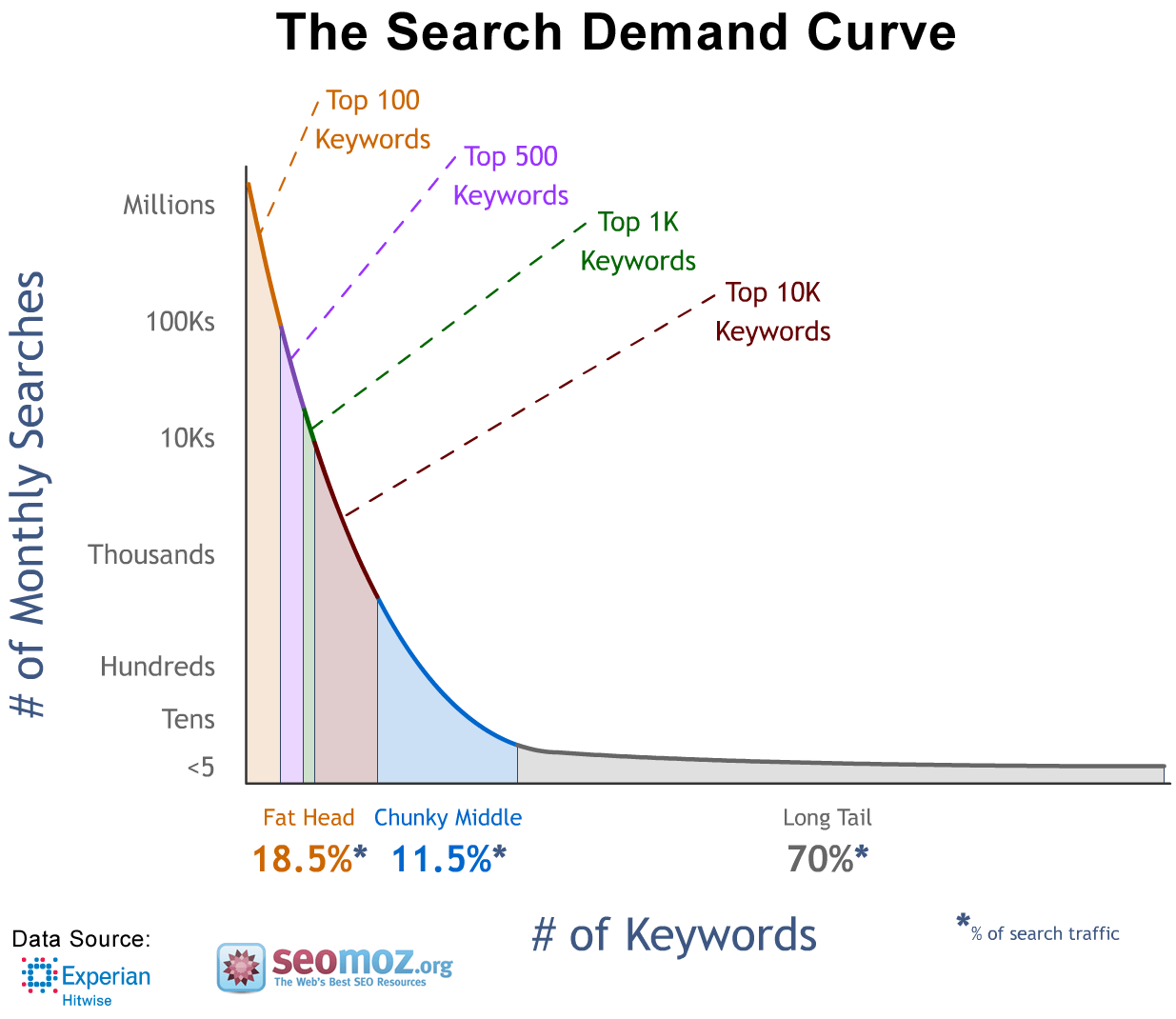
To use an example, the search for “shoes” counts as a short-tail keyword, while “nike shoes for men” counts as long-tail. Looking at this example, the “shoes” query has very high search volume and quite intense competition, while the “nike shoes for men” query shows much clearer user intent, and its search volume, while lower than “shoes”, still sits at a meaningful level.

Why Are Long Tail Keywords Important?
When you're researching keywords for a website and deciding what to act on, focusing on short-tail keywords, which always carry high search volume, isn't always the right strategy. These keywords come with high competition too, which makes early success difficult for a non-authoritative or brand-new website. So it often makes more sense to focus first on long-tail keywords, where competition tends to be lower and user intent is much clearer. Let's go through why long-tail keywords matter, one reason at a time.
1) Low Competition
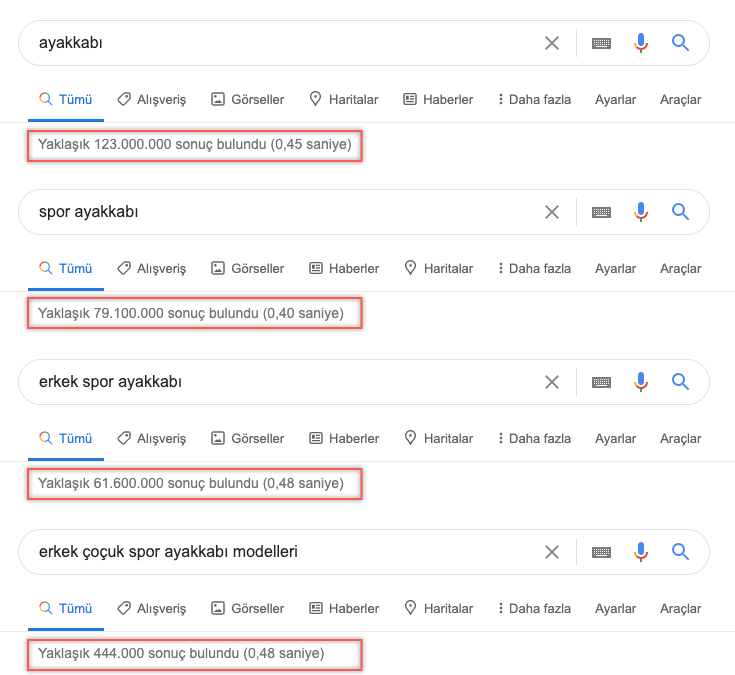
Long-tail keywords carry lower search volumes than shorter, more generic ones, and that lower volume usually comes with proportionally lower competition too. As you can see in the sample keywords below, search volume drops as the number of words in a query grows, even when the queries share the same core words.
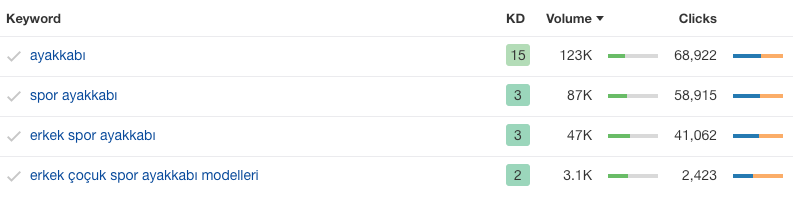
That lower search volume, compared to shorter keywords, might make a keyword look less appealing at first glance. But alongside the lower search volume often comes lower competition too, and that lower competition helps you reach your goals faster with the right moves.
2) The Advantage of Conversion Rate
Long-tail keywords contain more words, as the name suggests, which lets users pack more detail into their queries. That extra detail also makes user intent much clearer than in shorter queries. Compare the intent behind a “internet” query with an "internet providers near me" query, for instance: the difference is obvious. In short, user intent is much clearer with long-tail keywords, which makes it easier to hit your conversion targets through accurate targeting and optimization.
3) More Easily Targeted User
Long-tail keyword queries tend to be easier to interpret than short-tail ones simply because they contain more words. Take the “headphones” query, for example: it's genuinely hard to understand what the user actually wants, since there's no specific detail to go on, which makes it difficult to target them well. Compare that to "best noise cancelling headphones", where the user's goal is far clearer than with "headphones" alone. As this example shows, users who enter long-tail queries can generally be targeted more accurately and more reliably, simply because they've stated their goal more clearly.

4) A Strong Blog Strategy
We've already mentioned that long-tail queries reveal more detail about user intent because they contain more words. We also know that some long-tail keywords come phrased as questions. A query like "how to clean white shoes", for instance, makes a great candidate for a blog post targeting long-tail traffic. Using a variety of keyword research tools, you can develop a strong blog strategy around long-tail keywords that fit your website and bring in new users. Filtering for queries containing question words like “what, how” makes it easy to surface keywords like this one for your blog strategy.

5) The Position Zero Opportunity
It shouldn't come as a surprise when Google rewards you, after a while, for creating content that's more high-quality, original, and comprehensive than your competitors'. That's exactly what a blogging strategy built around long-tail keywords can earn you. Content that targets long-tail keywords like the ones below, usually built around lists or tables, can win you position zero on the page. That, in turn, pushes your competitors further down and pulls most of the traffic to your own site.

6) Success in A Shorter Time
Even though the long-tail keywords in our examples above carry less search volume than other queries, they also face less competition, and lower competition helps you succeed faster with the right strategy. As we mentioned earlier, focusing purely on high-search-volume queries can drag out how long it takes a new website to see results. But target long-tail queries the right way, and you'll have a real shot at success in a shorter timeframe.
How Can We Find Long Tail Keywords?
So far, we've covered what long-tail keywords are and why they matter. So how do we actually find these long-tail queries that users type in? Let's walk through a few paid and free ways to research long-tail keywords.
1) Keyword Research Tools
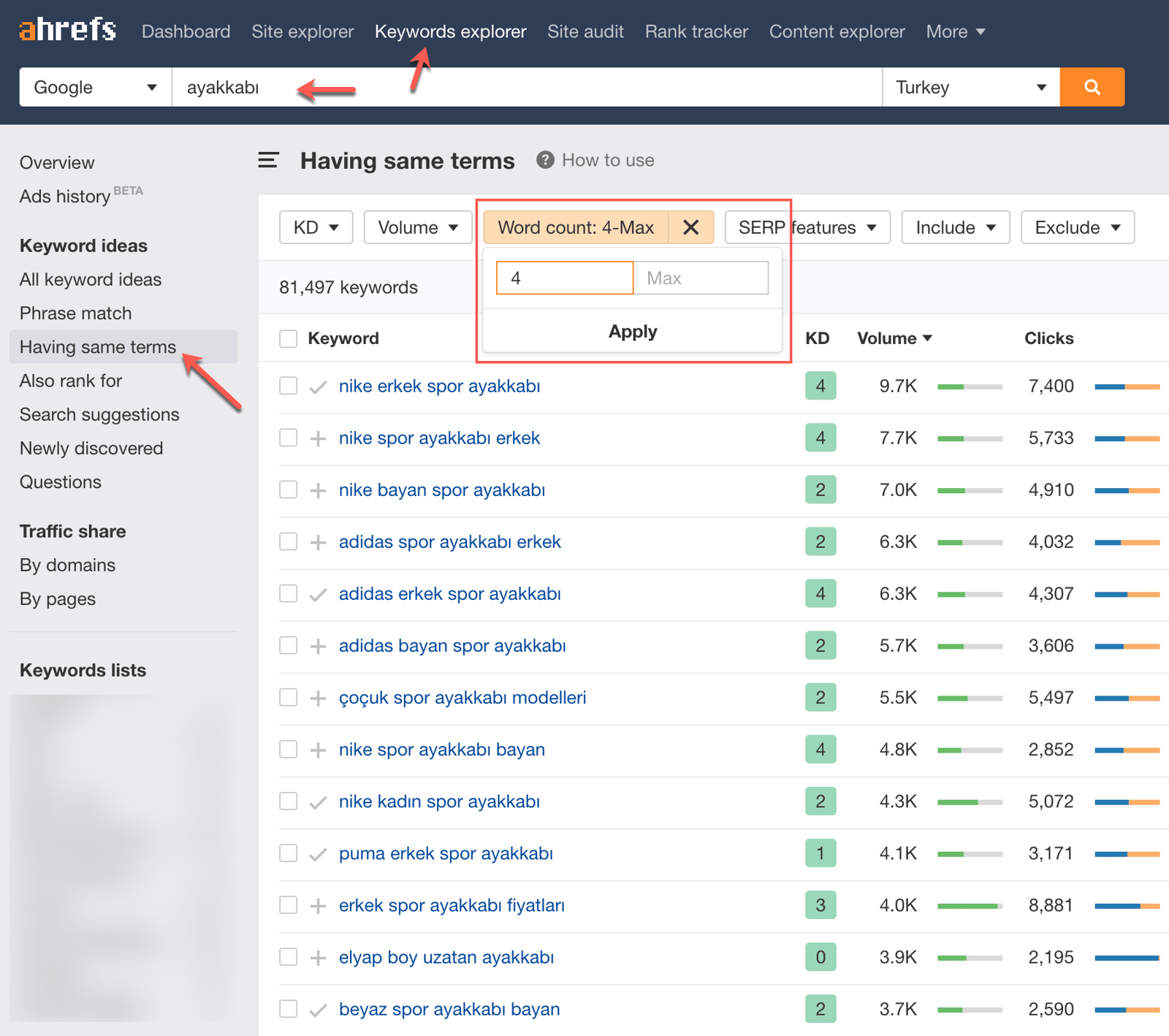
Tools like Ahrefs, SEOmonitor, SEMrush, Keywordtool, Ubersuggest, and WordTracker give us easy access to a lot of information about keywords and their search volumes. In Ahrefs, for example, if we want to research long-tail keywords, we'd start in the "Keywords explorer" section. From there, we'd research the most generic short-tail keyword and click “Having same terms” to pull up queries containing that keyword, then use the "Word count" filter to narrow the results to a minimum or maximum word count.
Say we run a website about shoes. We'd search the “shoes” query, the most generic term related to our site. Then, clicking "Having same terms" and filtering for queries with at least four words would surface long-tail keywords for us easily.
2) SERP Research
One of the easiest and most reliable ways to research long-tail keywords related to your website is through the search engine results page itself.
2.1) The Related Searches Section
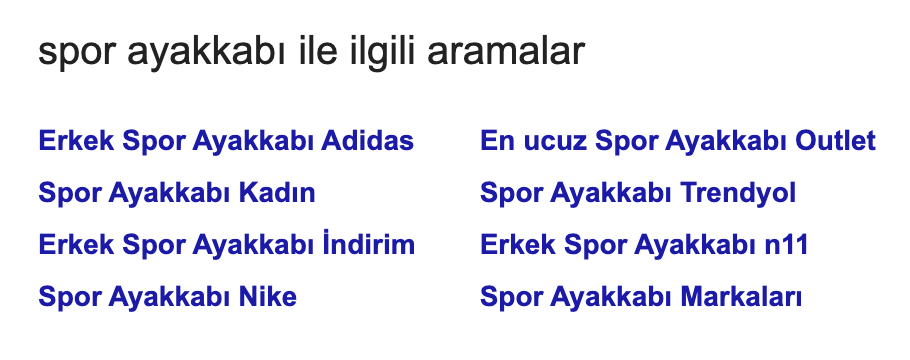
Start by entering a query on Google about the subject you want to research. If we search “sneakers”, for example, the "searches related to..." section at the bottom of the page turns out to be one of the easiest ways to surface long-tail keywords on that topic.
2.2) Google's Query Autocomplete Feature
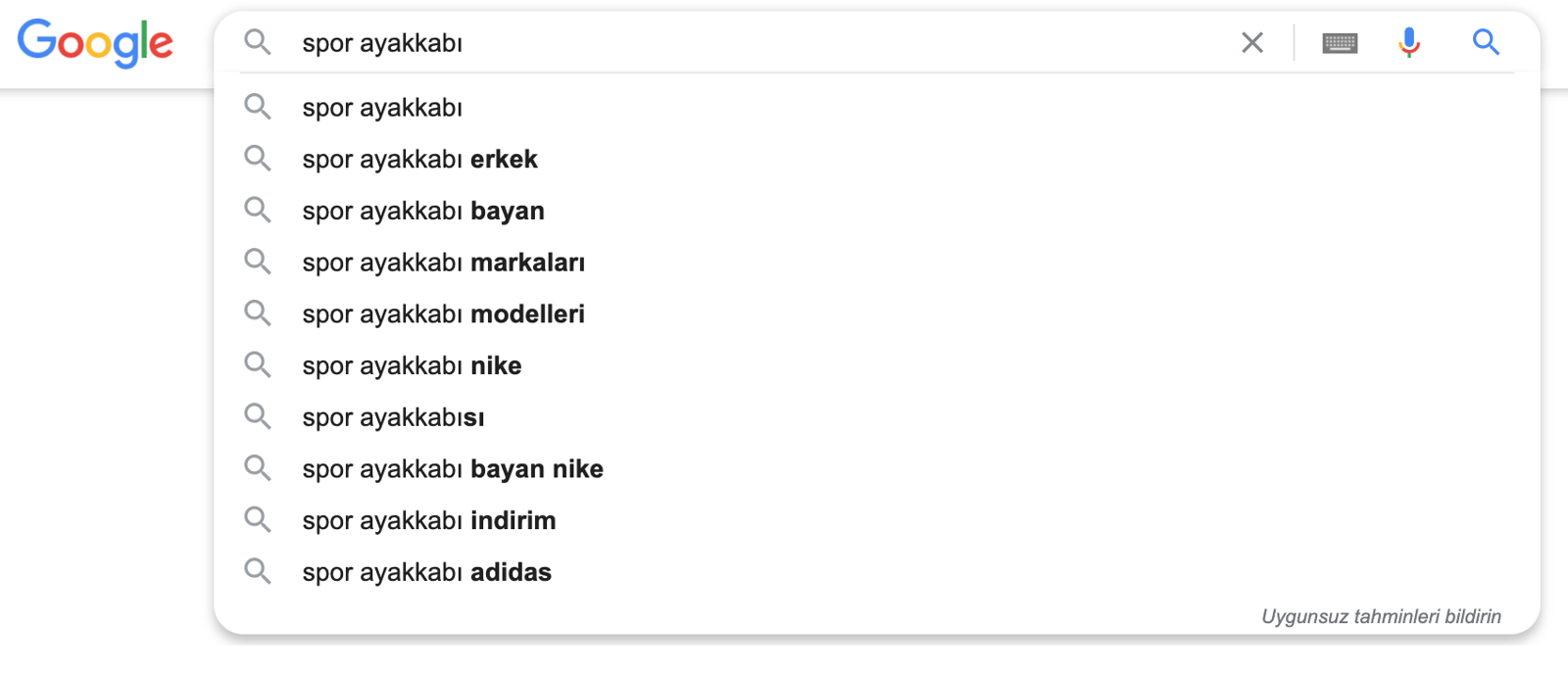
As you type a query into the search bar, Google suggests ways to complete it based on what previous users have searched most often. This feature can also help surface long-tail keywords.
2.3 The "People also ask" box
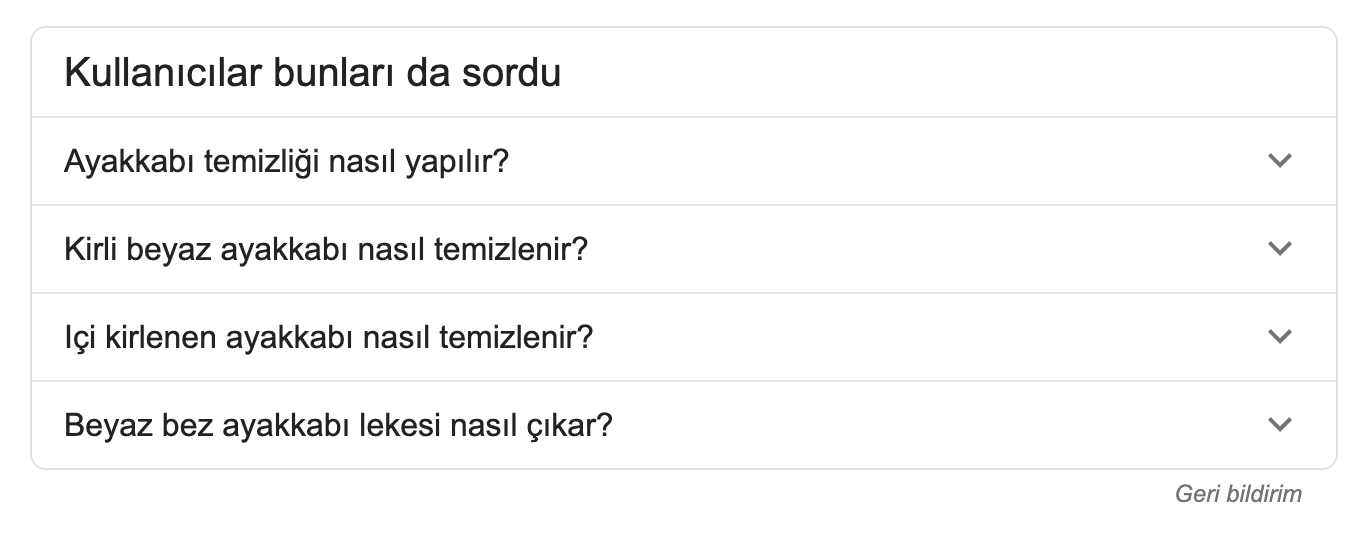
This box, which often shows up alongside question-based queries, surfaces related questions other users have searched. It's an easy way to find long-tail queries that users are curious about and that relate to your original query.
3) Google Services
Beyond keyword research tools and search engine results pages, Google's own services can help with long-tail keyword research too. Tools like Google Search Console, Google Trends, and Google Adwords Keyword Planner all support this kind of research.
4) Forums and Direct Questions of Users
You can also research long-tail keywords indirectly through forums related to your website or platforms where users ask questions. For a brand in the internet industry, for example, you might look at the topics that come up often in tech forums. That can show you what subjects your target users care about most, or what problems they're running into, which then points you toward content worth creating to address those questions.
How Can We Target Long Tail Keywords?
What you do after finishing your long-tail keyword research matters just as much. There are two main ways to target these user queries.
1) Specific Pages for These Long Tail Queries
One of the most sensible moves is building pages that directly target long-tail keywords with meaningful search volume. The “how to clean white shoes” query from earlier, for example, makes a great candidate for direct targeting. Look at the results page for that query, and you'll already see plenty of websites targeting it directly.

2) Supporting Short Tail Keywords
Beyond direct targeting, long-tail keywords can also support high-search-volume words. Take "sneakers", for example, which carries fairly high search volume and competition. Competitors targeting keywords like this one often have quite comprehensive content already, so competing here usually means building an equally comprehensive set of informative content for users. When you build that content, you can extend its scope further by working related long-tail keywords in as subheadings. Comprehensive content built around long-tail keywords like this can help you outrank your competitors for the related keyword.
We've now covered what long-tail keywords are, why they matter, and how to find and target them. I hope this was clear and useful. :)


