


SEO and AI search are evolving fast, with large companies leading the way by folding AI applications into their search functionality. Google's AI Overview, SearchGPT, and Perplexity search have all become common. In this article, I'd like to evaluate xAI's Grok from an SEO perspective. As I write this, the latest version of Grok is 2, so I'll base my comments on that version. Think of this as a brief report.
Grok, with its natural integration into X, is in a constant learning mode, which lets it adapt to emerging information and trends and produce some of the most dynamic, up-to-date responses out there. It doesn't currently have a separate mobile app and operates entirely within X. Let's start with a few general observations:
What is Grok?
Grok is an AI chatbot developed by xAI, a company Elon Musk founded in 2023. It has been integrated into the X (formerly Twitter) platform.
Does Grok have API support?
Yes, you can sign up at https://console.x.ai and use the Grok API.
Grok can keep its responses relevant and timely by analyzing the latest tweets, news, and discussions, which comes in especially handy in fields like technology and science. For example, while Google Trends helps you monitor real-time trends, Grok lets you follow that same kind of research and news much faster.

1. Grok Search Results Are Different from Google’s
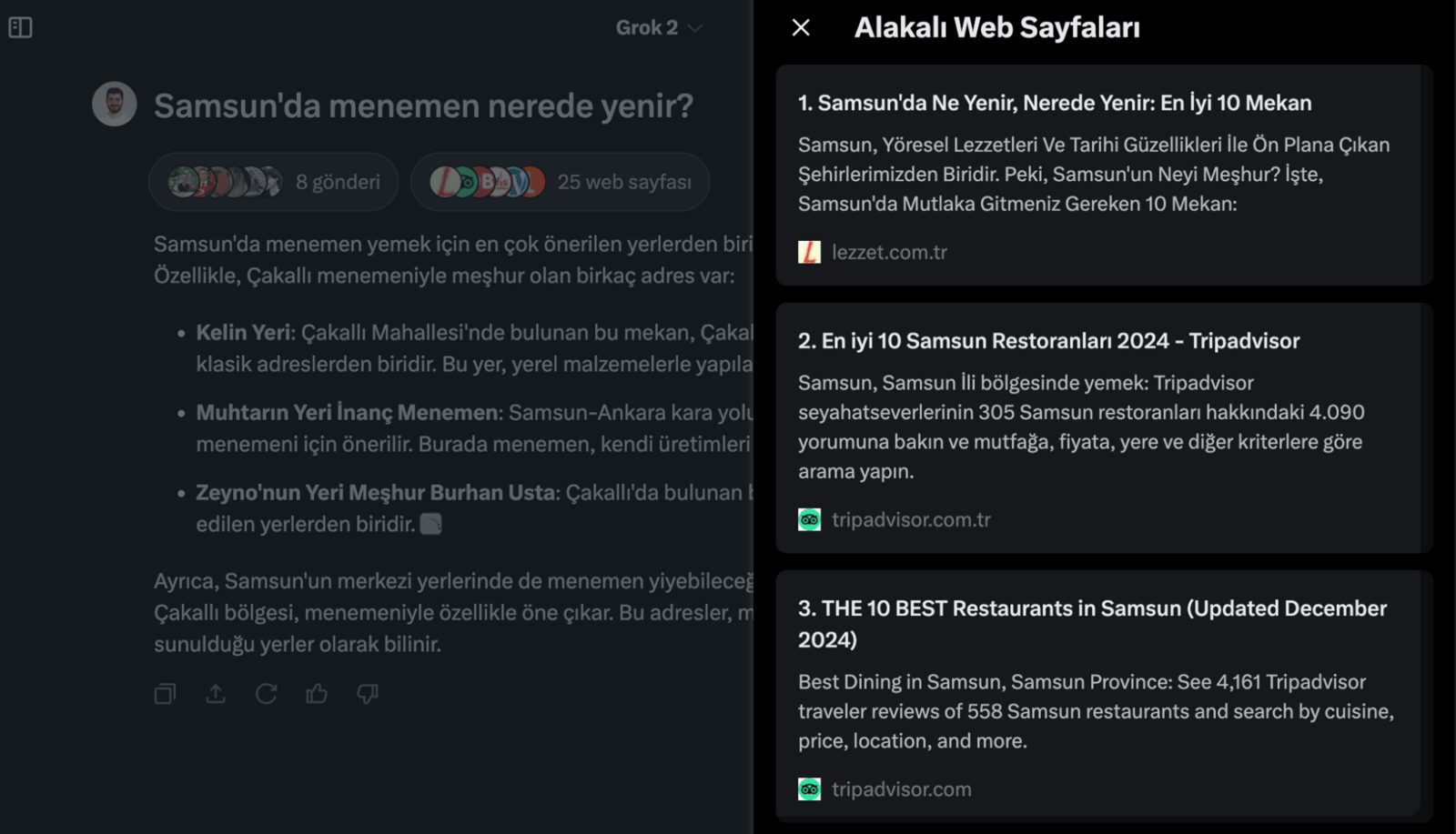
Let's start with a simple example prompt: "Where to eat menemen in Samsun?" Looking at the "Relevant Web Pages" section, you'll notice a variety of different websites show up. How these sites appear may shift over time, of course, but they're displayed in a "tile" format. It's worth noting that Grok doesn't add any extra parameters to the sites it lists, since it relies on real-time data from X (Twitter) to provide relevant, up-to-date suggestions without any additional filtering or categorization.
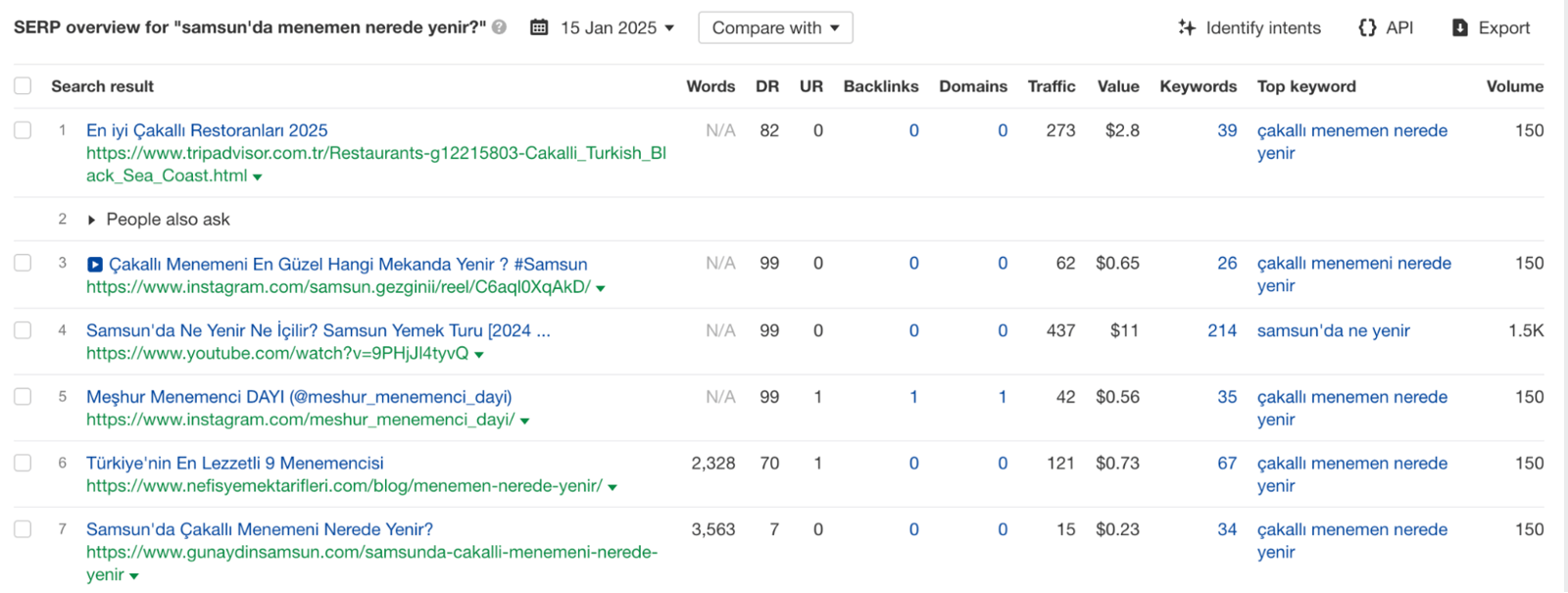
The SERP on Google, by contrast, looks quite different:
2. Number of Sources
For a search that isn't unusual or brand-specific, Google typically shows only one page per site in the SERP. In Grok, though, a single site can appear with multiple pages:
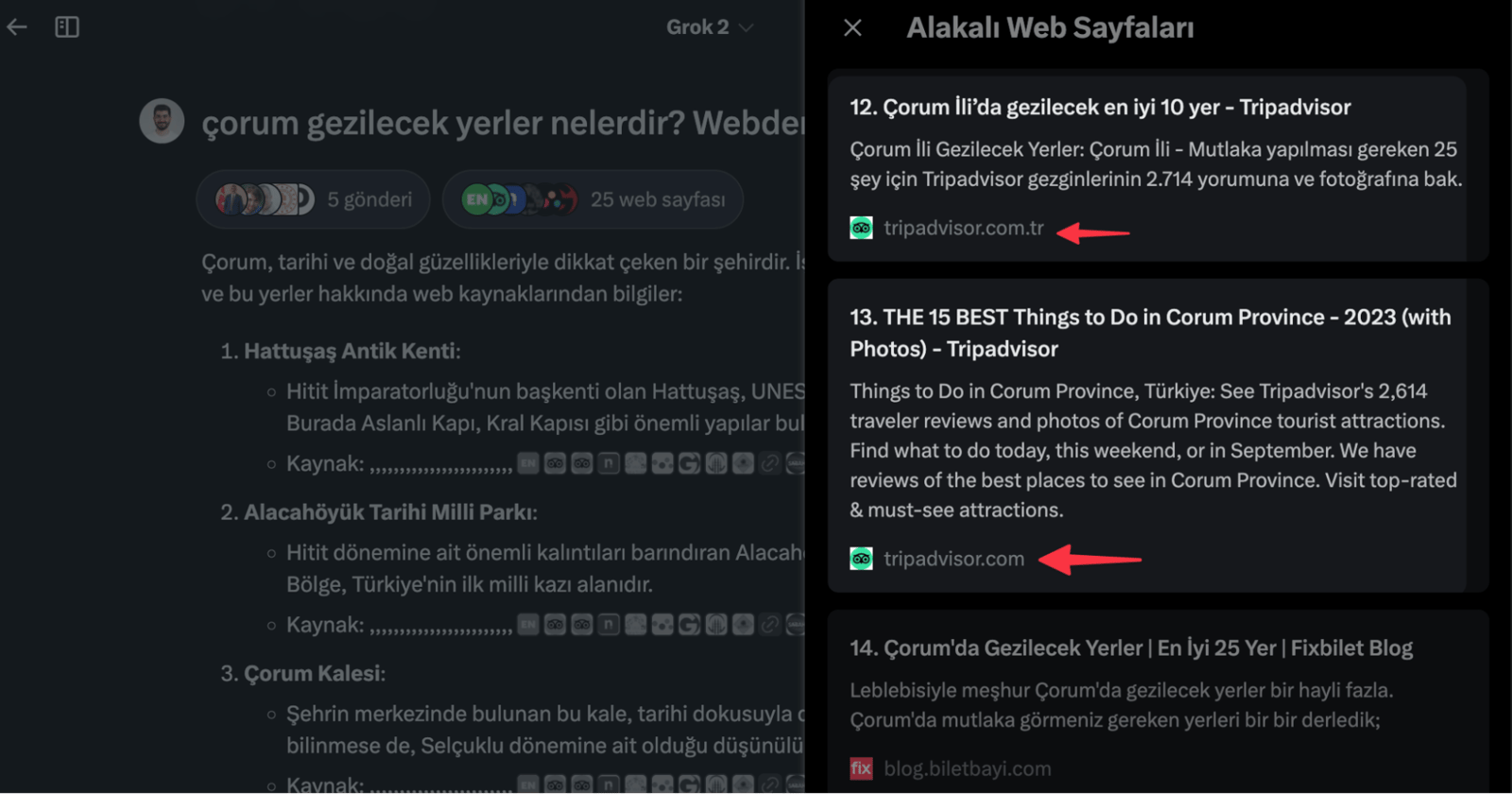
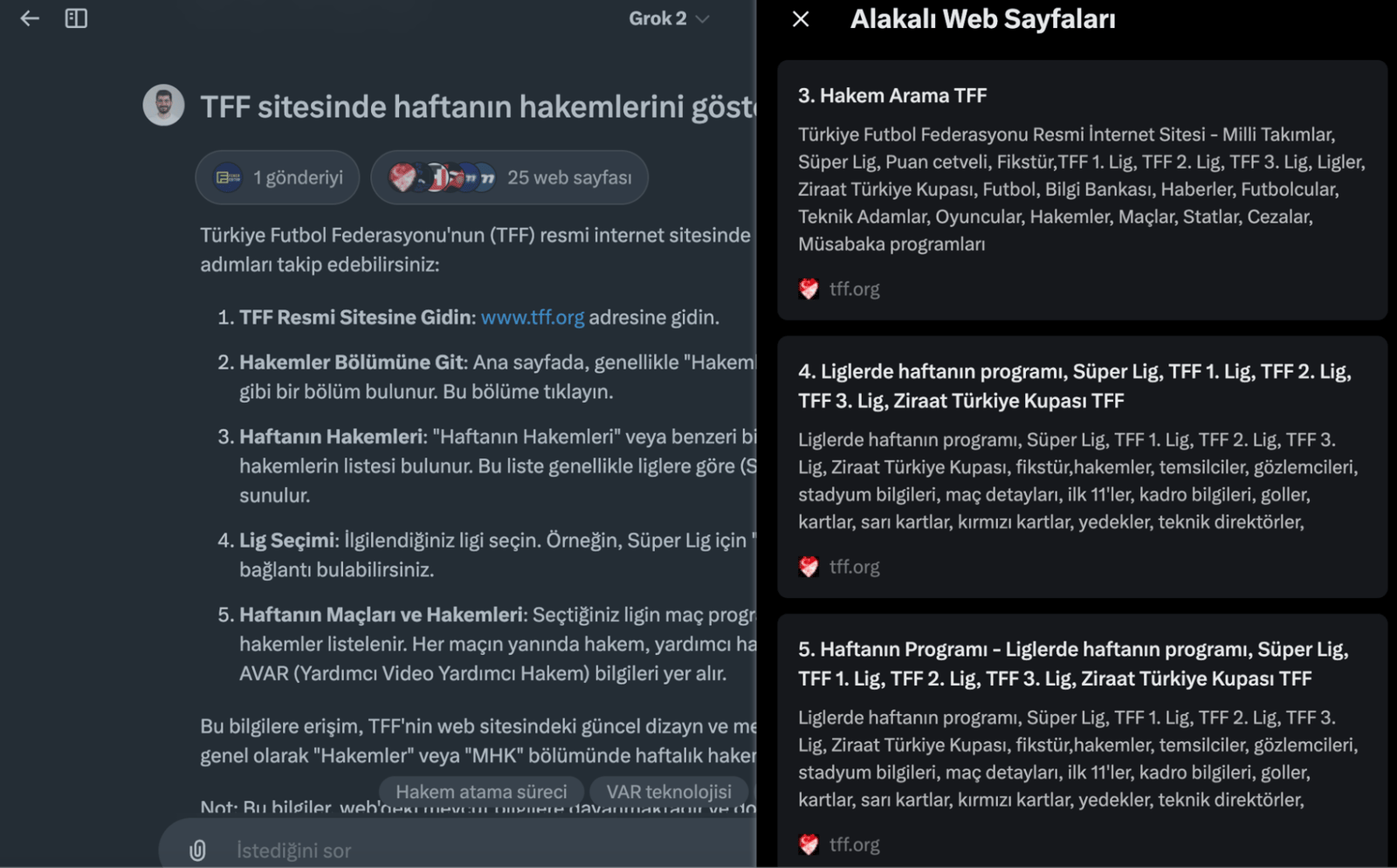
For brand-related searches, you'll see many references back to the main domain:
3. Total Number of Sources
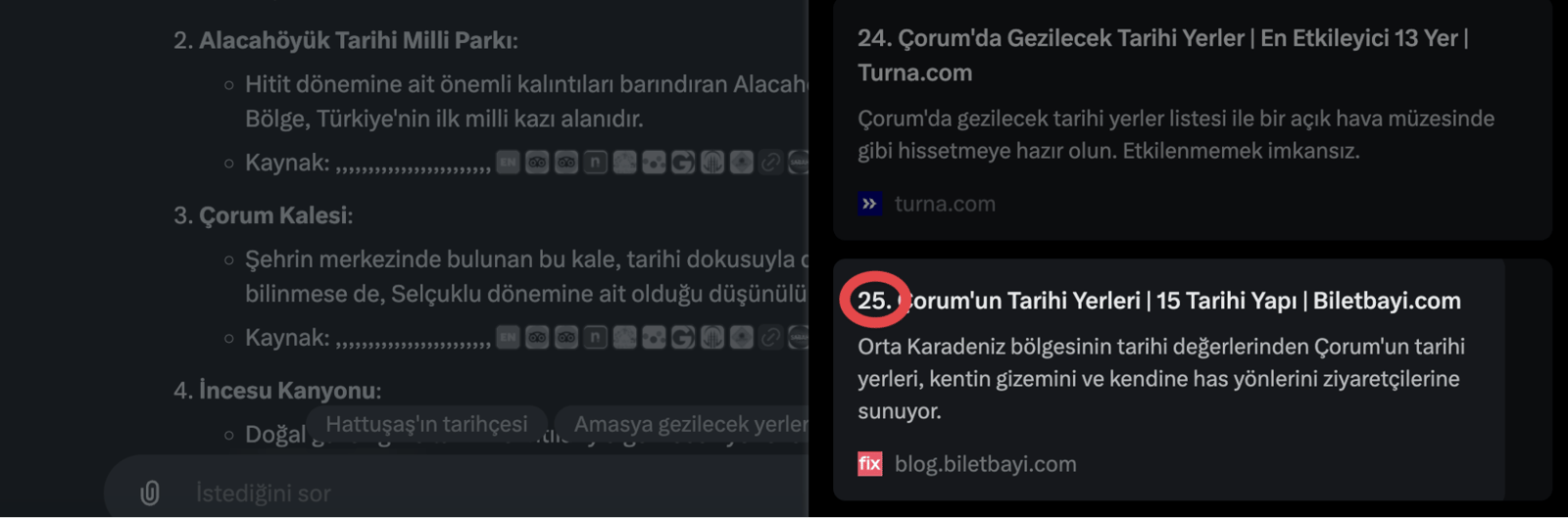
From what I've observed, the web sources section lists a maximum of 25 pages. A page that appears at the top of the list can also show up again toward the bottom, so it's worth paying attention to site favicons too, using a favicon is always a good idea.
Tired of reading?
You can also listen to this blog post as a podcast we created with Google NotebookLM on Spotify.
4. Description
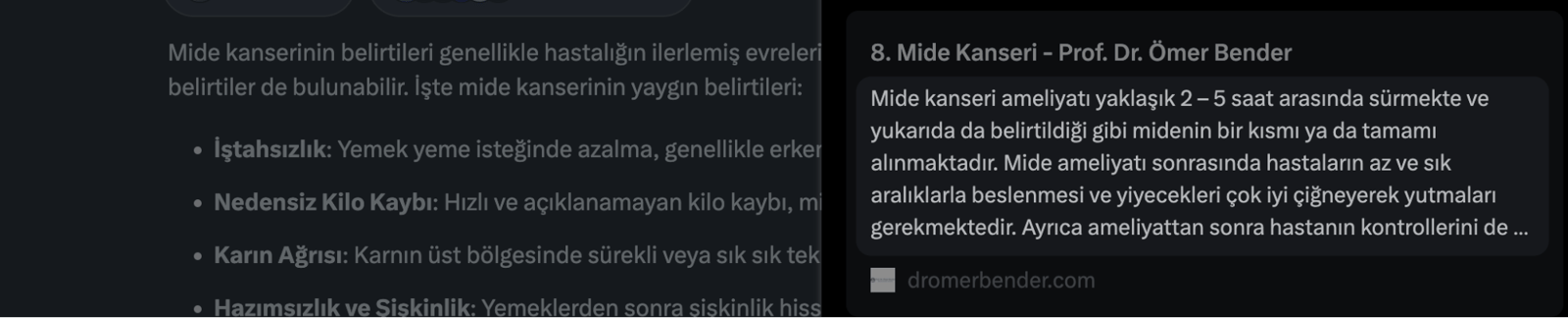
The app displays a page's meta description section exactly as written, which is worth emphasizing again: meta descriptions really matter here, since they summarize a page's content and signal its topic.
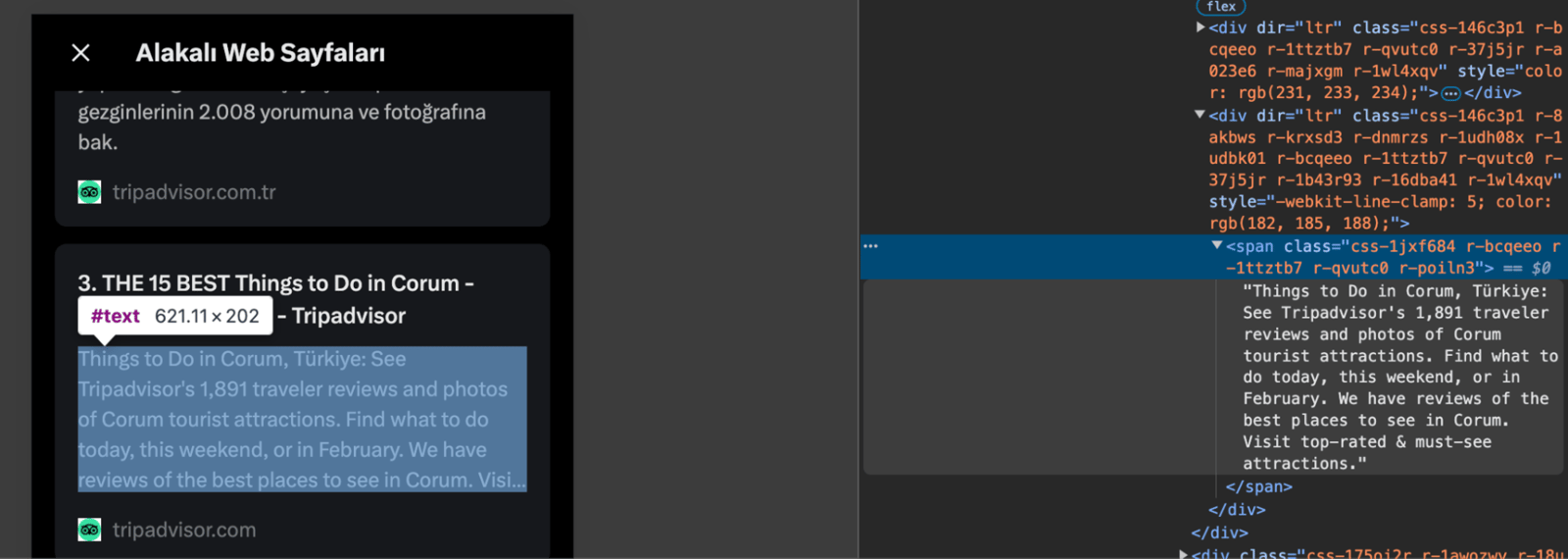
If a page has no meta description, it just shows up empty rather than generating one on the fly. The description section also tends to display around 320 characters on average.
5. News Sources
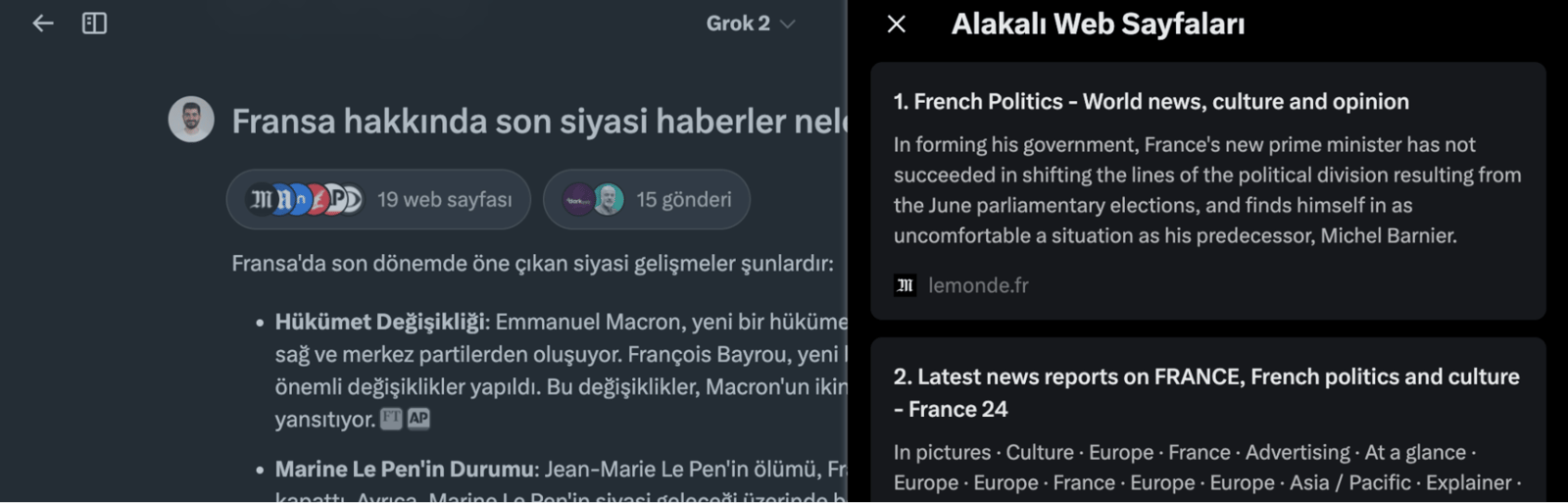
In the web pages section, news results and sources don't get their own separate feature the way they do in Google. It first shows a page specific to Ankara and lets users gather information from there, though these results can vary with different prompts and searches. Take what I've written here as just one example.
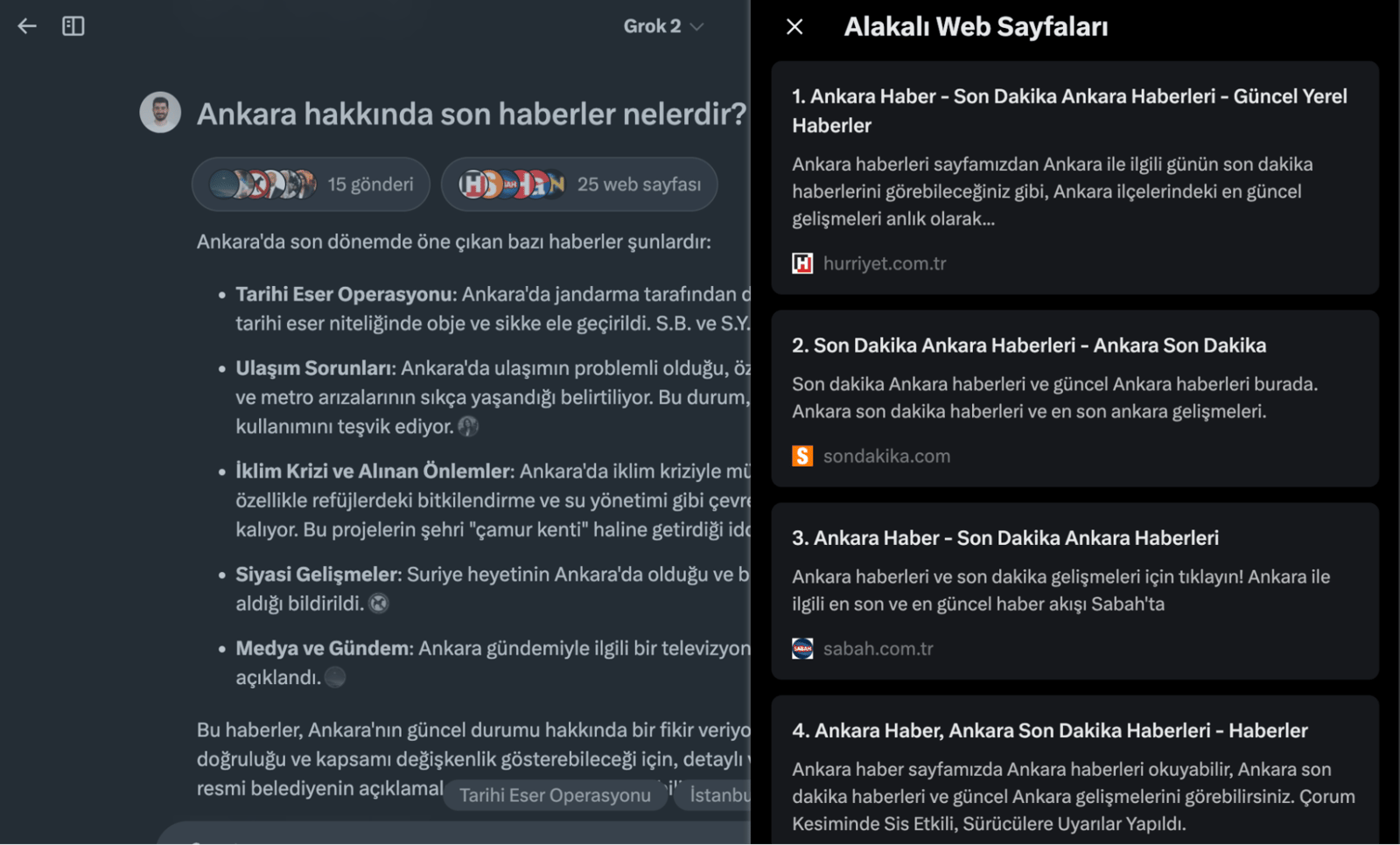
When I search with a Turkish prompt, instead of Turkish news sources, it shows examples from news sources in France.
6. Canonical
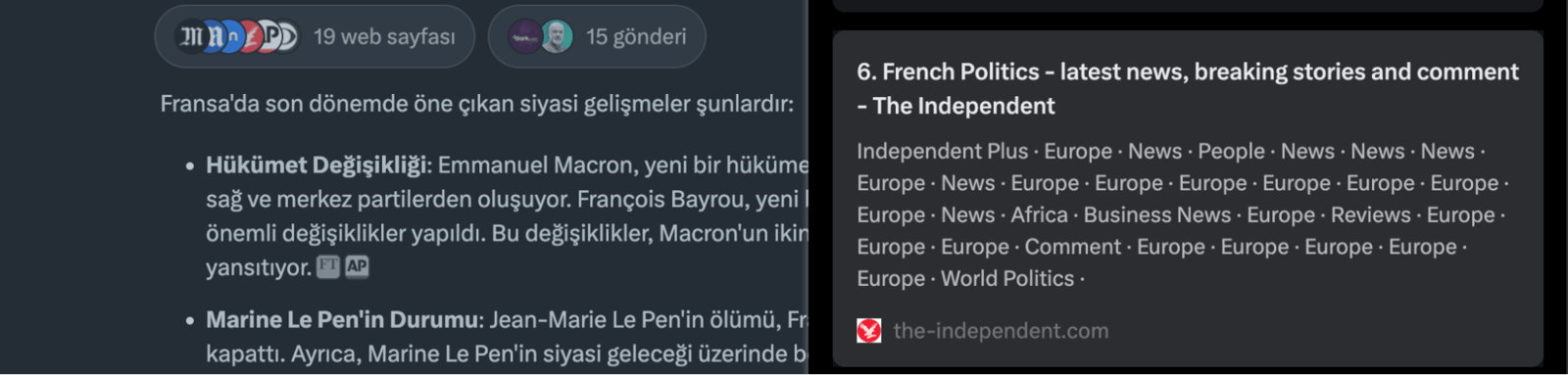
For example, the canonical section for https://www.the-independent.com/topic/french-politics among the sources points to a different site entirely.

That doesn't seem to trip up Grok, though, since it still lists the source:
A page with a "noindex" tag shouldn't typically appear in Grok's results, though delays can happen due to the system's slower refresh cycle.
7. Detection of Updates
Content updates can get picked up a bit slower here than they do on Google. Here's a personal example from my own site: when I updated a piece of content, it took about 15 days for the system to catch the change. Higher-traffic sites, on the other hand, seem to get picked up much sooner. Of course, a blanket assumption like "it'll be detected after x days" wouldn't be entirely accurate.

8. 3XX Redirected Pages
A page redirected with a 3XX status can still show up in Grok without the final URL. For instance, a redirect added 3-4 months ago might not be detected yet.

To wrap up, I wanted to share my observations on Grok's web results from an SEO perspective. Content quality, prompts, and plenty of other topics here could easily form the basis of another blog post down the line.


