


Websites that break Google's guidelines can face all sorts of penalties. While many webmasters describe it as "Google has banned my website" or "I've been banned by Google," what they're usually dealing with is a Google Penalty, or a manual action. I want this article to serve as a handbook, walking through Google penalties and the authorities' own explanations about manual actions.
The purpose of these penalties is to "clean up" search algorithms by removing spammy content, so the results stay useful to users. The release of the algorithm called Penguin in April 2012 was a critical step toward understanding web spam techniques.
Web Spam Overview
Google has published several statistics over the years to show how it deals with spam, and it has occasionally reminded webmasters of certain warnings on its blogs.

To summarize the spam statistics from 2019;
- More than 25 billion spammy pages.
- 230,000 spam reports were received every day, and Google was able to take action on 82% of those reports. This number was 180,000 in 2018, and action was taken on 64% of them.
- 4.3 million manual action messages were generated to website owners.
- While the amount of spammy content produced by users increased in 2018, it did not increase in 2019.
- Backlink spam has become the most popular spam type.
- The effect of spammy content on users in 2019 was reduced in 2018 by 60%.
- 90% of backlink violations were detected by algorithms.
- New explanations were made about the use of nofollow.
- The spam generated through hacked websites was stable compared to 2019.
Since Google's spam-fighting statistics page is what it points to, I took a quick look at the latest data on the web archive to share with you. Here's a diagram showing that 0.22% of sites in the index were given a manual action: (2018)
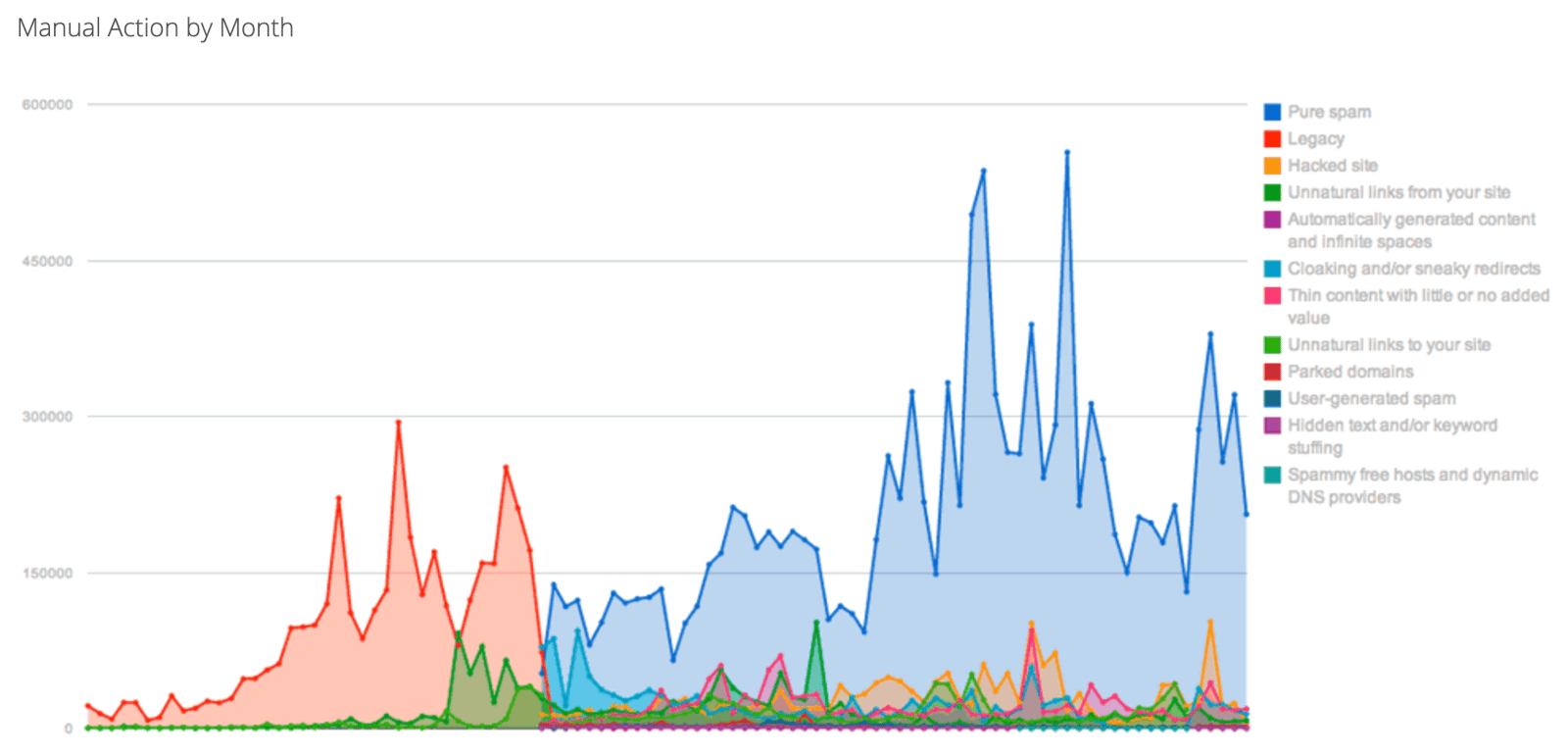
Pure spam is one of the most common types of spam. You can read more about it further down in this article.
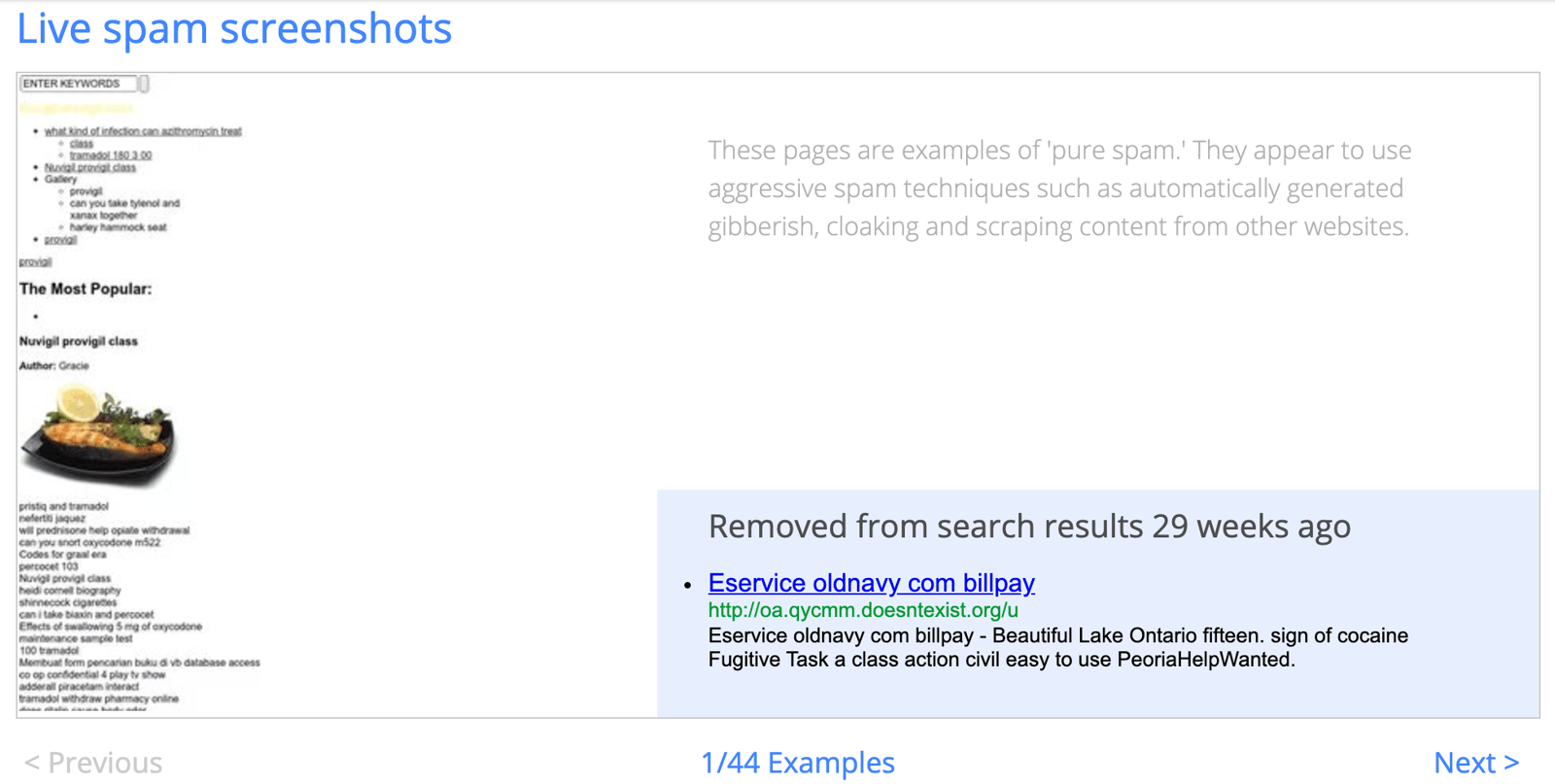
In previous years, Google shared a few examples of websites that received a manual action:
This screenshot I took in February 2018 shows reconsideration requests by week from 2006 up to that date: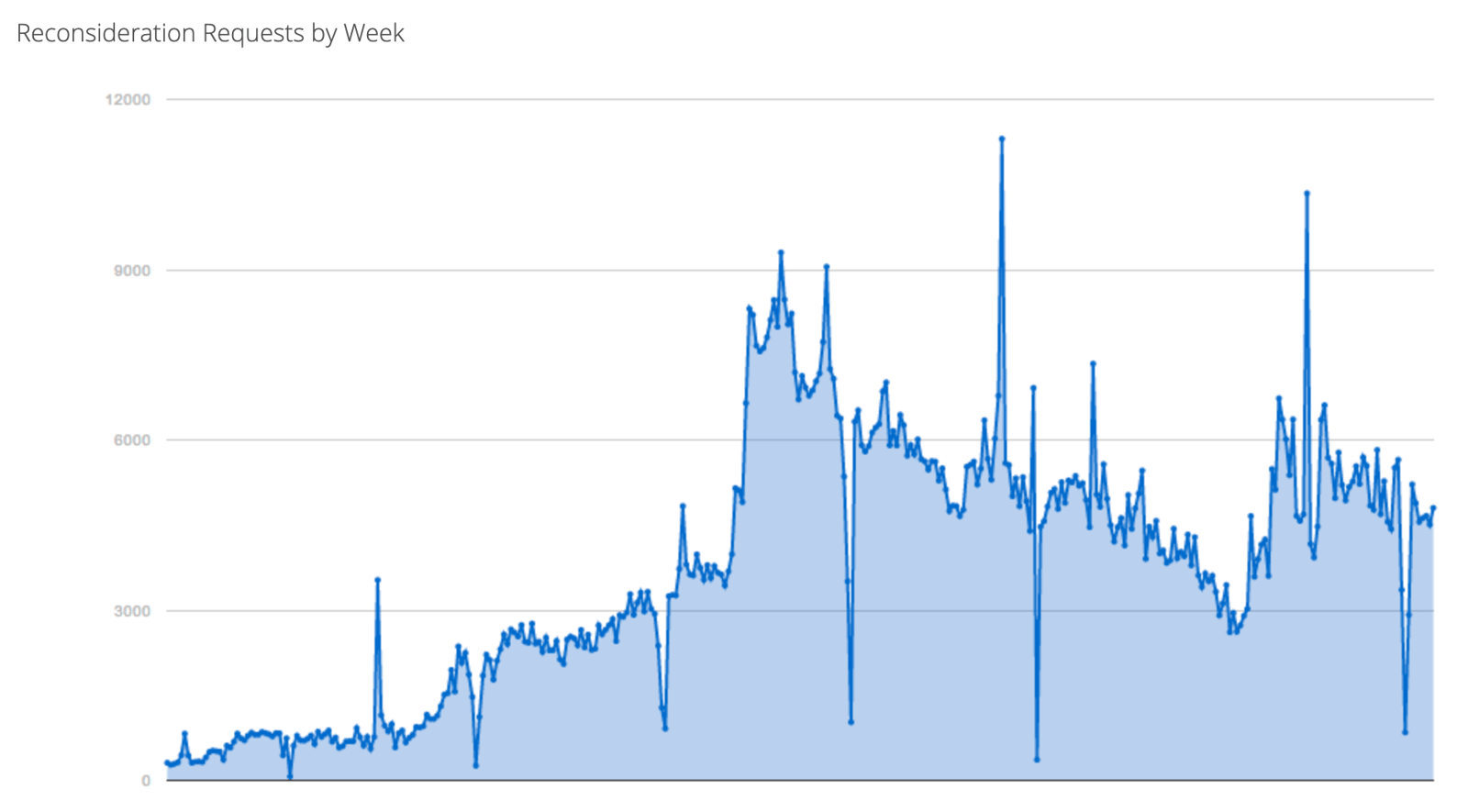
With machine learning, Google was able to detect spam types more quickly, through both manual actions and algorithms. Google's own explanations note that algorithms can't prevent every bit of spammy behavior and that the system isn't perfect:

Another blog post explains that the systems used to detect spam aren't always flawless and are open to improvement. You can find the 2018 spam statistics here. We'll see how Google fights spam in 2021.
Google uses spam reports to improve its spam detection algorithms.

You can report webspam by filling out the spam report form. It's almost impossible to tell whether spam reports actually get processed. Google can take manual action on specific URLs or across an entire website.
What is a Google Manual Action Penalty?
As the name suggests, a manual action is a penalty a human reviewer applies to certain pages or websites.
The penalties Google issues are almost impossible to detect from the outside. Only account owners in Search Console can see the penalties Google has issued. Because of that, I'd advise against relying on systems like Google ban checkers.
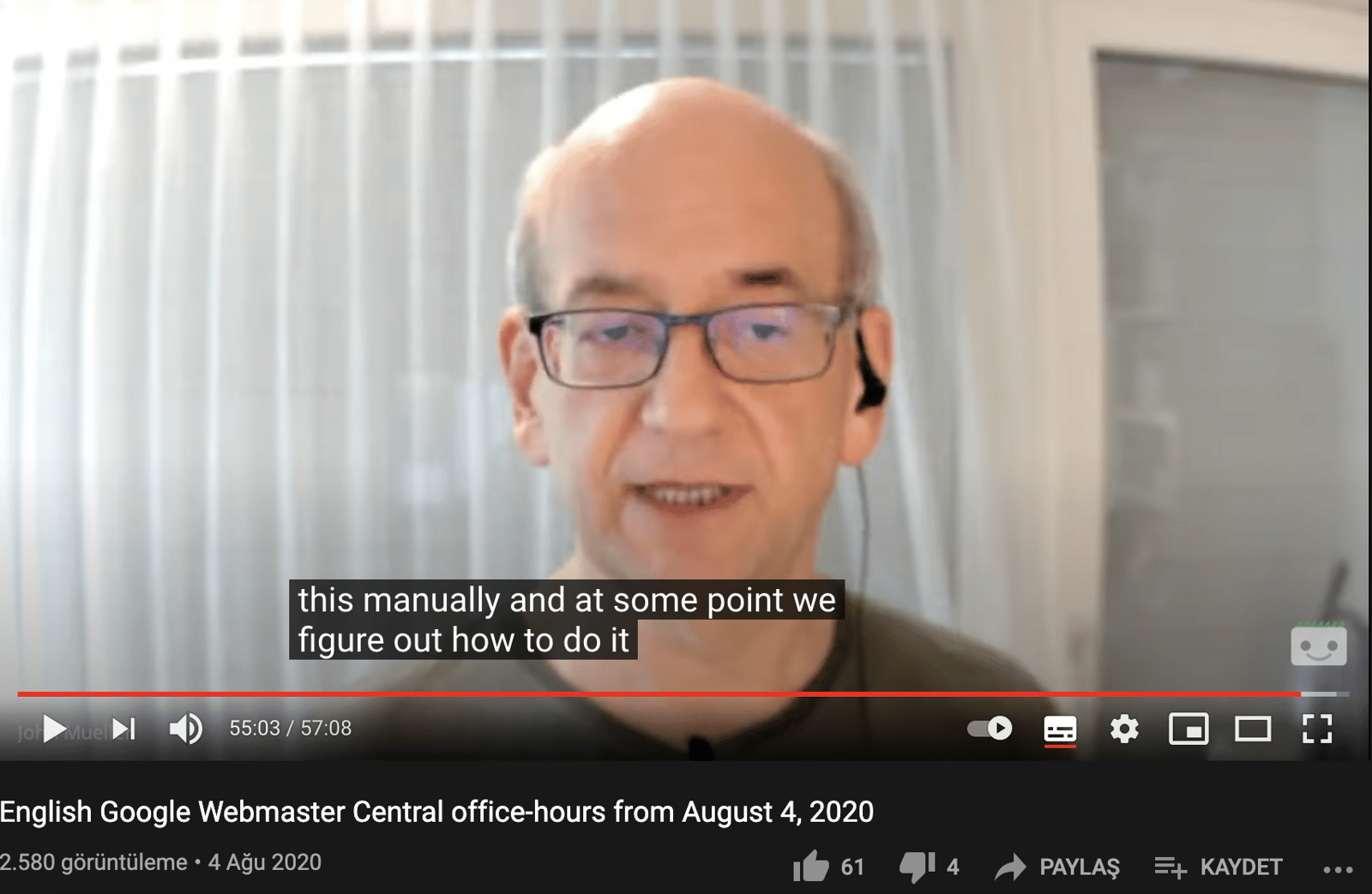
J. Mueller stated that most manual actions were handled algorithmically and probably weren't needed anymore:
What Happens When a Penalty is Received from Google?
When Google applies a manual action to your site:
- Your site's ranking in search results may drop,
- Your rich results may not be displayed in SERP,
- Your site may be removed from the Google index,
- Your site's organic conversion rate may drop,
- Your site's organic traffic may decrease.
- If you're on platforms such as Google News, the traffic may flatline.
Noting the dates a manual action was issued and removed will help with future analysis. Your site's traffic can drop suddenly after a manual action.
What is the Duration of a Manual Action Penalty?
There's no fixed time limit for manual actions. Some might be lifted in a few days, while others could cost you 1 or 2 years. Reconsideration requests and fixing the underlying problems will shorten that window.
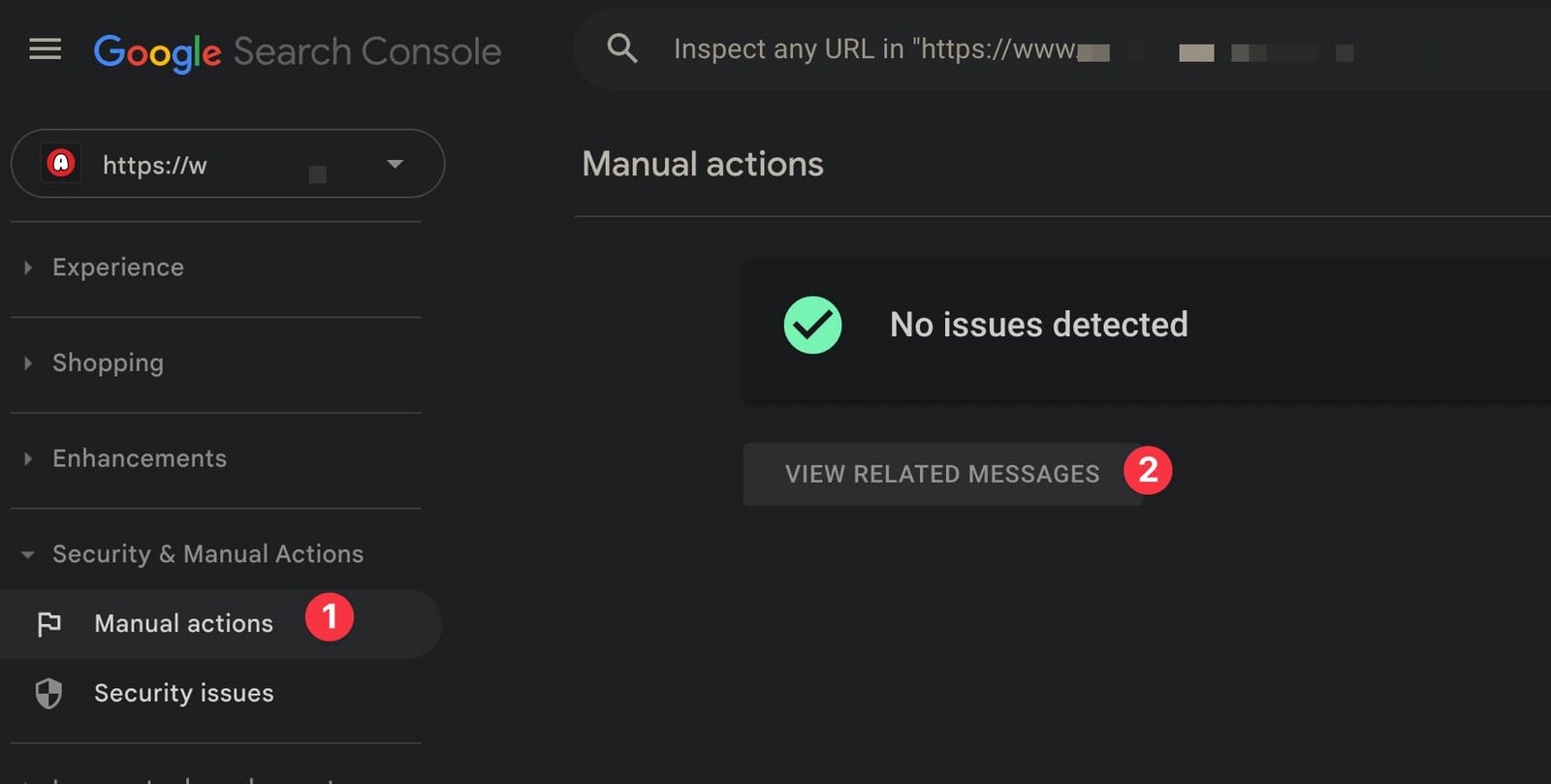
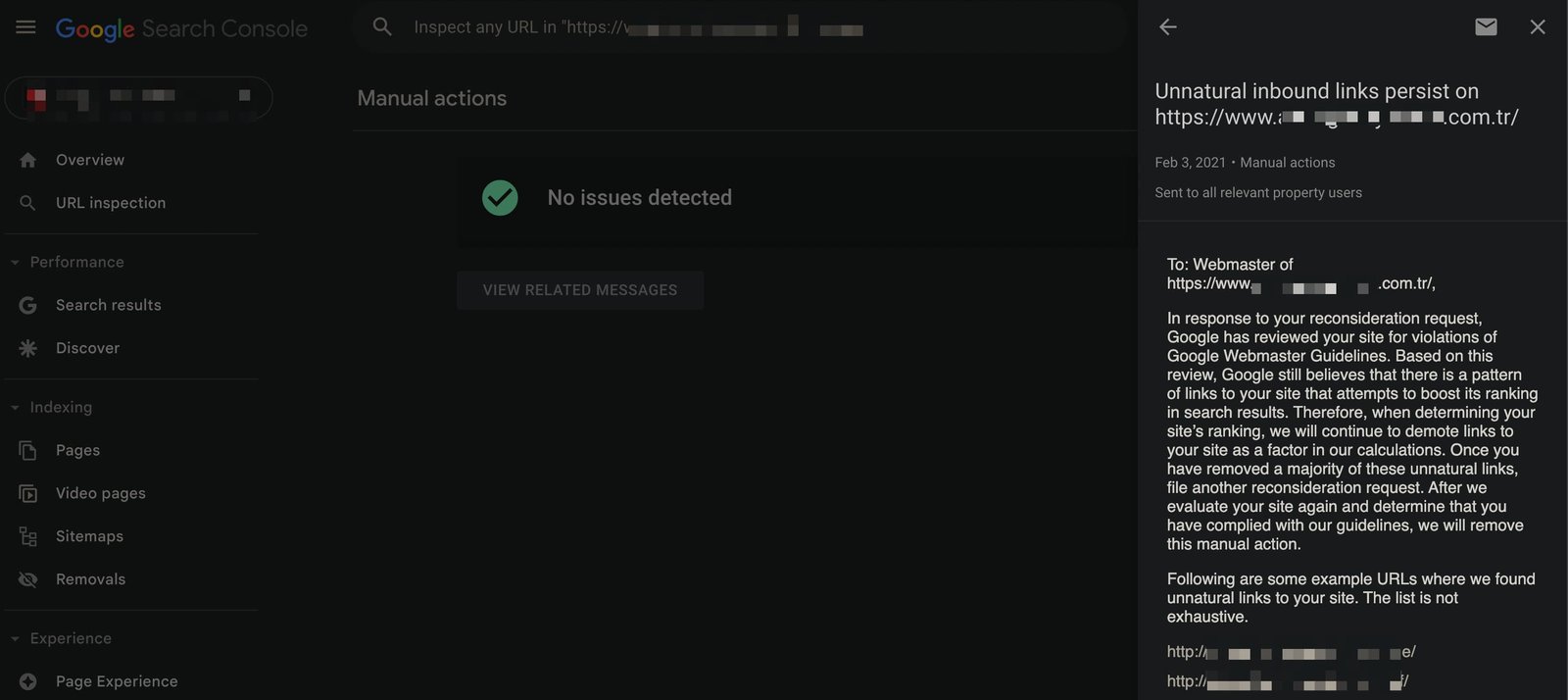
You can log into Search Console to check whether your site has been penalized in previous years:
Manual Action Types (Google Penalties)
Google's manual actions on websites vary, and I'd like to go through them in detail. Unlike algorithmic penalties, a manual action comes with an email to the website owner.
Keyword stuffing
Keyword stuffing, using irrelevant keywords on a page just to boost traffic rather than inform users, is a reason for a manual action.
Examples of keyword stuffing:
- Pages that have only phone numbers but no content with value,
- Pages that have been created for spammy purposes with random content such as the names of cities or districts.
- Using the same keywords both on the page and in meta description tags to generate spam, as in: "We sell custom coffee tables. Our coffee tables are handmade. If you're thinking of buying a custom coffee table, please contact our custom coffee table specialist at custom.coffee.tables.@thewebsitename.com."
Website owners should create content so that the keywords they want to rank for don't come across as spam. To avoid a penalty for this spam type, which is a black-hat SEO method, a page shouldn't contain activity like this. That said, a site containing such content doesn't automatically mean it complies with the guidelines.
In some cases, Googlebot can skip pages stuffed with keywords and scan other pages of the site instead. And if the site offers some other kind of value, Google can ignore the keyword stuffing.
Your pages might rank low or underperform without receiving a manual action at all, simply because Google chooses to ignore them.
This spam type matters especially to EAT. The Guidelines include an example of "Keyword Stuffed":
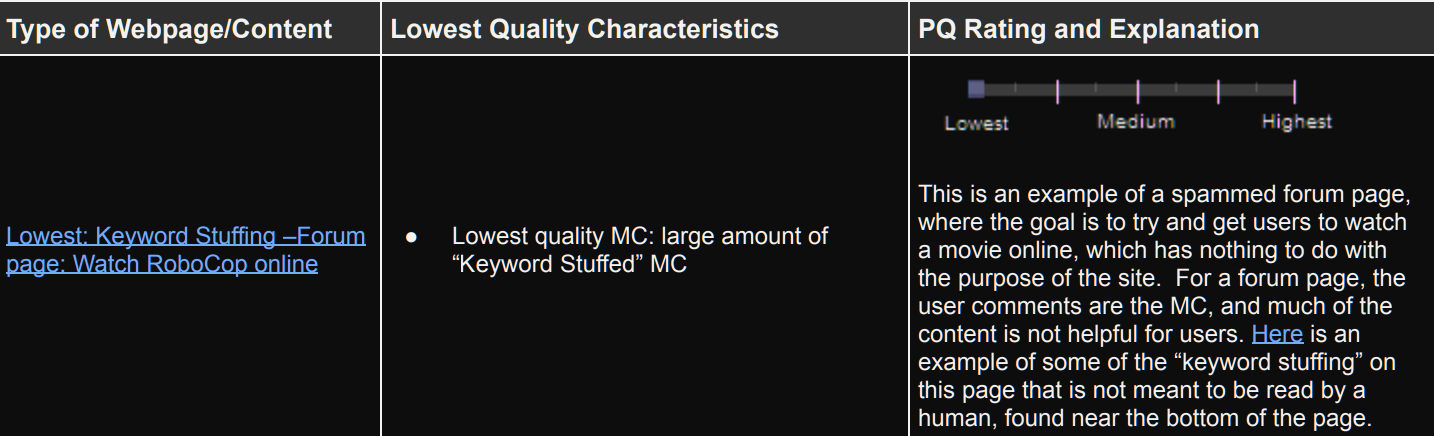
You can see an example of keyword stuffing below:
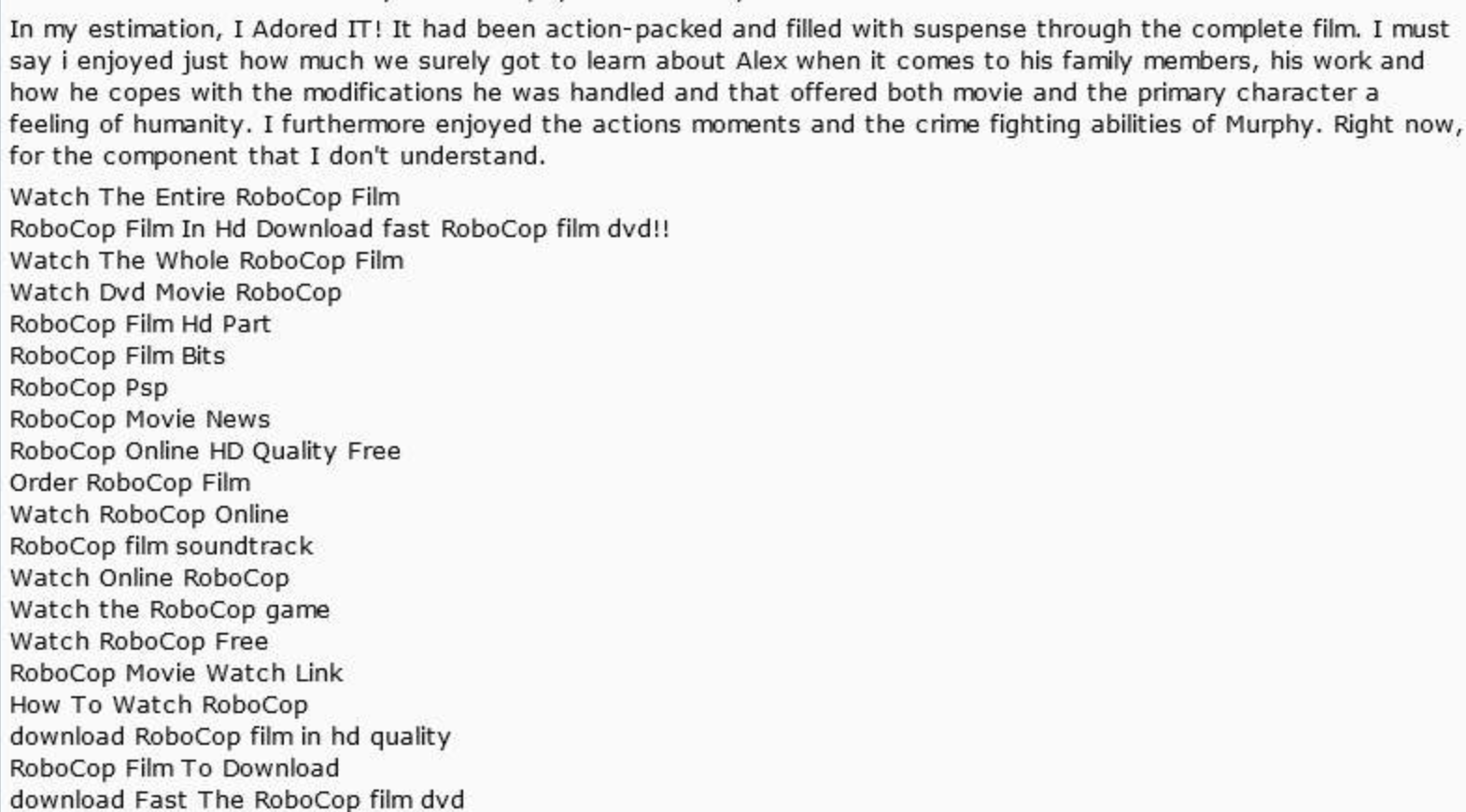
Keep in mind that there is no ideal keyword density for keyword usage.
When asked why websites with stuffed keywords ranked at the top, John Mueller explained "Usually, we're just ranking them because of other factors. Getting one thing wrong doesn't mean you'll never show up in search":
Usually we're just ranking them because of other factors - getting one thing wrong doesn't mean you'll never show up in search (lots of sites get things wrong, but they're still useful).
— 🍌 John 🍌 (@JohnMu) November 23, 2018
Spammy behavior should be avoided in Google My Business (GMB) names. Your business accounts might be suspended for this kind of manipulative behavior, which shows up often in local SEO:
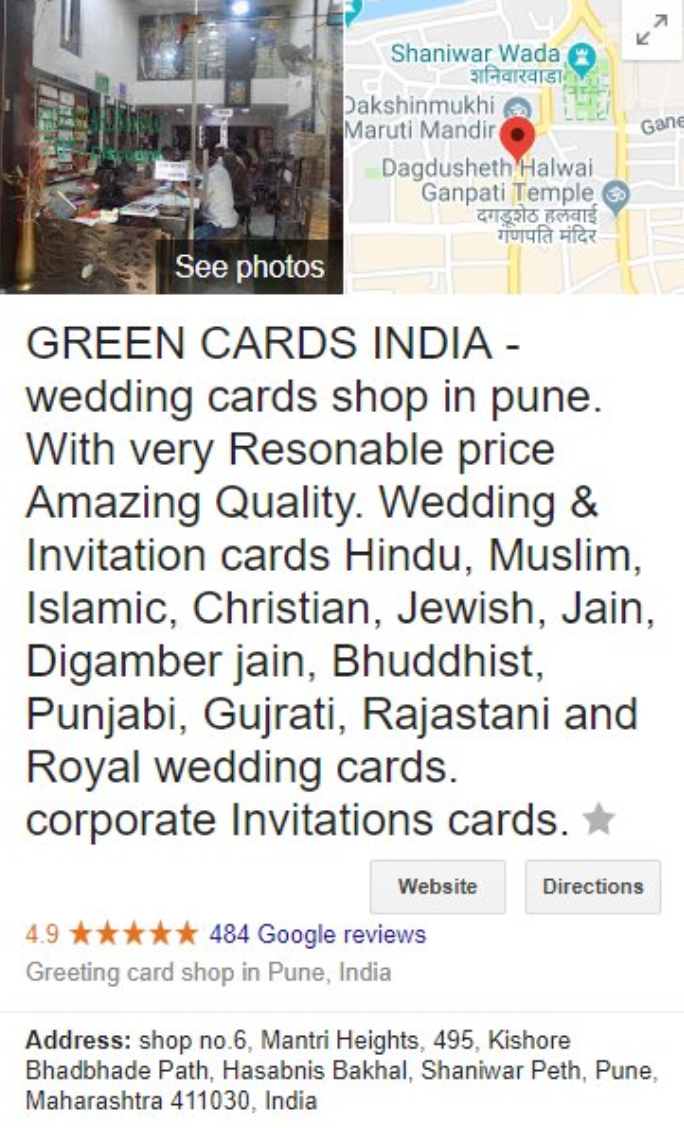
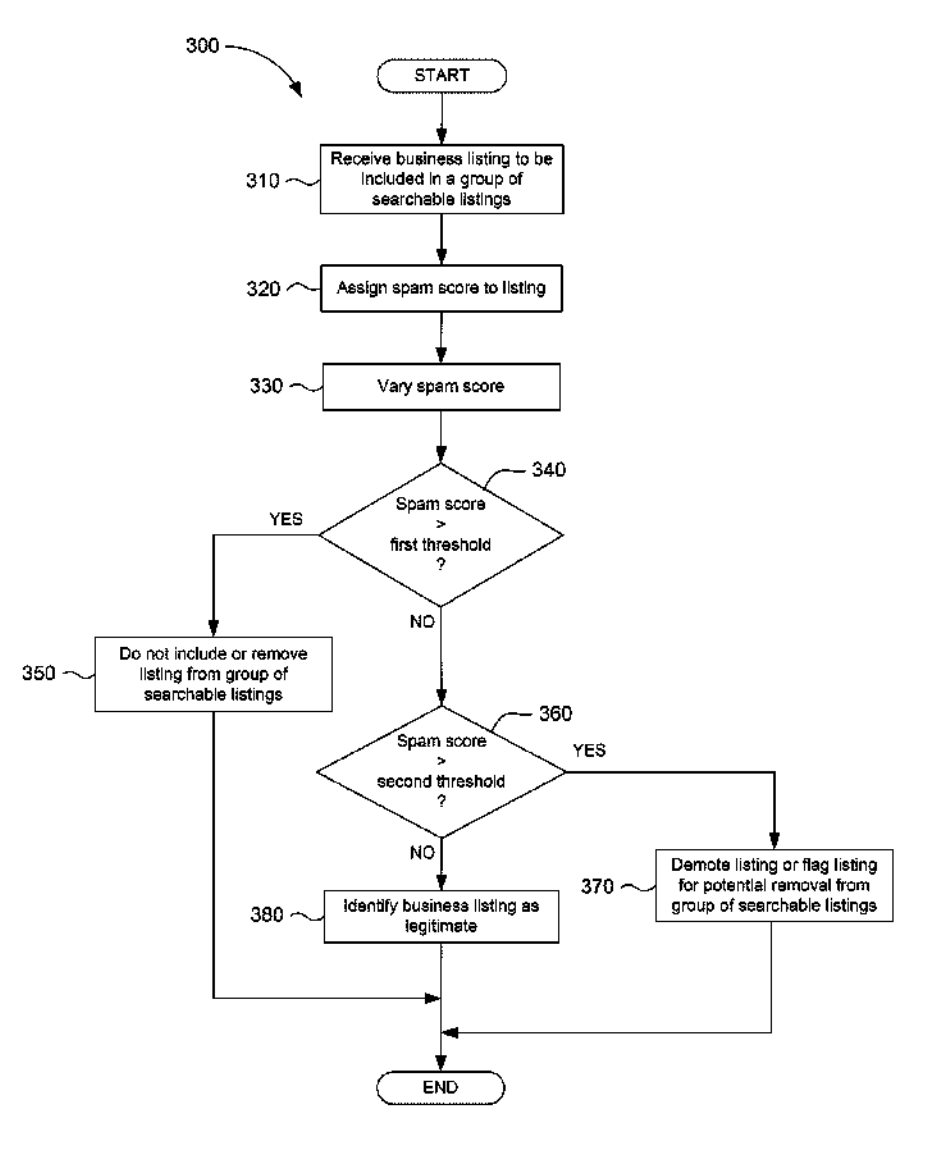
In a patent issued in 2016, Google explains how it detects fraudulent business profiles:
Comment Spam
Some users who post comments may have bad intentions. Google began publishing explanations about this spam type in 2015. Such users can inject spam into your content through malicious links added to their usernames or comments, which goes against Google's guidelines.
If every page of your site is full of spammy comments, Google sees them and may conclude that you encourage spammy content. If you've been approving all comments without checking them, I recommend going back through the relevant pages and reading each one. It's not just blogs, sites with a guest book need to be careful too.
If you allow spammy comments on your site without moderation and get hit with a manual action:
- Your pages might rank lower,
- You send your loyal users to irrelevant or malicious websites,
- Pages with spammy comments may be removed from the index.
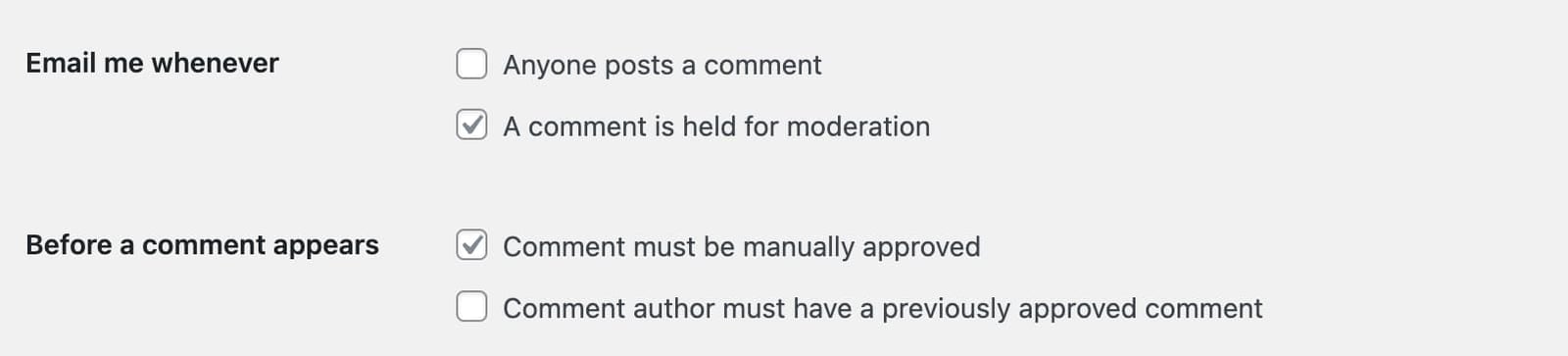
On CMSs like WordPress, you can review comments and delete the spammy ones before they get posted to your site. If your site is under attack from spammy comments, you might consider disabling comments temporarily:

You can add extra safety measures for commenting on WordPress. You might also consider using reCAPTCHA:
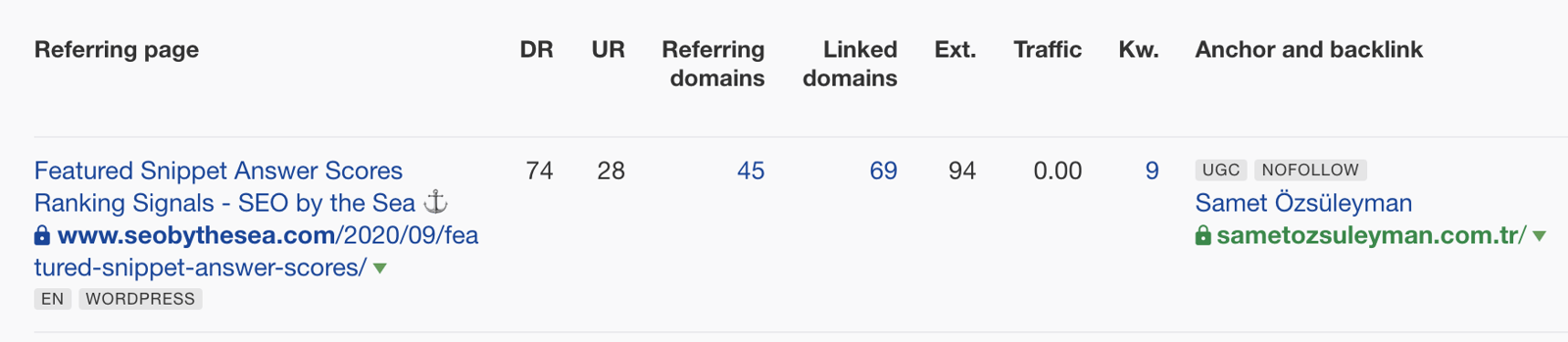
You can add the nofollow attribute to outbound comment links on your site, so links that might otherwise slip through no longer pass PageRank, and spammers may lose interest in commenting. It's the default in systems like WordPress:
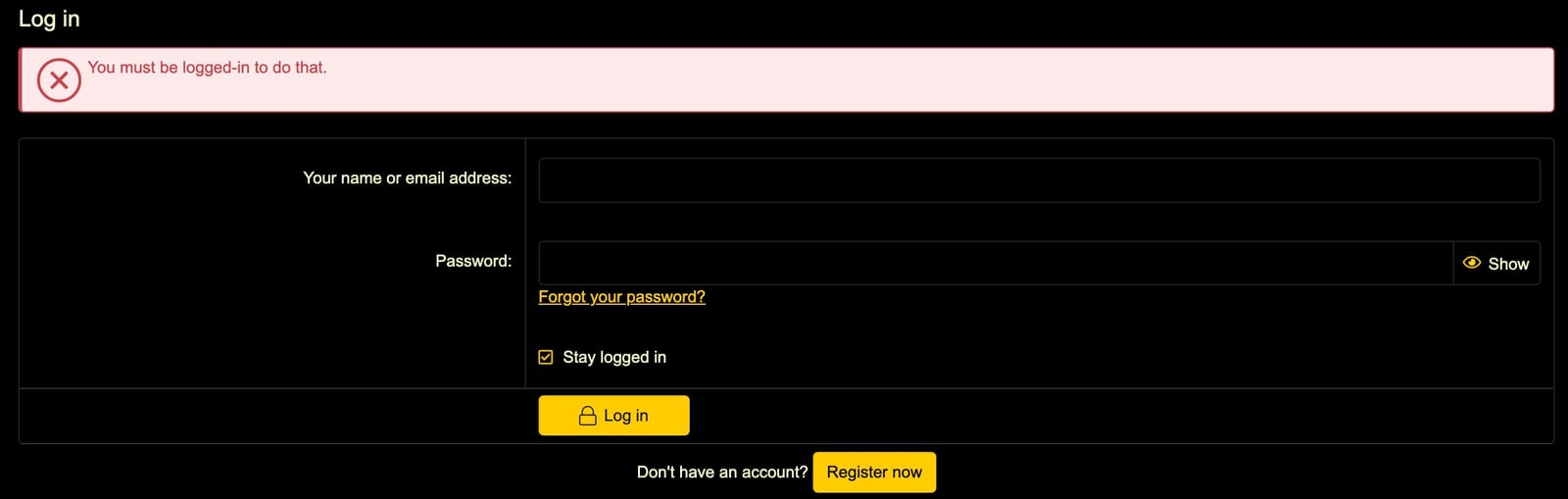
For forums, it can also help to disable crawling of pages like profile pages and block them with robots.txt. As software solutions improve, this spam type is becoming less common:
For more on this manual action type, head to this page: Ways to Prevent Comment Spam.
User-Generated Spam
Sometimes, when the necessary precautions aren't in place, spammy pages created by users can earn you a manual action.
What is user-generated spam?
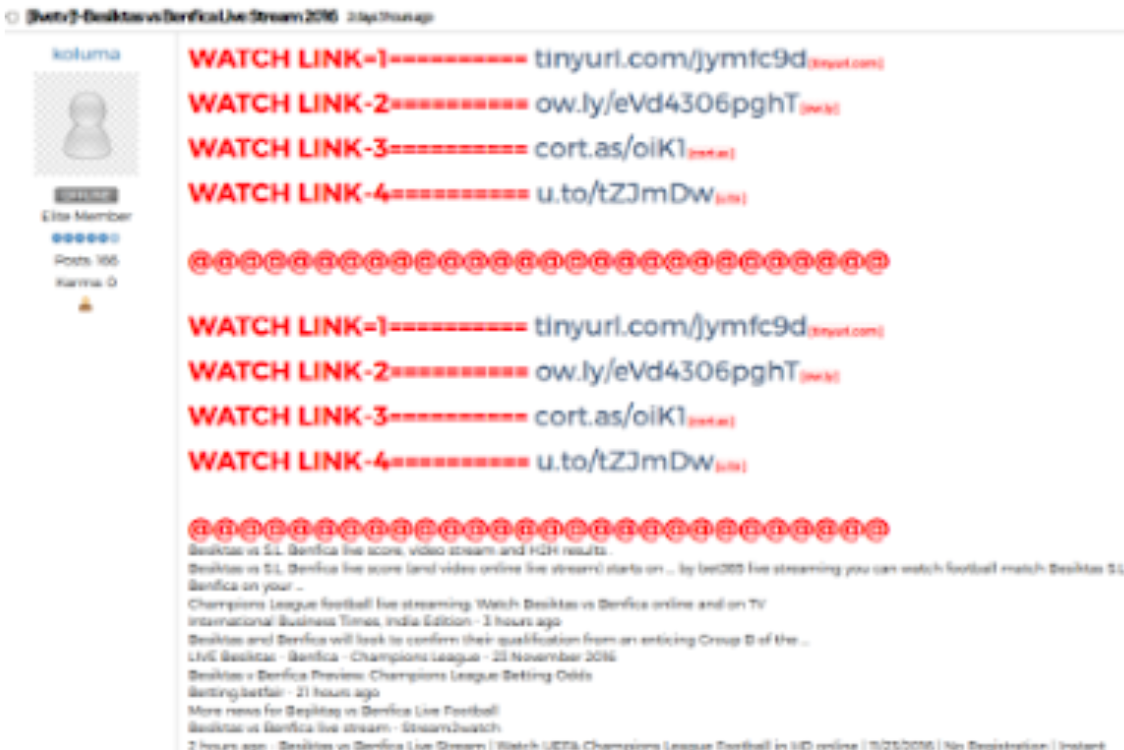
This is the spam that happens on forums, blogs, or basically any page where users can leave a comment or a link.
Examples of user-generated content spam:
- Malicious sites generated within free hosting sites,
- Unmoderated forum messages,
- Signatures in forum profiles,
- Malicious links in Q&A sites.
Example:
To Prevent UGC Spam:
- If the forums on your site are too old or outdated, or not adding much value to your users, consider turning them off.
- If you are complaining about a certain type of spam, you can add the related words such as "watch movie" to the blocklist.
- Improve your moderation team.
- Set limits to adding links to messages.
- Monitor the messages of the most active users at times.
- You can also add nofollow attribute to the links shared by users.
Pure Spam Notification on Google Search Console:
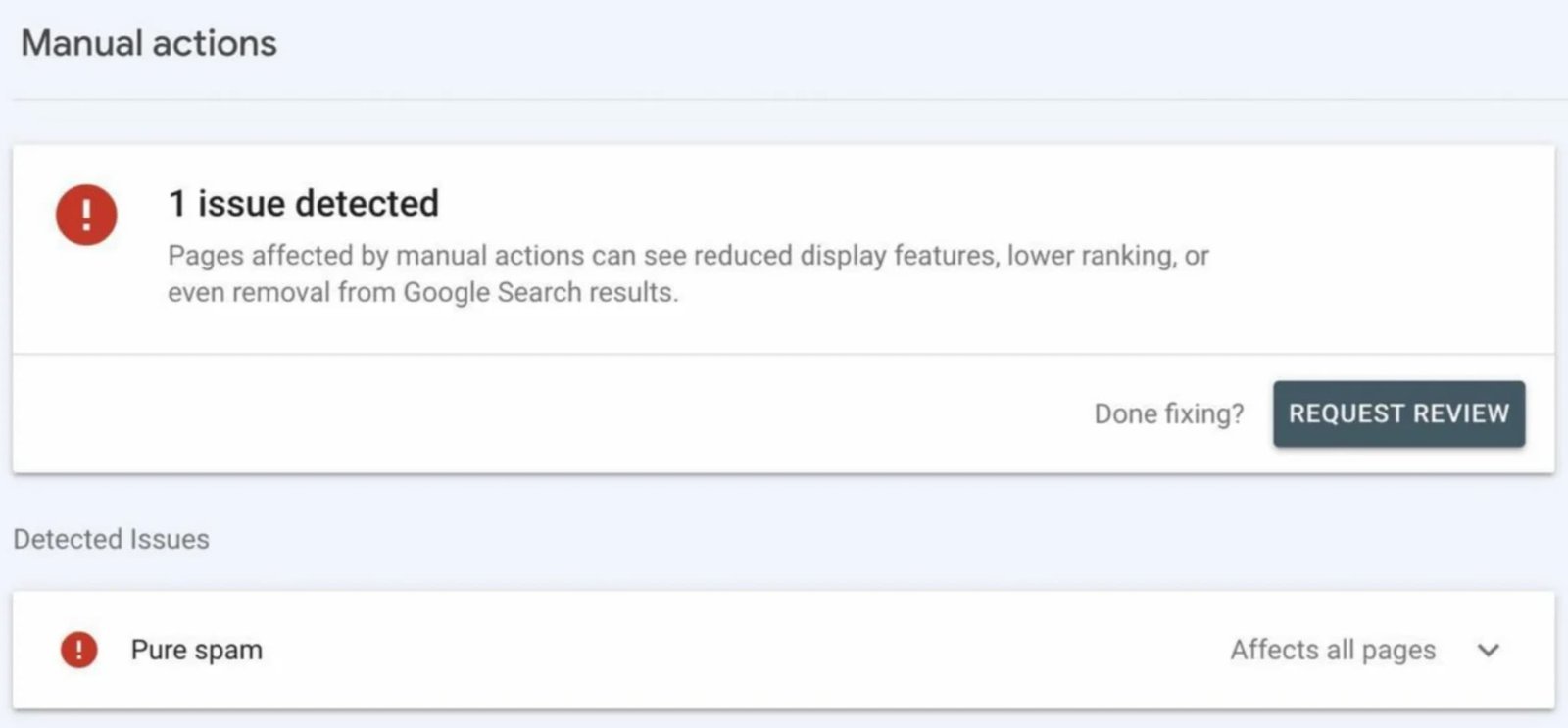
Identify the spam types users could generate and put precautions in place. Websites that don't follow these rules may receive a manual action.
Google has published a study on how user-generated content (UGC) spam affects user experience. The study was conducted with 3300 participants from India, South Korea, and the USA through Google Play, with 1100 people from each country. I won't go into detail, but the study covered these 5 UGC spam types:
•Gibberish: "asdsad jksjfs sdhd"
•Irrelevant: "Review of a movie app for a gaming app"
•Social Media: "Follow me on social media @sss"
•Abusive language: "e.g. idiot"
•Promotions: "Instant cash discount, register now”
You can watch the video here:
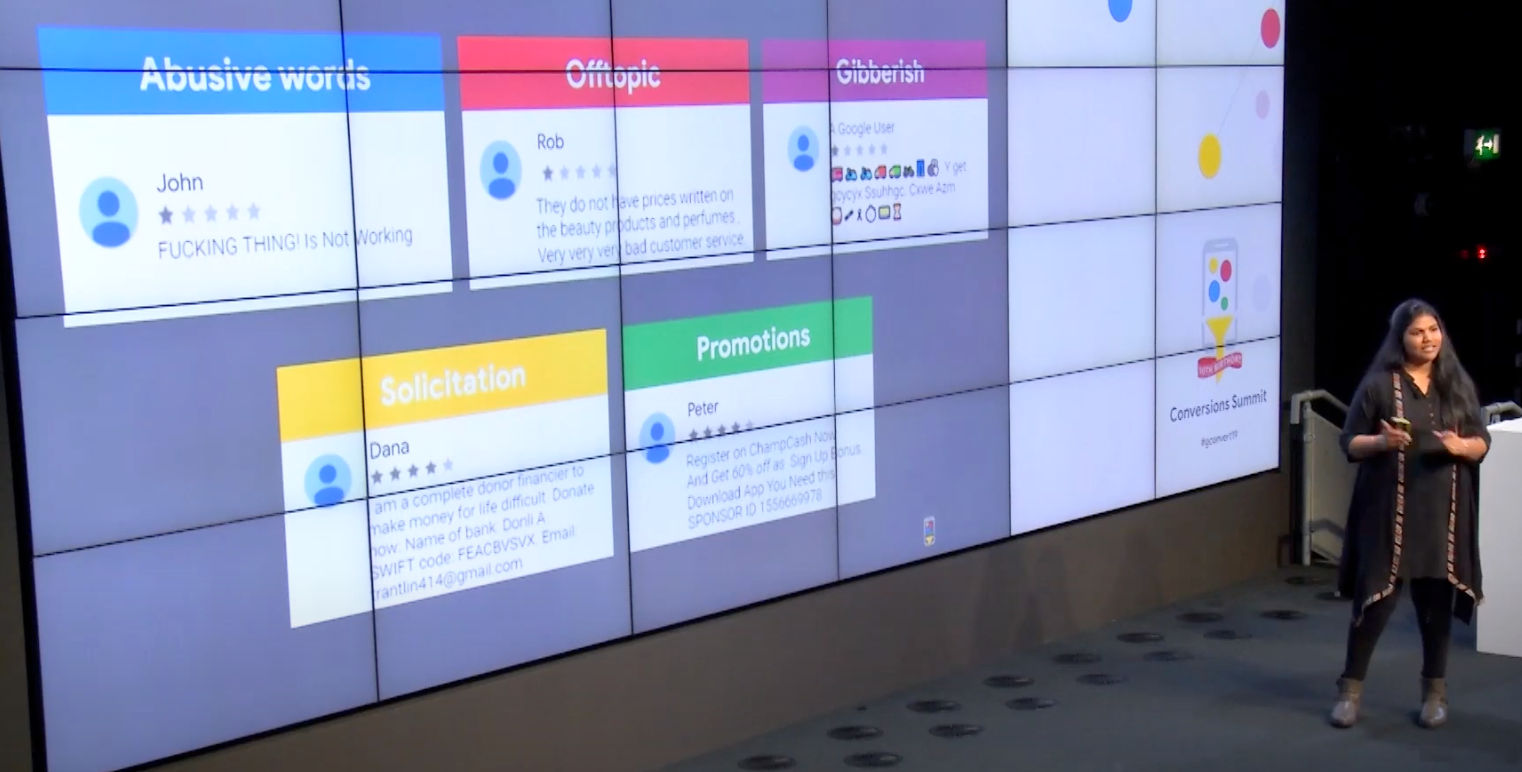
Reducing this spam type from 5% to 0% takes far more effort than reducing it from 10% to 5%. I'm sure Google will keep putting real effort into improving UGC.
Automatically Generated Content
Automatically generated content, as the name suggests, involves content produced through certain programs or systems without adding any value.
These include, but aren't limited to:
- Texts that are gibberish and translated by an automated tool,
- Texts that only include keywords within no comprehensible context,
- Texts generated through automatic processes such as Markov Chains,
- Meaningless content generated using synonymous words,
- Pages generated through retrieving data from RSS feeds,
- Content generated through combining other content from different websites without adding any value or moderation.
Google offers only limited examples of automatically generated content and notes that a manual action could be taken on entirely different behavior. Note, too, that Google hasn't updated the documentation page for this manual action type in years. There's also an action type applied to automatic queries.
Sneaky Redirects
A sneaky redirect is the act of sending a user to a different page than the one they saw in the search results. The point is to show different content to the user and to Googlebot. The first announcement about this behavior was made on April 30, 2014.
When a user gets redirected to a page about "x movie" while the search result they clicked was about "structured data," it means the webmaster deliberately sent the user to different content.
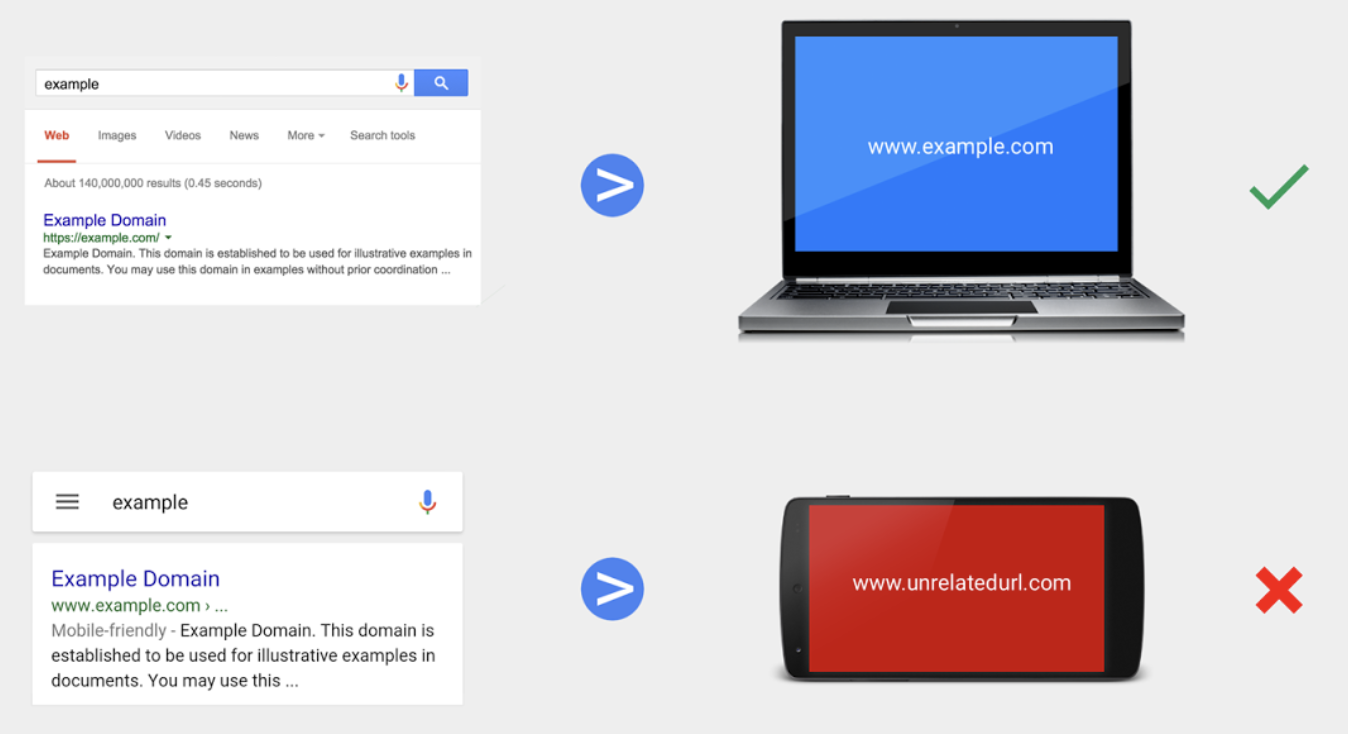
Another example that can lead to a similar mistake is redirecting mobile users to different pages than desktop users. Make sure your redirect (JavaScript & 301) reflects the truth, so you don't get caught by this manual action type.
You can check whether your website has a sneaky redirect using the code below:
<script type="text/javascript">location.replace("https://domain.com");</script>
It's not just the browsing device that matters in sneaky redirects, but also the source the user is redirected from, in other words, the search engine or social media platform. The source should be detected before the redirect. And I'll remind you that unreliable advertising companies caused problems like this for publisher websites in the past.
Beyond a manual action, you can also lose your users' trust because of this.
Affiliate Programs
Affiliation comes with the nature of the web, which is perfectly normal. Still, website owners in the affiliate marketing business need to be more careful.
If affiliate sites create pages that add no value to users, Google may consider those pages worthless. Low-value content in the SERP leads to a poor user experience.
Examples:
Pages with product affiliate links where the product descriptions and reviews are copied directly without any added value, Affiliate websites with a limited amount of original content.
I recommend doing everything you can to make your site perform better than the original merchant's site. Instead of copying content from the merchant, produce original content with real added value so you can make more sales. Click here for more information.
Scraped Content
Websites with little or no original content, copied from other sites without adding value, can receive a manual action under the name "scraped content."
Content copied directly, even from the highest-quality sources like Wikipedia, will still be low quality. And scraping like this can sometimes create copyright problems too.
Examples:
- Sites that copy content through bots or manually without adding any value,
- Sites that copy content from different sites and modify it slightly or substituting synonyms,
- Sites that take content such as images or videos from other sites without any other activity might be penalized with manual action.
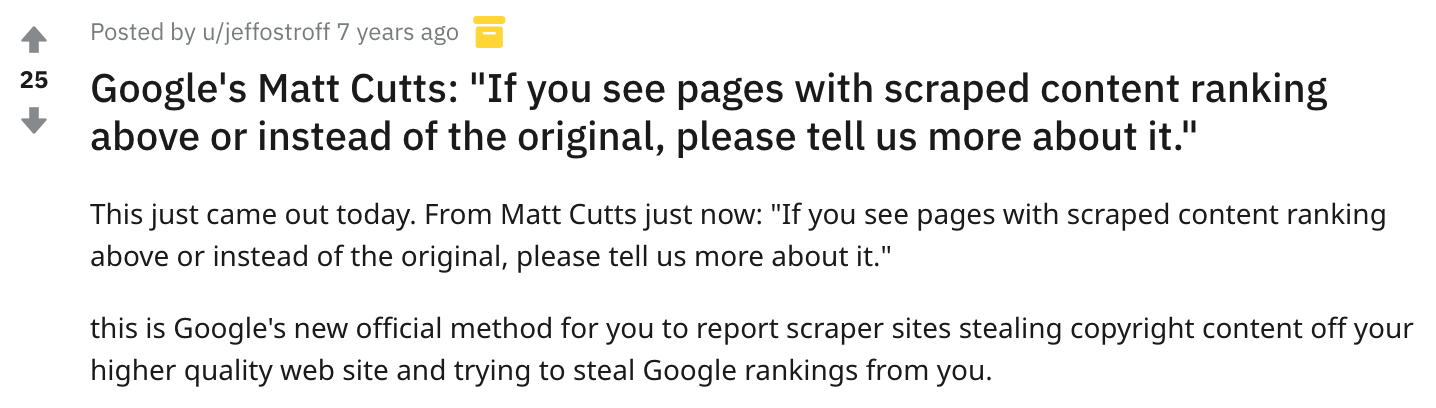
Matt Cutts from Google addressed this on Reddit 7 years ago:
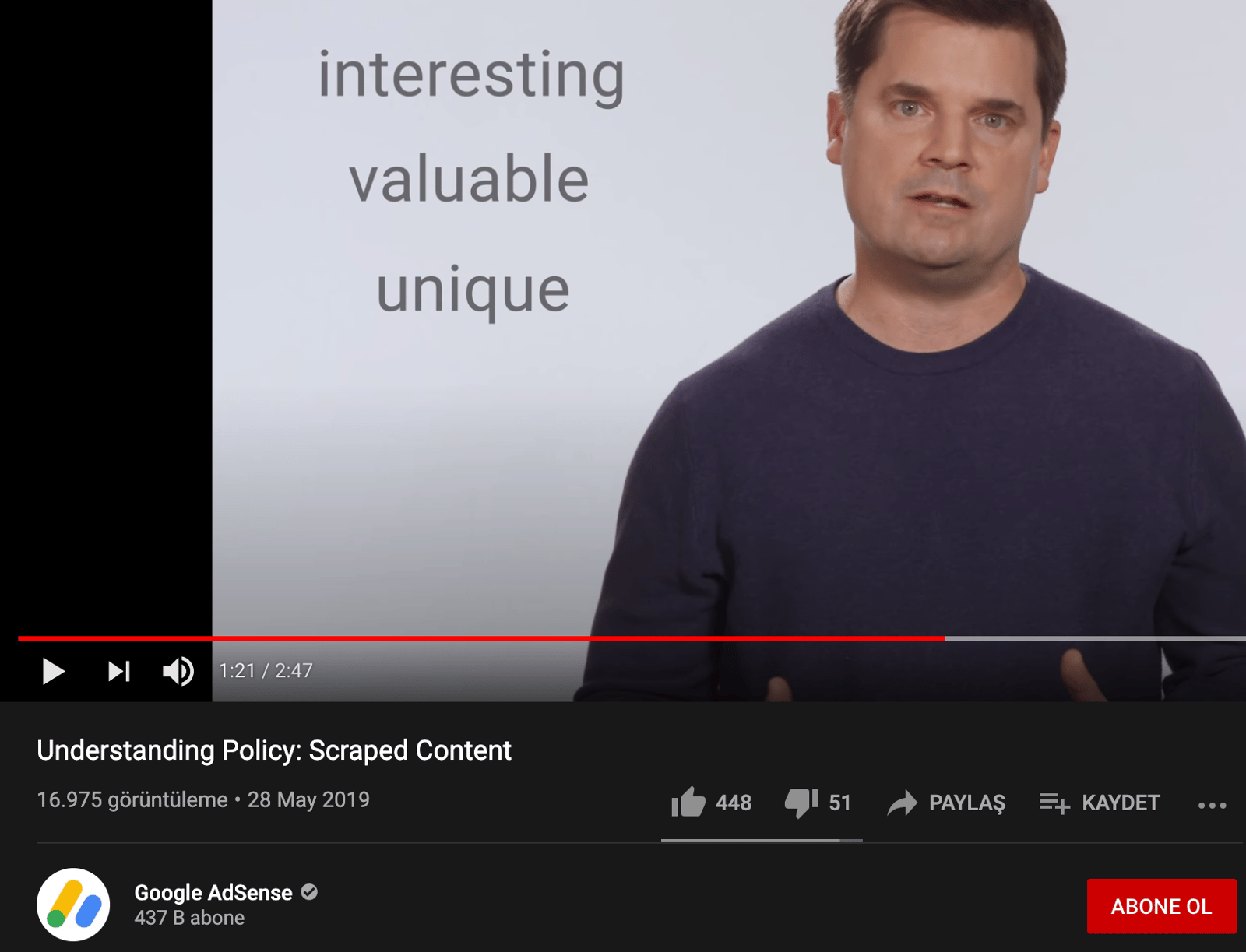
This also goes against (Valuable Inventory: Scraped Content) Google AdSense policy:
Doorway Pages
Doorway pages are best described as poor intermediate pages created to rank highly for specific search queries, which violates the quality guidelines.
The New York Times published a report on poor search results 10 years ago. This manual action, for doorway pages, first started to be used on March 16, 2015.
Doorway pages are malicious pages built to target certain queries, generated, for instance, with district names such as "Chelsea SEO Agency" or "Westminster SEO Agency." In practice, these pages steer users toward the same destination. The main problem with doorway pages is that they add no value for users, usually because the same pages get generated over and over with only slight keyword changes.
That sounds like doorway pages, not something I'd recommend.
— 🍌 John 🍌 (@JohnMu) December 10, 2019
While this can show up across multiple pages of a single site, it can also appear across different domains. Here, it's important to fully understand user intent and the content being presented. Click here for more details.
Cloaking / Hidden Texts and Links
Cloaking is the act of showing different content to users and to search engines, which violates Google's guidelines.
Google publishes these two violations separately, but I'd like to explain them together. Examples of cloaking:
- Displaying HTML to Googlebot while the users can only see the images and videos,
- Displaying search keywords to Googlebot only when the user agent is detected while not serving the keywords used in ranking to human users.
- Displaying keywords to users as they expect to see, while displaying different words to Googlebot by overusing the keywords in HTML,
- Hiding text behind an image intentionally,
- Using white text on a white background to make sure it won't be realized,
- Setting the font size to 0.
You can watch the video Matt Cutts prepared here.
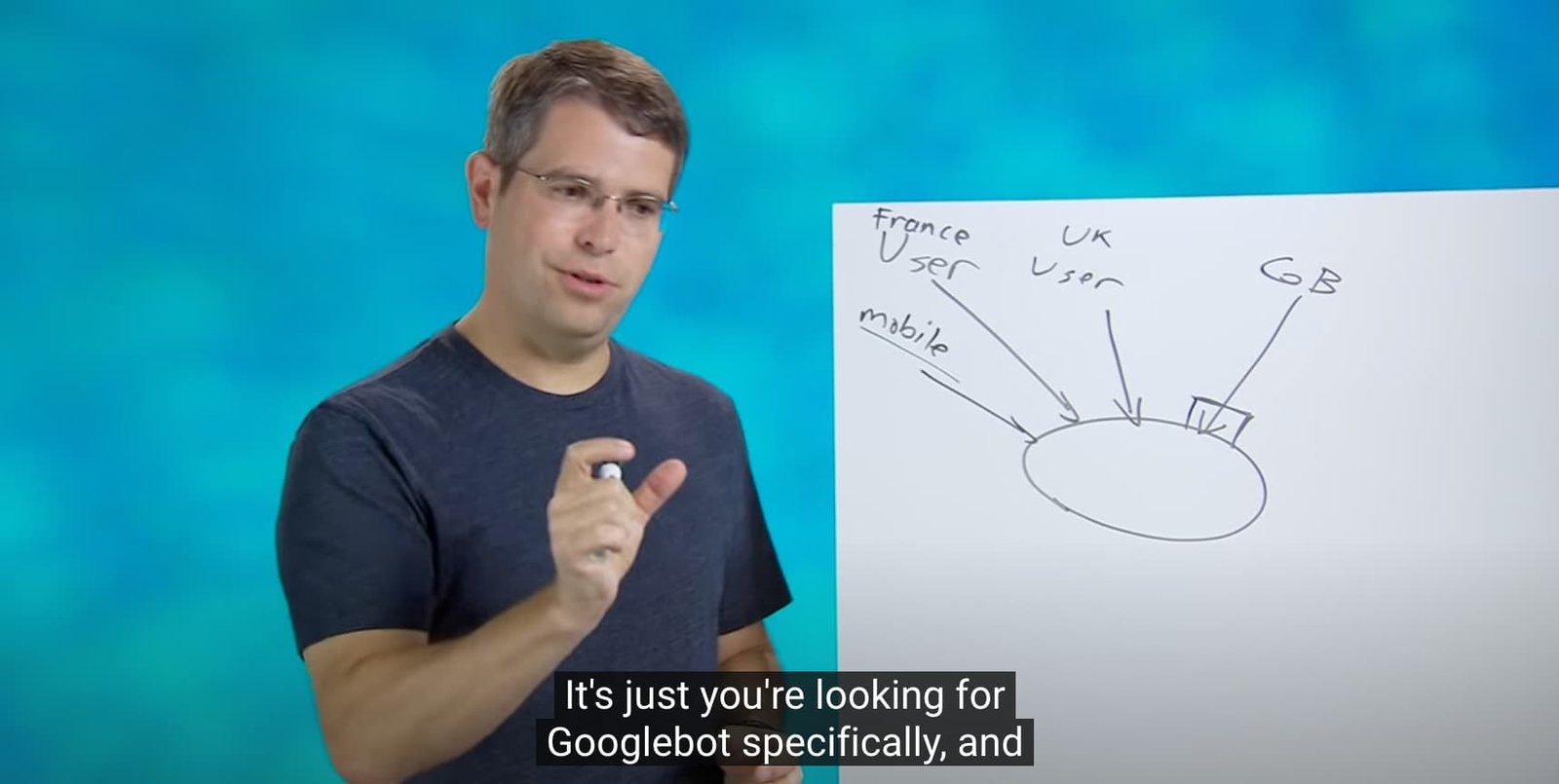
It's also important not to serve a different version to Googlebot through IP redirects. This won't be an issue unless you serve different content to users in the USA and to G-bot, since G-bot crawls from US-based IP addresses. Hidden keywords can hurt your site too.
Not every cloaking method should be treated as a violation. Sometimes extra text is used to explain HTML text on JavaScript-based sites, which may not count as cloaking. It's best to look for manipulative intent when deciding whether cloaking is a violation.
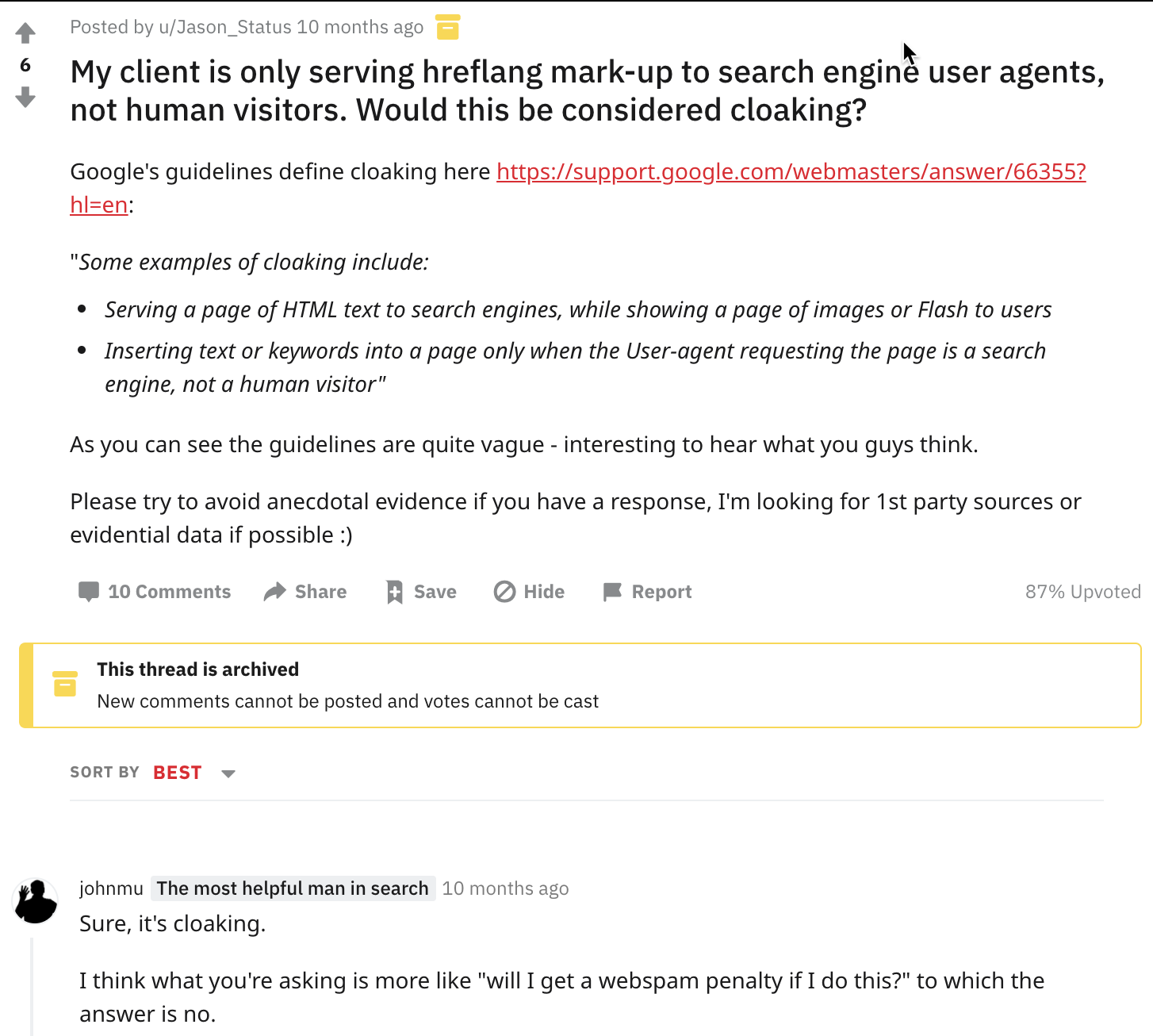
Mueller was asked on Reddit whether using hreflang counts as cloaking, and his answer was "no":
You should also be careful with A/B tests. It's emphasized that this won't be a problem as long as you don't treat Googlebot differently, and that A/B tests should be given a limited lifespan:
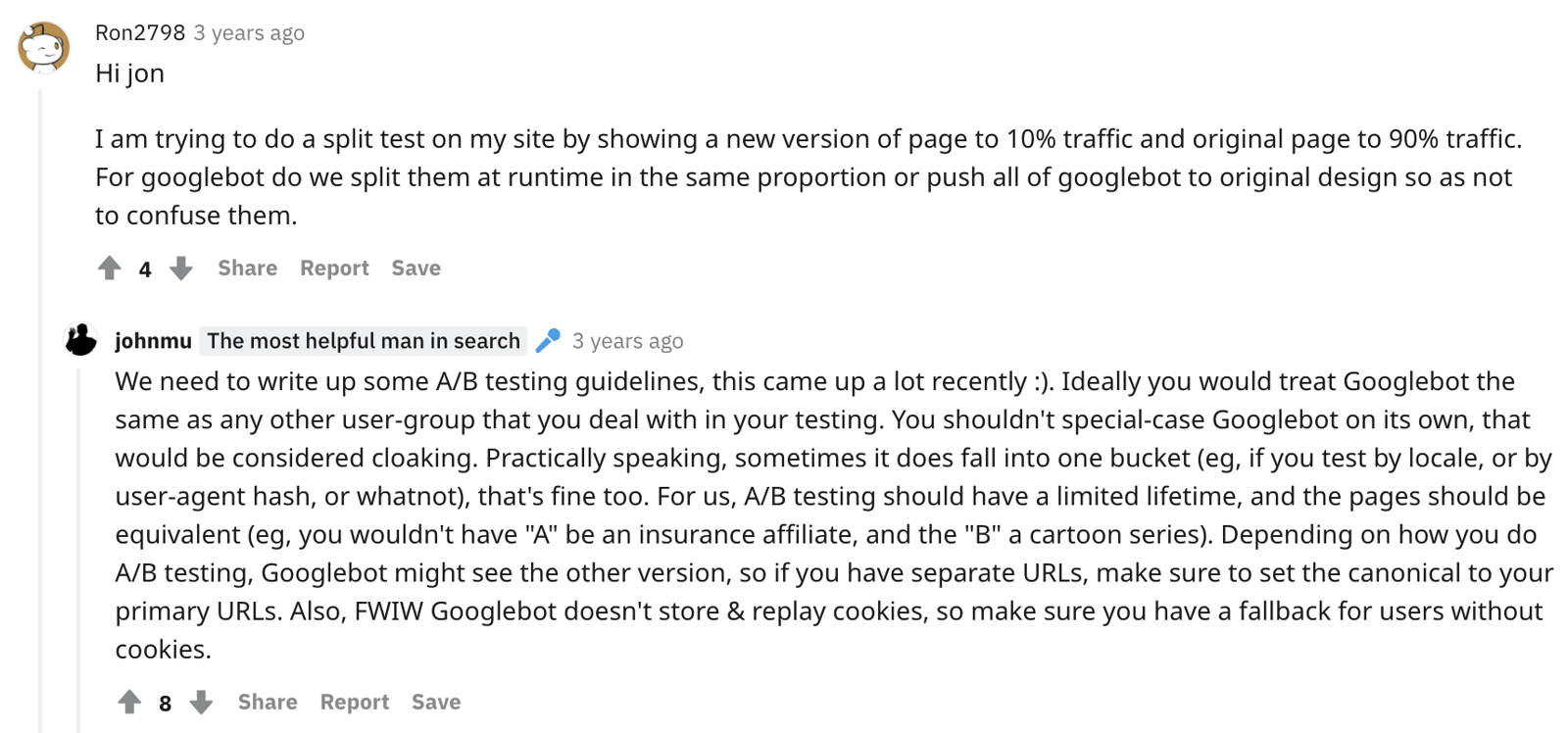
Websites offering subscription-based access to some of their content might consider using the relevant structured data to avoid cloaking.
Backlink Violations
Paid backlinks and link schemes that break the guidelines can get your website penalized.
Google finds it perfectly natural to pay for advertising on websites. But it recommends adding nofollow to backlinks, or adding sponsored to sponsored links.
Examples of link schemes that may be considered a violation:
- The act of exchanging links,
- Paid links without nofollow attribute,
- Aggressive use of anchor text,
- Not stating that the backlinks are sponsored,
- Getting backlinks to your site, which are automatically generated through programs designed to do so,
- Low quality web directories,
- Unnatural backlinks from footers.
You can lean on SEO tools that provide strong backlink data, such as CognitiveSEO, to help tell natural links apart from unnatural ones:
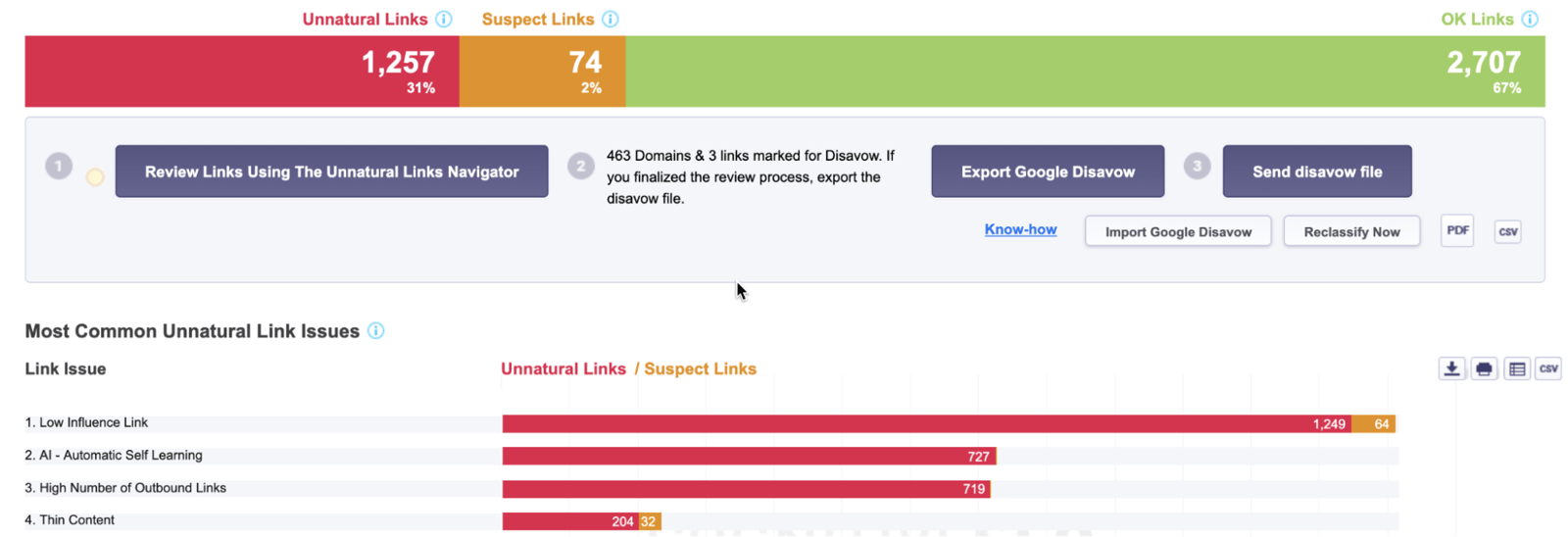
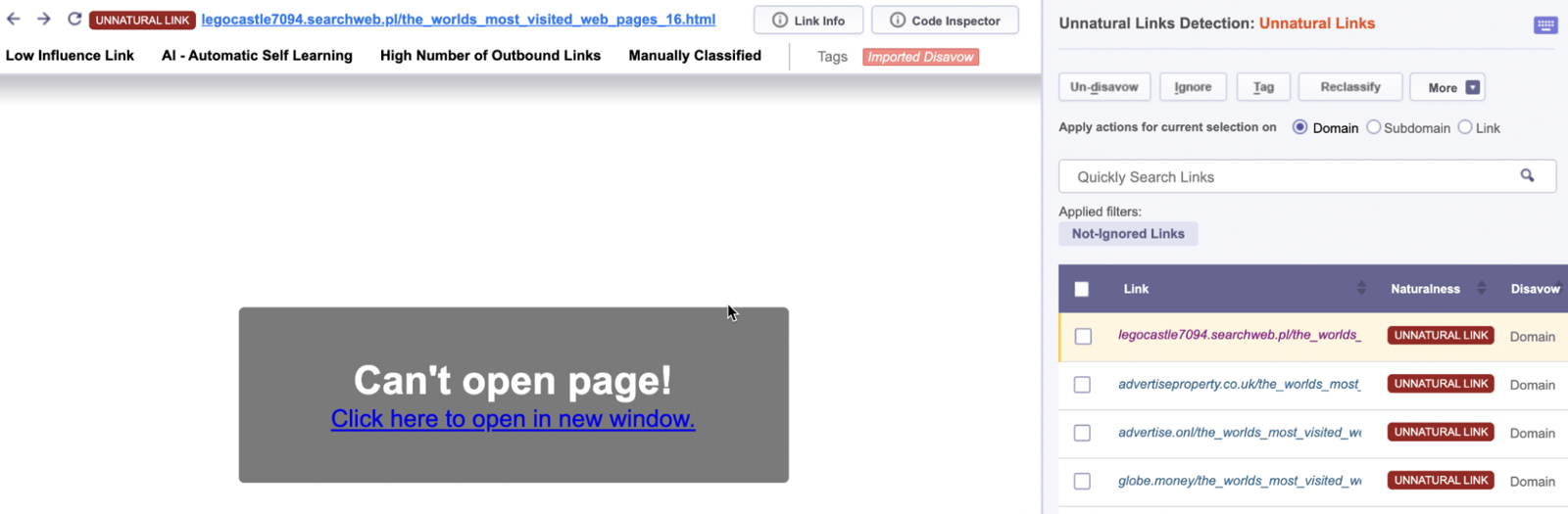
You can easily see where backlinks come from. By checking the "unnatural link" sites these tools flag, you can also build the best link profile for your situation:
You might consider adding nofollow to links in work like press releases:
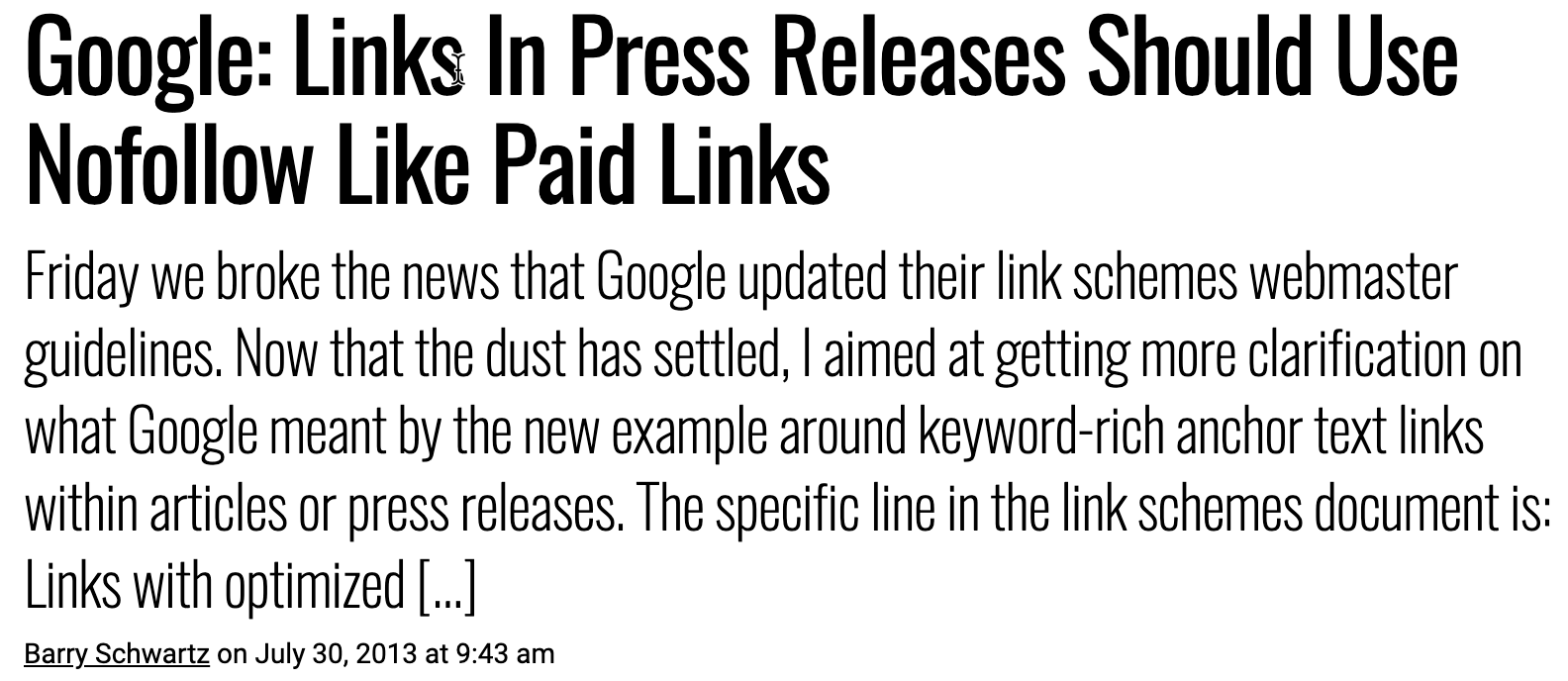
Unnatural links, or links without the nofollow attribute, may be treated as a violation by Google. A manual action can follow in some cases, while in others the algorithms may simply choose not to use the signals from those links in ranking.
Google explains that random backlinks to your site may be ignored:
Random links collected over the years aren't necessarily harmful, we've seen them for a long time too and can ignore all of those weird pieces of web-graffiti from long ago. Disavow links that were really paid for (or otherwise actively unnaturally placed), don't fret the cruft.
— 🍌 John 🍌 (@JohnMu) January 25, 2019
So what does it mean to get natural backlinks? To explain, I'll refer to Google's own definition:

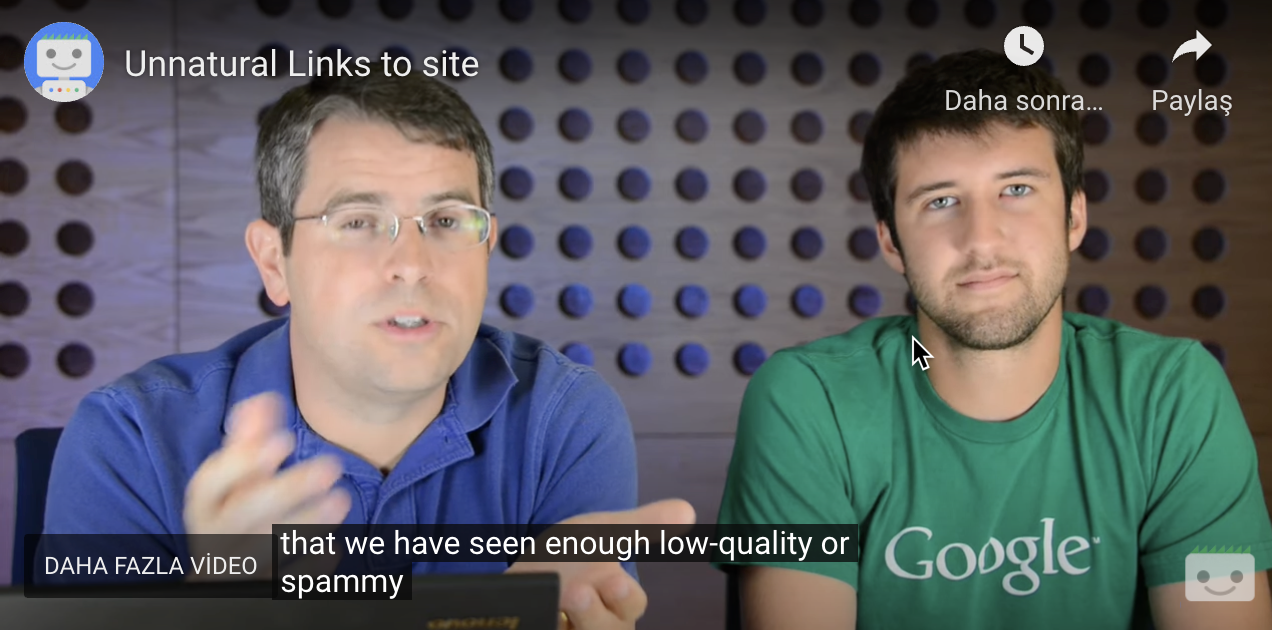
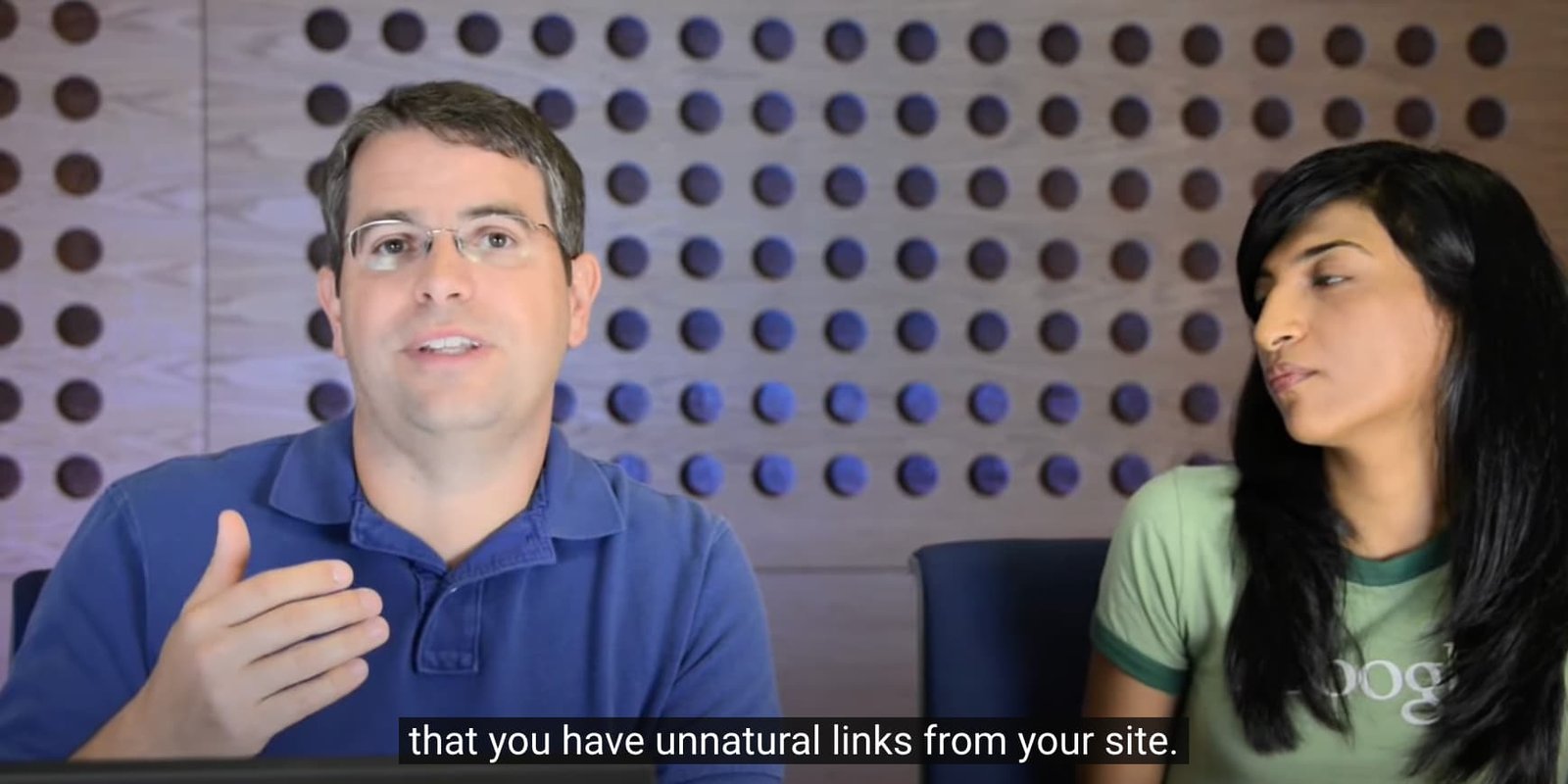
I'd like to mention 2 manual action types: unnatural links to your site, and unnatural links from your site. In short, spammy or low-quality links, whether to or from your site, can both trigger a manual action.
An explanation for unnatural links to your site:
An explanation for unnatural links from your site:
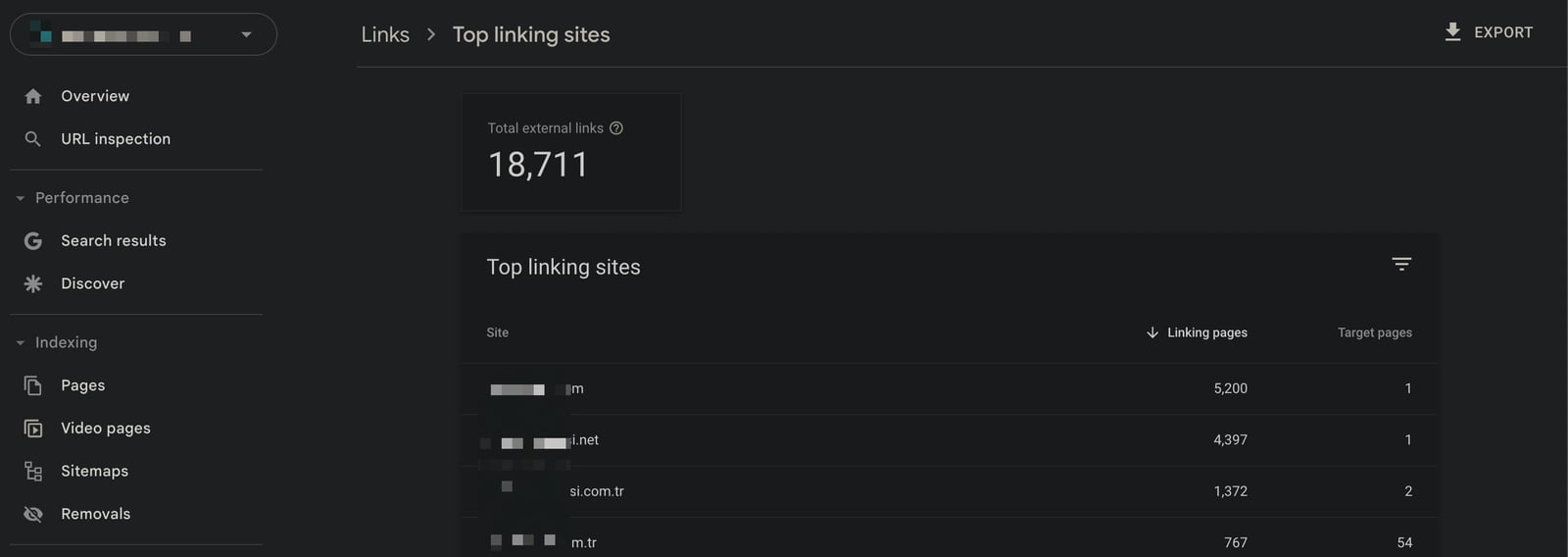
You can find backlinks to your site through Search Console. Click links, then "top linking domains," to see all the data:
You can use tools to disavow unnatural backlinks to your site. If unnatural backlinks are the reason for a manual action against your site, I recommend explaining the details in your reconsideration request:
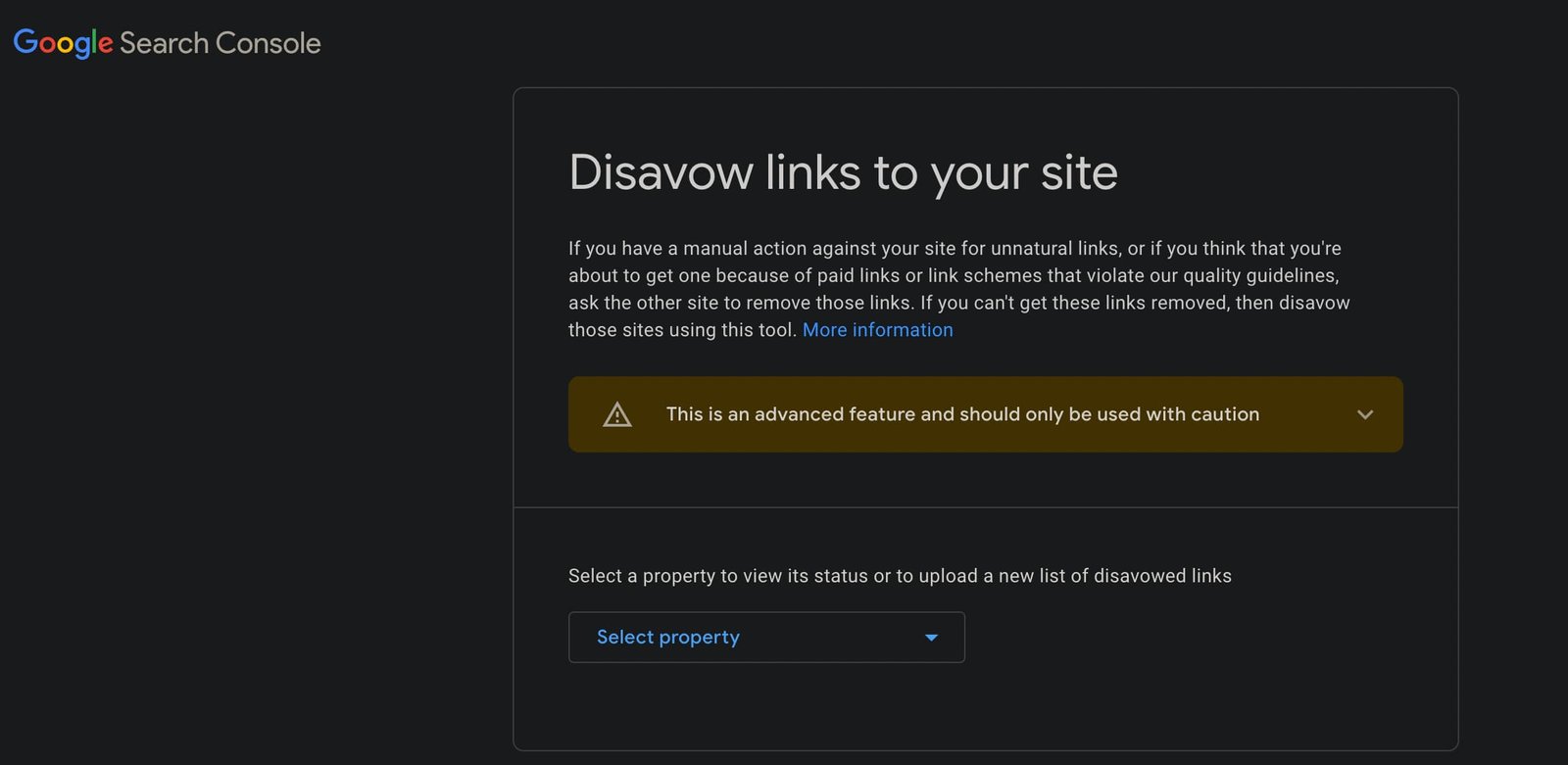
Search Console will still show the disavowed backlinks, but Google will process them once it crawls the relevant pages.
Structured Data Spam
You can get a manual action, knowingly or not, because of the structured data on your site. This kind of manual action only removes your rich results from the search results. For example, pages using product schema markup may no longer show up in the SERP with review stars or price. If you do violate the guidelines, you'll likely get a manual action email like the one below:
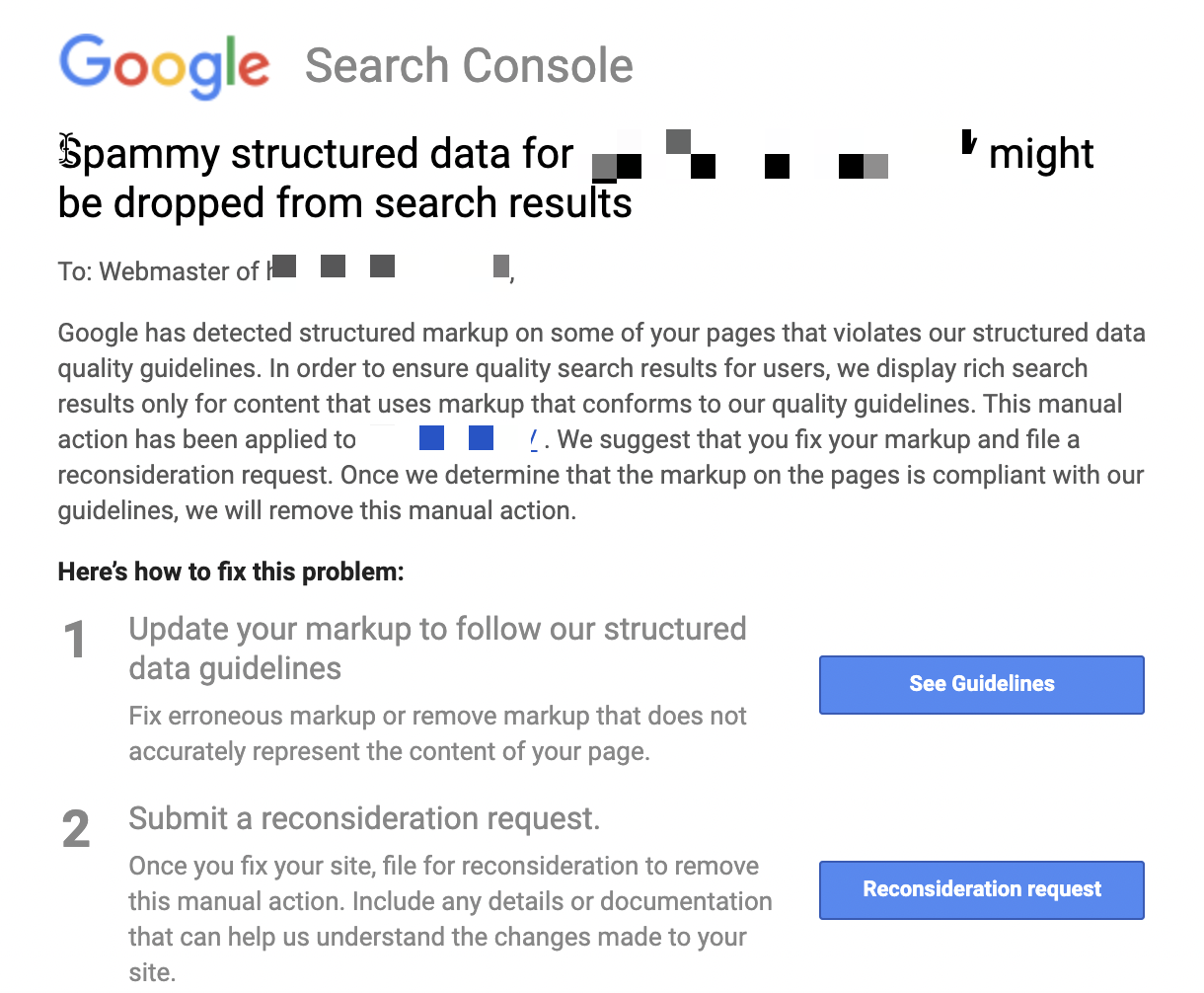
You can read the structured data guidelines and check your schema against each guideline for the specific structured data type. For example, here are the specific guidelines for fact check schema:
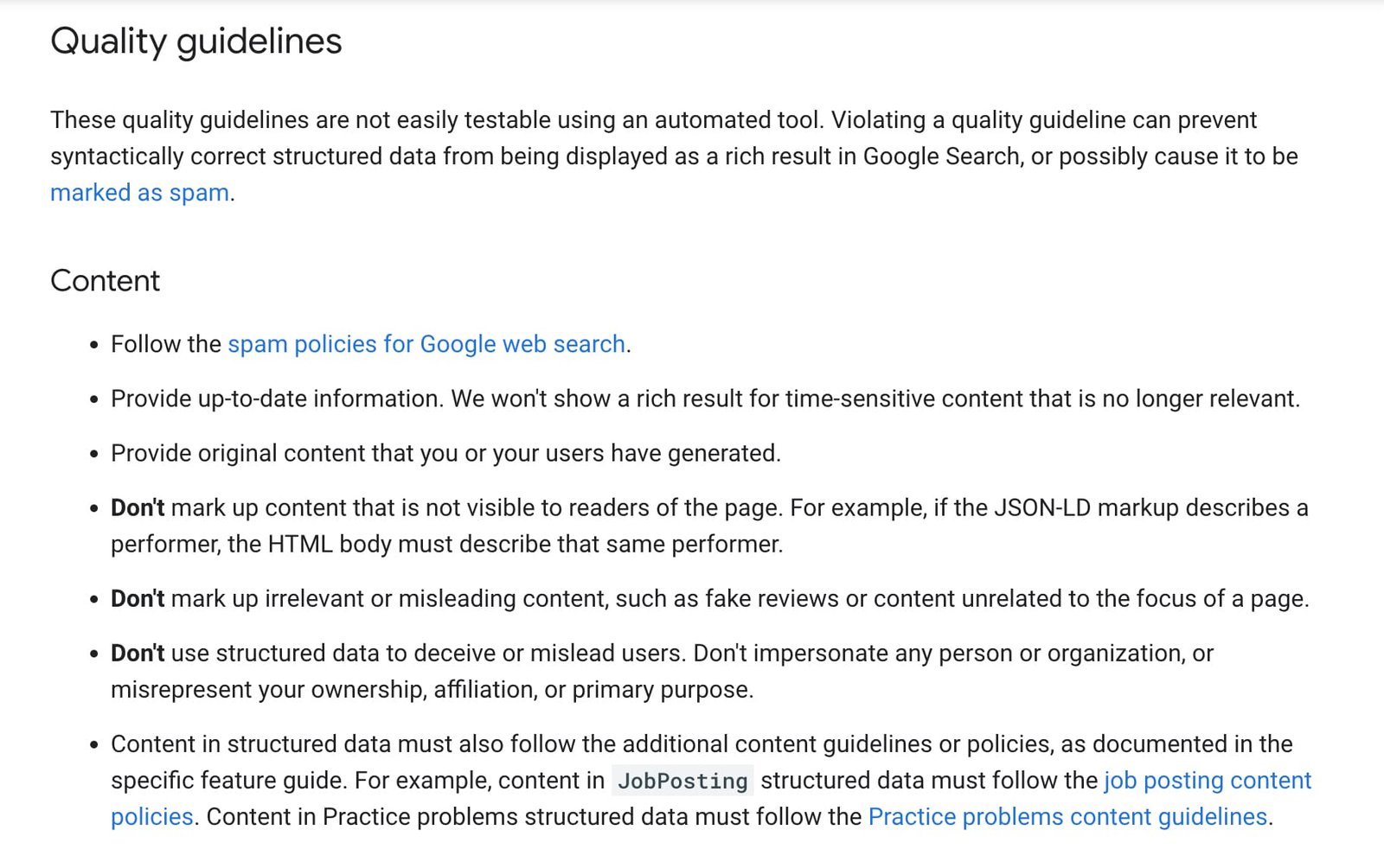
If you do get a manual action for spammy structured data, all you need to do is fix the errors on the relevant pages and send a reconsideration request.
Content with Little Value / Thin Value
If you create pages or content with little value, all or part of your site can receive a manual action penalty for adding little value.
Examples of content with little added value:
- Automatically generated content,
- Doorway pages,
- Illegible pages full of punctuation and spelling errors,
- Content with no useful details and value,
- Illegible texts because of poor design,
- Scraped content,
- Insufficient unique content.
You can watch Google's video on this subject here:
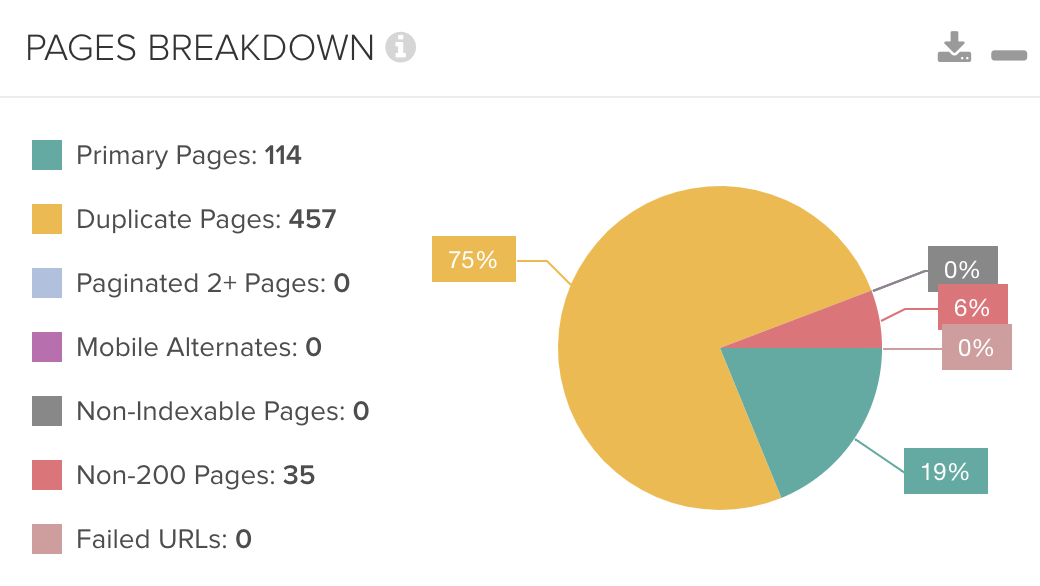
Check your site for duplicate content so you can serve more unique, high-quality content. I recommend reading the blog on how to create high-quality content if you haven't already.
Sloppy content won't bring you much organic traffic, and having a lot of it can lead to a manual action. Remember that you're responsible for every piece of content on your site, and consider updating content that was created years ago but adds no value today.
Pure Spam
Pure spam is one of the harshest manual actions Google applies to a website. Sites using aggressive spam methods can get a pure spam penalty.
Repeatedly receiving manual actions can also lead to a pure spam penalty. For instance, if your site keeps getting penalized for low-value content or unnatural links, you're likely to see a pure spam notification in Search Console. Keyword stuffing and other aggressive spam types fall under this category too.
When you get a pure spam penalty, your site is removed from Google's index. Within 12 to 24 hours of the manual action notification, Google removes your pages from the index. If you get traffic from platforms like Google News, your pages may be removed from the news index as well.
Security Issues
Security issues are different from manual actions. To protect and inform users and website owners, Google may show visitors that a site, or some of its pages, has been hacked. One of the main differences between manual actions and security issues is that the latter requires spam to be reviewed manually.
You can read the article on sites with malicious behavior. If you have problems like content injection, you'll need to fix them.
You may also run into a social engineering content problem. When you receive such notifications, follow the steps Google explains and consider removing the relevant pages if that's required:
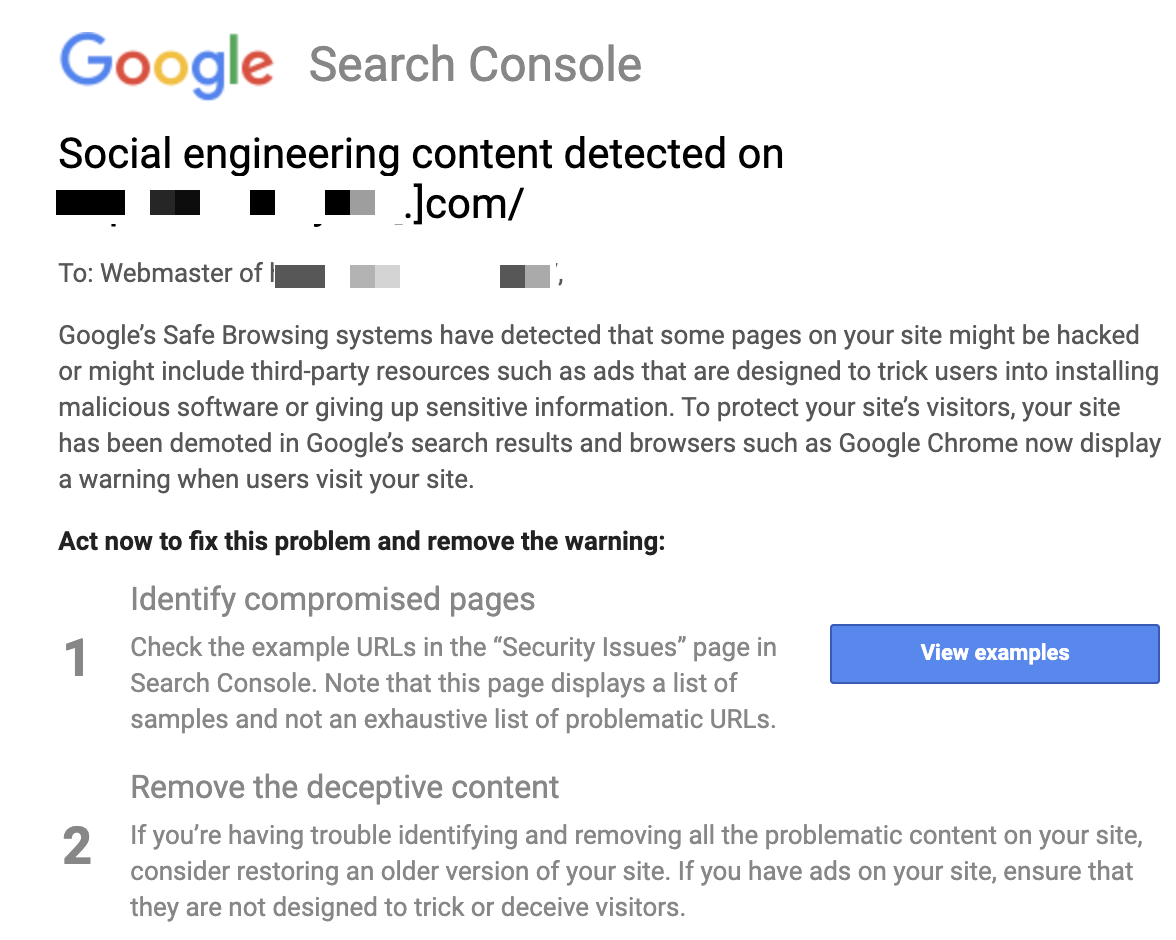
You can also sort out pages listed under malware or unwanted software. If you have infected files on your site especially, you must remove them:
Google News & Discover Manual Actions
Your site can get a manual action when Google News policies are violated. The reason for the manual action, and the affected pages, will appear in Search Console. Your site can also get a manual action for a Google Discover guidelines violation. These types of manual action have been public since February 8, 2021.
The URLs behind such a violation get removed from Discover results. This is a warning that your site violates only the news and Discover policies, and it won't affect your Google search results.
On top of that, an AMP version's content should cover the same topic as its canonical web page. The content doesn't have to be identical, but users should reach the same information on both the AMP and the canonical page. If a violation shows up here, your site can get a manual action for "AMP content mismatch."
Reconsideration Requests
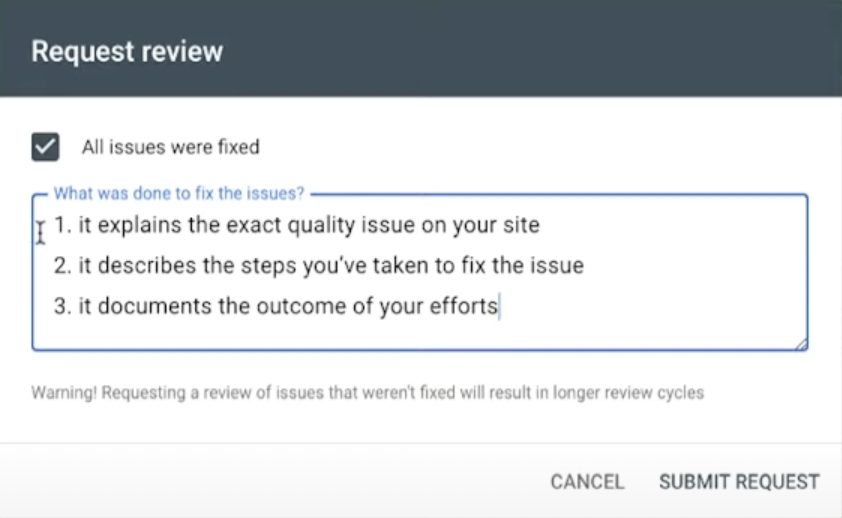
After fixing the problems, you'll need to send Google a reconsideration request to remove the manual actions covered in this article. You'll only see this form when your site has a manual action.
In your reconsideration request form, explain in full how you fixed the issues, and provide evidence. Then you wait for the reviewers' verdict. Reconsideration requests can take a few days or a week to resolve. In the end, your request will be either denied or accepted. Here's an example of how to use the form:
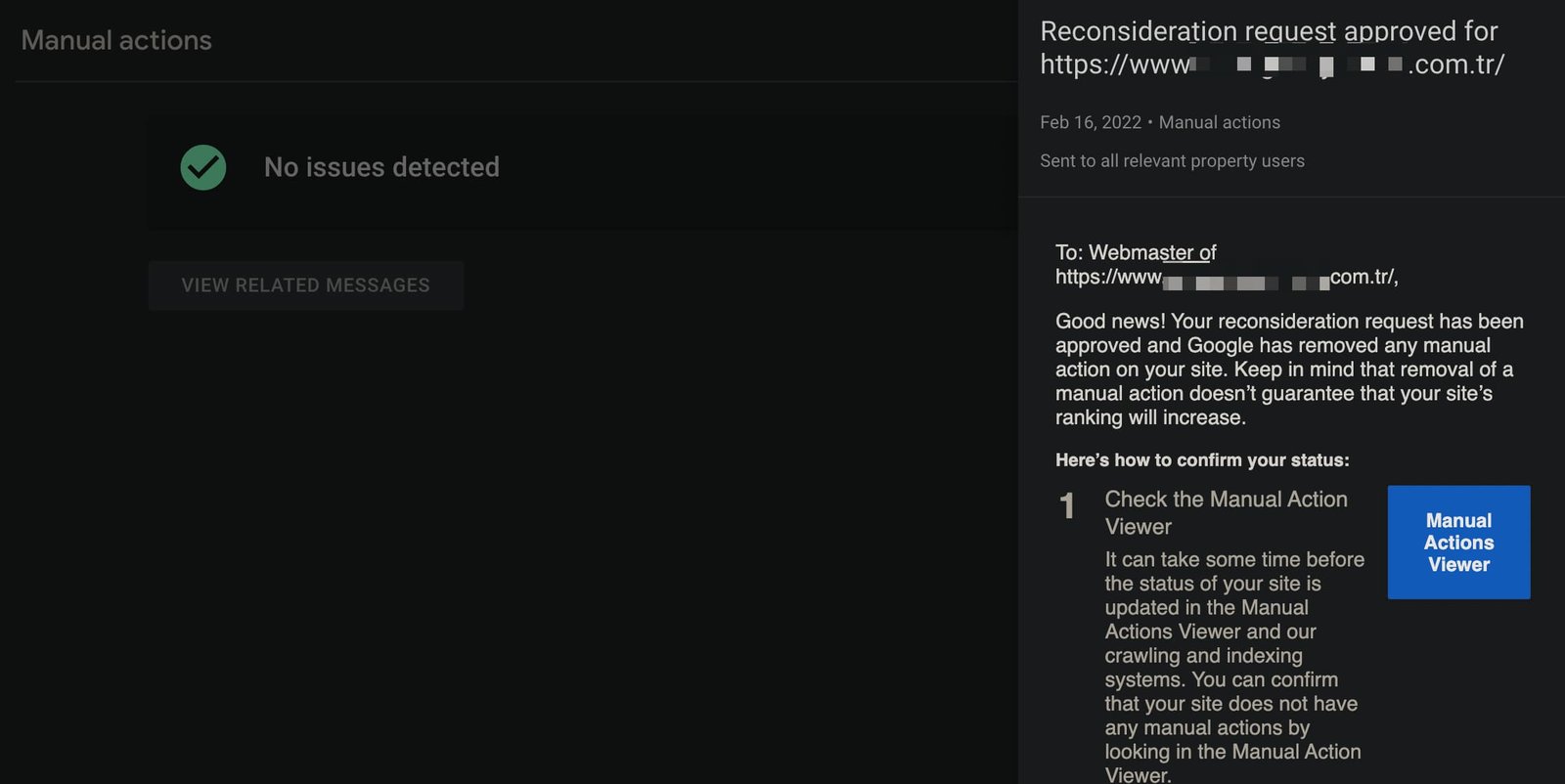
If your request is denied, I recommend not resending the form until you've fixed every issue. Don't resend it before you've received the result email, since your site could still be under review. If your request is accepted, you'll probably get a notification like this one:
On rare occasions, reviewers may send you notes to help fix your problems, with requests like "provide additional evidence."
I'd like to answer a few frequently asked questions about manual actions:
-My paid domain/site is banned. What should I do?
In cases like this, consider explaining the situation in your reconsideration request.
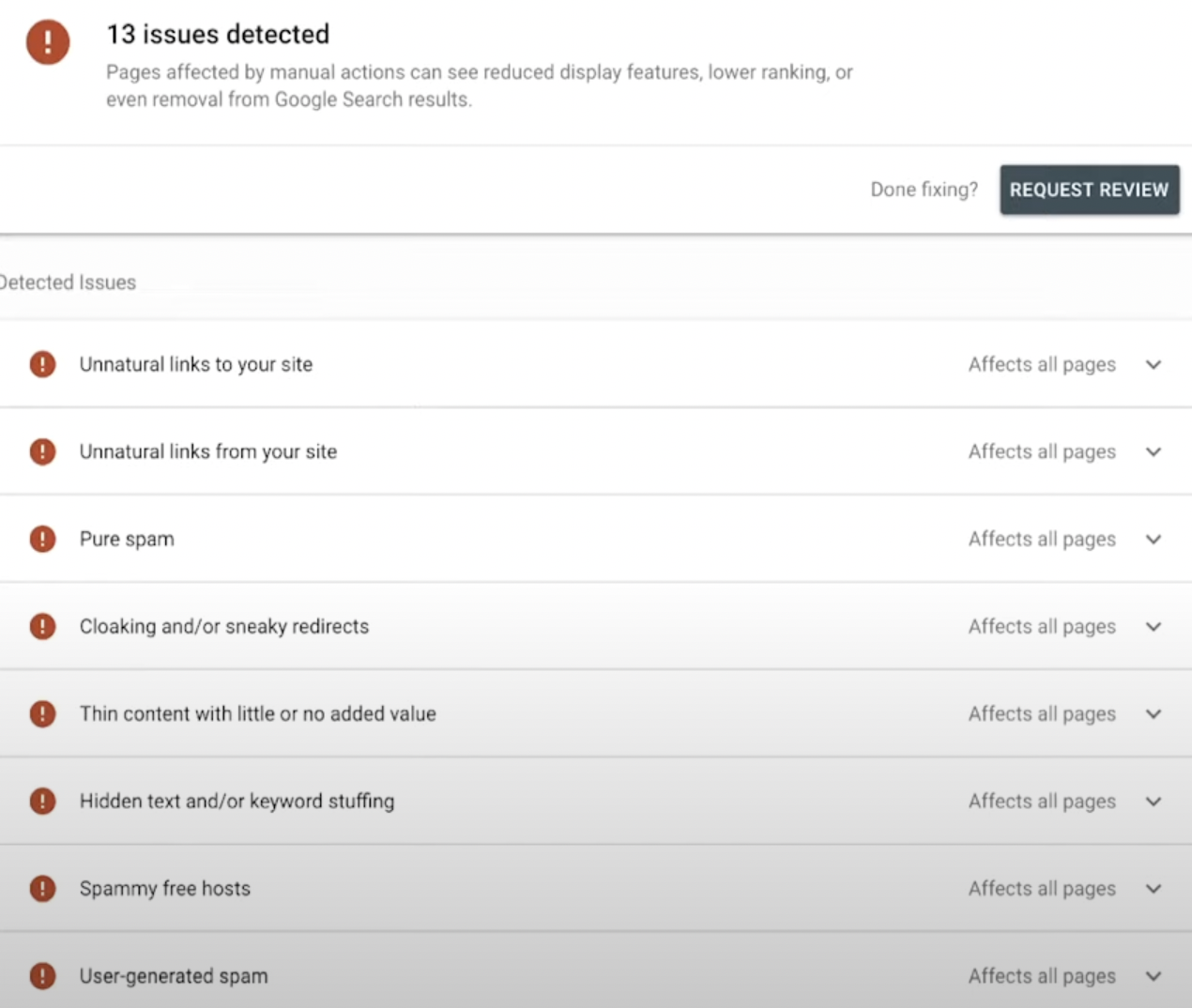
-Can I get multiple manual actions?
Yes, your site can get more than one manual action. Here's an example I took from a video:
-How do I get my traffic back after recovering from a manual action?
You'd been getting extra traffic through spam. So it's perfectly normal not to get that traffic back, since you've removed or edited the relevant pages to recover from the manual action.
-X website has spammy behavior but does not get penalized. Why?
Google isn't perfect, of course. Just visiting a site, you can't tell whether it has a manual action against it. For instance, X website got a manual action for low-value content, but that action may only apply to certain pages.
-My manual action has been removed but I still have problems with indexing. What do I do?
After recovering from penalties like pure spam, it's possible to see indexing fluctuations for a couple of days. Check for problems on your site that could be blocking indexing, and fix them.
While writing this article on Google penalties and manual actions, I tried to be as thorough as possible and to point to evidence and specialists' explanations. Really, each manual action deserves its own deep dive, but I wanted to bring them all together here. I hope it's been useful for the dear ZEO visitors who took the time to read it all the way through.
That's it. I wish you all a Search Console account that says "No issues detected" :)



