


https://www.adobe.com/express/create/infographicContent marketing, which has made quite a name for itself in recent years, is a strategic marketing approach focused on creating valuable, relevant, and consistent content to attract, retain, and ultimately win over a target audience, helping build a strong "organic relationship" between consumers and the brand.
Before diving into the depths of the content marketing world, I'll briefly cover its purpose and a few key points:
Purpose:
The purpose of content marketing can be summed up as keeping the brand current, building a relationship and loyalty between the brand and dynamic leads, boosting brand reputation through email marketing, creating a brand story, fostering brand loyalty, and increasing conversion rates.
Key Points:
-
Identifying a target audience ⇒ Divide your target audience into segments and build a different content marketing strategy for each one
-
Ensuring that each content is catchy, striking, and understandable ⇒ Use a sincere, fun-to-read tone
-
Deciding on sentence structure ⇒ Write sentences that are informative, slogan-like, exciting, and engaging
-
Coming up with slogans
-
Creating short video content and stories
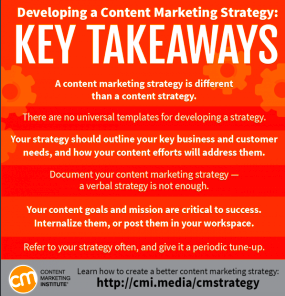
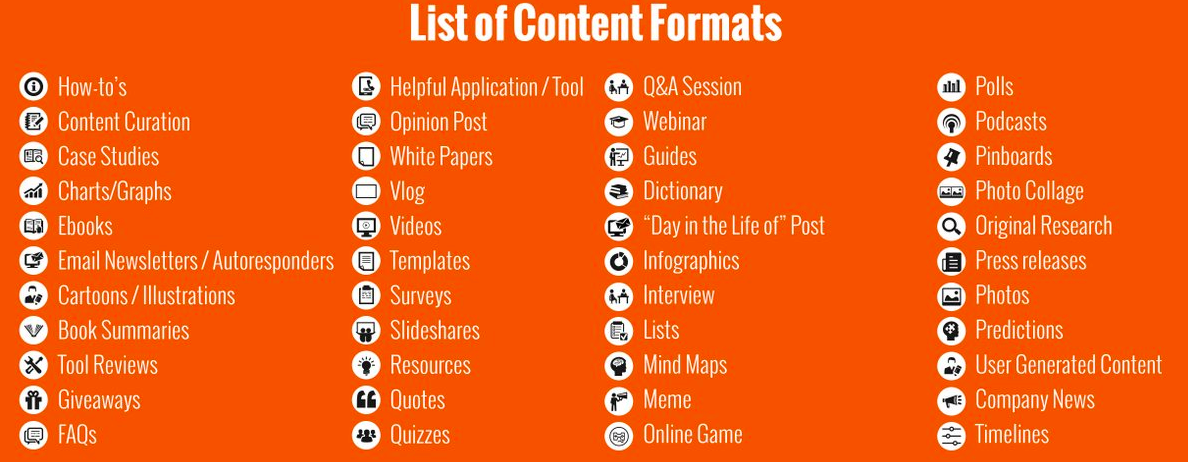
Different Types of Content Marketing
-
Written content (Text content) ⇒ The most frequently used content strategy in digital marketing
-
Audio content (Podcast etc.) ⇒ A strong content marketing strategy used to boost brand awareness and build a relationship between the brand and consumers on an alternative platform
Broadly speaking, here's a more detailed breakdown of these two content types:
➢ Visual content
➢ Video content
➢ E-book
➢ Case studies
➢ Podcasts
➢ Social media posts
➢ Webinars
➢ Tests and quizzes
➢ Surveys
➢ Email newsletters
➢ Email notifications
➢ Presentations
Content Marketing Examples from all Around the World
Social Media Posts:
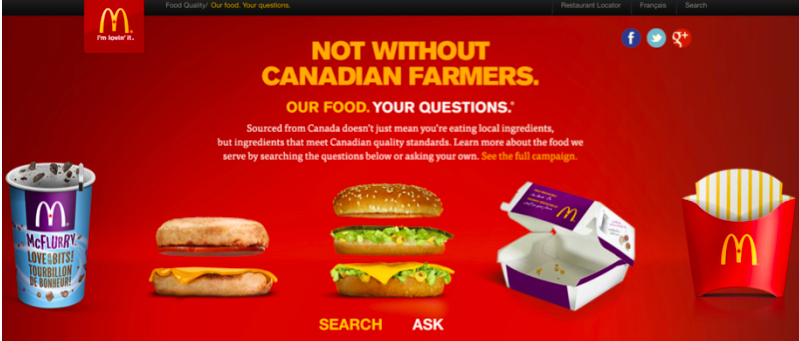
McDonald's Question Time - McDonald's aims to strengthen its relationship with customers by giving them the chance to ask questions about its food, and it has answered around 10,000 questions so far.
GoPro And Visual Content - GoPro places a lot of importance on quality visual content and infographics. It has millions of followers on YouTube and Instagram thanks to the quality, fun, interesting, and somewhat unusual visual content it posts on these platforms. It's worth noting that when used correctly, infographics have the potential to double a website's traffic.

E-book Examples:
Prophix – Adapt & Innovate
The e-book published by the finance company Prophix to explain how artificial intelligence affects the financial industry features audio clips from financial experts and an interactive menu, powered by a virtual assistant, that helps readers navigate between different sections.

Top Rank Marketing – Break Free of Boring B2B
Top Rank Marketing published an interactive e-book that uses comic-book-style animated graphics and clickable elements to grab readers' attention.

Pace – Your Corporate Custom Publishing Solution
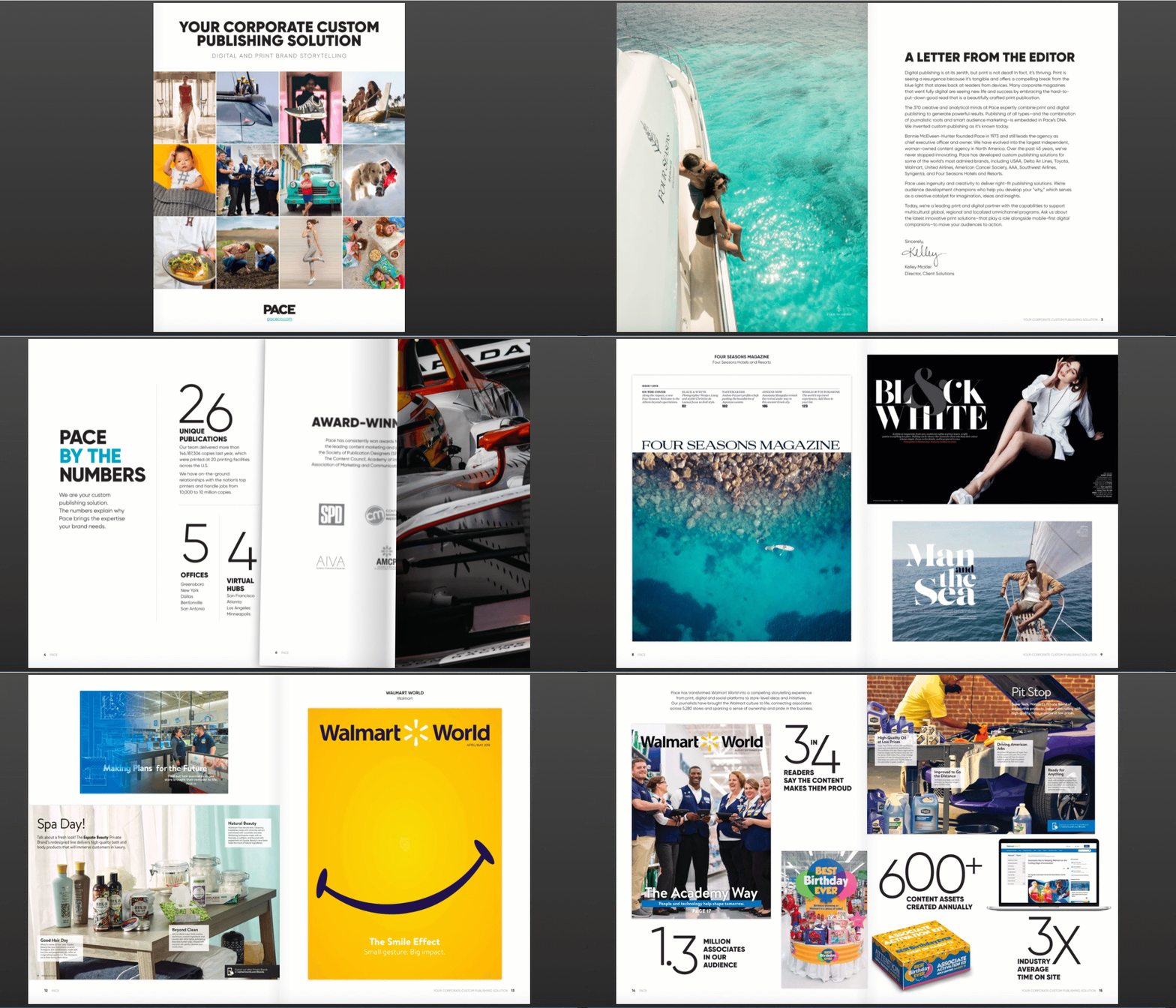
Marketing agency Pace published an e-book with clickable elements, embedded videos, and compelling, relevant images to showcase examples of digital storytelling.
DivvyHQ – Back to the Future: Insights & Tips for Content Strategy, Planning, and Measurement
This e-book from DivvyHQ features video interviews with content experts, along with tips on DivvyHQ's content analysis module.

Case Study Examples:
Case study: Colgate Palmolive Gamification
On Christmas 2019, Colgate-Palmolive ran a case study to raise product awareness and boost online sales for various Palmolive gift sets.
This special promotion combined gamification with Facebook Augmented Reality (AR) to attract new users. It was embedded on a landing page with a game where users popped bubbles in the bathroom using their noses.

The results were as follows:
➔ A total of 12% increase in YoY sales,
➔ More than 1 million players in two weeks on one platform (Facebook),
➔ More than 10,000 players were directed to the e-commerce site from the special promotion landing page to shop online.

Case study: Shutterstock Creative Trends
Shutterstock, which supplies high-quality photos, vectors, illustrations, and videos to marketing agencies and media outlets, put together a Creative Trends report last year. Built from data on the images, videos, and music that Shutterstock customers searched for and downloaded, this report serves as a handbook of the latest trends.
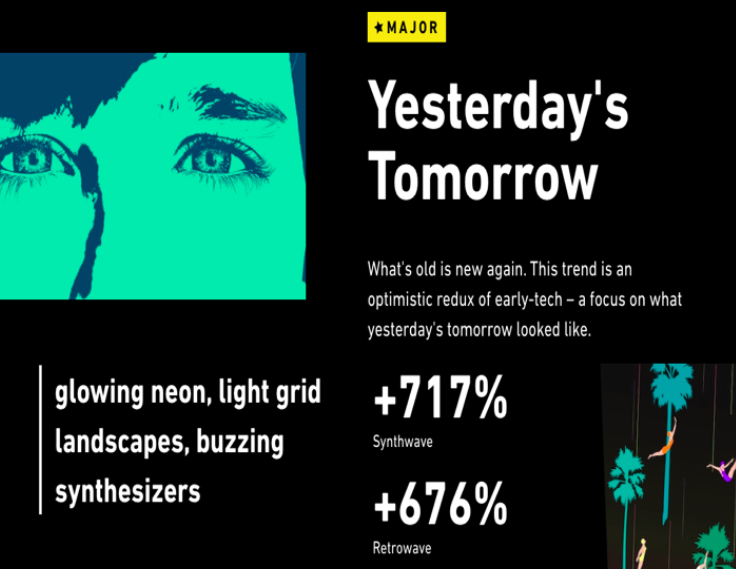
Containing creative trends in images, videos, and music, this report offers great guidance to Shutterstock's two primary target audiences: businesses that purchase the right to use the images, and visual artists who put their work up for sale.
On launch day, an infographic went out in 20 languages and was featured in over 170 articles over the following two weeks, including Adweek, Campaign, Vogue Australia, Design Jungle, Follow the Colors, and W&V.
The results were as follows:
➔ More than 160,000 page views and 146,000 sessions in the first two weeks following the release of the infographic.
➔ 22% email open rate, which was directly converted into revenue.

Podcast Examples:
A podcast is a series of audio content broadcast regularly, usually in the form of episodes. These episodes feature interviews or conversations, and they can differ in length and format. Podcasting can add a new dimension to your brand, as well as to your content marketing strategy.
Here are five great benefits of podcasting:
1. Currently in-demand
Podcasts have become extremely popular in recent years, and that popularity is set to keep growing as people become more connected to the digital world.
2. Ease of access
Creating podcasts is relatively easier than other types of content. To create a podcast episode, all you need is a few pieces of readily available equipment. You don't need any special audio engineering training to make an episode that's a joy to listen to!
3. Potential to create multiple content
Podcasts are a great way to produce multiple types of content at once. For example, if you have a video interview with an industry leader, you can repurpose that content three different ways: post it as a video, a podcast, or a blog post.
4. Partnership potential
This interactive audio format is a great way to build partnerships. For example, other industry experts can join your podcast as guests, and that kind of interaction may help you create better content, as well as new content altogether.
5. New audience segments
With creative podcast content, you can reach new segments and expand your target audience.
Contribution of Podcasts to SEO
You can share your new podcast episodes as standalone landing pages on your site, just like a blog.
You can boost your website's search engine visibility by adding a title, meta tags, and transcripts related to your podcast content.
This way, each new podcast episode becomes a piece of content that's discoverable on search engines.
As your podcast grows in popularity over time, you're more likely to earn backlinks, which means you can increase your website's authority and improve its ranking.
Also, respond to as many comments as possible on your podcast episodes, thank your listeners regularly, and engage with them on social media; you might even consider starting a Facebook Group or a similar network for your fans!
How to Evaluate Podcasts
You can measure and analyze your ratings to see whether your podcasting strategy is working, and get insight into things like: How many new listeners and subscribers are you getting? How many times is each episode downloaded? Does your podcast bring new traffic to your website? How many website visitors download an episode of the podcast? Are people more responsive to a particular type of episode? What trends do you see emerging over time?
You can use Google Analytics to keep track of these metrics.
Podcasting is a powerful tool in content marketing and, if used correctly, can be a way of generating revenue. To succeed and stay one step ahead of your competitors, you need to give great importance to quality and keep improving with the help of measurement and analysis.
Podcast - Online Marketing Made Easy
Online Marketing Made Easy is a platform where marketing expert Amy Porterfield hosts marketing podcasts for entrepreneurs.
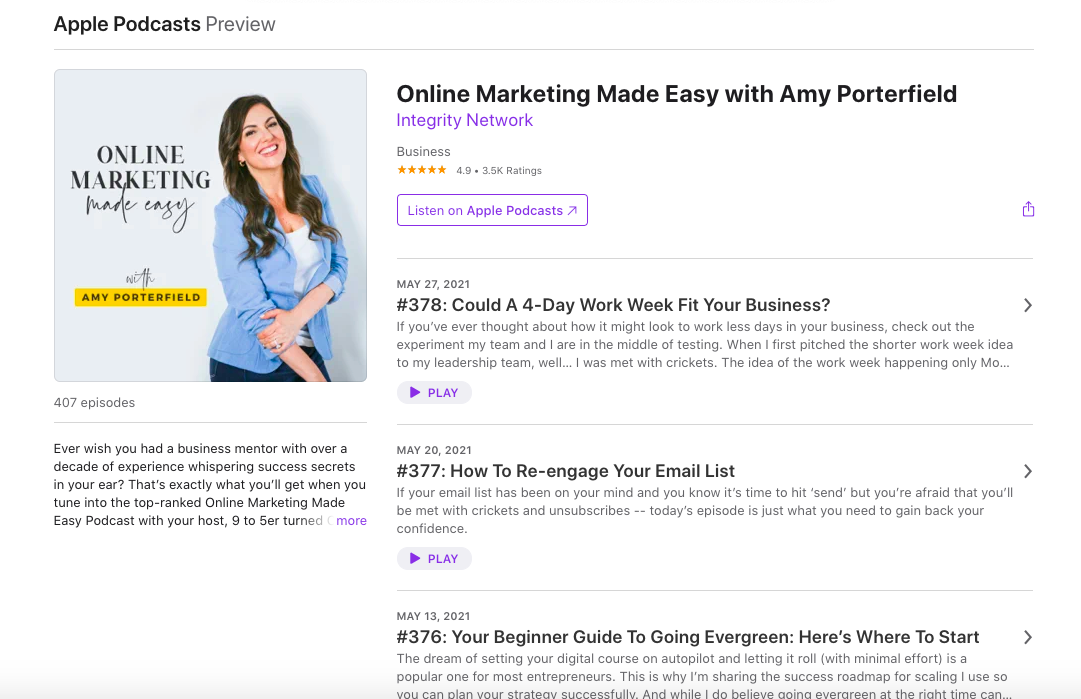
On the Online Marketing Made Easy platform, there are more than 400 podcasts hosted by Porterfield, where she interviews people from various industries and shares her own experiences.

You can click here to listen to these podcasts.
Podcast - Marketing School
Neil Patel's podcasts are undoubtedly among the most prominent marketing podcasts out there. Blog posts, videos, and podcasts are some of the best examples of content marketing in the digital marketing space.
Patel's co-host Eric Siu is the CEO of Single Grain, a digital marketing agency that has partnered with some of the world's most successful businesses.
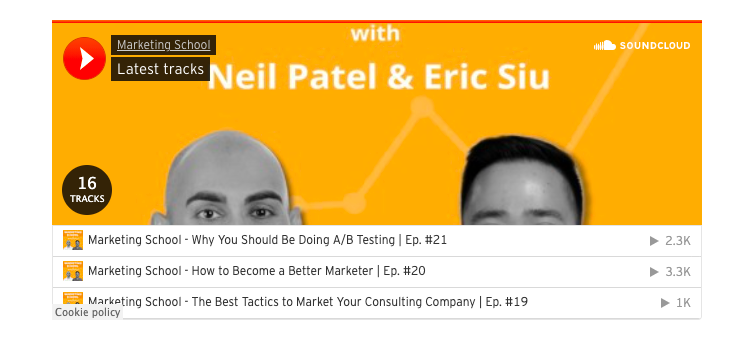
Marketing School is a podcast platform that releases new episodes every day. Each episode is packed with tips, tactics, strategies, and information on a given topic, and runs just 5 minutes long.
You may be interested in some of the topics such as "Is Pinterest a Good Platform on Which to Advertise?”, “How to Uncover Your Competitor’s Facebook Strategy” and “How Long Does It Take to Rank in Google?”.
Test and Quiz Examples:
Quizzes and tests don't just engage users, they also inform them about your industry, what your company offers, and how your team differentiates you from your competitors.
You can use quizzes to collect email addresses. One way to do this is by sending the quiz or test results via email. That way, users are more likely to give you their real email address so they can see the results.
Quizzes let you gain valuable insights into your target audience. For example, if your brand sells clothing and accessories, you can create a quiz and feature it on your homepage to help users "find their ideal style". Doing so, when new users visit your website and take the quiz, you can make recommendations based on their answers. You can also collect email addresses and send out emails targeting users' preferences.
Another example: if your website is education-oriented, you can measure users' knowledge with a quiz and then give feedback on the areas that need improvement. This increases the number of page views because, after the feedback you provide, users will be using your pages as a resource to refresh their knowledge.
Tests are an effective tool to use in segmenting your audience and developing a lead creation strategy. They enable you to get in contact with your users in an entertaining and engaging way, enrich your content marketing strategy, and build a loyal customer base for your brand.
Quiz - Warby Parker
Warby Parker uses a quiz that asks about users' size, color, and shape preferences to narrow down the available eyeglass frame options.

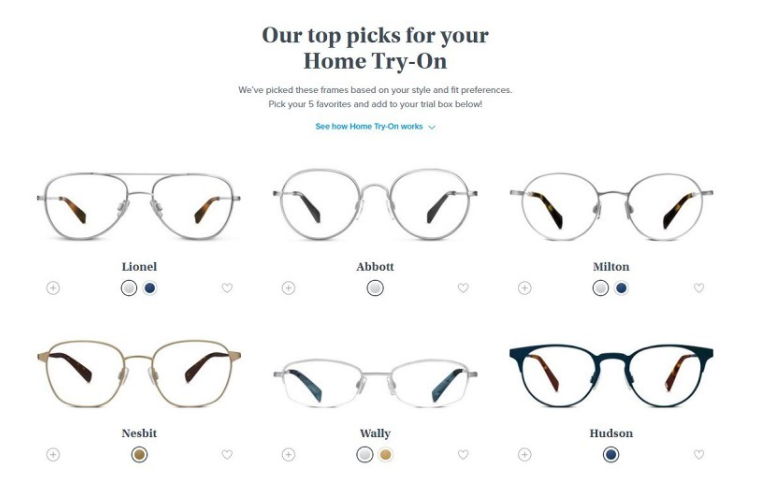
In this way, the brand not only helps indecisive customers, it also cleverly collects data from them.
Quiz - Zenni Optical
Zenni Optical, another eyewear brand, uses the "You've Been Framed" test to increase brand awareness and drive more traffic to its website.

It looks like the brand encourages users to share this test, which asks questions in a fun, humorous way to match users with glasses that fit their lifestyle.
Contribution of Tests to SEO
In content marketing, it takes extra effort to attract users to a website, get them to read the content there, and then keep them on the page. This affects your bounce rate and time on page statistics.
One of the benefits of using tests/quizzes is that they increase user engagement significantly. Users who spend more time on the page are more likely to click on other content, especially when they see suggestions based on their answers to questions in the test or to their test results.
Tests are a great way to turn your leads into returning customers. With the right setup, you can collect data that you can use in creating personalized email campaigns, using different marketing materials depending on the target audience segment.
A visually appealing, fast-loading test can get you a lower bounce rate and longer on-page time. If the test redirects the user to a results page, you'll also get increased page depth.
Creating a Test
Tests should be fun, engaging, and informative. Remember, the goal isn't to make users feel like they're taking a test, but to make them feel like they're playing a game to kill time.
You can make the tests personality-related, as well as about your products or brand, to leave a strong impression on users.
Start the process of adding a test to your content by defining a goal. Do you want to grow your email list? Do you need more leads? Or maybe you just want the content to drive new traffic.
Next, decide on the type of test you'll create. Personality tests, matching tests, and knowledge tests are some of the most popular options.
You need to come up with an impressive title for your test, since 59% of users will judge content by its title alone, without reading it. Here, let's emphasize the importance of the title and H1 tag you will choose for your test.
Write down all your ideas in a Google Docs document, and then use a tool like Survey Anyplace that will let you customize the test questions to your needs and show the results in a visual dashboard.
Survey Examples:
If you want to measure how successful you're being with content marketing, you need useful, actionable feedback. Surveys are the best way to learn what people think of your content and get a full picture of how effective it is at raising brand awareness and marketing.
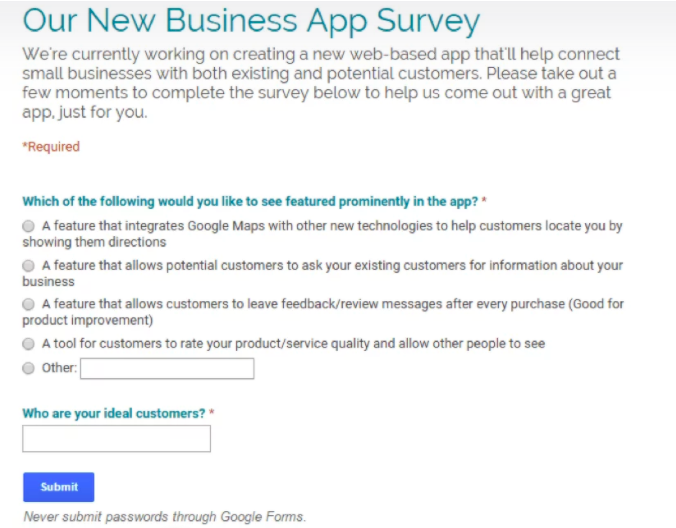
Surveys can measure the following in terms of content marketing:
● The demographic characteristics and preferences of your users or target audience (audience analysis)
● Perceptions/impressions of your content and your brand
● Impact of your content on users' decision-making
In content marketing, it's important to make sure that your content supports three "Rs": Reach, Reputation, and Results.
Reach: Does your content attract the right leads?
Reputation: Does your content position your brand the way you want? Is your brand perceived to be distinctive from your competitors? Is your content perceived as a reliable source for useful information rather than just some brand propaganda?
Results: Does your content influence how people make their decisions?
Here are three tips for making the most out of surveys:
1. Don't ask people what they will do: It's better to ask users if they have purchased a product rather than asking them if they would like to buy it. So, ask people what they did and what they have decided on. You can ask the question “Do you recommend…” instead of “Would you recommend…”.
2. Don't ask too many open-ended questions: To make sure that your survey provides you with quantitative data, stick to multiple-choice or matching questions, for the answer of which you can set some parameters. For example, ask questions like “Which of these statements best fits your impression of our digital magazine?” and provide users with answer options.
Invite people to take the survey at the right time: Direct users to surveys only after giving them enough opportunity to consume the content. If you direct users to the survey at the right time, your survey will be more likely to be taken and answered carefully. It can be useful to invite users who open email newsletters and campaigns to take surveys.
Email Newsletter Examples:
A regular email newsletter is one of the best ways to keep your audience notified about your content, which is, according to the Content Marketing Institute, the reason why 83% of B2B marketers use email newsletters for content marketing. Here, it's important to offer valuable content that appeals to the wants and needs of your audience.
Here's what you need to know:
Personalization increases email open rates.
You can increase your email open rate by 50% just by adding subscribers' names to the subject line of the email. A higher email open rate means more views for your newsletter, which will lead to more engagement with your content, resulting in more traffic to your website.
Choosing the correct frequency of sending out newsletters can prevent users from unsubscribing.
Research shows that 67% of unsubscribes come from recipients who feel they're receiving too many emails. To have a successful content strategy, you need to be careful about how often you send emails.
You can start by sending out emails at longer intervals, for example, with a monthly newsletter. Make sure to monitor not only email open rates but also click-through rates to see how your audience engages with your content. In the meantime, you can start increasing the frequency of your newsletters. For example, you can transition from a monthly newsletter to a weekly newsletter.
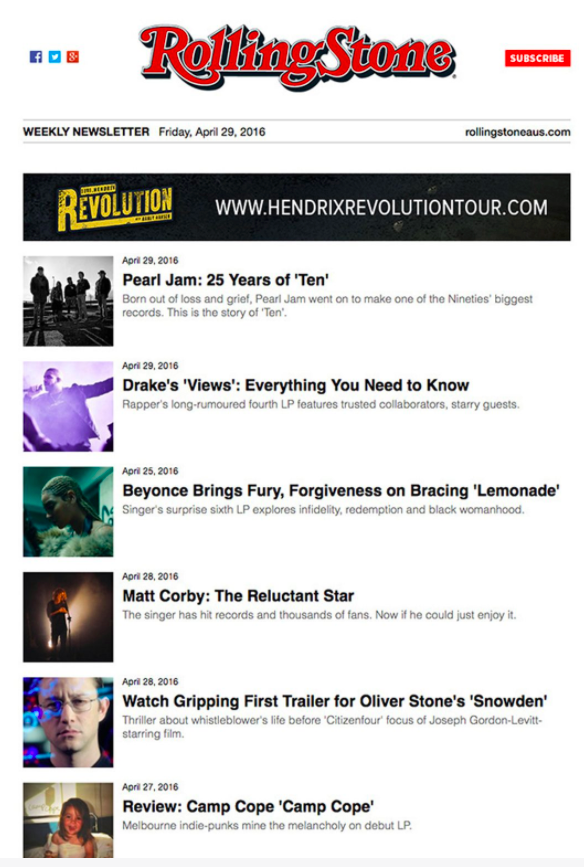
For example, Rolling Stone uses a weekly newsletter to inform users of upcoming events.
Create newsletters quickly and easily.
To save time and create quality newsletters, you can use templates, which make putting together emails quicker and easier.
The design of an email is the most important element in grabbing readers' attention and encouraging them to engage with the content. A well-designed email will draw your audience toward the content that interests them.
Use engaging images.
The best way to make your emails stand out from the rest is to use quality images alongside engaging text.
Make sure your images match your content and line up with its titles.
Don't reveal the entire content in the headline.
Instead of giving away all the content in your headline, make sure to provide enough information to get your subscriber to click the link.
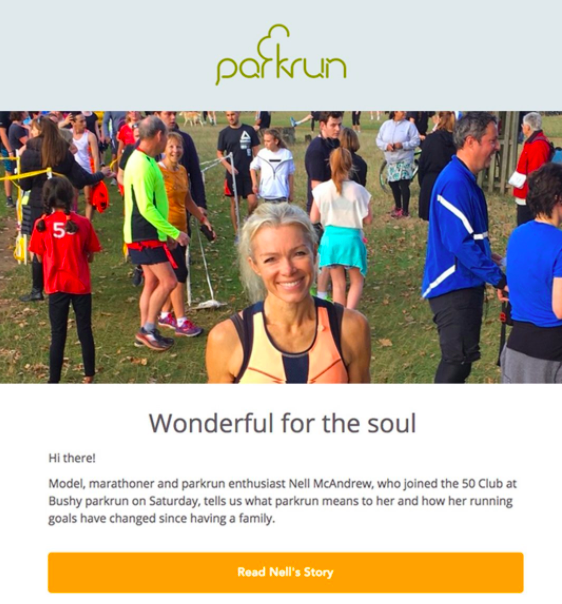
For example, Parkrun encourages subscribers to engage and learn more by using a short teaser phrase to spark curiosity about the content of the email.
Use your old content.
Don't feel like you have to create new content pages for every newsletter, or that your weekly (or whatever frequency you choose) emails should contain only your most recently posted content. You can work old blog posts into your existing email strategy as well!
Divide your target audience into segments.
Every lead you have has different goals, comes from various industries, and searches for different products, and so on. You can develop different email strategies for each specific situation and expectation by using segmented campaigns.
Final remarks:
Working the types of content marketing mentioned above into your overall content marketing strategy will help you strengthen your position in the digital world and build a strong relationship with your leads by increasing brand awareness.
To see content such as "Content Marketing for Beginners" and "How to Make Content Analysis" you can click here.
Have a happy and healthy day full of content marketing!
Kaynaklar:
https://contentmarketinginstitute.com/what-is-content-marketing/
https://blog.hubspot.com/marketing/content-marketing-plan
https://contentmarketinginstitute.com/2020/03/brands-content-marketing-examples-convert/
https://contentmarketinginstitute.com/2013/12/surveys-help-create-effective-content-marketing/
https://econsultancy.com/eight-effective-examples-of-quizzes-in-content-marketing/


