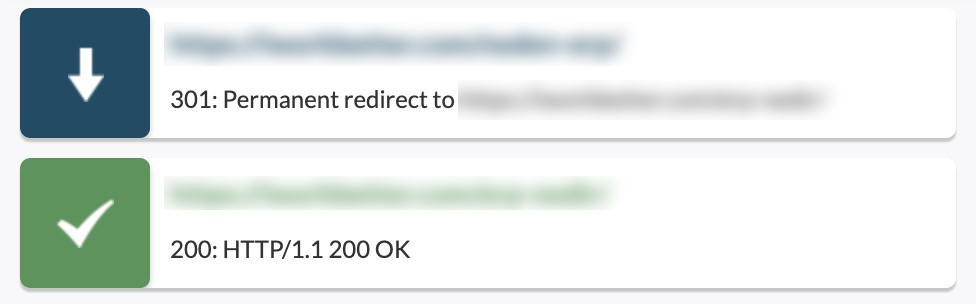
Code 301 tells browsers and search engines that a page has moved permanently, and that every future request for the old URL should go to the new one instead. It's the redirect to use whenever a move is meant to be final: a product page that's been renamed, a site migrating to a new domain, or duplicate URLs getting consolidated into one canonical address.
Search engines treat a 301 as a strong signal to transfer most of the old page's ranking signals to the new destination, which is why it's the standard choice for preserving SEO value during a redesign rather than letting the old URL simply 404. The redirect should point straight to the most relevant replacement rather than a generic homepage or category page, since a mismatch between old and new content weakens how much value actually carries over. Chains of multiple 301s stacked on top of each other also dilute that transfer and slow the page down, so redirects are best pointed directly at their final destination.