


Email is such an essential part of daily life, and such an important channel in digital marketing, that it remains a core focus for us in 2021. Social media marketing has grown its share of the game thanks to new platform features and a growing user base, but email marketing has held its own ground thanks to its own distinct benefits.
Here are some of the most important benefits of email marketing:
Loyalty: Email keeps bringing your target audience back to your website again and again, building a real connection with them. That loyal audience is more likely to convert into customers than people visiting your website for the first time.
Returning Visitor: For online businesses, 97% of people who visit your website and leave never come back. Building an email list from your visitors is an efficient way to bring more of them back, which also feeds into the loyalty benefit above.
Conversion rate: Of all digital marketing channels, email marketing delivers the highest ROI (Return on Investment).
It's been 50 years since the first email was sent in 1971, so let's look at the Statista data to get a clearer picture of where things stand today.
- Approximately 306.4 billion emails were sent every day in 2020.
- This number is estimated to reach 319.6 billion by 2021, and 361.6 billion by 2024.
- The number of email users, which was 4.03 billion in 2020, is estimated to reach 4.48 billion by 2024.
The pandemic reshaped email marketing throughout the year in some clear ways. While a few industries sent fewer emails early on, campaigns and updates addressing people's changing needs increased overall. Industries that had gone quiet on email picked up new strategies once the initial uncertainty passed and ramped their campaigns back up. As a result, 2020 closed out with a net increase in email volume. Last year, especially between February and April, the global email open rate increased by 4.7%.
The big numbers mentioned above help us better understand the scale of email marketing, leaving us yet with another truth: a lot of those emails never get opened.
Let's walk through the 10 steps you can follow to make the most of email's potential in your marketing and increase your conversion rate.
1. Developing an effective email marketing strategy
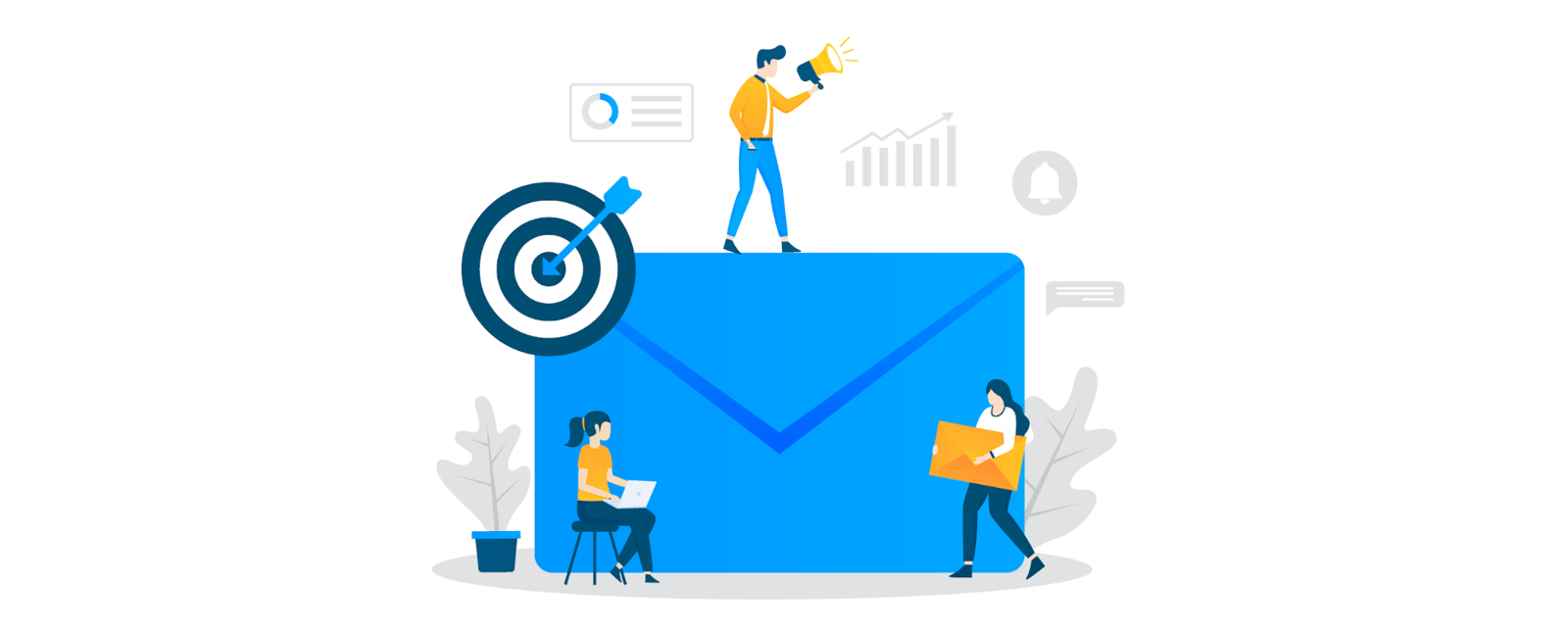
Email marketing can offer much more than products and services. It can also deliver useful content and create a highly customizable space for building meaningful relationships, which is why email needs a clear place in your overall marketing funnel. As you shape that strategy, think about the customer journey and use an inbound marketing approach that creates two-way communication. When your goals around interest, interaction, acquisition, and satisfaction are backed by content that gives your audience real value, you can create a distinctive experience and give your email marketing a strong start with higher conversion rates.
Set clear goals before you send anything. If you don't know exactly why you're sending an email, the recipient may wonder why they received it and eventually unsubscribe. At every stage of your strategy, you should be able to give a clear answer to the questions that start with "why". Ultimately, the goal is not just to land in your leads' inboxes, but to get them interacting with the content.
2. Understanding and Evaluating Email Marketing Metrics Correctly

Measuring your campaigns, reporting on the right metrics, and optimizing around what you learn are some of the most critical parts of email marketing.
Here are the global averages for a few key metrics across all industries:
- The open rate is 18%
- The click rate is 2.6%
- The click-to-open rate is 14.1%
- The unsubscribe rate is 0.1%
Here's what those metrics mean:
- The open rate is the percentage of all recipients who received your email campaign and opened it.
- The click rate is the percentage of all recipients, including those who never opened the email, who clicked an image or link inside it.
- The click-to-open rate is the percentage of recipients who clicked something after opening your email. As one of the key measures of success, it helps you spot exactly where your content needs improvement.
- The unsubscribe rate is the percentage of recipients who choose to leave your mailing list after a campaign. It helps show when people are unhappy with your communication or don't find the content compelling. The content itself, the email template, and the subject line can all push this rate up.
- The bounce rate is the percentage of emails that fail to reach recipients because of spam filters or server problems, measured against the total number of contacts in your list. To keep it low, remove invalid email addresses and never buy email lists.
- Email deliverability tells you whether you reached the recipient's inbox. Obstacles can include spam and bounce issues, a full inbox, a poor Internet connection, or the service provider. The important distinction is that email delivery and email deliverability are not the same thing. Email delivery only tells you that the message reached the recipient, whether it landed in the inbox or the spam folder. Email deliverability tells you whether it actually made it into the inbox.
3. Having an Effective Mailing List

Before you can create an email campaign, you need a contact list. Success at this stage depends on accurate data management and a well-maintained list. With an effective list, you can access details about each recipient and segment contacts into smaller groups for more personalized insights.
- When collecting email addresses, the most important rule is never to use a purchased list, because the people on it have not given you permission. Every address should be obtained organically, along with consent to send that person commercial electronic communications. Beyond the legal issue, buying a list produces poor results in every scenario because it fills your database with people who aren't interested in your business.
The introduction of İYS (Turkey's message management system), which has been in place since the middle of 2020, has required every business communicating by email or SMS in Turkey to verify that the contact information in its database was collected with consumer consent, and to take responsibility when that isn't the case.
The first requirement of an effective email list, then, is that it contains people who know your business and have agreed to hear from you. You can build and grow that list with dedicated e-bulletin landing pages, website pop-ups, forms tied to e-book or report downloads and registrations, or offers such as discounts and campaigns that appeal to your audience.
- It also matters what you know about the people behind those email addresses. Details like their date of birth, the categories they're interested in, and the industry or role they work in will be valuable for future personalization.
Collecting this kind of information about your audience will help you:
- segment existing contacts and map their interests at a larger scale
- send automated emails
- adopt an OmniChannel marketing approach and provide a more comprehensive service to your customers.
- It's perfectly normal for your email list to shrink by 22.5% each year because of unsubscribes and messages landing in spam. (Hubspot). What matters is having a strategy to keep bringing in new email addresses.
- To maintain an effective list, track the people who unsubscribe, the addresses that produce hard bounces (meaning the address is invalid and the server rejects the email permanently), and the people who haven't opened one of your emails for more than a year. Remove them when necessary.
4. Segmentation

Segmentation is much easier with today's email marketing and automation tools, and it's one of the most important steps you can take to improve conversion. Rather than sending generic content to everyone, segmentation divides recipients into smaller groups based on shared interests or behaviors, so you can send them something more relevant. Which data you use will depend on your industry and services, but common options include location, age, gender, purchase history, and behavior on your website.
For successful segmentation, you should:
- Keep your database organized and clean. Store email addresses and personal information, such as names, locations, and categories of interest, in a consistent, organized way.
- Collect accurate information. Make sure you have all the data your business and marketing strategy actually need. In short, you should know which customer persona each lead belongs to and understand where their experience sits in the customer journey.
- Use both explicit and implicit data. Explicit data is information you ask for directly in a form or on a page, such as a name, company, or location. Implicit data comes from how a user interacts with you and the actions they take. It requires more analysis, but it lets you group people with similar interests and create more personalized campaigns.
5. Personalization

Beyond building brand awareness and interacting with your audience or customers, one of email marketing's ultimate goals is to improve conversion, which means increasing revenue. Personalization is a big part of that, especially in e-commerce, and it goes far beyond putting someone's first name in a subject line like "Hello, Deniz Cinar".
Personalization works hand in hand with segmentation, so the amount of data you collect matters. The more you know about how your audience and leads behave, and therefore what they need, the easier it becomes to personalize effectively. Watch how customers interact with your emails, track how leads and customers engage with your brand across every channel, study their shopping behavior, and use those insights to segment future campaigns. Marketing automation tools are essential here too.
Skipping personalization in email marketing can lead to several negative outcomes:
- A lower email open rate
- More emails being deleted automatically
- A higher subscribe rate
- More emails marked as "junk" or "spam"
- Recipients becoming less willing to buy from your brand
- Fewer people visiting your website
Rather than personalizing a single campaign, make personalization part of the whole system:
- Tailor promotions and messages to each segment
- Shape products or services around your segments
- Send automated emails triggered by customer behavior
- Offer personalized products or content for much better results.
6. Creating High-Performance Emails

The ultimate purpose of an email is to get the recipient interacting with your content and completing the conversion you're aiming for. A high-performance email keeps that conversion goal at the center and optimizes every element for interaction.
To create high-performance emails:
- Set the right goal. The key is knowing what content to send, to whom, and when. Start by asking yourself these 5 questions:
Who? Send your emails to people who genuinely want to hear from you about the subject and will get value from the message.
What? What exactly do you want the recipient to do after receiving the email, click a link, buy something, or fill out a form? You need a clear goal to answer this.
When? Think beyond the day and time of the send. Consider where the recipient's current experience fits into the wider customer journey.
Where? Which devices do your recipients use to read your emails?
Why? This brings you back to the "What?" question. "What kind of a result do you expect from this email?", "Is this result for your own good rather than the reader's?", "How does the reader gain value from you?", and "What is the place of this email within your whole interaction with the reader?" are all useful questions when you're working through the "Why?".
- Optimize the email
Once you've answered those questions and set a clear goal, building the email becomes much easier. But before it can deliver the intended conversion, the email still needs to be opened and present the content in the right way. Pay close attention to:
- Name and email address of the sender
- Subject line and preview text
- The text containing a message you would like to deliver
- Tone of the language
- Personalization
- Adding CTA buttons
7. A/B Testing
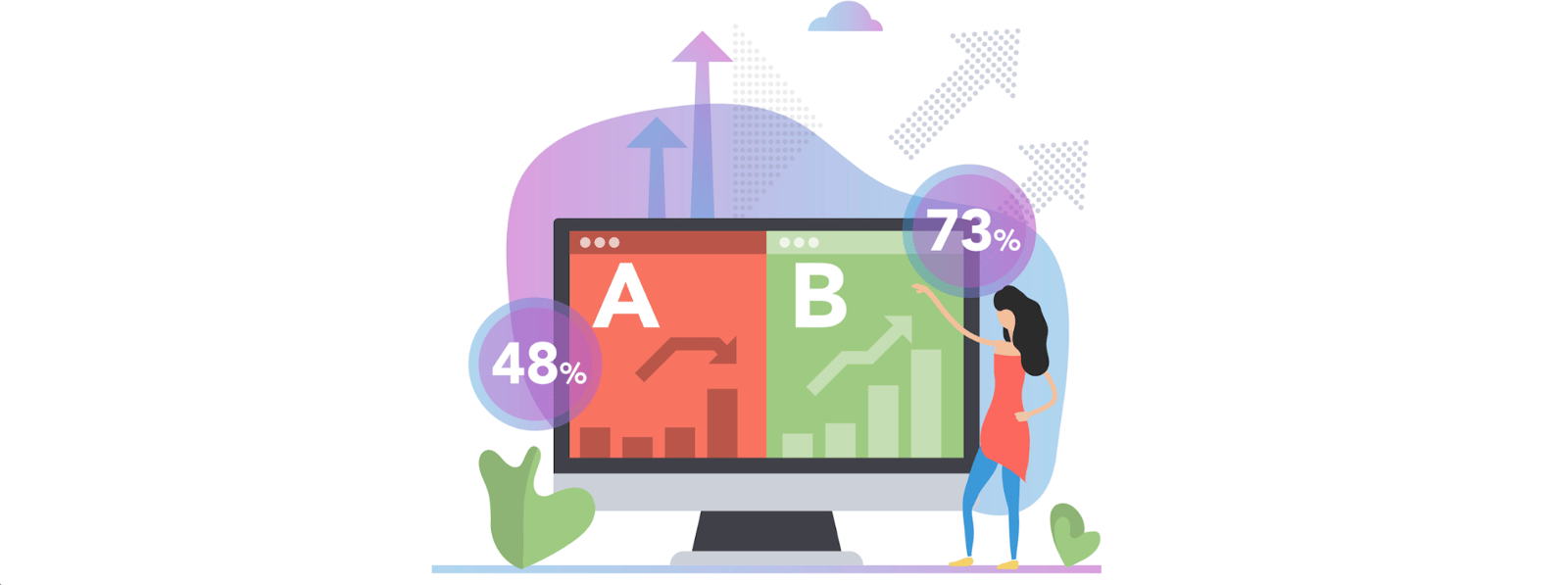
A/B testing is one of the most useful ways to improve your open and click rates. By creating different CTAs or designs for a campaign and sending them to different groups of recipients, you get real data on which variation performs better, so you can optimize your emails accordingly.
Which parts can you change while running A/B tests?
Email subject line - the subject line is one of the most effective ways to get subscribers to open your email in the first place. Use this space wisely to catch a subscriber's attention in a crowded inbox.
The length of the subject line - the ideal length for desktop is generally considered to be 61-70 characters, though remember that mobile devices give you much less room.
The order of words - given how little space a subject line offers, word order carries real weight.
Personalization - addressing recipients by their first name in the subject line may increase the open rate by 14%.
Images - you can test different images while building your email, or try a completely plain design without any images at all.
Style - beyond swapping images, you can test different styles within them too, like photography versus illustration.
Content - if you're sending an email that covers multiple topics, like a newsletter, try testing different content in the subject line.
The body - since our collective attention span keeps shrinking, what you write and how you write it matters. The message needs to land quickly and prompt the recipient to take action.
The length of the email - for the same reason, shorter text supported by visuals can make your email more appealing.
CTA buttons - test different text and formats for the CTA that invites your audience to act and ultimately convert, and make sure the copy is easy for readers to understand.
What should you consider while A/B testing?
Having a hypothesis before you A/B test for conversion improves your odds of success. It helps to frame a specific scenario for your needs, something like "Calling recipients by their first name in the subject line may increase the open rate" or "Using different texts for CTAs increases the click rate".
While running A/B tests, first work out whether the changes you're making are likely to have a real, positive effect, and whether they're actually practical to implement.
Not every test you run will succeed. Keep that in mind as you evaluate the results, and keep optimizing by learning from the ones that don't work out.
8. Mobile Optimization
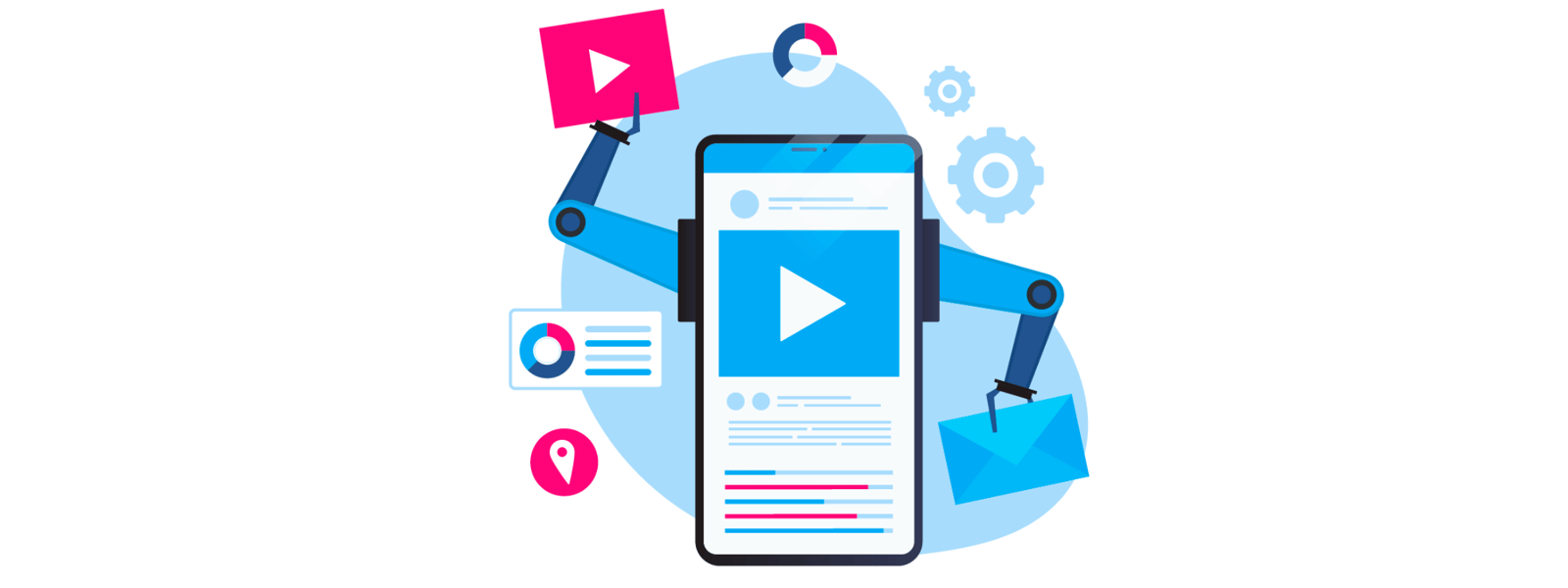
Mobile compatibility matters for email marketing just as much as it does for any other online process, so given how widely mobile devices are used, you need to optimize everything covered above with mobile in mind.
- Here's what the statistics show:
- 41.9% of opened emails are opened from mobile devices.
- 75% of Gmail users access their accounts on their mobile devices.
- 1 out of every 3 click in an email comes from a mobile device.
- 42.3% of recipients delete the email unless it is mobile compatible.
- If an email is opened on a browser after having been opened on a mobile device, the click rate is 65% higher.
- 69% of online consumers say brand emails influence their smartphone shopping decisions.
9. Automated and Behavioral Email Marketing

As e-commerce has grown, so has the number of campaigns businesses run, and that has turned email marketing from a manual process into a field where automation plays a major role. Behavioral email marketing, often called a "trigger-based" campaign, means sending emails automatically based on what users do, instead of sending everyone the same generic email.
That interaction starts with a specific user action and continues through emails that offer guidance and information tailored to what the user needs. This approach, known as a "drip campaign", creates a controlled, consistent line of communication between a brand and its customers or leads. The triggering actions set off a longer-term, step-by-step planning process.
For instance, this could mean sending relevant content to subscribers who click through a campaign and land on a product page, or sending incentive messages like "you left an item in your cart" or "the item you browsed is on sale" to people who added something to their cart without buying it.
Automated emails are known to have a click rate 119% higher than standard emails.
10. Latest Trends of 2021 Email Marketing
Beyond the core strategies I've covered above, there are a few more points worth calling out for the period ahead.
User-generated content is another lever worth pulling in your email campaigns, and it can help increase your conversion rates. Comments and reviews from real users carry a lot of weight in other people's purchasing decisions.
Interactive email content is another way to increase interaction and click rates. Animated buttons or CTAs, product image carousels, and accordion formats or surveys can all help you compress a long email into something more engaging.
The volume of data we collect keeps growing every day, which is part of why leveraging AI (artificial intelligence) technologies in marketing is among the latest trends. AI technologies that streamline segmentation by processing big data and user behavior, along with content analysis and better targeting, are becoming must-haves for optimizing your campaigns.
This article was written by our former marketing executive Deniz Çınar.


