


Search engines have become part of daily life, one of the tools we turn to most during the day. We use them to find whatever we're curious about, to look for answers, or to reach a specific site. In fact, search has worked its way so deeply into our language that we use “Googling” to mean “to search for something on Google”. In Turkish, the same idea shows up in the verb “Googlelamak”, which has become a generic term for searching the internet, not just in Turkey but around the world.
The first search engine dates back to 1990, but 1998, the year Google was founded, is the real milestone for search. According to gs.statcounter.com data, Google's market share stood at 91.86% worldwide as of January 2021, and 80.23% in Turkey on the same date.
Here's how the best-known search engines split the global market:
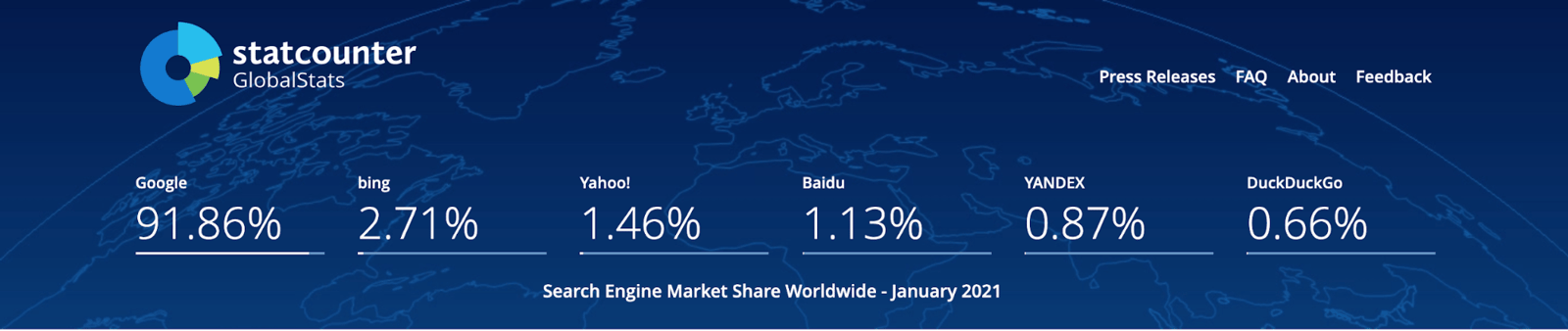
And here's how they split the Turkish market:
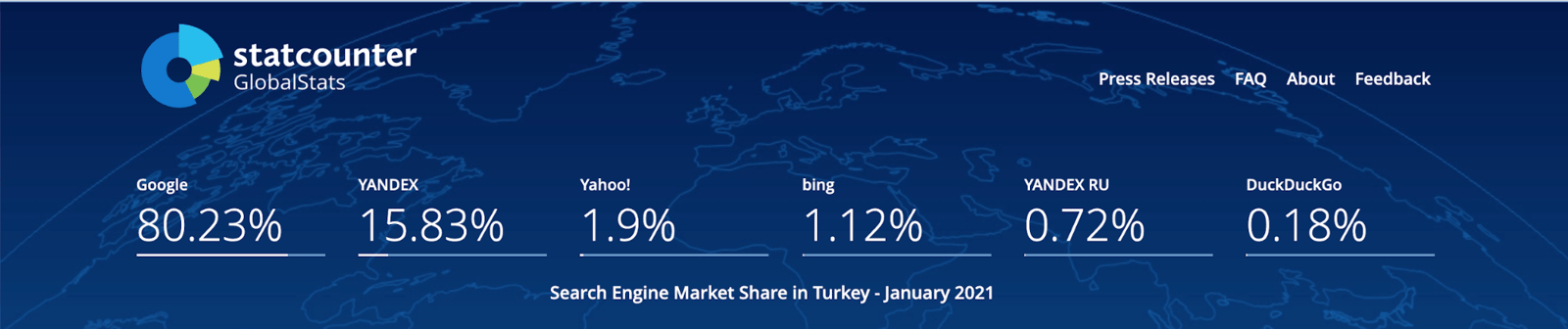
Even among all the search engines dating back to 1990, Google is still the name everyone thinks of first. But there are plenty of well-known and lesser-known engines that qualify as alternatives to Google [that might be too pretentious :")].
In this post, we'll cover alternative search engines like Yahoo, Bing, and Yandex, plus a few you may be hearing about for the first time, along with some basic background on each.
Before we get to the alternatives, let's take a look at Google.
Google is the most widely used search engine in the world, and by any measure, it's the clear leader of the pack. It offers far more than search, and it holds the largest share of the search engine market.
Google keeps refining its search algorithm day after day, and search remains the most popular product to come out of a company that pushes into nearly every corner of the digital world.
Rather than bore you, dear reader, with the usual rundown of customization options, ease of use, advertising, data collection, privacy policies, and so on, let's jump to the more interesting part :)
As the story goes, it all began when two PhD students, Larry Page and Sergey Brin, met at Stanford University in 1995. Google actually started out as a research project called “Backrub” running out of a student dorm room.
Once they settled on the name Google, they first registered it as google.stanford.edu. The domain name still in use today came in 1997, and the company was officially founded in 1998. From there, the company moved out of the dorm and into a garage in California, backed by a $100,000 investment.
I'll leave you the link where they tell the whole story themselves. :)

If you're into Google's Doodles the way I am, you can browse the full archive on this site :)
Let's take a quick trip back in time.
Google's first Doodle in 1998 (themed “Burning Man Festival”)

Google's Doodle for the Anniversary of the Founding of the Republic on October 29, 2009

Why has interest in alternatives to Google grown in recent years?
As Google's business model has leaned further into user data and advertising, privacy has become a bigger priority for users. Recent privacy scandals have pushed many people to start looking for alternatives.
In 2020, media reports covered a class action lawsuit filed in California, where the law firm Boies Schiller Flexner sued Alphabet, Google's parent company, on behalf of several consumers over 'unlawful surveillance and invasion of privacy'. The most striking part of the lawsuit was the allegation that “the company secretly recorded Chrome browser activity, despite users enabling incognito mode”.
When privacy is the priority, DuckDuckGo is the first name that comes up among alternative search engines.
DuckDuckGo
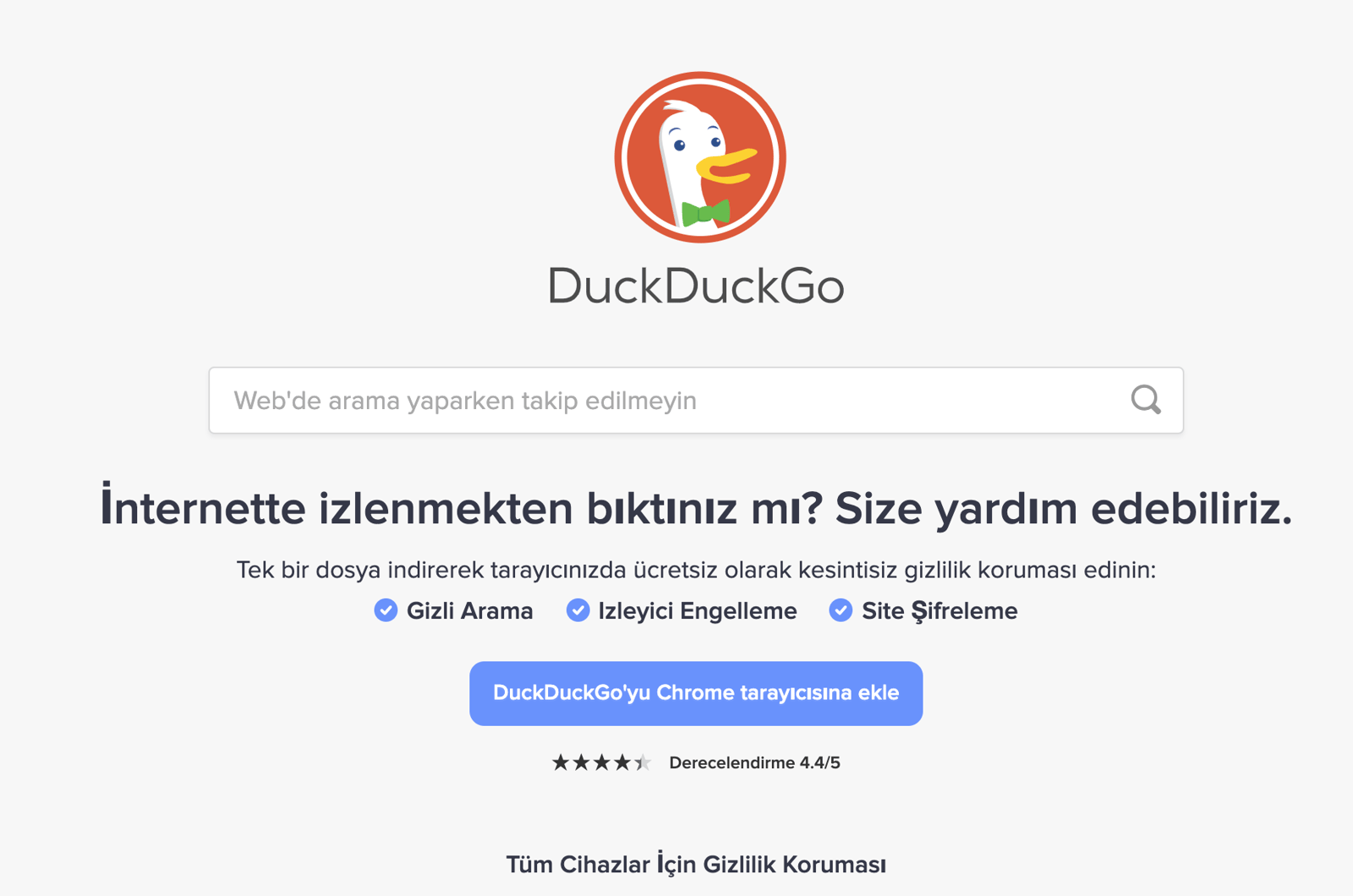
Founded in the US in 2008, DuckDuckGo caught users' attention as a search engine that respects personal data: it doesn't save your searches or collect your IP address.
In terms of policy, it's practically the opposite of Google: it doesn't personalize results based on user data. So if privacy matters to you, DuckDuckGo is one of the better search engines to use. As one of the more ethical search engines, DuckduckGo shows every user the same results for a given search term, rather than tailoring results to individual profiles.
DuckDuckGo, which is written in Perl, has users all over the world, though it's not especially common in Turkey. According to gs.statcounter.com, DuckDuckGo, known for its privacy focus and standing as one of the most recognized ethical search engines, holds a 0.66% worldwide market share and 0.18% in Turkey.
In 2018, Google and DuckDuckGo struck an interesting deal: Google, which had owned the Duck.com domain, transferred it to DuckDuckGo. No word was given on whether the transfer was free or came at a cost.
Microsoft Bing
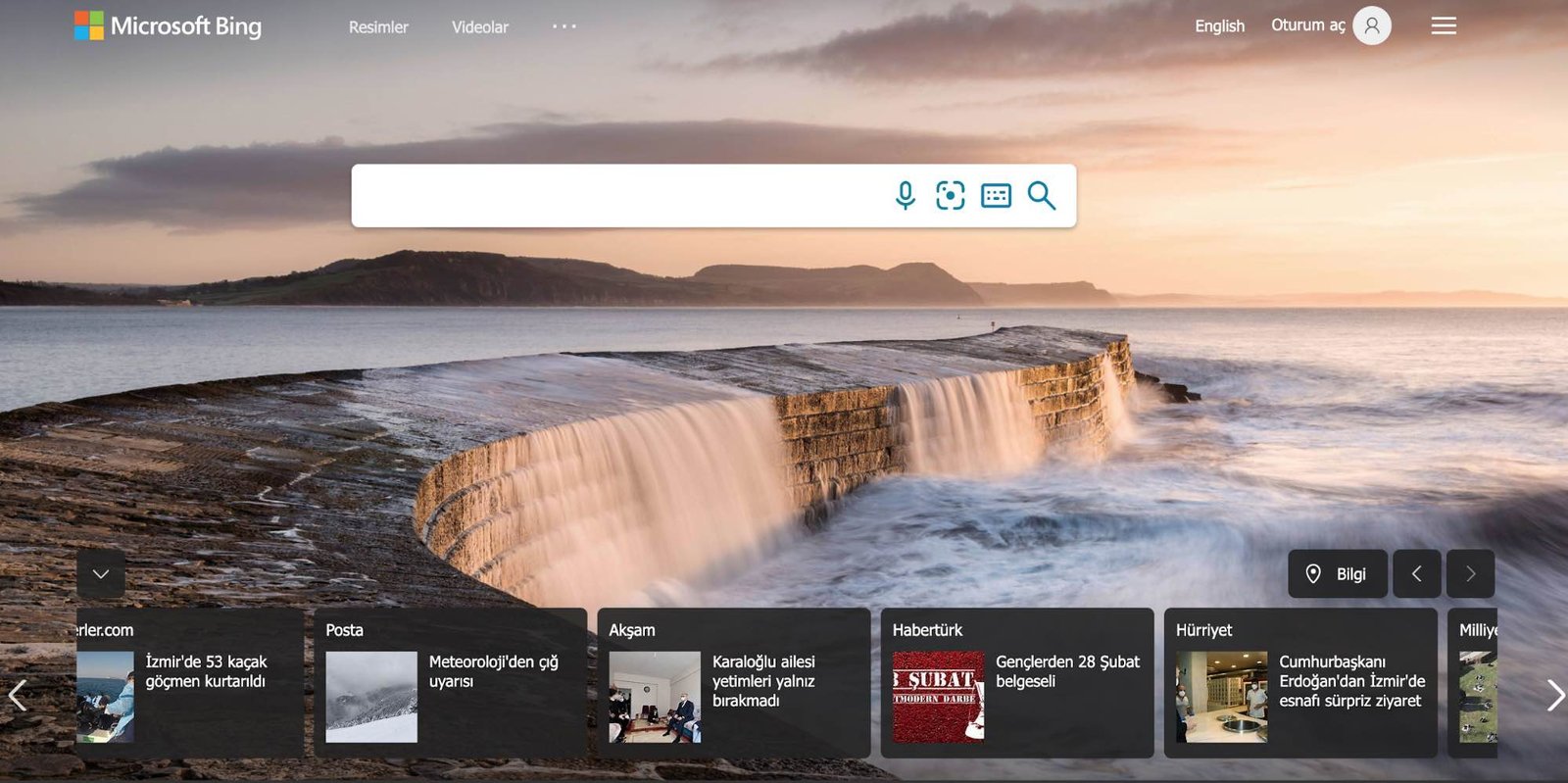
Microsoft Bing, formerly known as Live Search, Windows Live Search, or MSN, is Microsoft's search engine. It launched under the slogan “Bing is for doing” and became a real competitor to Google when it released its beta version in 2009. One of its biggest points of difference from Google is that it doesn't run ads in search results, and it's quite vocal about the strength of its own ranking algorithm.
Backed by Microsoft, the search engine has won users over with its specialized tools. Bing is particularly strong at visual search, and its video search optimization makes it a real alternative to YouTube. Its rewards program lets users collect points while they search, which they can then spend in the Microsoft and Windows stores. Bing is available in 40 languages worldwide. According to gs.statcounter, Bing's worldwide market share was 2.71% as of January 2021, with a 1.12% share in Turkey.
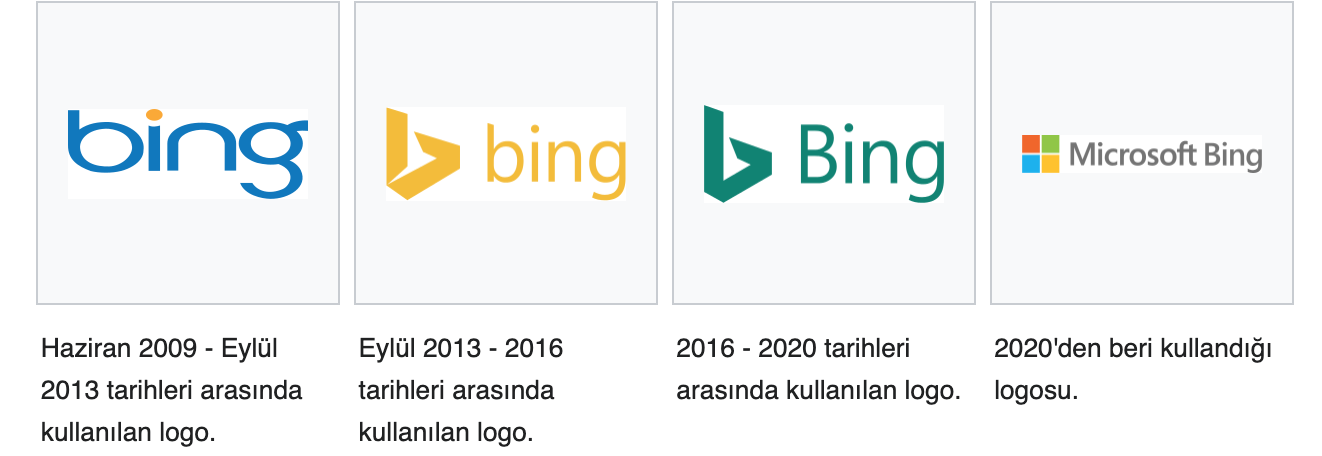
Last year, Microsoft Bing changed its logo, surprising users with a design quite different from anything it had used before.
Baidu

Founded in 2000, Baidu rose to prominence in China after Google was banned there, and it's since become one of the search engines serving users worldwide. Because China has the world's largest population, that ban gave Baidu a huge home-field advantage; even though it doesn't have much of a user base outside the country, it still draws the most traffic from within China. Built by China's largest AI and internet company, Baidu offers maps, access to online encyclopedias, and cloud storage, and holds a 1.13% worldwide market share.
Yahoo!

Yahoo! built its fame between its founding in 1995 and the end of the decade, and it's still widely used around the world, especially in the USA. These days, the search feature takes a back seat to other services like Yahoo Movie and Yahoo Music. It also covers job listings through its Hotjobs section, along with Yahoo Finance, Yahoo News, and Yahoo Games. In terms of market share, Yahoo! holds 1.46% globally and 1.9% in Turkey.
In 2008, Yahoo! wanted Microsoft to acquire it for 44.6 billion dollars, but the authorities rejected the offer. In 2016, the American telecommunications company announced that it had bought Yahoo! for 4.83 billion dollars.
Yandex
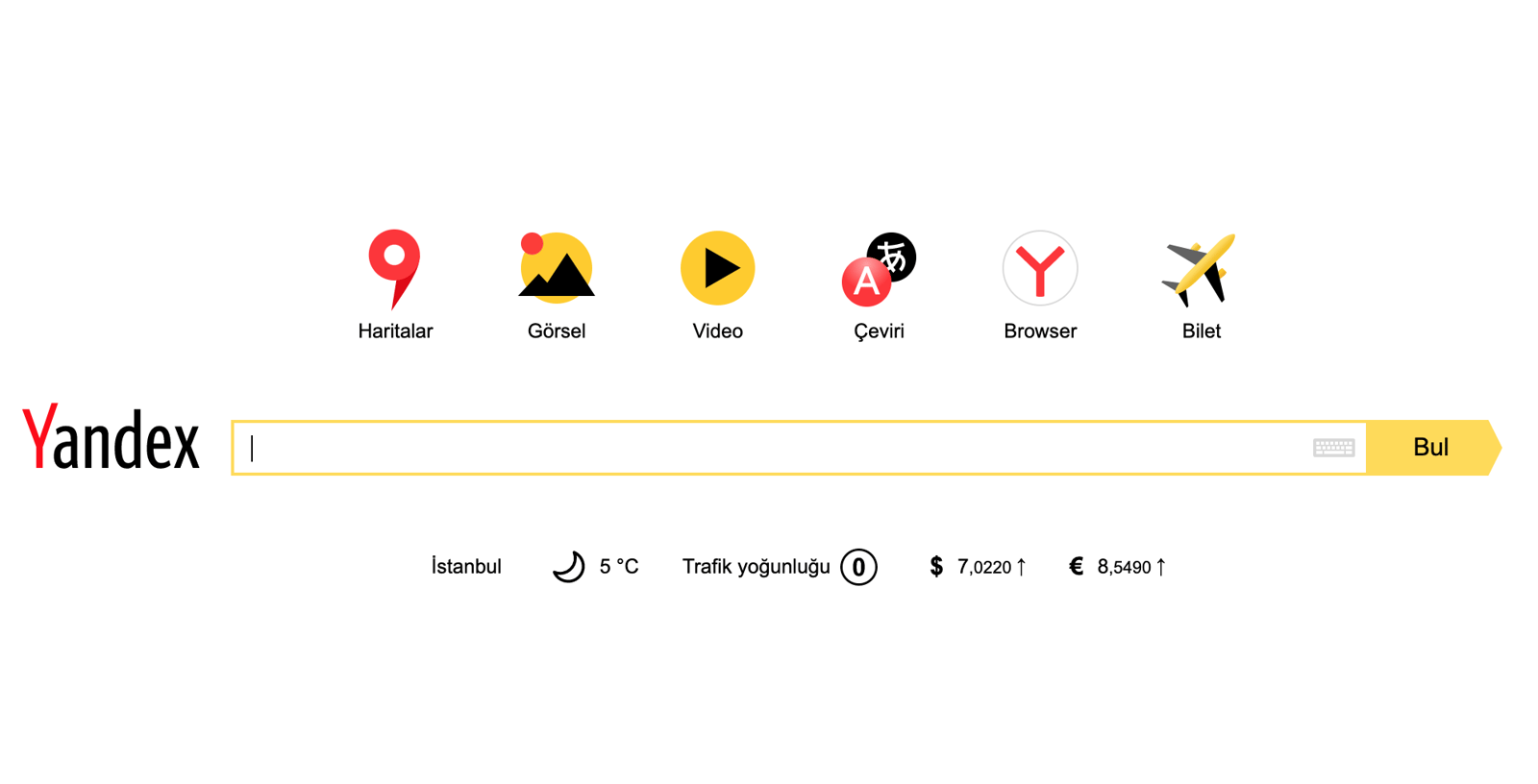
According to gs.statcounter.com, Yandex, the Russian search engine, commands a considerable 46.04% share of the Russian market. It's considered to outperform Google in Russia thanks to its language services.
Like Google, Yandex stands out for its ease of use, and its broader feature set makes it one of Google's biggest competitors. In Turkey, it entered the market with live traffic data, panoramic photos, news, email, and 360-degree street view, and has drawn strong interest since 2011. With its full range of services and a very large user base, Yandex is such a strong rival to Google that people call it “the rivalry of two giants”. Its market share in Turkey stands at 15.83%, according to gs.statcounter.com.
One reason for Yandex's growing global market share is that it's the default search engine for Mozilla Firefox and Microsoft Edge in Turkey. Yandex also has an agreement with Microsoft to power search on MSN, Microsoft's news site.
In 2020, when the embargo dispute between Huawei and Google cut off Huawei's access to Google services, Yandex struck a deal with Huawei to become the default search engine on Huawei phones in Russia and Turkey.
CC Search
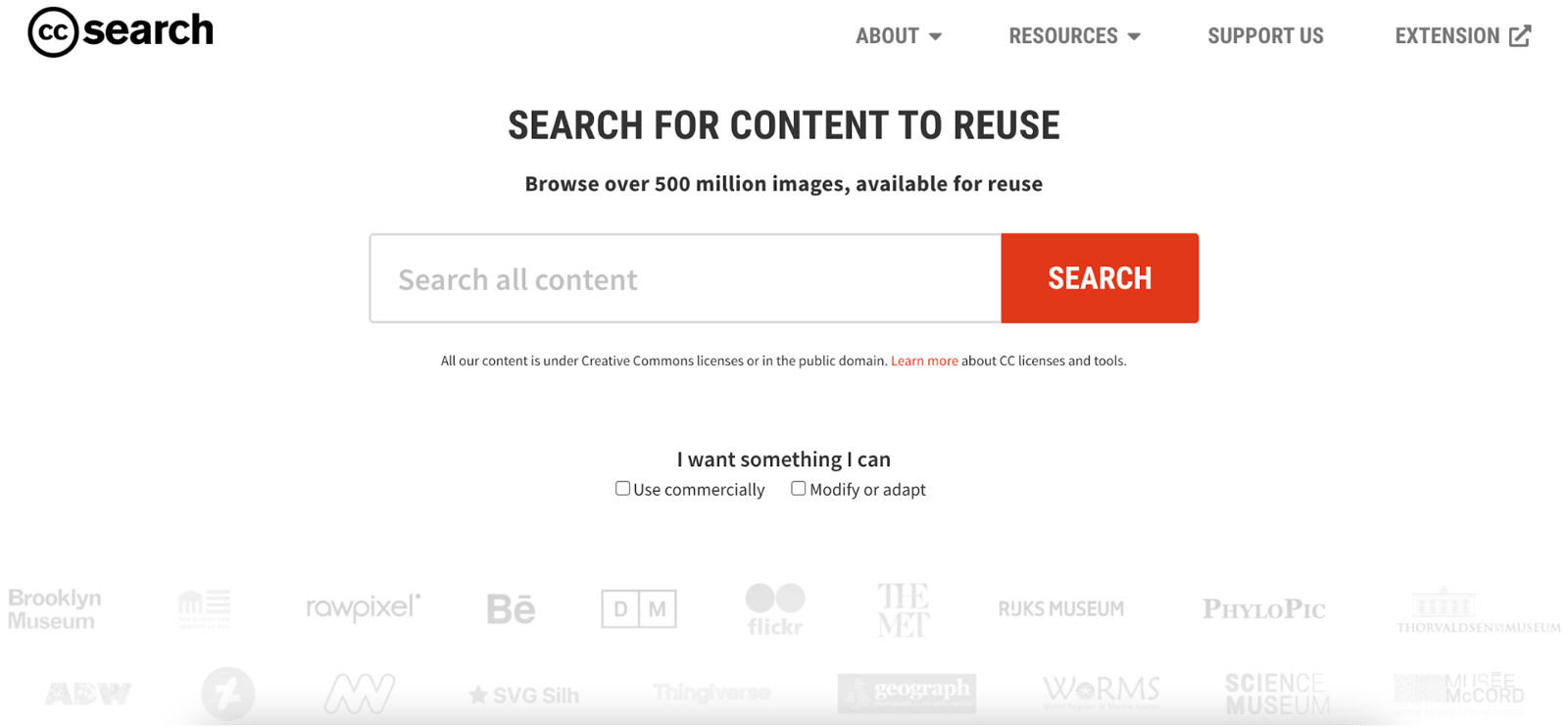
CC Search was created by Creative Commons, the non-profit behind the Creative Commons licenses, to help users find content they can use without paying royalties. It gives users access to free images, videos, and other visual content, offering a straightforward way around the copyright issues that come up with almost any kind of content.
The images available through CC Search can be used without contacting the copyright holder or asking permission. For content shared under a CC license, that step is already taken care of.
WolframAlpha
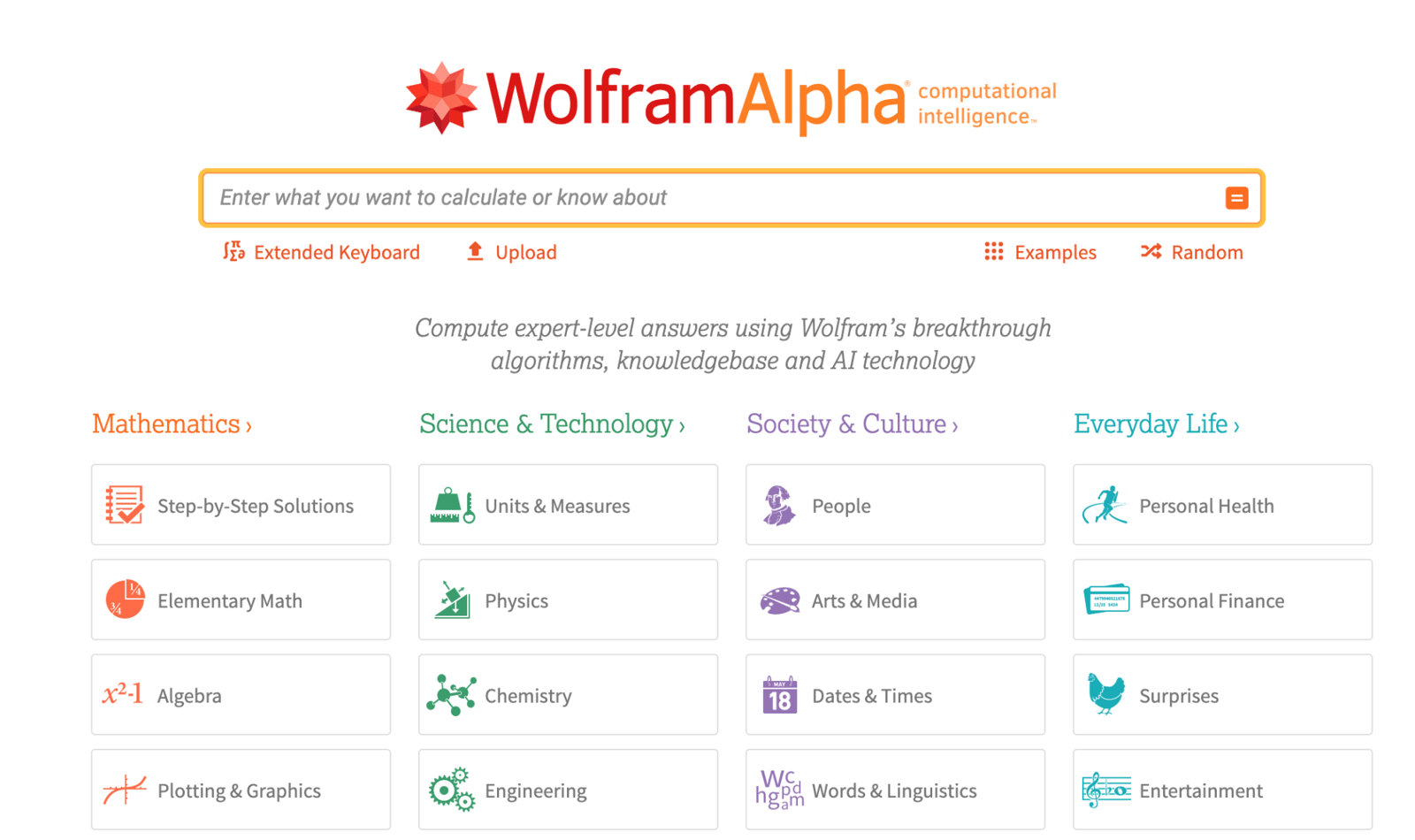
WolframAlpha, founded in 2009, is a knowledge engine built to answer scientific and mathematical questions rather than just perform calculations. Search for a country or city and you'll get detailed background information; search for a date and you'll get the historical events tied to it. For example, typing “Kastamonu” into WolframAlpha returns a detailed profile of the city, including its population, its location on a map, its coordinates, and the local date and time.
WolframAlpha isn't a search engine; it's a knowledge engine. That makes Wikipedia its real competitor, not Google. Like Wikipedia, its goal is to be a reliable database, one that pulls together known models, methods, algorithms, and formulas and presents them to the user.
Ask

Ask.com is a search engine founded in 1996 in the Caucasus. It's a question-based search engine that was popular with users for a while, but its popularity has since faded, and most of what's said about it today is negative. Ask generates results based on the question a user asks, and produces similar results even without a literal question; whatever's asked, it surfaces the websites most likely to help. Unlike other search engines at the time, Ask.com had no automated ranking system: roughly 100 human editors matched search terms to the most appropriate results by hand. Unable to sustain that labor-intensive process, Ask eventually switched to a standard, automated search engine, but its market share has stayed very low ever since.
GoodSearch
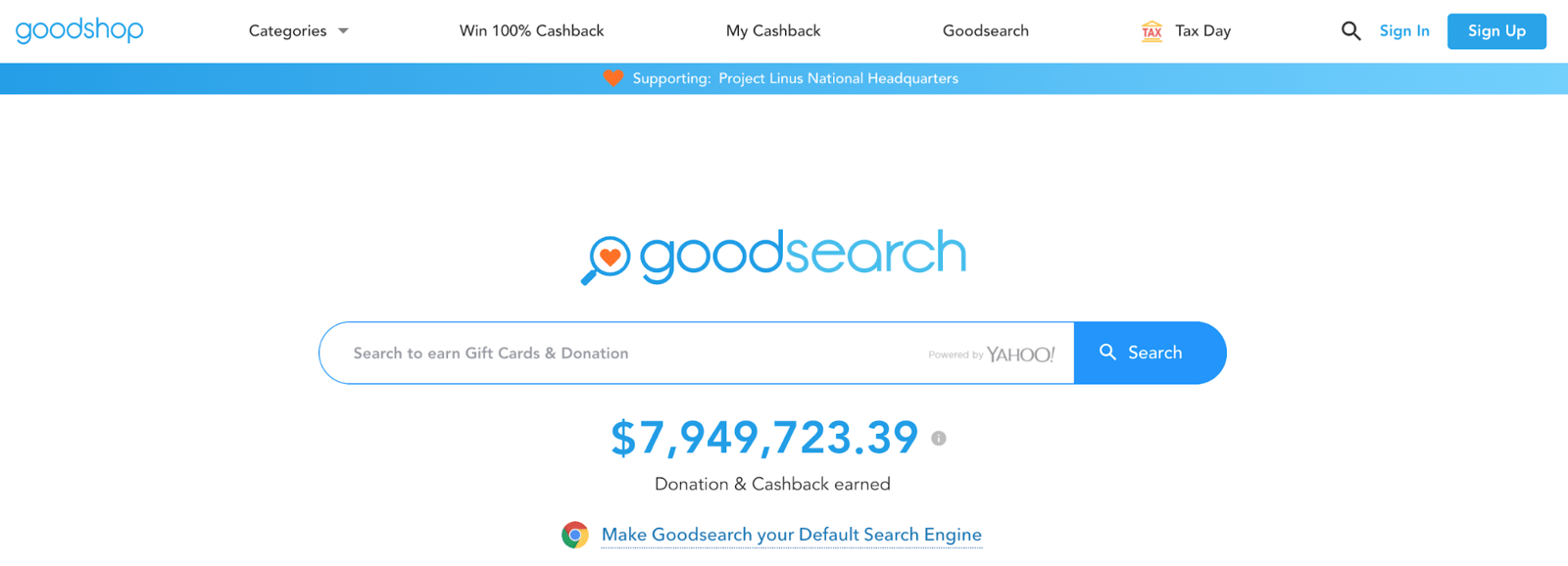
GoodSearch is a search engine powered by Yahoo, known for donating half its revenue to foundations and schools chosen by its users. It draws the most traffic from the United States, Canada, and Britain.
The whole engine runs on the idea of donating to schools and foundations: each search a user makes triggers a donation to a chosen institution, funded through the advertising shown alongside results. Once a year, in December, GoodSearch pays out the total amount raised from that year's searches as a check to the participating institutions. Users can also contribute by shopping through GoodShop, and the running donation total is displayed right on GoodSearch's homepage.
Yippy
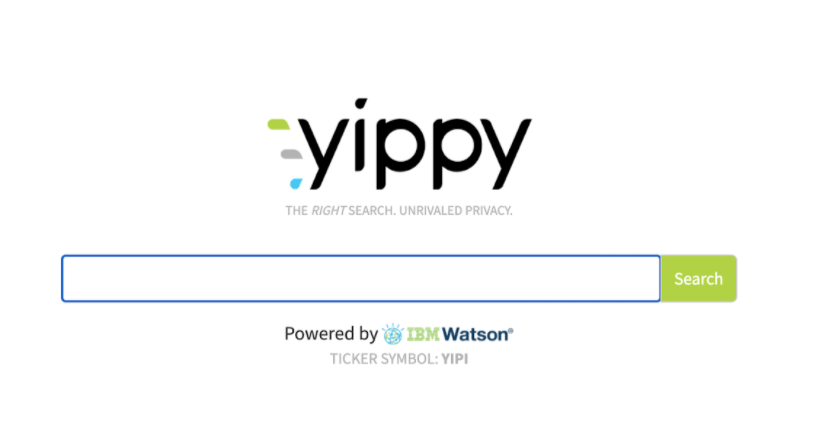
Yippy lets users filter search results and inappropriate content on request, and it doesn't collect user data, which makes it appealing to anyone who values privacy. It covers categories like images, web, news, blogs, and job postings, all of which make it a genuinely useful search engine. Not showing personalized ads and not collecting data are two more reasons people choose it.
Yippy also appeals to users who don't want to leave a trace online. As the search engine puts it, “We don't need to keep a record of anything because we provide our users with the safest possible environment.” That same filtering also makes it a solid option for children and young people, since it keeps inappropriate content out of results, though this feature is currently only available to users in the US.
Startpage
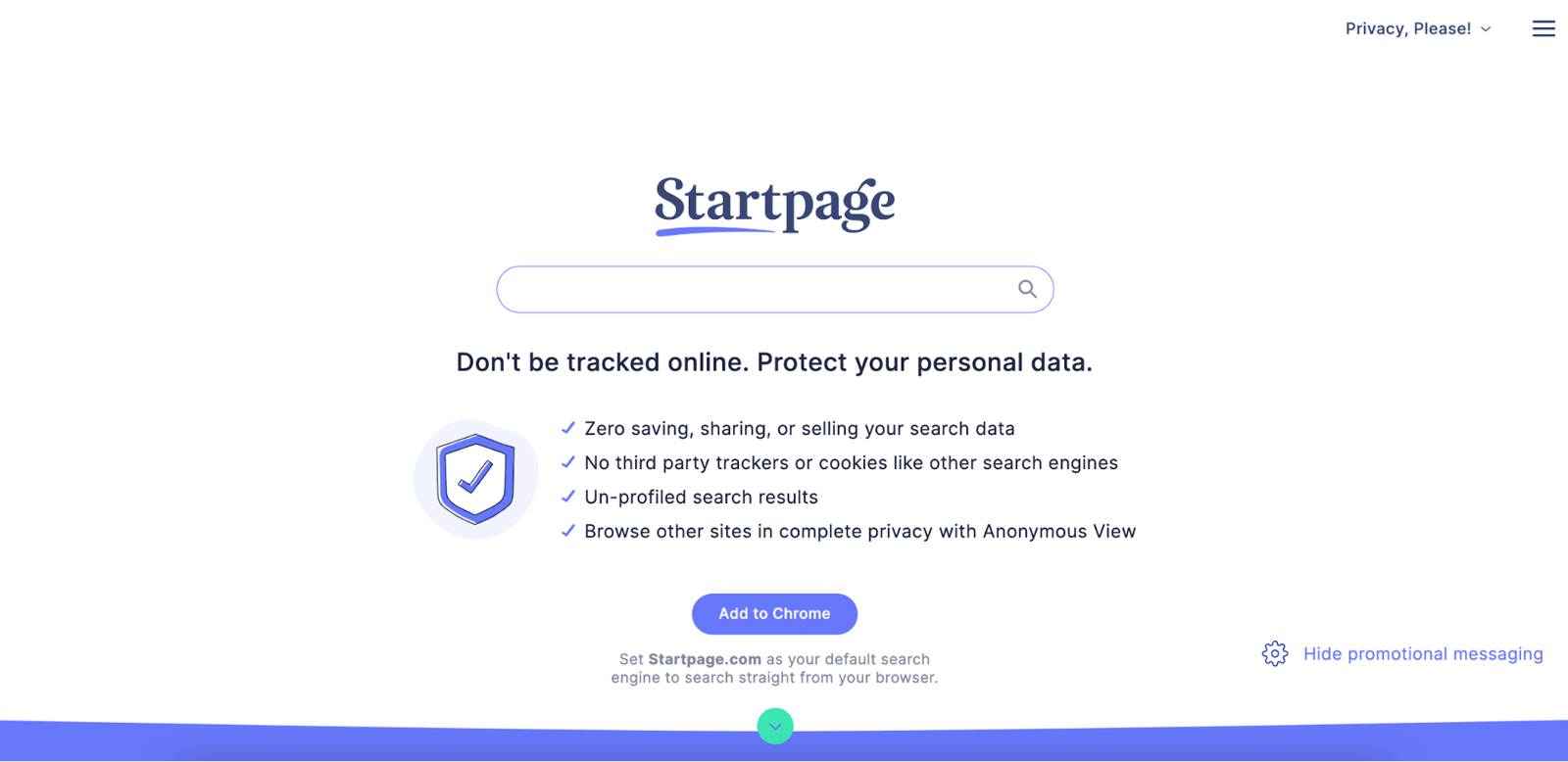
Startpage pays Google for access to its search technology, which lets it deliver Google-quality results without the recording and tracking that usually comes with them. That protects user privacy on top of surfacing good results. Startpage doesn't store any data on its servers, doesn't build user profiles, and so has nothing to share with any third party. With all that in mind, Startpage describes itself as “the world's most private search engine”. That privacy holds only as long as you stay within Startpage itself, though: once you click a search result and leave the site, your privacy is no longer guaranteed. To close that gap, Startpage offers an “anonymous viewing” feature that lets users browse those results without exposing themselves.
Because Startpage pulls all of its listings from Google, you may still see Google's search ads on the results page.
AOL Search

American Online, which has a much longer history than Google, was once considered one of the most ambitious search engines, but it never achieved success outside the US because it stayed focused on the American market. It also failed to anticipate how fast Google's own services would expand, which is one of the biggest reasons it fell behind. AOL is technically still backed by Google today through its email, news, and social networking services, even though those are also the areas where the two compete.
Ecosia
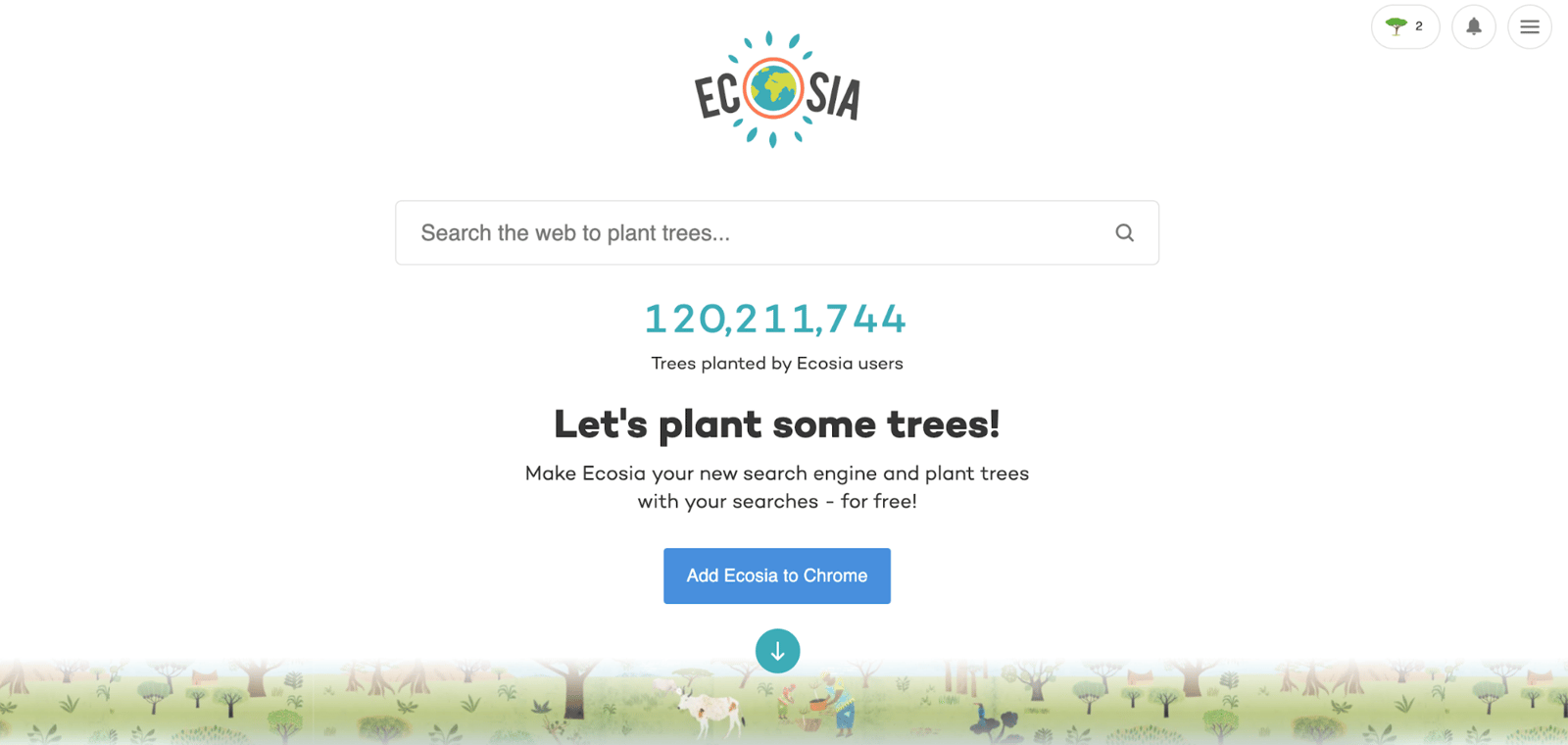
The search engine keeps its revenue and how it earns it fully transparent to users, which along with its ethical standards makes it one of the most trusted search engines after DuckDuckGo. It's also built around an environmental mission: Ecosia says it uses its profits to plant trees, one for roughly every 45 searches, and the team keeps expanding that effort to new parts of the world.
Its servers also run on 100% renewable energy, which shows just how central environmental protection is to how Ecosia operates. On top of that, Ecosia anonymizes user searches within 1 week and avoids third-party tracking technologies, and the fact that it can't sell your data to advertisers is another reason people choose it.
Ecosia started out using Yahoo! search results, then moved to working with Bing and folded in Wikipedia data over time. It also has a mobile app, available on both Android and iOS.
Let's add a few metasearch engines to the list. But first, here's what a metasearch engine actually is:
What is Metasearch?
A metasearch engine doesn't index the web itself. Instead, it sends your query out to multiple other search engines at once, then combines and presents all of their results together in one place.
İxquick
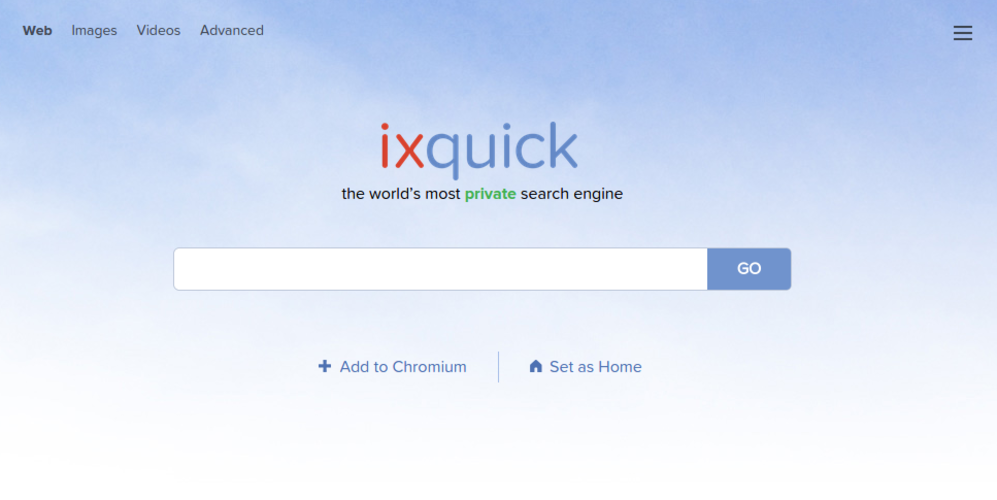 ixquick, which has drawn attention in Turkey too, is best known for not saving any user data at all. Its search network and results hold up well, and notably, it doesn't even use cookies. Users who want a personalized experience can enter their own information to customize their searches, and any traces left behind get deleted from ixquick's data centers within 90 days.
Dogpile
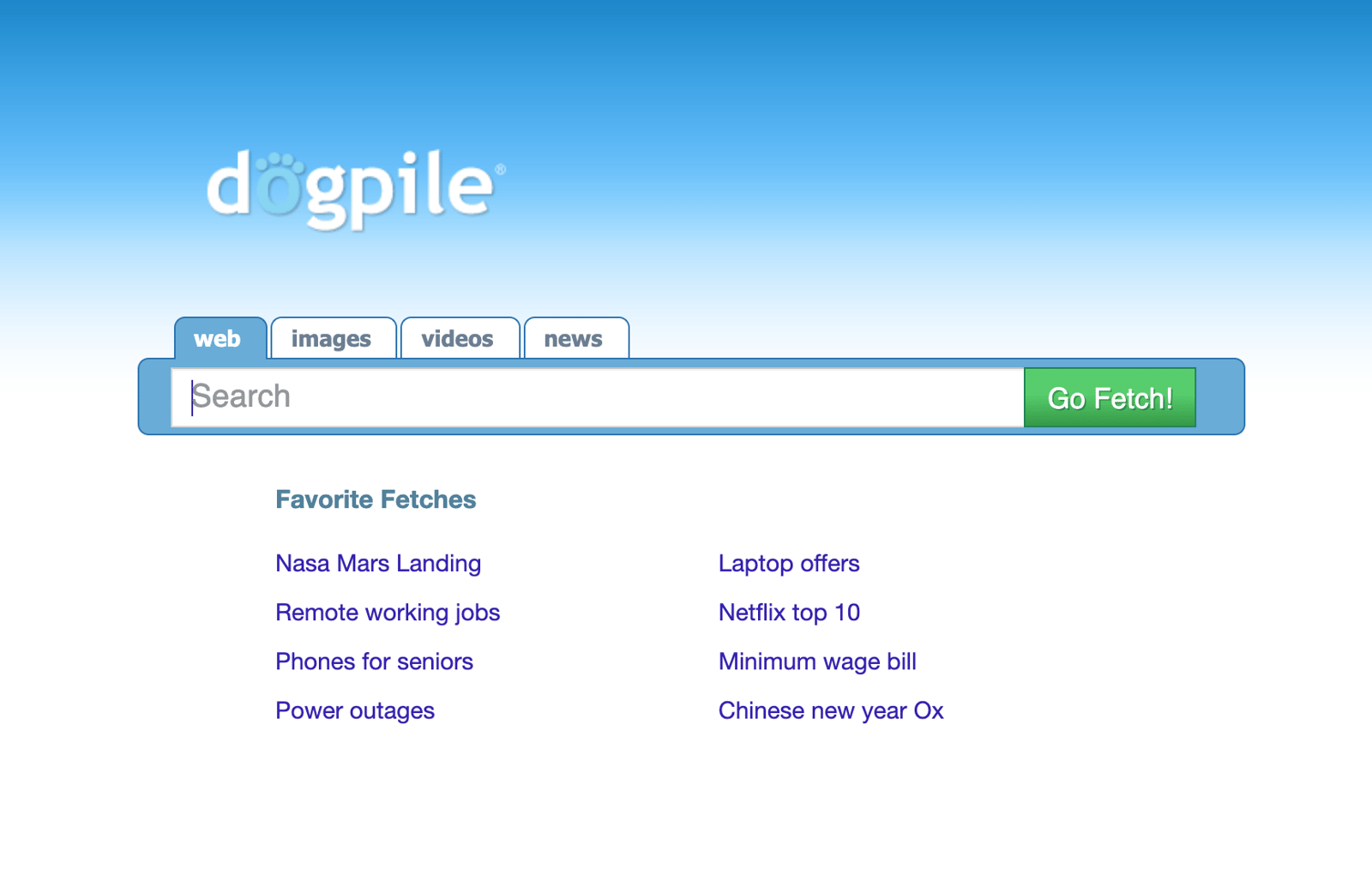
Dogpile is usually the first name that comes to mind for metasearch. It's built around the idea that users shouldn't see ads no matter what they search for, and it also covers image search, audio/video search, and news. Today, Dogpile pulls its results from a range of search engines, including Google, Yahoo, and Bing.
Searx
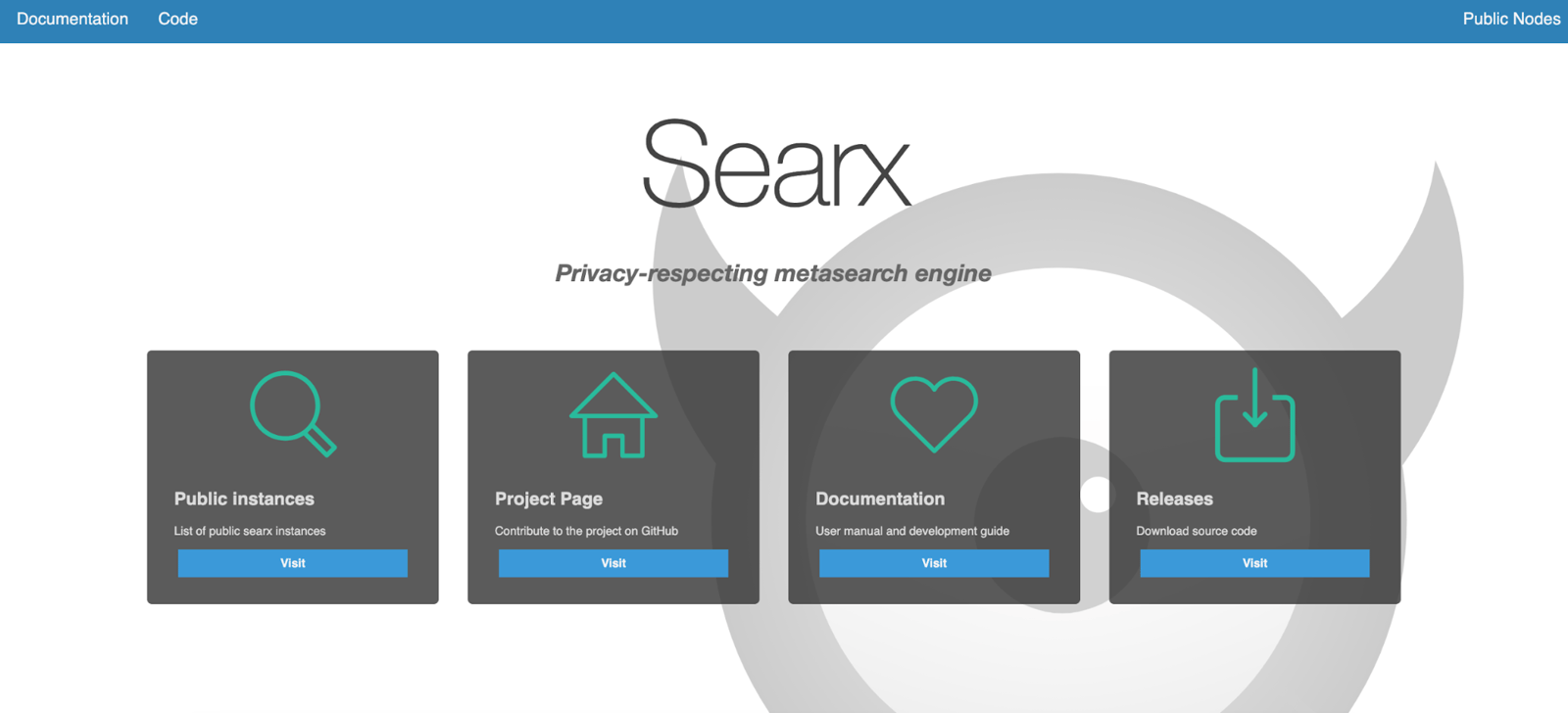 Searx works by presenting results pulled from other search engines, and it doesn't profile its users at all: no data storage, and nothing shared with third parties. On top of that privacy focus, Searx is also open source.


