


Marketing activities need to reflect the needs and expectations of our target audience, but they also need a clear plan built around our own goals and strategies. The marketing funnel helps us connect those two sides. I think developing strategies around the funnel is one of the factors that can put us a step ahead.
As digital transformation has progressed, the marketing funnel has evolved with it. Traditional marketing strategies and models no longer fully meet changing consumer needs or give us everything we need to build an effective strategy. Yet I still come across many sources based on the traditional model. We need to follow changes in digital marketing and adapt our strategies accordingly. Before building a funnel-based strategy, let's look at what the marketing funnel means and how it has developed over time.
1) The Traditional Marketing Funnel
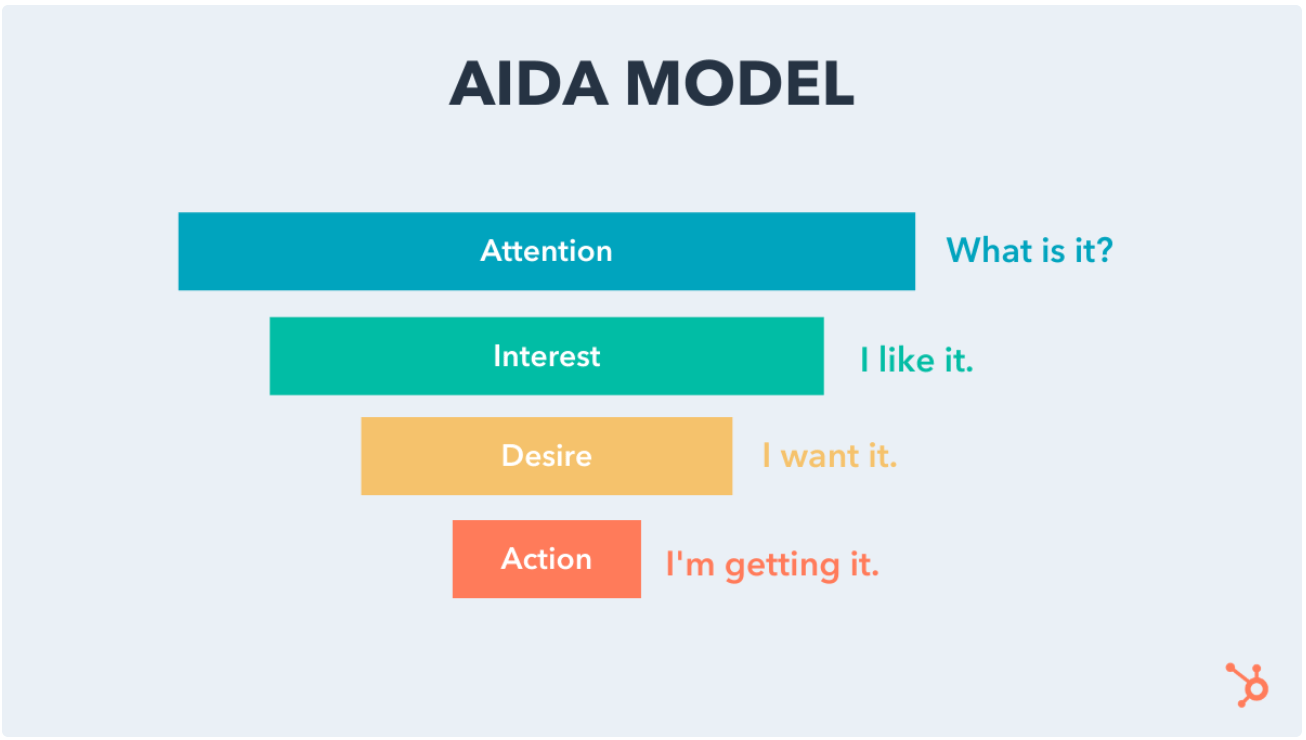
Elias St. Elmo Lewis, an American advertiser, developed the marketing funnel idea in 1898. He divided a customer's path to purchase into stages and created the model known as AIDA: attention, interest, desire, and action.
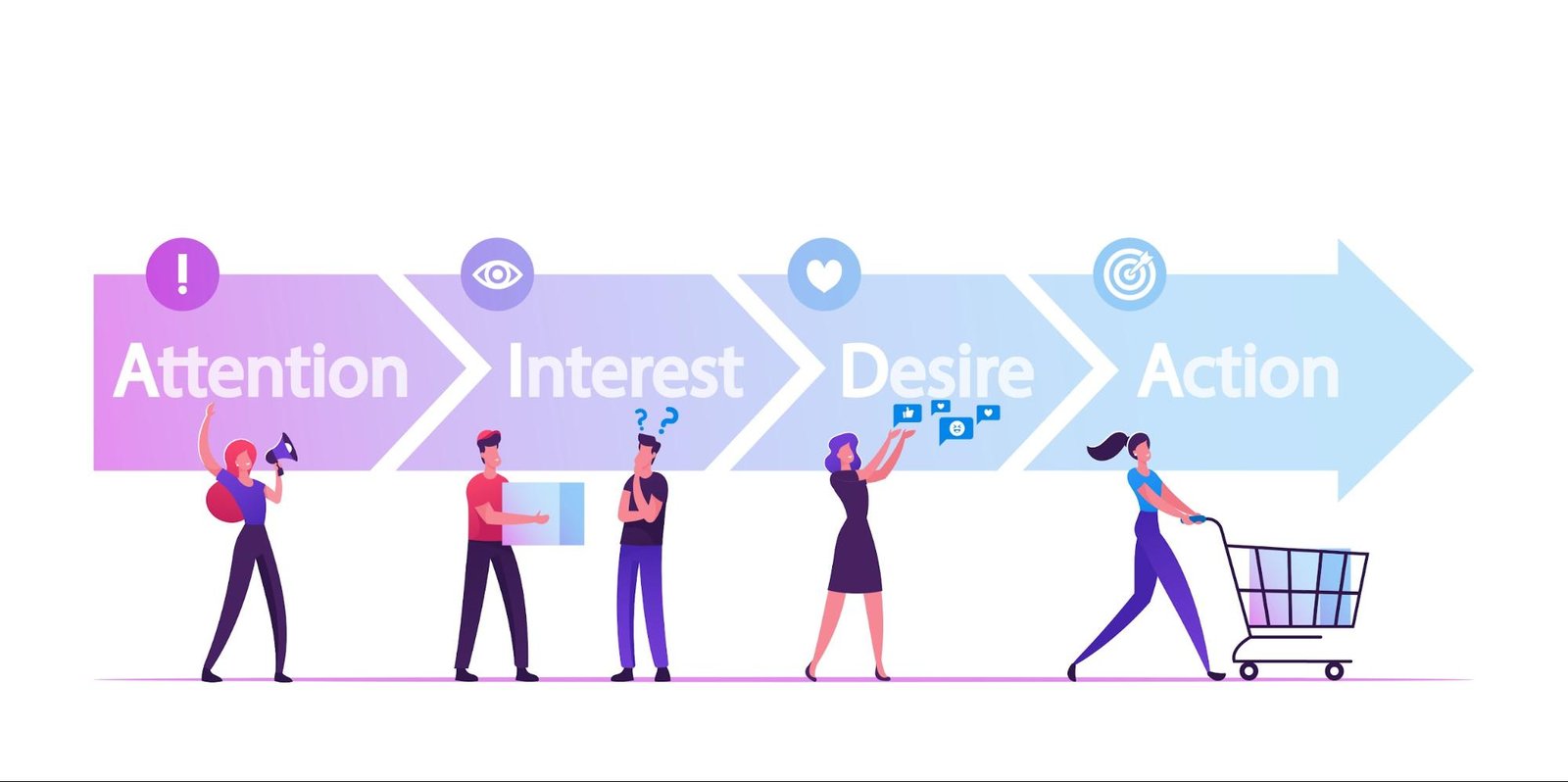
The first stage is about attracting attention and raising awareness. This is where we make our first contact with a potential customer. As people become aware of our product or service, we aim to capture their attention and begin building a connection with the brand.
In the interest stage, potential customers become interested in the product or service and start researching it.
In the desire stage, potential customers form an emotional connection with the brand and move from liking the offer to wanting it.
In the final action stage, prospective customers reach the end of the funnel and become customers by purchasing the product or service.
 Source of image: Hubspot
This familiar Marketing 101 model is still valid, but digitalization has changed the customer journey. Modern marketing funnels have emerged in response.
2) Modern Marketing Funnels
As the digital world and consumer behavior changed, marketers recognized that the funnel could not end at the purchase stage. Customer interaction should not stop once a purchase takes place. The funnel needed to become non-linear, with stages that continually develop and allow customers to enter or leave at any point. Consumers were also less willing to make the effort to understand brands. Instead, they expected brands to understand them. These changes drove the evolution from the traditional model to newer alternatives.
As digitalization encouraged a more individual approach to consumers, many companies developed their own marketing funnels. Although these models differ in appearance, they all emphasize the post-purchase process and aim to turn customers into loyal customers.
Let me explain a few of these models.
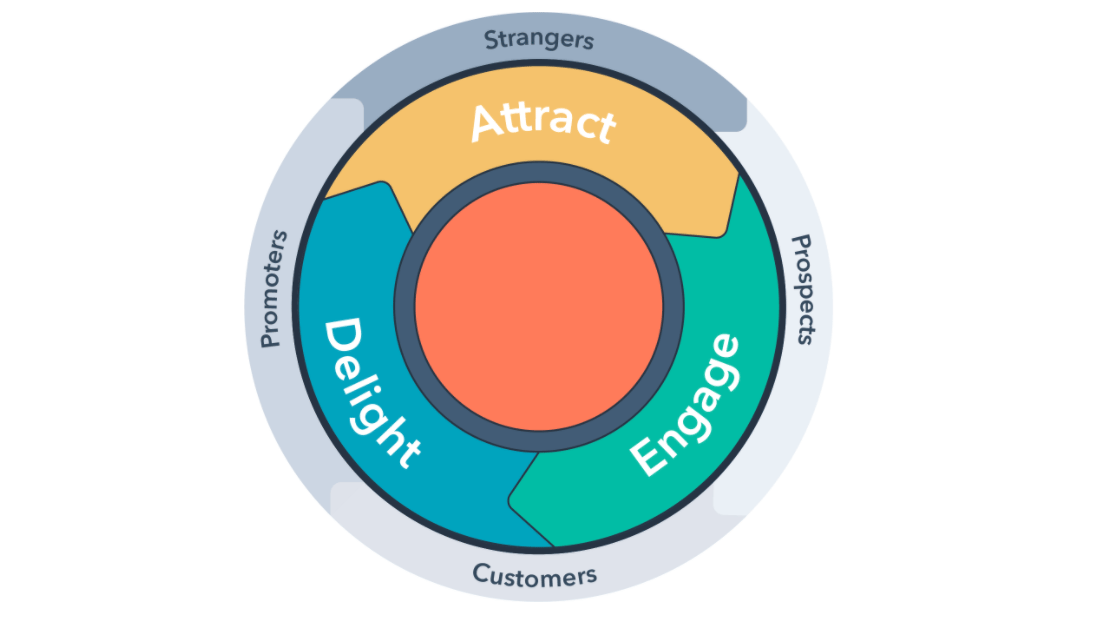
While other models treat customers as an outcome, Hubspot's Flywheel model considers how customers can help a business grow. It does not leave customers at the final stage. Instead, it turns them into advocates for the brand.
 Source of image: Hubspot
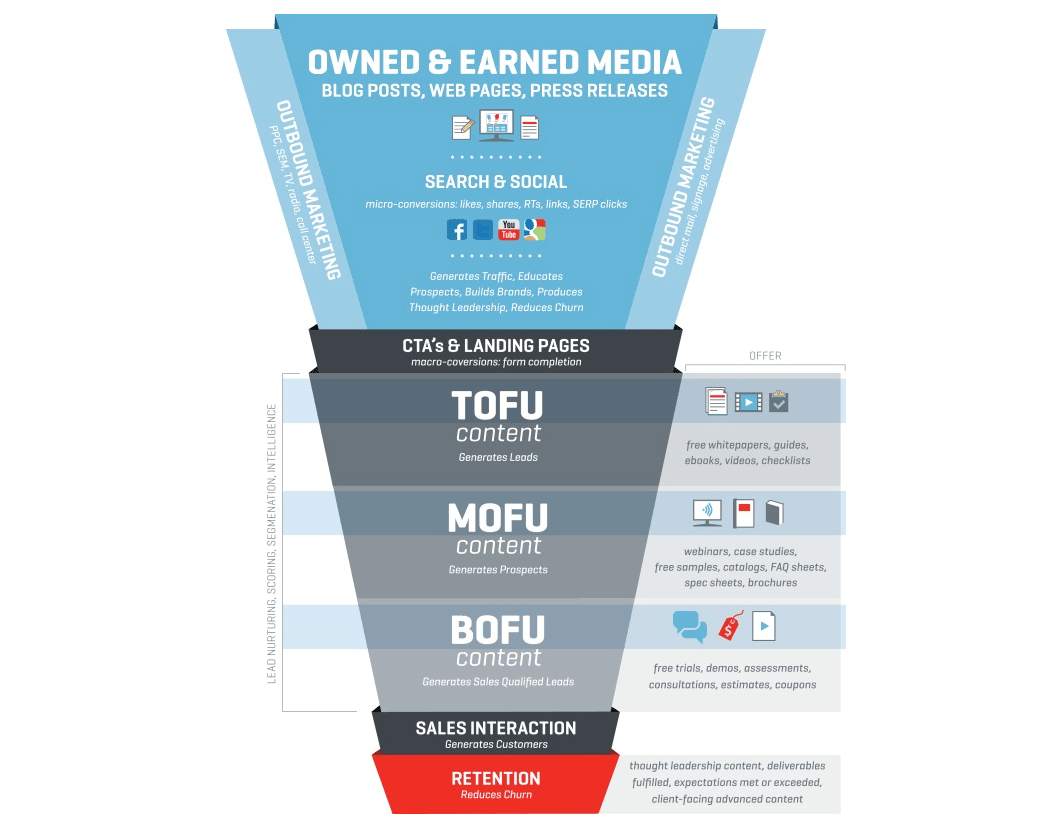
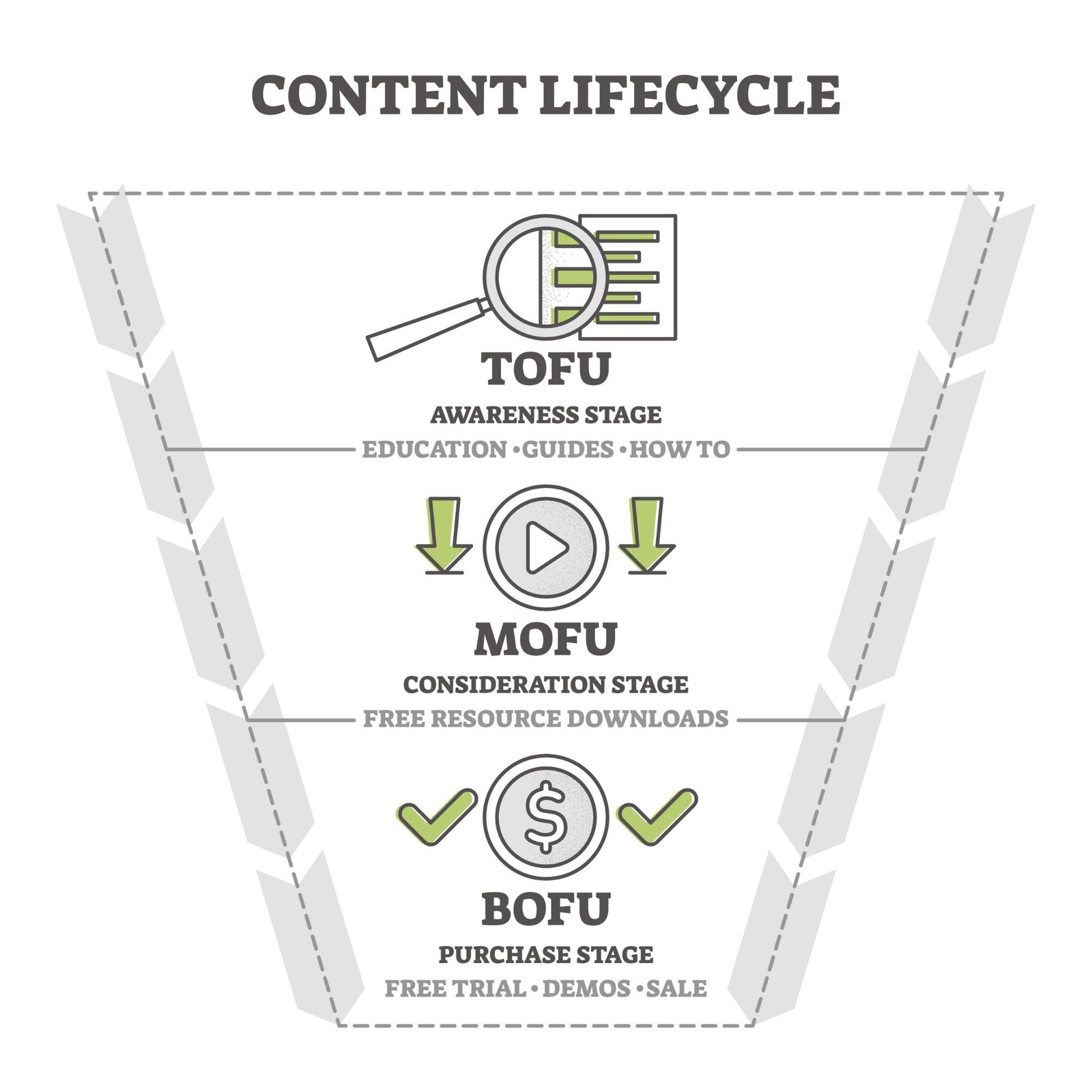
The model adopted by Moz consists of three stages: TOFU, BOFU, and MOFU. It focuses on retention and continued sales rather than advocacy.
 Source of image: Moz
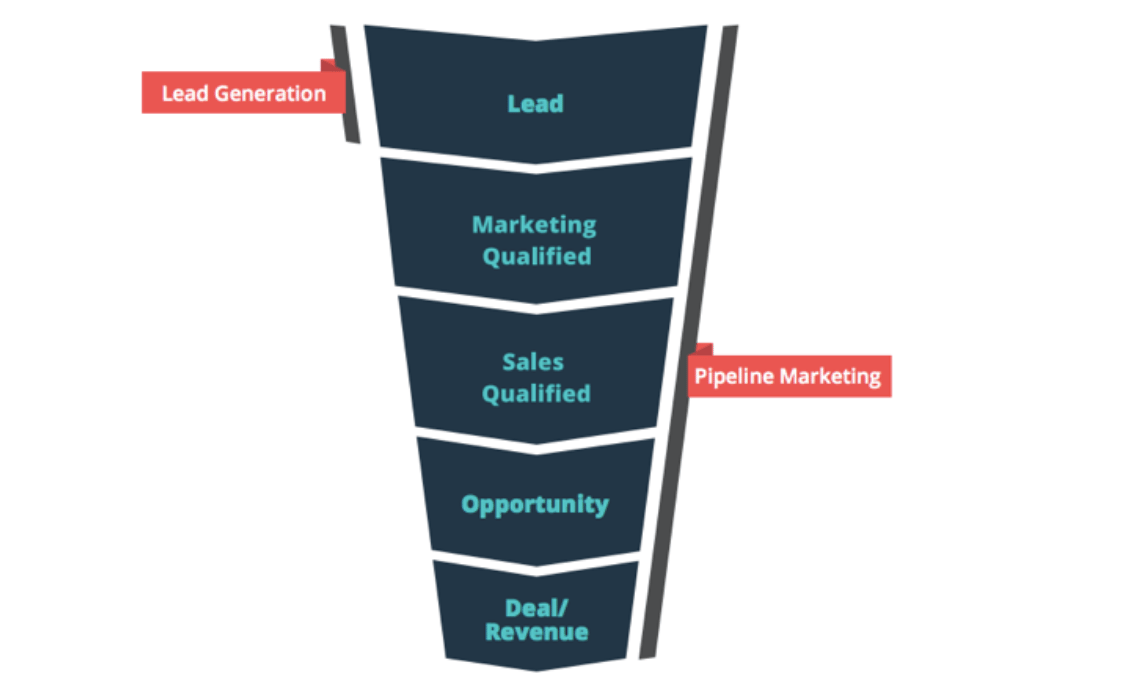
Bizible's Pipeline Marketing Funnel highlights every stage and introduces terms such as MQL (Marketing Qualified Lead) and SQL (Sales Qualified Lead). MQL describes qualified leads who are more likely to become customers than other prospects tracked by the sales team. SQL refers to leads that are ready to enter the purchasing phase. In other words, MQLs become SQLs when they are ready to speak with the sales team. Because it focuses on revenue growth, this model is optimal for B2B marketing.
 Source of image: Bizible
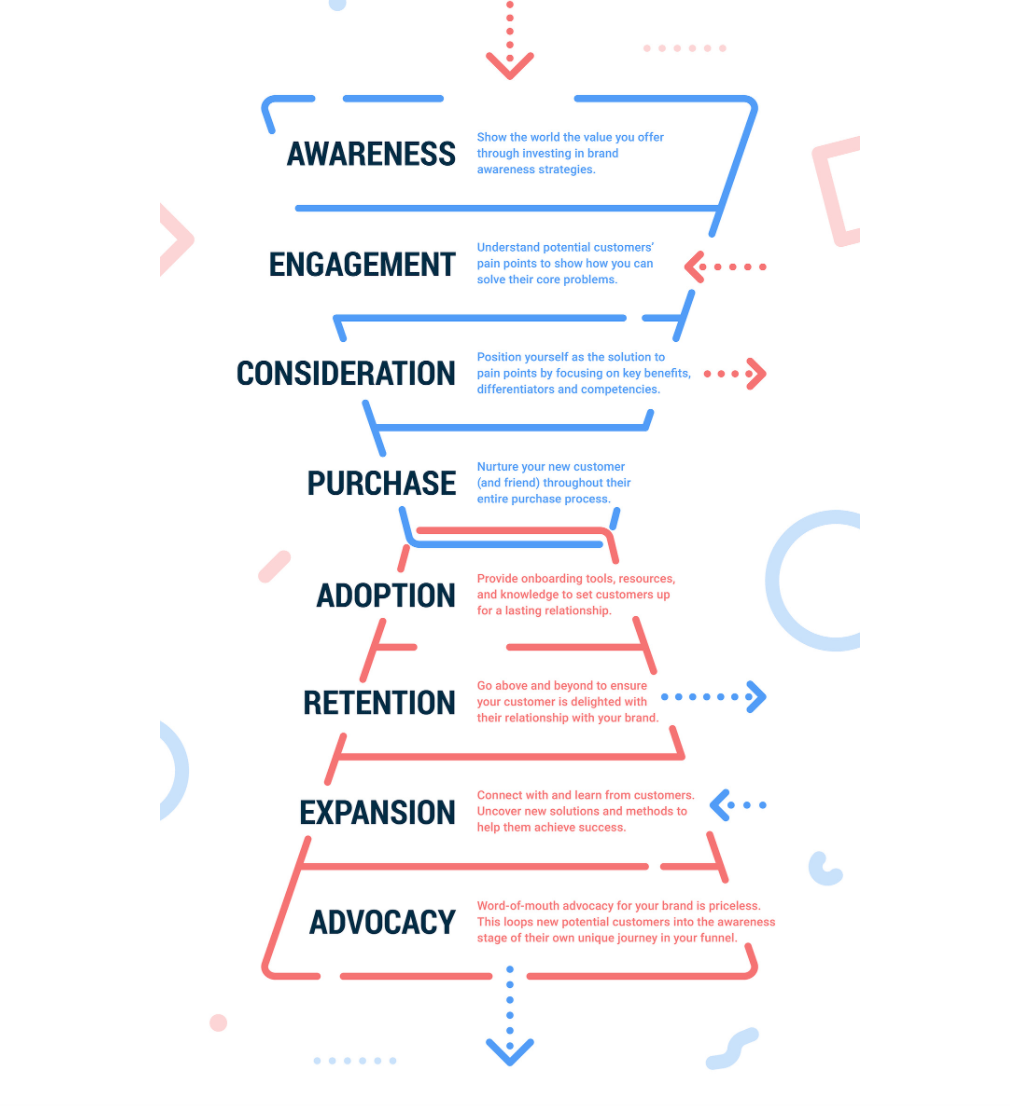
The non-linear, lifecycle-based model from Campaign Monitor proposes an omnichannel experience designed to turn customers into brand advocates and support lasting brand success. Customers can enter and leave this funnel at any stage.
 Source of image: Campaign Monitor
There are more new models than I have covered here, and I am sure others will appear as the digital world continues to evolve. The important thing is to follow these changes and adapt them to our own business types and goals. Each company can create a model of its own, while different sectors and segments may call for different models.
We can develop our strategy around one of these models, which continue beyond the purchase stage. The aim is to create a brand that customers love, remain loyal to, and eventually advocate for.
Although modern funnels use different definitions and stages, they follow a recognizable strategic pattern. The next question is which marketing activities and content types we should use to build a strategy around that pattern.
To answer it, I will use Moz's model to explain the marketing activities and content types that fit the top, middle, and bottom stages of the funnel. Some activities are better suited to building brand awareness, while others help create loyal customers. Keep this match between funnel stage and marketing activity in mind as you build your strategy.
2.a) TOFU
TOFU refers to the top stages of the funnel: brand awareness, attraction, and interaction.
At this stage, we want to make first contact and raise brand awareness. One approach is to create content around the problems our buyer persona faces.
Think about how the audience might find us. We can use the following marketing activities and content types to build awareness:
SEO: First, we need an effective SEO strategy. SEO-friendly content can help us rank higher, while a technically well-built website makes it easier for users to find us.
PPC: Advertising can help our target audience discover us. This may include Google Ads, social media ads, and other advertising models such as cost-per-click campaigns.
Content Marketing: At this stage, informative content created without the immediate aim of selling a product or service is more effective.
Blog: Keyword research can guide blog content that meets the needs and requirements of our audience. Checklists and how-to content attract the most attention. Guest blogging can also support this part of the funnel.
Social Media: We can identify the social platforms our target audience uses most and maintain an active presence through regular posts in formats such as images, videos, and infographics.
Infographic: Visual formats are highly effective today. Infographics can inform new users quickly and work well in both blog posts and social media content.
E- Books: Downloadable content can attract our target audience and introduce the brand. Broader topics may work well here. E-books can also help us collect contact information from the audience.
Webinar: A webinar may be one of the best ways to interact with the target audience around a subject in which we have specialist knowledge. It also provides another way to collect audience contact information.
2.b) MOFU
MOFU is the critical decision stage of the funnel, where we work to convert leads. Content at this stage should focus on our business and brand. We need to present the most important features that distinguish our products or services from competitors and position the brand as a strong fit for customer needs. Some of the content types below also appeared in TOFU, but here their purpose is to highlight products and services rather than simply inform or educate.
Case Study: Case studies can help establish reliability at this stage. They may be the strongest proof we can offer that we can solve an SQL's problem, just as we solved another company's problem.
Blog: Content marketing remains useful here and can also support SEO performance. At this stage, however, we can focus on how-to content that highlights our product or service and provides answers, rather than content designed mainly around the broader needs of the target audience.
E- Books: We can share our knowledge and experience through e-books with more technical analysis. We can also prepare e-books that explain product features in detail.
Webinar: Webinars can serve as training sessions that introduce products or services. A Q&A session can help resolve participants' questions.
E-Mail Newsletters: Newsletters allow us to deliver regular content about our products, services, and technical knowledge to an audience whose contact information we collected through e-books and webinars, and who gave us permission to send emails. I recommend avoiding aggressive mailing. A/B testing can help identify the days and times when open and click rates are highest for the audience.
Retargeting Ads: We can retarget users who have visited the site and remind them of the brand through tools such as Facebook Audience, Adroll, and Criteo.
2.c) BOFU
We attracted leads through TOFU content and earned their trust through MOFU content. Now we reach the purchase and post-purchase stage. This stage also plays an important role in building customer loyalty.
We can offer the following content types to a target audience that is ready to buy:
Coupons / Special Offers: This method can provide a reason to buy, especially for an e-commerce site. Special offers can also strengthen our relationship with the audience.
Product Demos: Showing exactly how a product works is an important step in the purchase decision. Whether through video or a live presentation, we can highlight the product features that distinguish us from competitors. We can also create a video series that explains the product in detail. Free trials may help speed up the conversion period.
Customer Reviews and Case Study: Customer stories and reviews can be persuasive in the final stage. We can use written or video formats and invite customers to review us on different platforms.
Customer Services and Help Resources: Help resources and a frequently asked questions section allow people in the purchasing stage to find answers and take action. A pricing page with several options can also have a positive effect on conversion rate. For special pricing plans and other questions, it is useful to provide customer service contact information. You can read this successful case study on how to optimize a pricing page.
E-Mail Automation: Email automation allows us to send follow-up messages to an audience after sales meetings. These emails can help increase conversion rates. We should also stay in contact with customers after purchase to support loyalty, including asking them to review the product or service they bought.
3) Developing Strategies Through OKR - Bonus: Template
A marketing funnel helps us visualize our strategy and plan an effective campaign.
Once we decide which part of the funnel aligns with our marketing goals, we can create the appropriate content described above. This gives us a more controlled and effective way to provide the target audience with the content they need.
The first step in building the strategy is to set our goals. We can use the OKR (Objectives & Key Results) method for this. Objectives and Key Results is a goal-setting methodology that enables companies to define goals and work together to achieve them.
OKR does not date back to very early times and is associated with Andrew Grove, who was CEO at Intel. Used by Larry Kim from Google, the method became popular among technology companies such as LinkedIn, Uber, and Microsoft.
The Objectives and Key Results method helps us focus on priorities and align the team around its goals. Shared goals can show whether teams are contributing to one another, while measurable key results help us assess progress accurately.
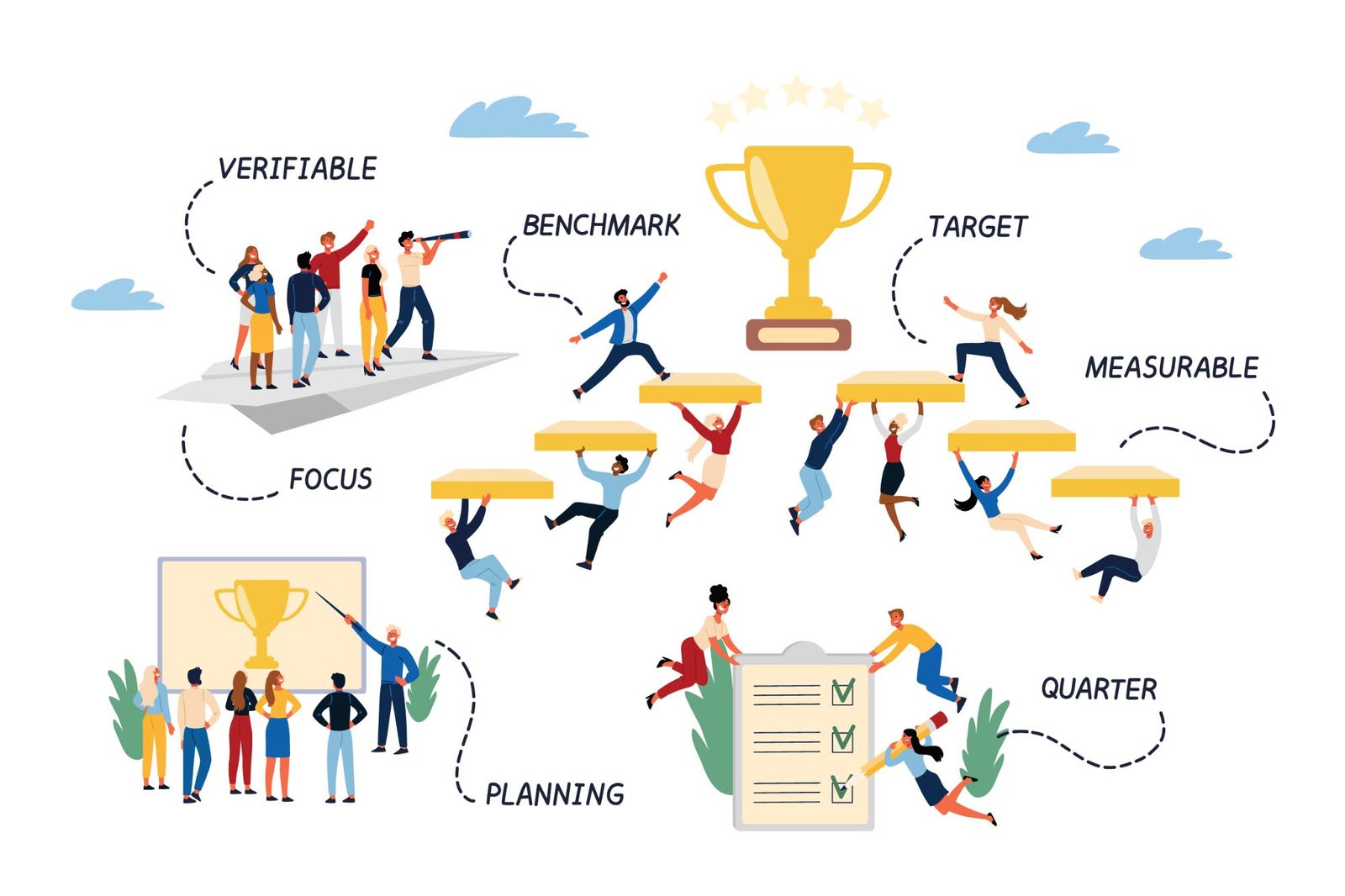
We can create annual or personal OKRs. Dividing annual goals into quarters can be particularly effective.
We begin by setting objectives. These should represent our primary and biggest goals. It is usually recommended that a company set three or five objectives. The objectives should be fair, qualitative, and applicable.
Next, we set key results. These are the benchmarks we track as we work toward our objectives. We can think of them as smaller actions that move us closer to the objective.
The right number will vary by case, but we can set 3-4 key results for each objective. For example, each department in a company might set one key result that contributes to a common objective, or each member of the marketing department might pursue a different key result toward that shared objective.
Key results should be specific, applicable, and measurable. They may focus on growth, performance, revenue, or interaction. A key result could be growing sales by X% or increasing visitor numbers from X to Y.
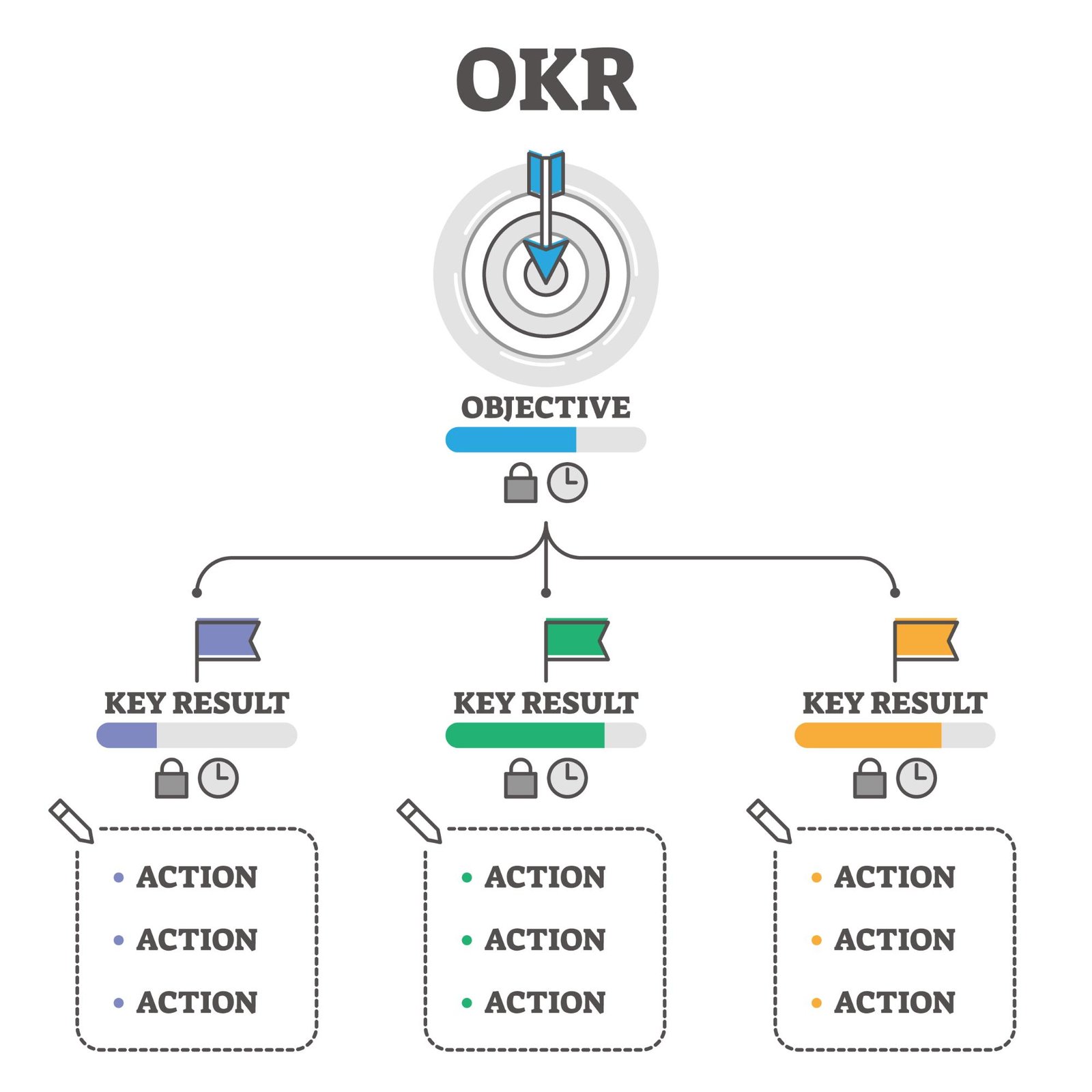
We should then track OKRs regularly and evaluate them at the end of each quarter. During the evaluation, we score how much of each objective and key result has been achieved.
Here is an OKR example to make the process clearer.
Objective: Raise brand awareness (10/10)
KR1: Increase the number of visitors to the website by 40% through SEO work and blog posts. (4/10)
KR2: Increase the webinar participation rate from 10% to 20% (3/10)
KR3: Convert 30% more with 100$ budget for ads by the end of the quarter. (2/10)
KR4: Have 2.000 followers on social media (1/10)
After setting the OKRs, we can decide which funnel stages they correspond to. The example above belongs to the TOFU stage, so the content plan should reflect that.
Of course, defining the target audience in line with the brand and business objectives is also essential. We need to understand the audience and meet its needs through suitable marketing activities.
Finally, you can use the link below to open the template I prepared. The first sheet of this annual template is where you set your OKRs.
After defining your marketing objectives, you can set a KR for each quarter. Score your progress at the end of every quarter to see how much of the objective you achieved. You can also convert the template into a quarterly objective-key result structure and assign 3-4 key results to each quarter.
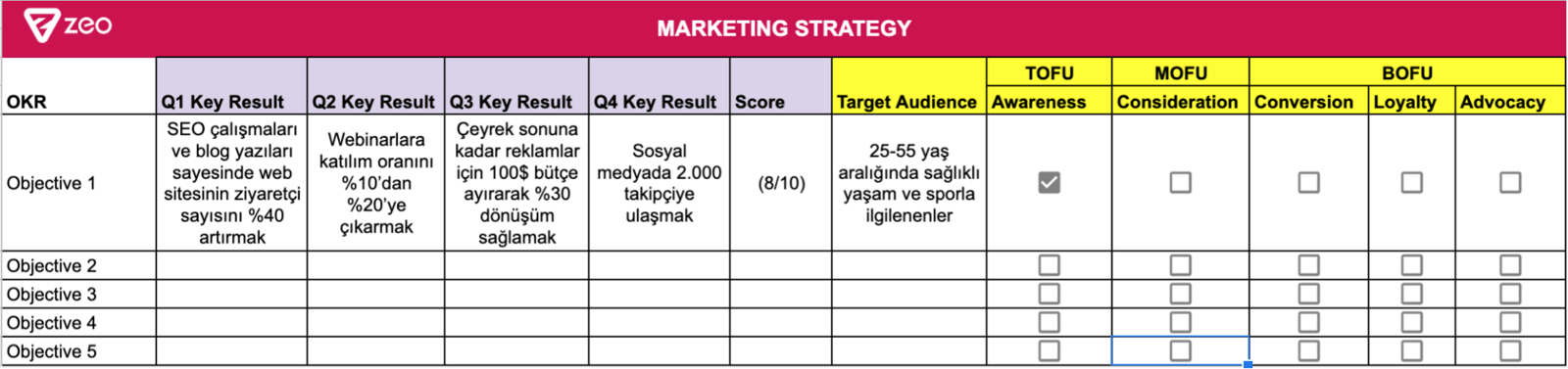
After setting your OKRs, define the target audience and decide which funnel stages match the objectives. For example, select awareness when releasing a new product, or loyalty and advocacy when trying to maintain a product's position in the market.
The second sheet provides more detail. Here, you can mark the funnel stages that correspond to each objective and review the materials or content types available for those stages. You can indicate whether you plan to use each content type and add notes about how you will use it. The sheet can also serve as a benchmark against the previous year's table.
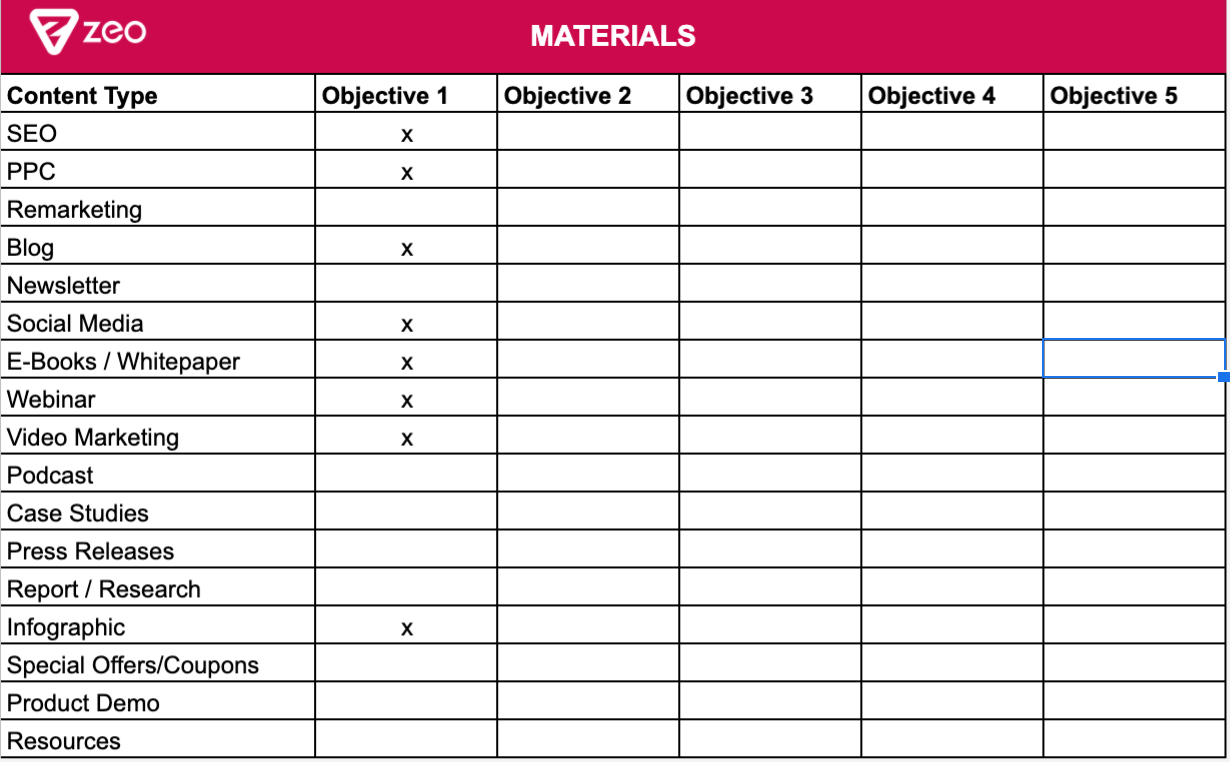
Because objective 1 in the example corresponds to the TOFU stage, I marked the content types that can be used at this stage. You can also add details for individual content types, such as "start working on Google Ads" for PPC.
The Template Link: http://bit.ly/template-build-your-annual-marketing-strategy
We have now followed the marketing funnel through its historical development and seen how digitalization led to new and more effective models. We also covered the content that can be used at the TOFU, MOFU, and BOFU stages and matched content types to each stage.
After setting objectives through the OKR method, we can identify the corresponding funnel stages and build a marketing strategy with content suited to those stages.
The template can help you create that strategy more quickly. Please do not hesitate to ask your questions in the comments section!
Resources:
https://www.smartinsights.com/traffic-building-strategy/offer-and-message-development/aida-model/
https://www.singlegrain.com/blog-posts/content-marketing/how-to-create-marketing-funnel/
https://www.lucidchart.com/blog/what-is-tofu-mofu-bofu
https://blog.denamico.com/heres-the-difference-between-tofu-mofu-and-bofu-offers
https://weekdone.com/resources/objectives-key-results
This article was written by our former Marketing Specialist Gökçe Yeşilbaş.


