


SWOT Analysis is a fundamental strategic planning technique used to identify the strengths, weaknesses, threats, and opportunities of a project, process, method, or company. By definition, SWOT is designed to help you identify the items with the greatest potential impact on growth, or the most dangerous threats. This analysis brings a powerful, creative approach to our SEO work and planning, one that helps us make sense of where we stand relative to our internal and external environment, or "where we're going."
The primary purpose of a SWOT analysis is to help organizations build full awareness of every factor at play when making a business decision or plan. You can use it to list what to focus on over the medium and long term as you build your SEO strategy.
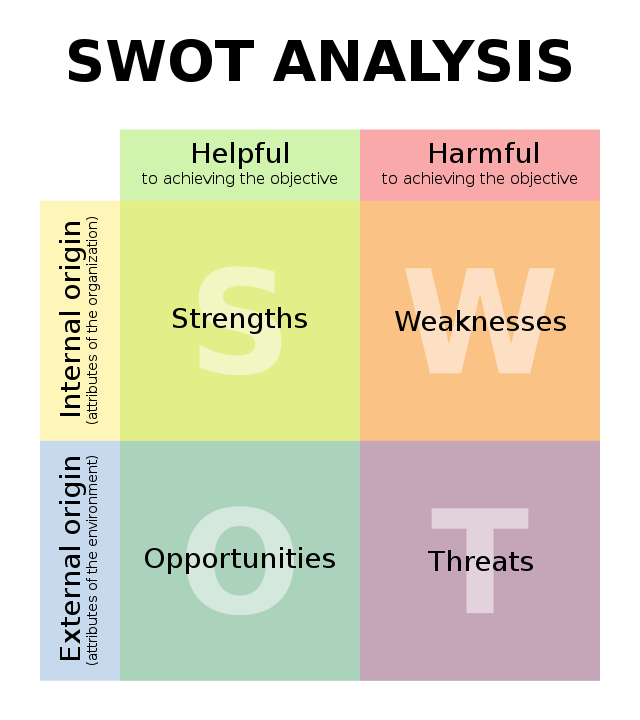
SWOT Analysis is an acronym for the four components the technique examines:
- Strengths: The strengths of the project, and the internal factors that give it a competitive advantage.
- Weaknesses: Internal factors that put the project at a disadvantage compared to others.
- Opportunities: Factors in the external environment that the project can use to its advantage.
- Threats: Factors in the external environment that can create problems for the project.
So how do you conduct a SWOT analysis? Below, we cover the right way to build one for yourself.
Identifying Strengths
Identifying your strengths is an easier step than the others, which is why we generally recommend starting there. Think of these as the factors you're already good at, the ones that make you a threat to competitors, and the ones you should keep building on.
Getting recognized as an authoritative website, especially by Google, is difficult and takes time. That's exactly why it makes much more sense to build on what you already have.
How to Identify Strengths?
As with any analysis, grounding your strengths in data will save you from future problems or confusion. The questions worth asking will differ by project, but here are a few you can ask yourself to find your strengths:
- For which keywords do you currently rank well?
- What are the keywords in positions 0-20 for which I am ranking?
- Which of your content is ranking well, and why do you think so?
- Which type of content (images, videos, articles, etc.) is more suitable and successful for your goal (sales, traffic, conversions, etc.)?
- Which are your best links?
- What is the most important competitive advantage that sets you apart from the competition?
Identifying Weaknesses
These are internal factors that make it harder to reach your goal in a project. Since competitors will likely focus on your weaknesses, identifying and improving them yourself is also an opportunity. When identifying weaknesses, look not just at where you're weak compared to competitors, but at the aspects of your own project that are weak on their own terms.
How to Identify Weaknesses?
Identifying weaknesses is the hardest category, simply because of human nature. This is where you need to surface items that usually get accepted or ignored. Here are a few questions that can help you identify your weaknesses:
- Which areas or pages need improvement?
- What do your competitors do better than you (brand awareness, technical SEO work, backlink work, etc.)?
- What do you want but can't do technically, and what could be the solution?
- For which keywords are your pages on page 3 or further back in the search engine?
- Which of your content is currently attracting little or no traffic?
- What keywords are your competitors ranking for that you are not?
- Do you have the know-how and budget to reach your SEO goals?
Identifying Opportunities
In a nutshell, opportunities are the gaps you spot in the external environment: the gaps you can fill, the areas where you can improve, and the places where you can make a difference.
How to Identify Opportunities?
It's worth taking time periodically to research situations that could turn into opportunities, follow changes in your sector, watch your competitors, and listen to your target audience. It's a fairly abstract subject, but here are a few guiding questions you can ask yourself:
- What are the needs or desires of my target audience?
- What do I want my audience to do after they reach my website?
- How open is the path for new visitors to my site to find what they need?
- What new products or services can I explore offering?
- What content can I improve? What content can I add to my website?
- Which weak points should I focus more on?
- Are there new products or services we can offer?
Identifying Threats
The most common mistake when thinking about threats is only analyzing competitors. But beyond your competitors' strengths, you should also weigh everything else that could threaten both you and your competitors, changing user habits, search engine updates, and a rise in substitute products or services. Every item you list under threats should come with a solution attached.
How to Identify Threats?
The main purpose of identifying threats is to produce proactive solutions and turn them into opportunities. Here are a few questions to help you identify threats in your analysis:
What are the points where my competitors are better than me? How often do new competitors enter the market? Is there a sectoral change? Is a change expected? How will this change affect us? Am I negatively affected by search engine updates, and if so, what changes should I make? Which pages are my biggest competitors, and where are they strong where I am weak? Are there any current events that could affect the project as a whole? If so, what can I do? What factors are changing or renewing in our industry?
TOWS: Matrix Matching and Conversion
Beyond all the factors you've identified and your prioritized medium- and long-term plans, another benefit of using SWOT is that it lets you run a TOWS analysis too. With the TOWS Matrix, an extension of SWOT, you can gain new perspectives by matching internal and external factors. You can find a competitive advantage by pairing strengths with opportunities, and by turning weaknesses and threats into strengths or opportunities.
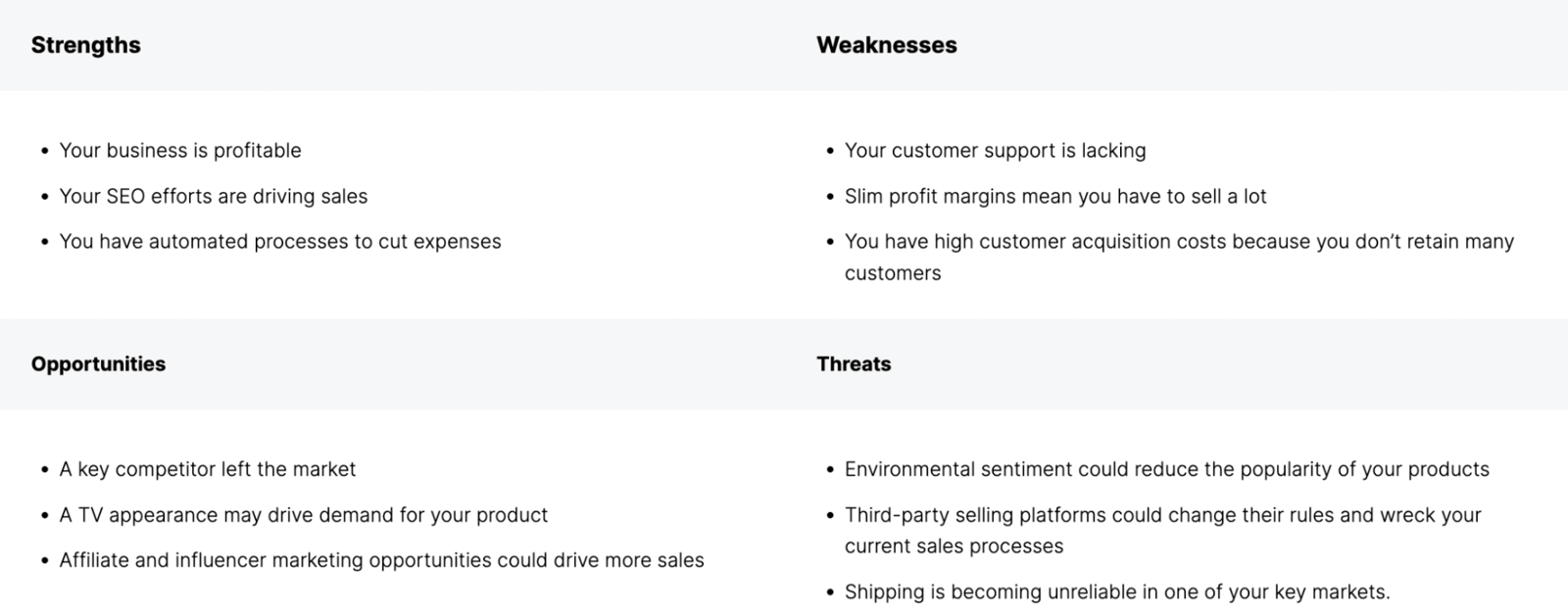
The TOWS Matrix gives you a clearer view of the strategic choices you're facing right now.
WT strategy: faced with external threats and internal weaknesses, how do you minimize both? In other words, how can you shrink your weaknesses while protecting yourself from threats?
WO strategy: faced with external opportunities and internal weaknesses, how do you minimize weaknesses while maximizing opportunities? In other words, how can you use your opportunities to work through the weaknesses you're facing?
ST strategy: faced with external threats and internal strengths, how do you minimize threats while maximizing strengths? In other words, how can you use your strengths to steer clear of real and potential threats?
SO strategy: faced with external opportunities and internal strengths, how do you maximize both? In other words, how can you use your strengths to capitalize on these opportunities?
Every option you've identified counts as a strategic alternative.
So what can you do with this information?
Use a SWOT Analysis to assess your organization's current position before committing to any new strategy. Figure out what's working and what isn't. Ask yourself where you want to go, how you can get there, and what might get in your way.
Once you've gone through all four parts of SWOT, you'll want to build on your strengths, shore up your weak areas, work out solutions for every threat, and capitalize on every opportunity. In practice, you'll likely end up with a long list of potential actions, so look for connections between the 4 categories in your matrix. Can some of your strengths help you create more opportunities? Could eliminating a few weaknesses open up even more opportunities?
Finally, expect to spend time pruning and prioritizing your ideas so you can focus your time, work, and budget on the ones that matter most and work best. Clarify each point to make your comparisons sharper. For example, accept only precise, verifiable statements, such as "On-site optimization and backlink work for page X," rather than something vague like "Getting more traffic." And don't forget to repeat your analysis periodically and track changes as your industry's dynamics shift.


