


Most of us check the Google Search Console country report every so often. If your site only serves Turkey, you might only look at it once every 6 months or so. In this article, I'll try to explain why the country report matters, why it's relevant for international SEO, and which analyses you can run with it to get actionable results. In my view, it's a report worth pulling out during market analysis or GEO work. Let's get into it.
Cannibalization Between Countries
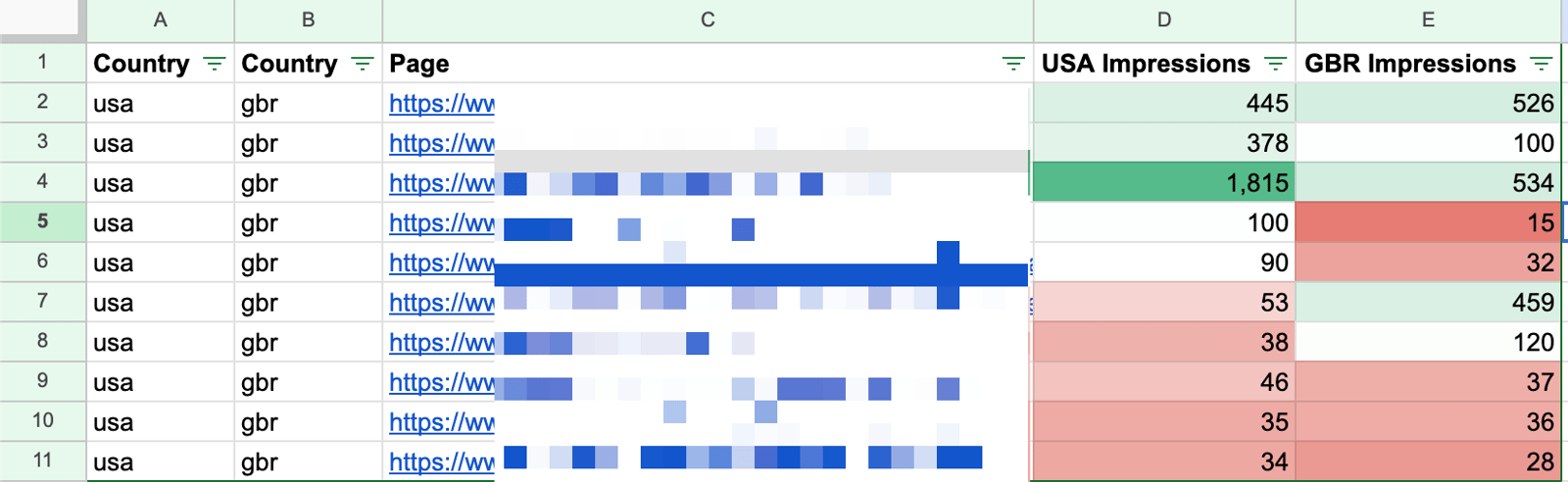
Especially with English queries, you can do every bit of technical SEO correctly and still pick up traffic from the USA or other English-speaking countries even when your target is the UK. You can analyze which countries are competing with each other for your KPI keywords, or check whether subfolders like /en/ or /us/ on your site are causing cannibalization with each other.

You can test whether pages using hreflang&canonical are set up correctly. In some cases, hreflang implementations end up pointing to pages that don't have a real counterpart, or country codes get mixed up. You can even find non-existent hreflangs added for targets like the European Union. In projects like migration, examining this report closely can also help you catch redirect and hreflang errors.
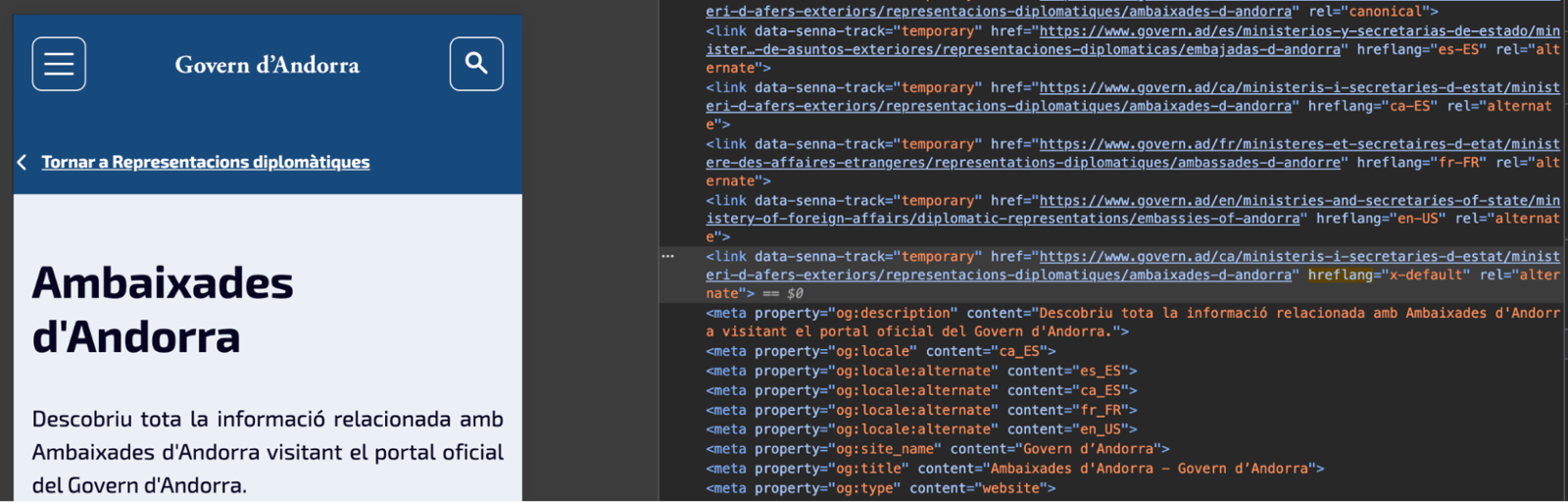
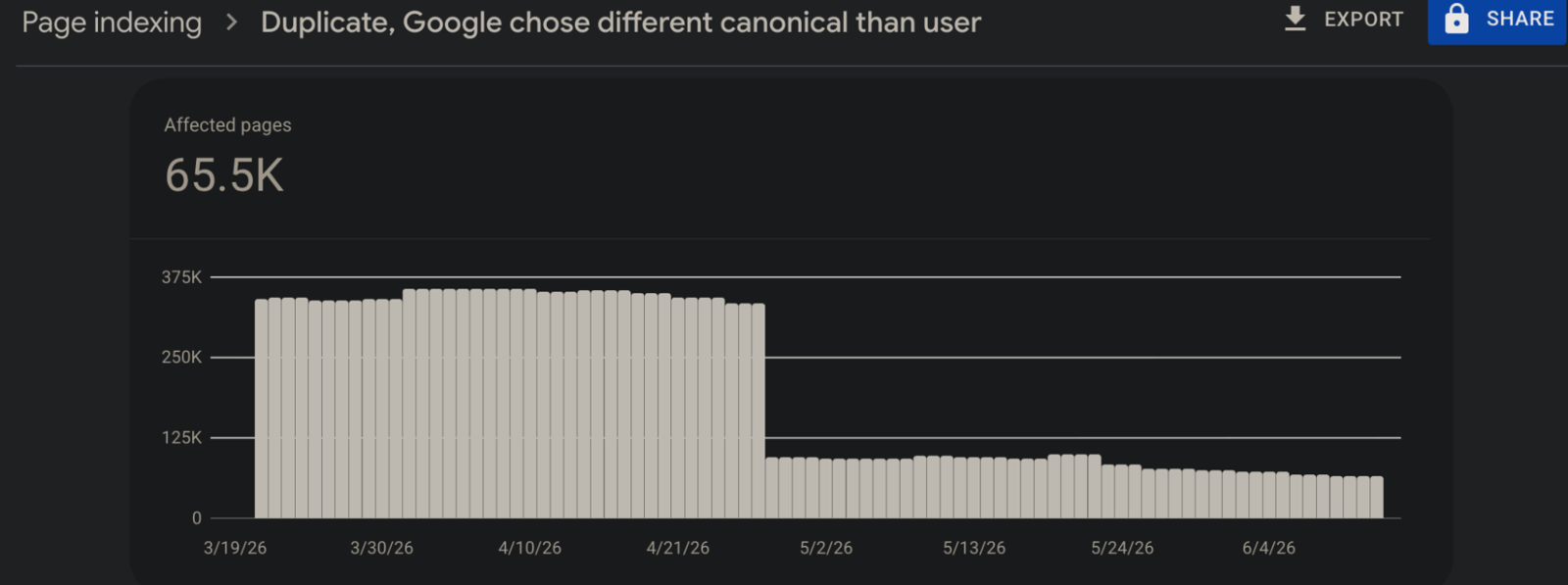
If unwanted or unsuitable pages show up in the SERP even when you've done your SEO work completely right, there isn't much we SEO professionals can do about it. Google's systems may have simply picked a different URL as more suitable, or this could be a bug that gets fixed down the line.
I asked John Mueller why the Turkish Republic of Northern Cyprus doesn't show up in Console, but I never got a clear answer. If you have a client in the TRNC, check the Cyprus or Unknown Region country filters.
Hi @JohnMu ,
In the "countries" section of Search Console, for example, does the country "Turkish Republic of Northern Cyprus" appear as "Unknown Region"? When analyzing target markets, we can sometimes have difficulty making this distinction.
I know you haven't answered on this… pic.twitter.com/10Eqjj9KAr
— Samet Özsüleyman (@sametozsuleyman) June 11, 2025
Average Position Analysis
Open the performance report and, say, you see "6.2" on screen, that average is really the unweighted average across all countries. Data gets grouped by the country where the search happened, so for a given query you might rank 3rd in Turkey and 10th in Austria. It's always worth looking at, and making decisions from, these kinds of averages broken down by country.
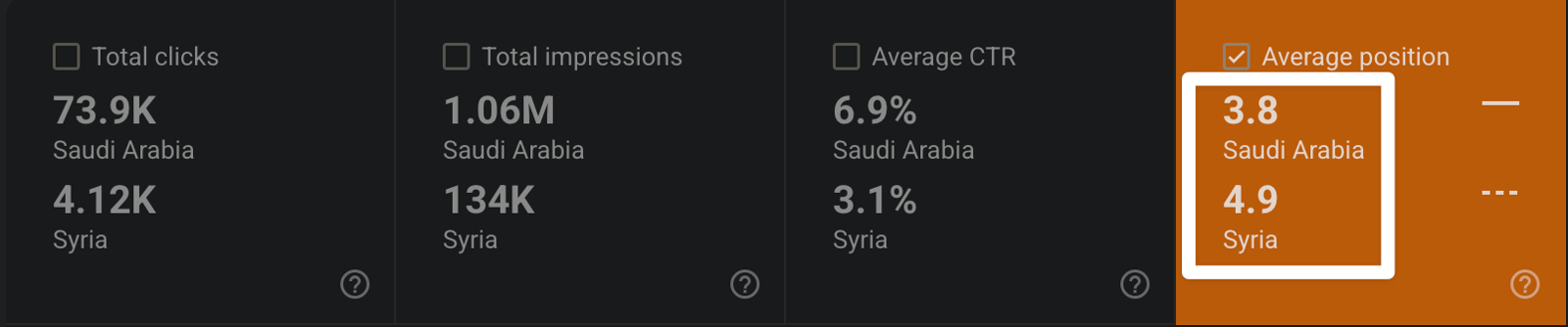
A keyword that matters to you might rank first in one target market and 5th in a secondary one. Looking only at global averages can mislead your decisions, so I'd always recommend running the analysis by target country.
How Many Countries Are Included in the Search Console Performance Report?
I looked through many Google properties and found that Search Console reports a maximum of 244-245 countries.
Don't forget to set up separate properties in Search Console for each market. That way, you'll stay well clear of the reporting limits and get the chance to pull more data.
Change in Page Types
You can end up ranking with different page types depending on the market you serve. For example, on an e-commerce site, you might rank with PDPs for certain product groups in Germany, while the same product groups show up with a different page type, like a PLP, in Austria. Building a country plus page-type breakdown report also helps you avoid targeting the wrong page type in a given market.
Google Updates
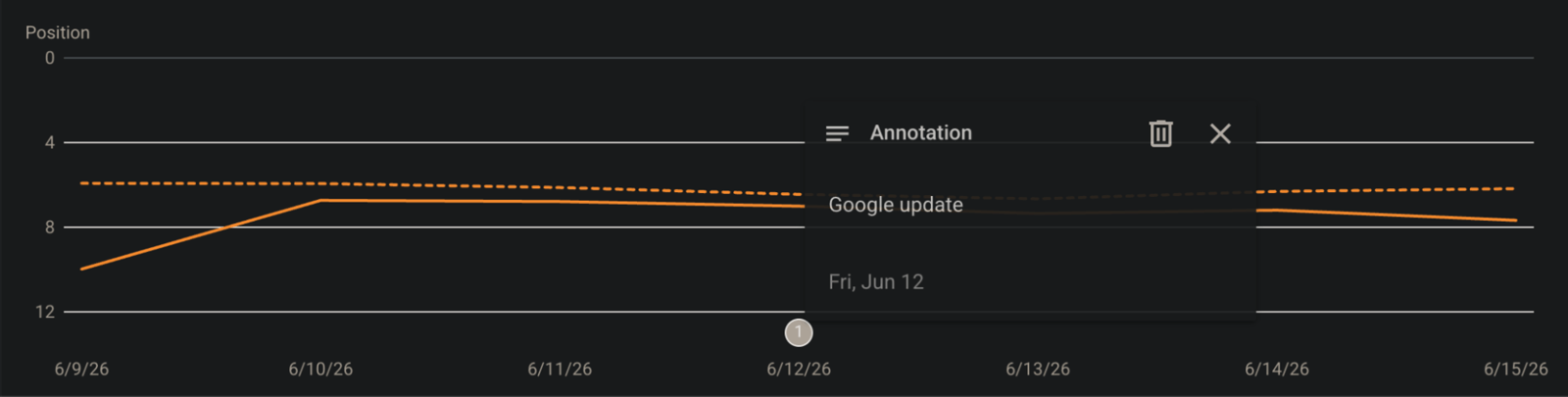
If a drop after a Google update only shows up in one country, the problem may not be site-wide, it could be specific to the ccTLD, subdomain, or subfolder. You can analyze a Google update with a country breakdown. Sometimes you'll feel the effects of unofficial, minor algorithm updates differently in different markets. If you serve multiple countries, check whether your Discover traffic on your news sites, not just your web results, is affected by these updates.
Tired of reading?
You can also listen to this blog post as a podcast we created with Google NotebookLM on Spotify.
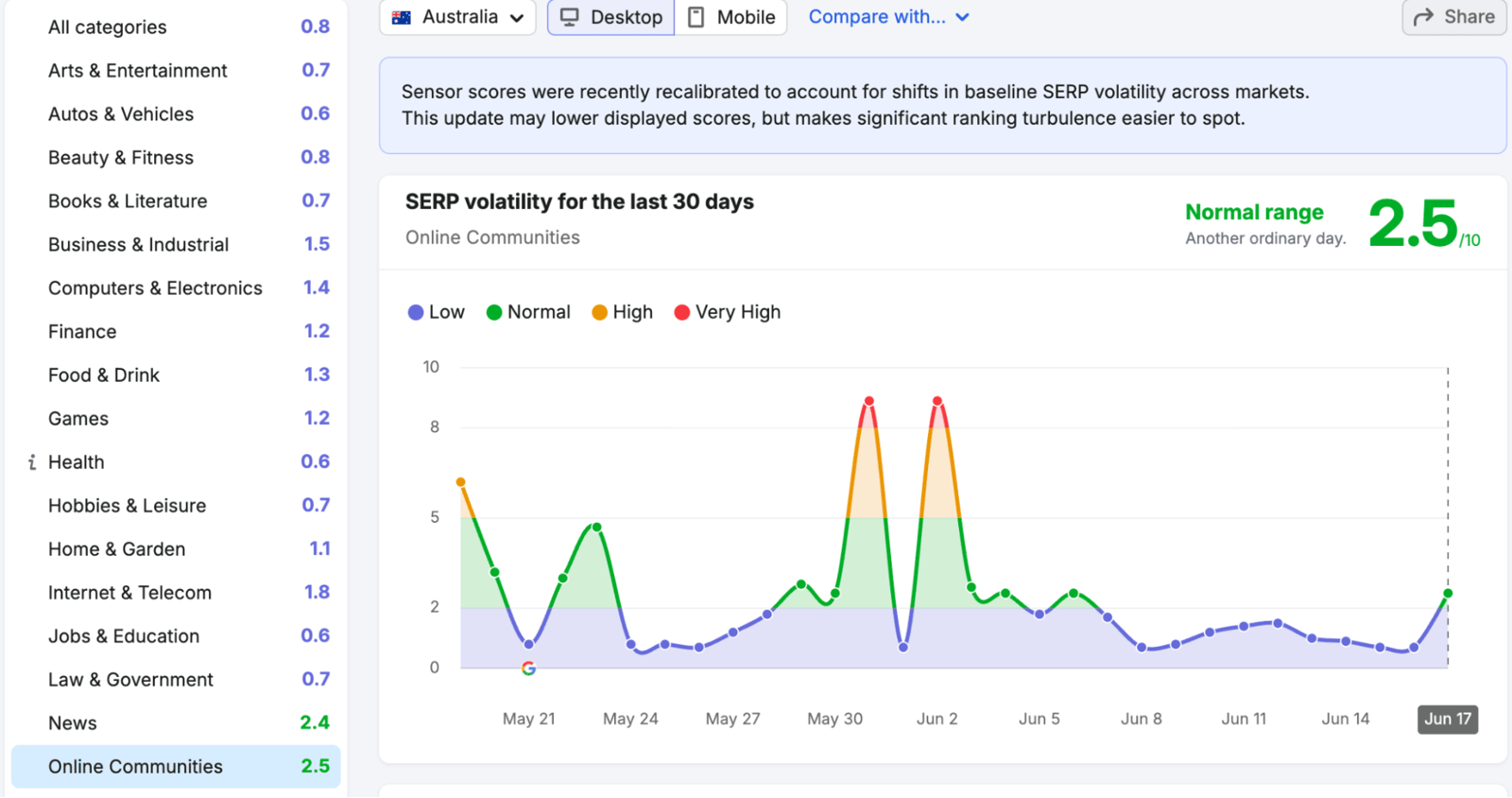
If you're running SEO tests, you can also apply them in different markets to more clearly see whether an update had a positive or negative impact. You can check industry-wide volatility with tools like Semrush.
Impression and CTR Opportunities
If you're getting very high impressions in a country but the CTR stays low, you may have a localization problem. Google is showing you plenty, but you're not getting the clicks in the SERP. SERP features vary between countries too, since markets like the USA get new features we haven't seen yet in TR, it's worth analyzing what's actually happening on the SERP there. How do features like AIO or AI Mode get applied? You can also report on things like what your competitors are doing differently from you in shopping results.
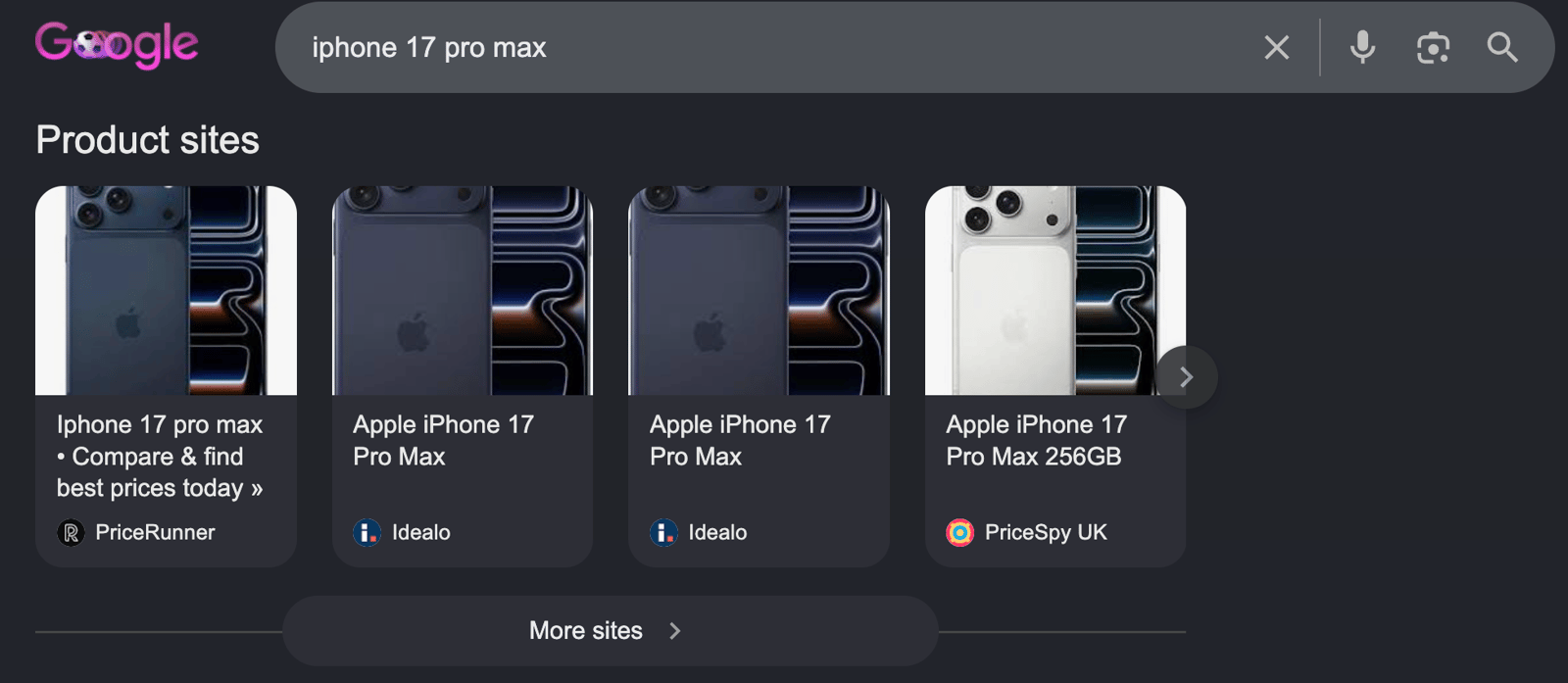
Beyond SERP analysis, it's worth looking at:
- Local language: Your title or meta description elements may not suit that market, since AI translation can sometimes get it wrong, and that can keep your click-through rates low.
- User intent: You can check whether you have pages that match search intent for searches like "iPhone 17 Pro pricing".
- Google Business Profile: For local queries like "city name + service/appointment," does Google Maps show up? If it does, you can prioritize GBP optimizations.
- Schema: On an e-commerce site, you can check that fields like price, priceCurrency, and, where available, isVariantOf inside the Product schema are specific to that country.
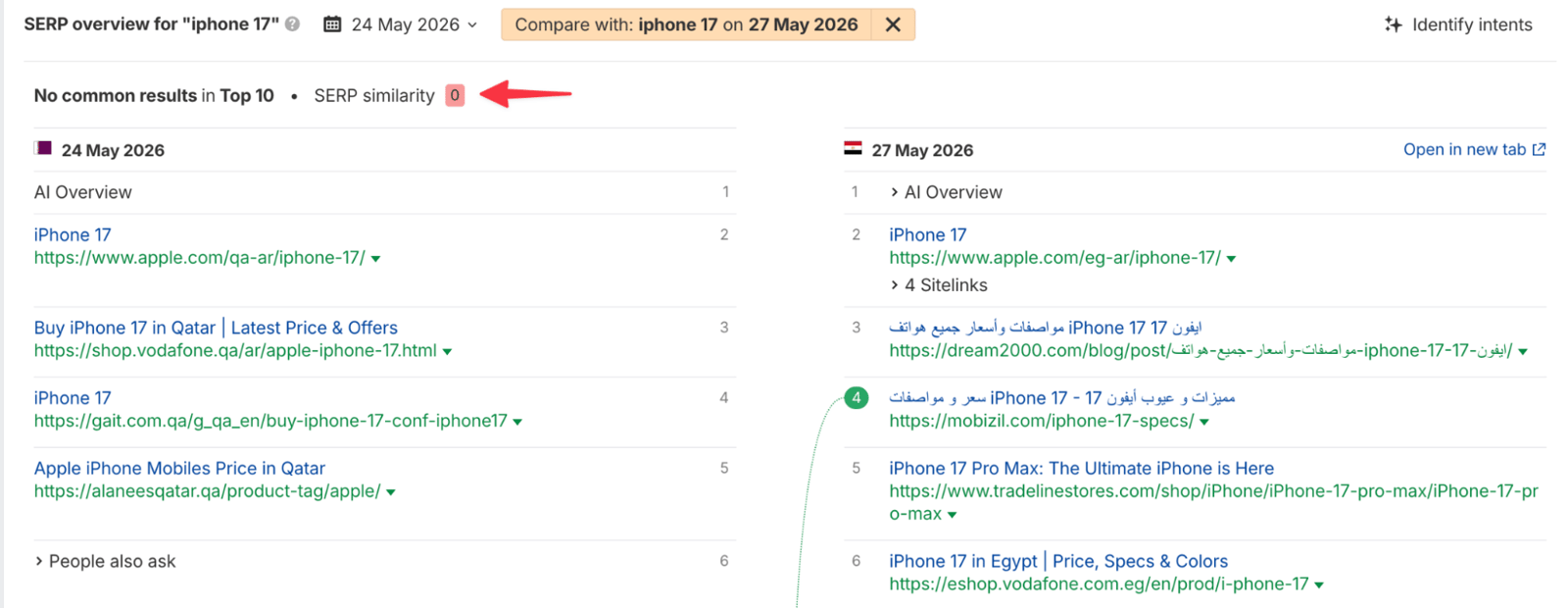
Once enough data has built up, you can list target countries with high impressions but a below-average TO (CTR) and prioritize from there. Since the SERP structure differs by country, it's worth comparing TO (CTR) between markets like Qatar and Egypt separately, for example. In the case below, SERP similarity comes out at 0, and features like People Also Ask sit higher up in Qatar:
You can also analyze image searches. The taxonomy behind each keyword in image results can differ, and that gives you a clearer picture of what to target here:


Trend Growth & User Needs
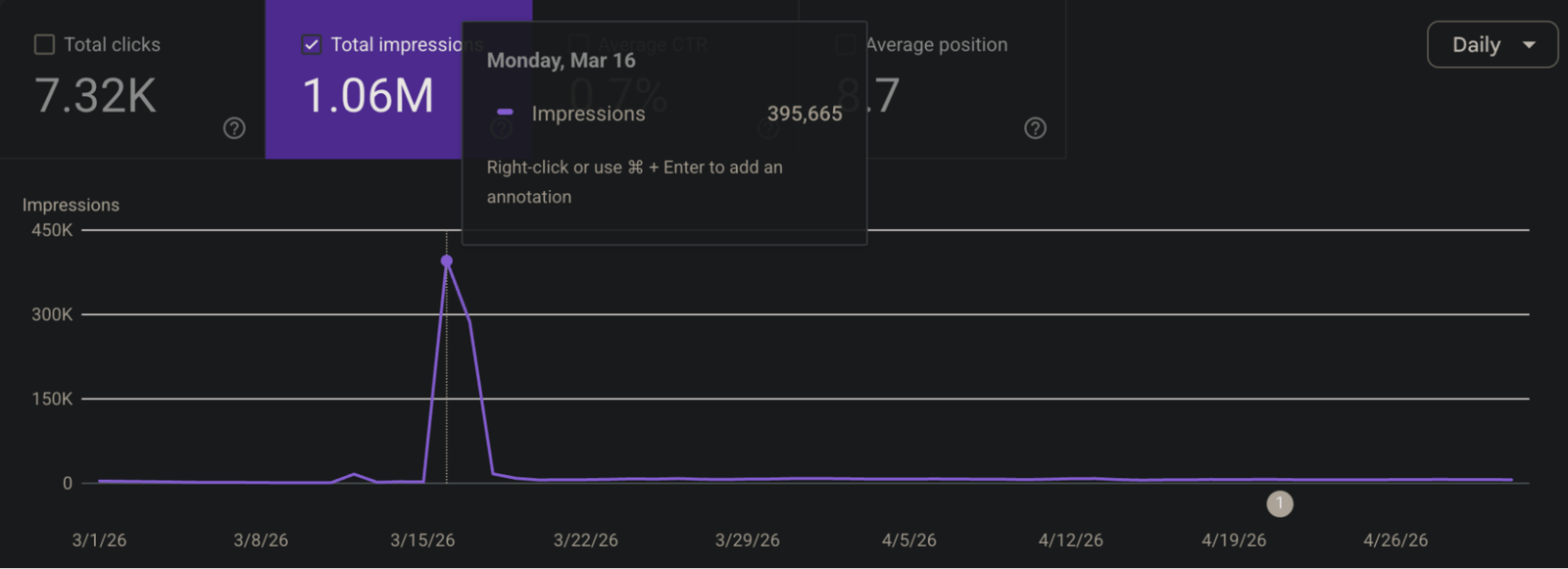
Given Search Console's 1k row limit, an increase in brand queries or related terms from a country like Thailand can easily slip past unnoticed. In monthly analyses, a spike in specific keywords on certain days can turn into an opportunity worth watching. I'd also focus on brand queries here. Users might see and click on you in Google, but they might not be able to place an order because they can't find information on things like shipping to Vietnam or whether local payment methods are supported.
CPC & RPM Data
Sorting traffic by a country's per-capita GDP isn't a particularly sound way to make decisions. Getting high impressions from a low-income market doesn't mean that traffic will convert.
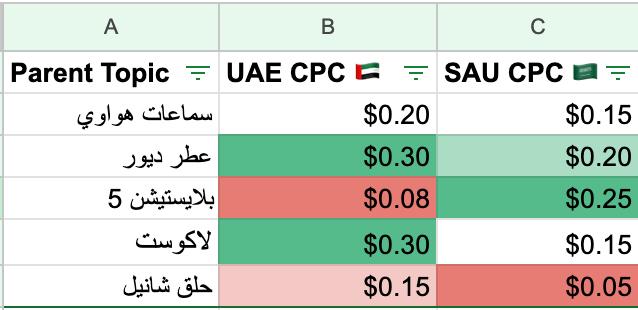
You can check country-based CPC values for your top keywords using tools like Google Ads Keyword Planner or Ahrefs. Doing this shifts your SEO focus from generating traffic to generating revenue. Looking at CPC values, if your target market spans a wide geography, you can split countries into Tier 1 and Tier 2, since CPC can vary a lot in smaller markets.
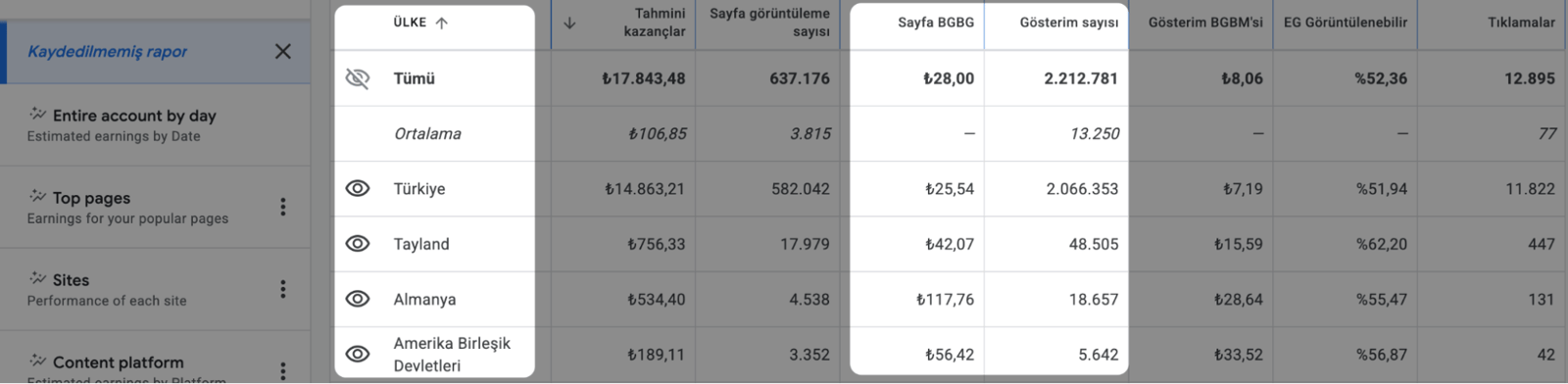
If you're a Google AdSense publisher, you can add Search Console data alongside page RPM to the sample country report below, which lets you see market RPM more clearly.
Distribution of Brand Awareness by Country
By splitting Search Console keywords into those that contain a brand name, there's already a branded filter for this, you can run country-based awareness or CTR analysis. You can see how your visibility in brand queries differs across countries that share the same language, Arabic, for instance. If you're running a TV ad or a social campaign, you can watch its effects on Google from here too.
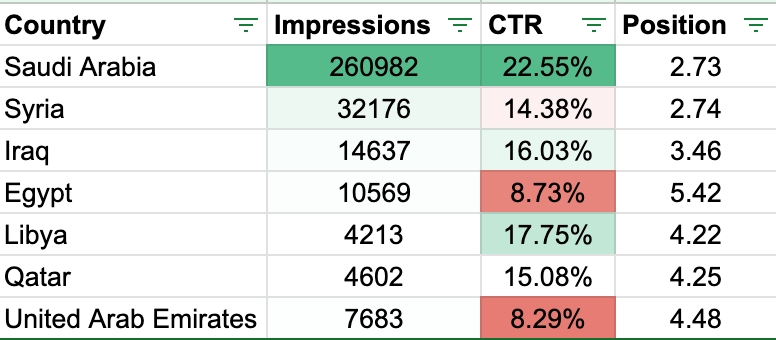
Weighing impression data against the population with internet access, rather than a country's total population, can give you sharper insight for a deeper analysis.
Core Web Vitals
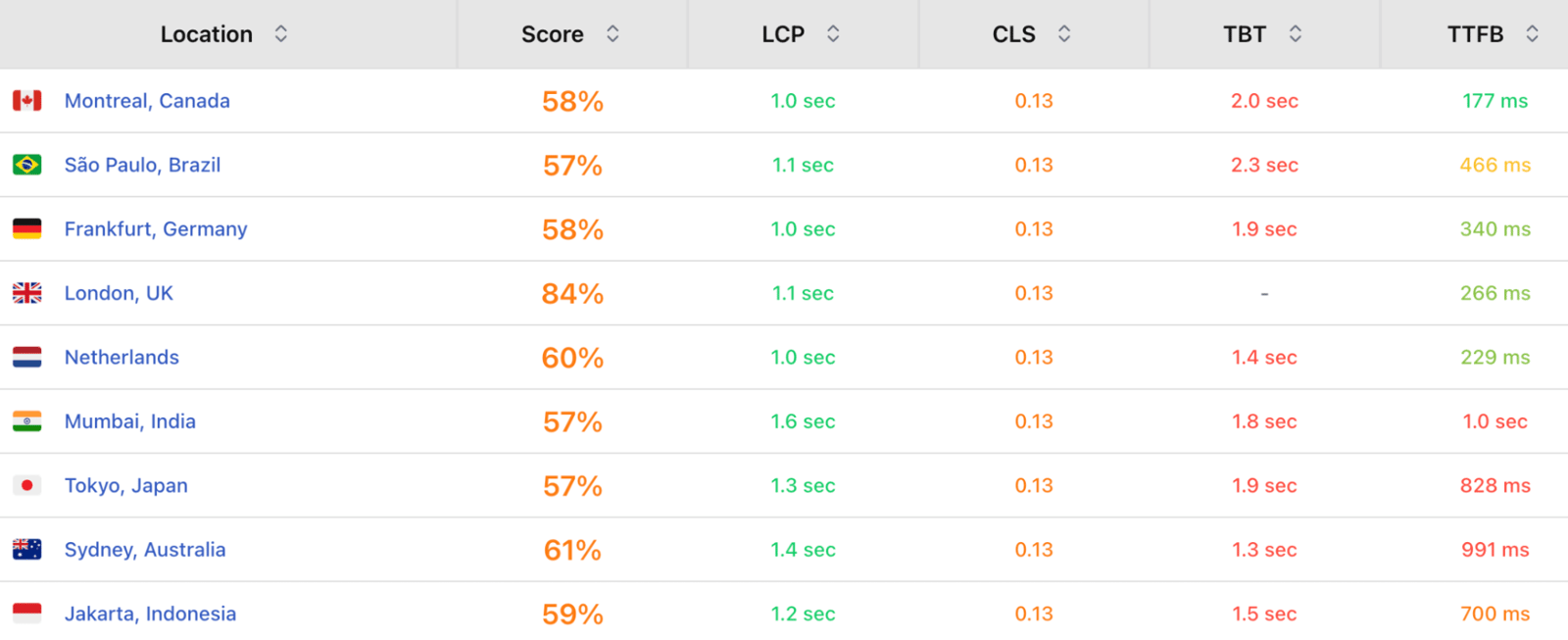
Getting indexed in your target markets doesn't mean your site is fast there, or that it satisfies users there. You can analyze your country-based page speeds instead. Look at optimizing server response times (TTFB), check metrics like LCP or CLS first, and take action wherever needed.
In a market with slower internet, heavy pages can push up bounce rates and hurt metrics like time on page. In other words, the exact same design can perform well in a market with fast infrastructure while losing rankings in slow-connection markets.
Seasonal Searches
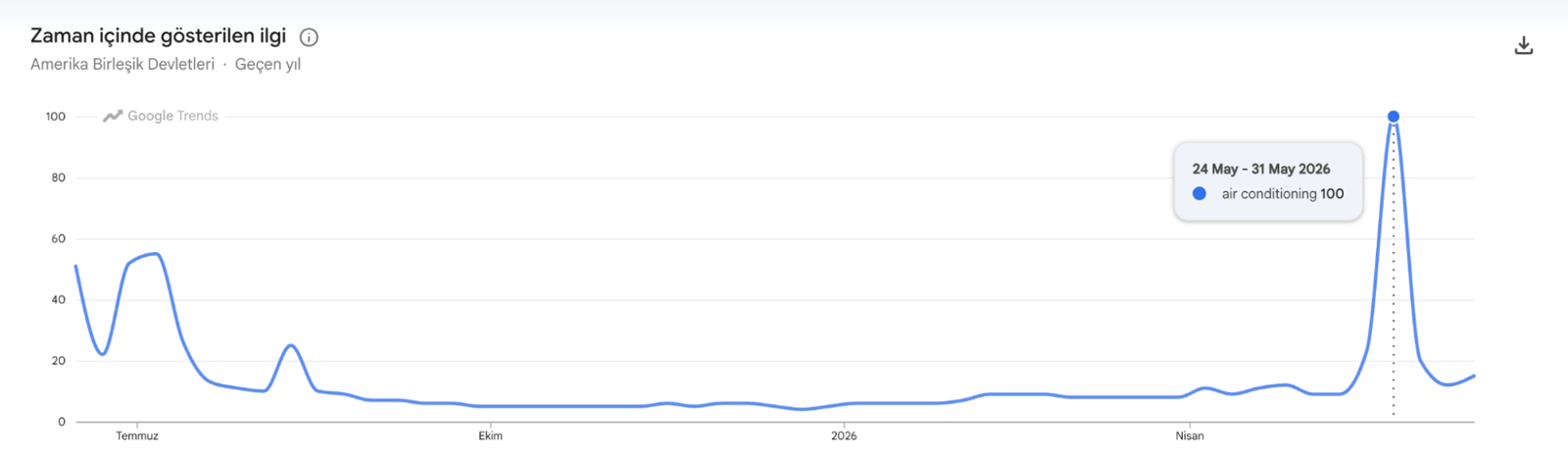
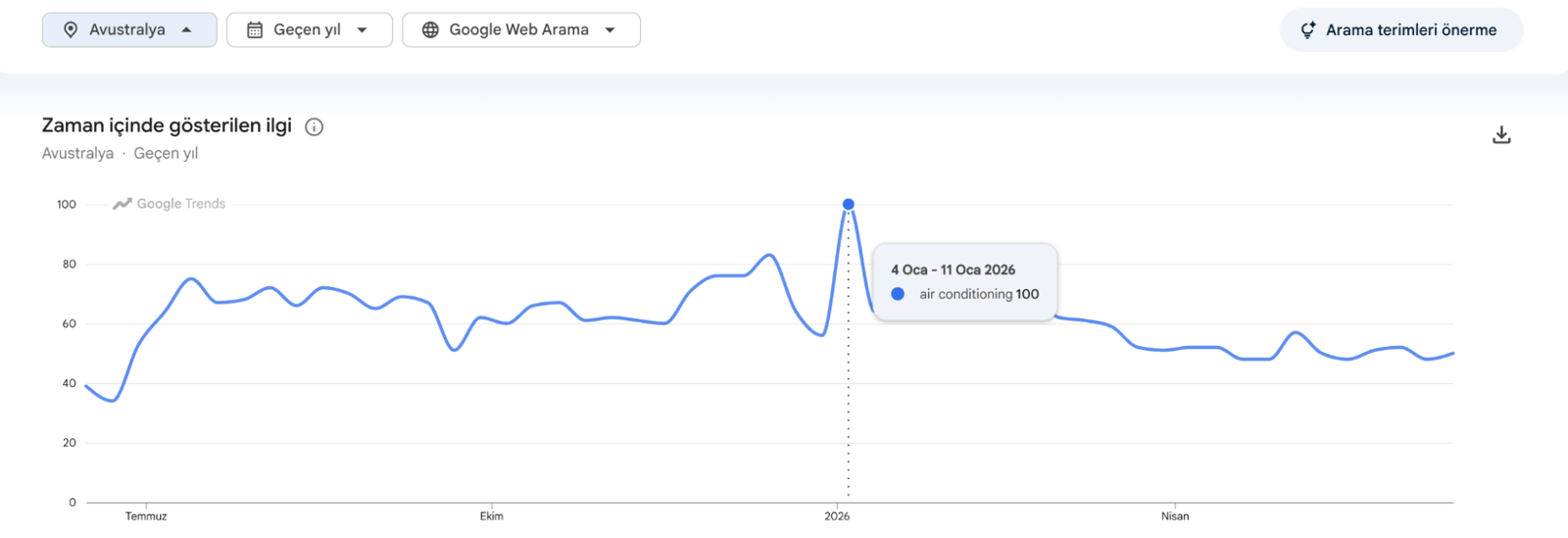
Given the seasonal gap between the northern and southern hemispheres, the products your target markets are actually shopping for can look completely different. For example, searches like air conditioning, vacation, or swimwear rise across countries in the northern hemisphere from June to August, and you'll see the same increases in countries like New Zealand from December to February. Similarly, Ramadan shifts back by about 11 days every year, and you can track those changes by looking at your site's YoY data in the MENA region. Separating countries by seasonality, climate, and religious holidays makes it much easier to prioritize content planning.
I used example metrics throughout this article, but of course, SEO KPIs go well beyond rankings alone. I just wanted to walk you through the situation with a simple explanation. I'd recommend making your own decisions with that in mind, since Search Console can throw up reporting errors from time to time too. I hope this was a useful read, see you in the next article.


