


Email marketing has become an essential part of many businesses' digital marketing strategies. It can help you build trust with customers and readers, gather valuable feedback, announce new services, and attract new customers. However, with so many messages arriving in people's inboxes, earning their attention and keeping them engaged takes real effort. In this article, we share 7 things to consider if you want better results from the emails you send to your readers.
1. Personalization:
According to an infographic in Social Media Today, marketers who use personalization in their emails see 27% higher unique click-through rates and 11% higher open rates than those who don't. In addition, according to Campaign Monitor, 74% of marketers say that targeted personalization increases customer loyalty, and on average, they experience a 20% increase in sales when using personalized emails.
Personalized emails need to be relevant to your readers. They should catch their attention, meet their expectations, and arrive when they need something related to your products or services. That requires collecting enough information from the people who visit your websites. You can personalize emails with variables such as the user's name, location, email title and time. Here is an example of a personalized email that uses my name in my inbox:
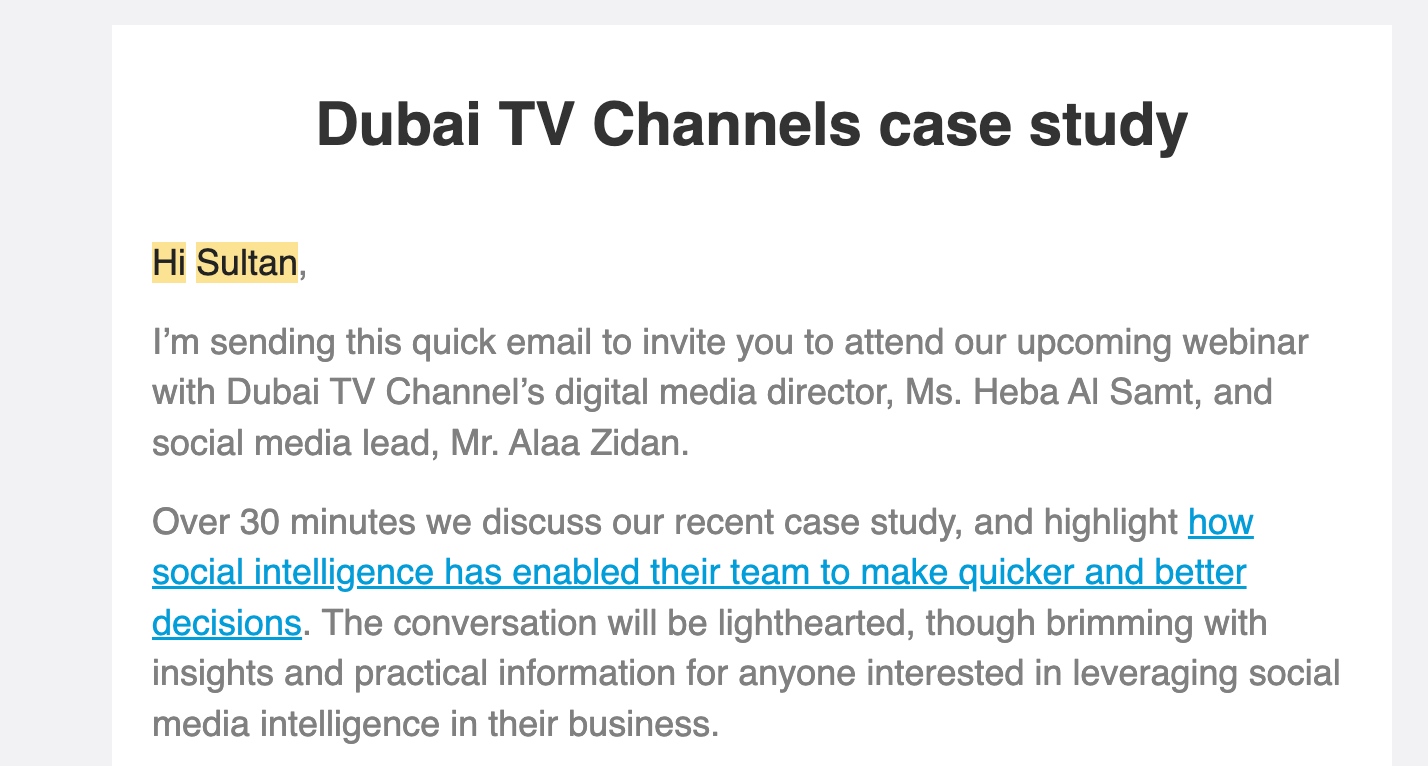
Personalization does not guarantee success. However, emails without it may receive less engagement. If your goals include higher open, click and conversion rates, personalization can help support them. Beyond showing who the email is from and adding the reader's name to the subject line, you can encourage more opens and clicks by making the email content more relevant to each user.
2. Segmentation
In email marketing, segmentation means dividing your subscriber list into smaller groups to create a more targeted or personalized experience. You can group recipients by demographic information such as age and gender, or use business-specific criteria such as purchase history for B2C businesses and sector reports for B2B businesses, as in Zeo.
These segments help marketing teams deliver the right information to the right people. Instead of sending one message to everyone, they can provide more relevant content to each group. This can also have a positive effect on the sales team.
3. A/B Testing:
The main purpose of A/B testing is to find out which version of an email campaign delivers the best results. Different tools let you run these tests in different ways by dividing your subscriber list between campaign variations.
A/B tests can vary in complexity. A simple test might compare open rates for different email titles, sender names or sending times. A more complex test might use completely different email templates to see which one earns more clicks. You can divide your subscribers 50% and 50% to compare results, or test two variations with 30% of the audience each and send the winning version to the remaining 40% after a certain hour.
With A/B testing campaigns, you can learn which time of the week/day produces a higher open rate, how engagement changes when the email header includes the company name or an employee's name, and whether recipients prefer campaigns with static images or GIFs.
When we tried Mailchimp and Hubspot, two of the most widely used email tools, we found some limitations in Hubspot's A/B testing features. Mailchimp allowed us to run more complex and varied tests. For example, when we wanted to test different sending hours, Hubspot did not let us choose the exact hours we wanted. Instead, we could select one time and have the winning variation sent after a set interval.
4. CTA (Call to Action) Button:
Call to Action buttons have become an important part of email campaigns. They usually direct readers to a destination outside the email. For example, to encourage registration for a free webinar, you can use the button "Sign up now for free". The CTA then takes the reader to the webinar page. You can see an example below:
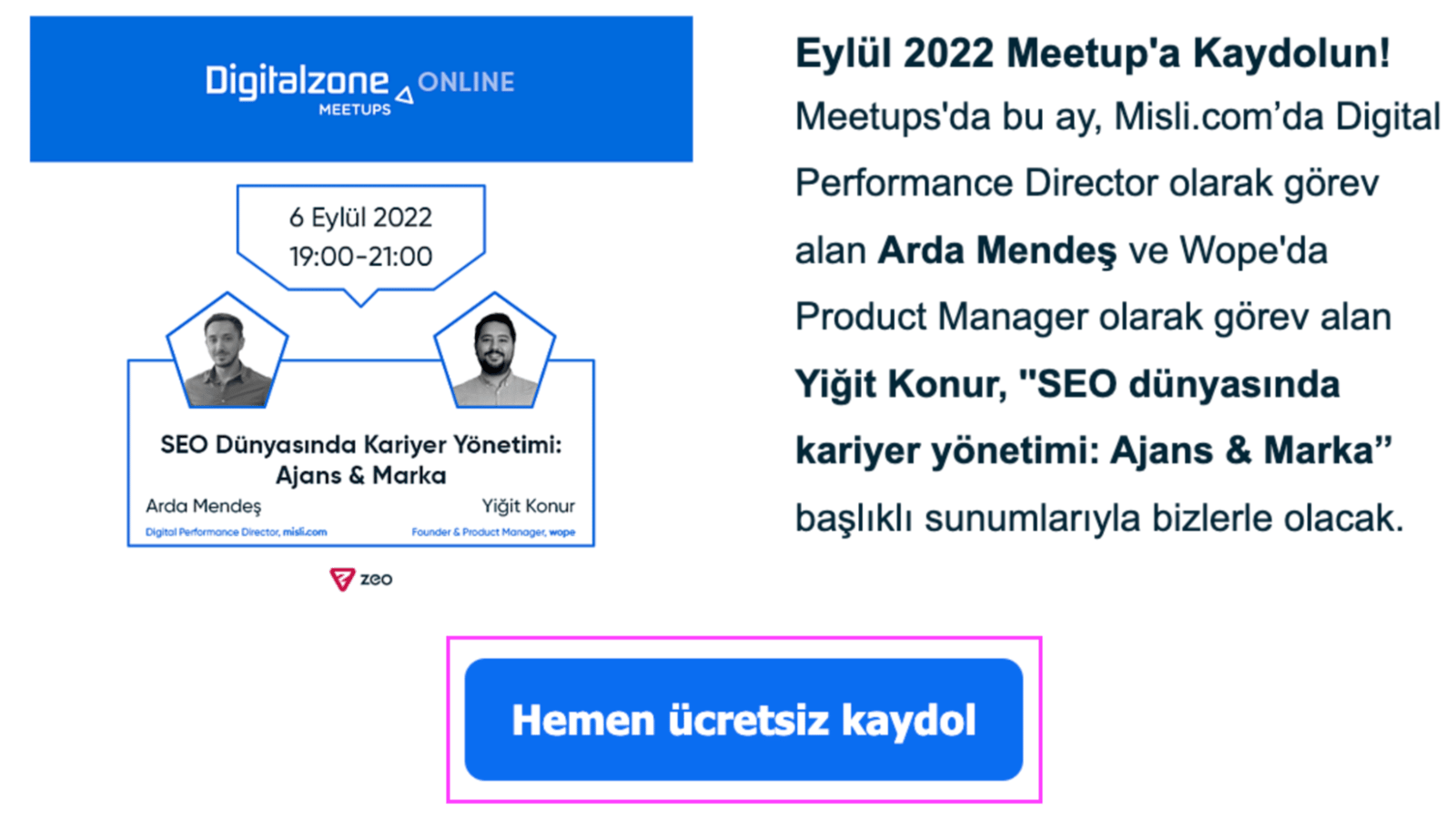
To increase downloads of a free report, you can direct readers to the report's landing page with a similar call to action, such as "Download now for free". CTAs can also increase click-through rates because they clearly show readers what to do next. In most email marketing tools, click data usually shows that CTA buttons receive some of the most clicks. To make CTAs more effective, consider their position in the email, design, color, text and quantity.
5. Relevant/Irrelevant User Distinction:
To improve open rates, review the subscribers on your mailing list at regular intervals (every 6-12 months). You can prevent inactive readers from lowering your open rates by moving people who have not opened your latest emails into a separate segment. Then, run experiments to understand their behavior. For example, they may not read your emails because they receive them too often. You could send fewer emails for a short period and monitor the open rates. If there is still no positive change, move this audience to an inactive reader segment and stop sending emails, or remove them from your subscriber list.
6. Welcome E-maili:
According to a study, the average open rate for welcome emails is 50%. Making a good first impression on new subscribers can increase the open rates of your next emails. Use the welcome email to introduce your brand's products/services, share general information, and explain the benefits of the subscription. This can help you build better, more interactive communication with customers, reduce spam and unsubscribe rates, and increase customer loyalty. You can see tl;dr Marketing's welcome email example below:
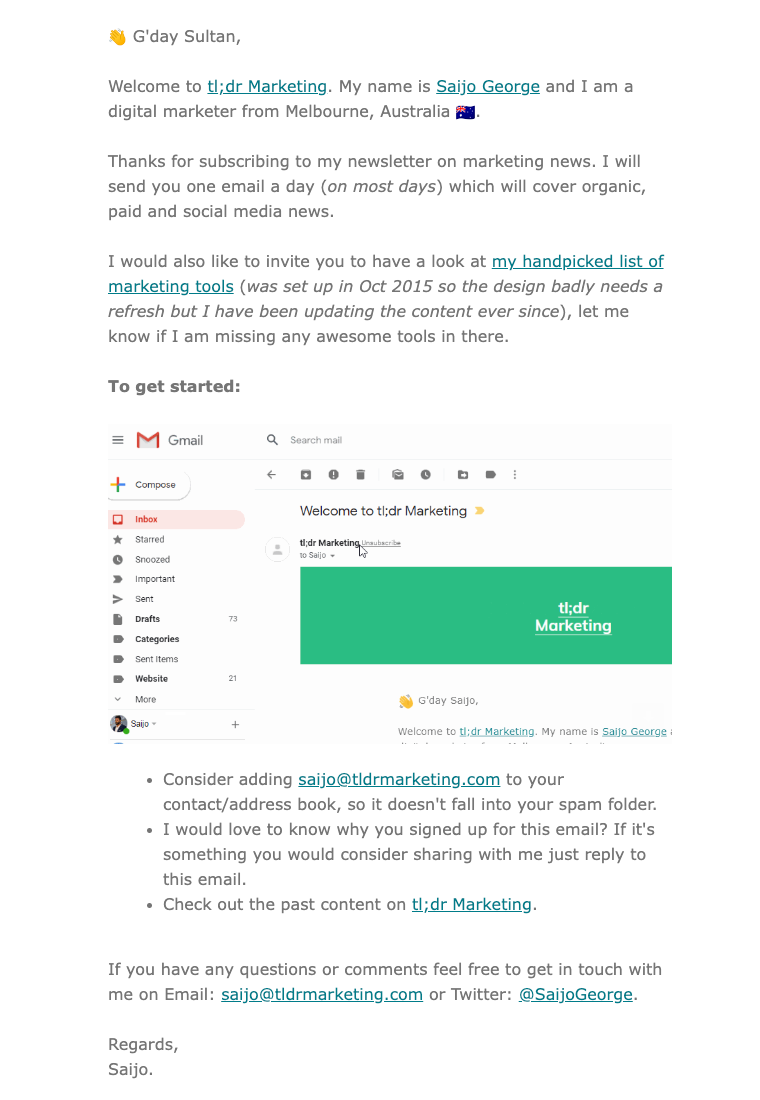
It is also important to understand the difference between single opt-in and double opt-in. With single opt-in, users subscribe to a company's emails by filling in required information such as their name, surname, email, company and position. With double opt-in, users enter the same information and then receive an email asking them to verify their email address. This confirms that readers actively signed up for the newsletter and reduces spam rates.
7. Rewarding Subscribers:
The readers who open, click and interact most often are your brand newsletter's loyal readers. You can make them feel special by offering something created for them. B2C businesses can provide special discounts and coupon codes, while B2B businesses can give these readers early access to content such as reports.
BONUS:
You may not have started email marketing for your brand yet. Some businesses respond by immediately buying a contact list, but this is not a good idea. A purchased list probably will not match your target audience, so you will be emailing people who are not interested in your product or service. This will naturally have a negative effect on your email marketing KPIs and the important metrics you track, such as open and click-through rates. Instead, build your subscriber list through omni-channel marketing strategies. For example, on the social media channels you actively use, invite followers who belong to your target audience to subscribe to your newsletter. Reaching your audience organically can help you build a high quality subscriber base and work toward your email marketing goals.
You can access our other articles on email marketing from the links below:
- https://zeo.org/resources/blog/email-analysis-6-email-metrics-to-track
- https://zeo.org/resources/blog/migration-of-email-automation-software-things-to-pay-attention
This article was written by our former marketing specialist Sultan Yüksel.


