


Search: Where the questions meet with the right answer
a) Searching to Meet the Need in the Age of Information

What sets human beings apart from every other living being that has ever existed is our capacity to think and question. As the only creatures capable of asking questions, humans have used many methods throughout history to reach the answers they're after. People who once relied on observation to find those answers stepped into a completely different medium once the internet, which emerged as a military technology in the late 1960s, spread widely in the 1990s. Thanks to major advances in digital technology, the internet has become the most important tool people have for finding answers to problems of every kind.
The production of content and information has reached the highest level ever seen in human history through the Internet, one of the greatest developments of our time. When we look at internet consumption worldwide, we consumed 1 zettabyte, (1,099,511,627,776 GB) of content in 2016 (GB), and it is expected to reach 2 zettabytes in 2019.
This phenomenon, which doubles its consumption in just 3 years, becomes an even bigger part of our lives every day as smart devices diversify. The effective communication tools of past media, like television and newspapers, expected us, and forced us, to consume the content presented to us passively. But with the internet's arrival, we, as users, have taken an active role and become able to select and create our own content. The growth of an internet where users can also produce content looks beneficial in terms of increasing the diversity of information, but it's worth acknowledging that this growth brings some problems with it.
The internet pioneers of the era saw that in a world where anyone can produce content, the share of quality information declines rapidly, and people have to dig through a huge pile of data to reach the information they're looking for. Search engines were built to help with exactly that search for the information users need. Of course, not all of these queries can be classified as searches aimed only at reaching information. These days, all of us look for everything we want to know on the internet, from fixing a leaky faucet to checking the specs of the new phone we're about to buy.
Search, which commercial enterprises are watching closely because of all this, keeps growing in importance. With the rise of social media, another major turning point of the internet revolution, global figures still show that search remains the most popular way people move from one site to another, even as its share of overall influence declines slightly. While the growth of search has let individuals reach information with less effort, companies have started looking for different ways to benefit from the interest building up around this space.
This search for different methods led to the emergence of processes such as SEO, which covers all the tactics used to rank high in search engines (Search Engine Optimization), and PPC, which covers paying a fee per click to appear in sponsored results (Pay per Click),
b) Where Queries Meet Results: Search Engines
Yapılan araştırmalar arama motorlarında her gün yaklaşık 8 milyar sorgu yapıldığını gösteriyor. *Research shows that around 8 billion queries are made every day in search engines. *To put it more precisely, once we account for the world's population, more than one search per person per day, or more than 8,000 searches per second, is being made.
This fact alone shows the scale of what search engines accomplish. Because of it, search engines keep pushing the limits of their material and human resources to give users the most accurate, most detailed, and fastest possible response. That means a significant investment of both time and money.
Of course, while search engines let people find what they're looking for at no cost, they still need a way to recoup that investment, and that's where advertising models built around sponsored results come in. Even so, search engines are obliged to keep those ad placements relevant to what users are actually looking for. The first project to realize the potential of search engines was Archie, launched in 1990. Archie's main mission was to provide users with lists of files found in the FTPs (a kind of file sharing protocol) of various websites at the time.
Working at a very basic level, purely by listing files, this search engine earns its place as the first true search engine on the strength of its vision and structure. After this project, it became clear that search engines were becoming a necessity, and many companies invested in this field to seize the opportunity, but none matched the success of Altavista, which launched in 1994. Many search engines wanted to fit the whole web into their index during the period when Altavista was strong. At the time, having a search index of even 2 million pages was impressive, while AltaVista had every corner of the internet indexed, 20 million pages' worth. Altavista, which had a far more capable ranking algorithm than its competitors along with greater data access, achieved rapid growth in a short time.

Yahoo! was undoubtedly one of the most important names anyone who spent time online back then would know, right alongside Altavista. Known as Altavista's closest competitor, and the strongest name in search at the time, Yahoo was also a powerhouse as a web portal, holding a significant share of the era's traffic through services like Yahoo Mail and Groups. That competition would eventually end when a newcomer weakened both rivals, and Yahoo went on to acquire Altavista much later.
By 1998, even though Yahoo, Altavista, and Ask.com still held serious dominance in the market, the era of Google had already begun, its technology leaving most competitors behind. As the web grew rapidly, Google, which had outpaced its rivals with creative solutions for building a wide index, published a paper on the PageRank algorithm that same year. The paper, titled The PageRank Citation Ranking: Bringing Order to the Web, aimed to solve the fundamental problem facing search engines: how to determine rankings. Google, already sitting on a broad index, proposed that the links websites give each other should count as a ranking factor. The value of an academic study had long been measured by how many other scientists cited it. Google effectively adapted that system to the web, where, unlike academic journals, anyone can produce content freely, and that adaptation drove a significant jump in ranking quality.
What's more, under this system, links from high-authority pages carried much greater weight, since it wasn't just quantity but quality being measured. In 1999, Google Inc., not yet a company, was incorporated with the first angel investment from David Cheriton, a Stanford professor, and began growing rapidly.
After AOL, one of the era's major portals, chose Google as its search partner in 1999, and Yahoo did the same in 2000, Google's rise became unstoppable.** With only a few years left before Google's twentieth birthday, its rise in the market shows no sign of slowing. According to Comscore data, it holds 64% of the US market, and according to the Gemius data, it holds 95% of the market in Turkey. Apart from China, South Korea, and Russia, where legislation makes entry difficult, Google is the leader in every market it operates in.
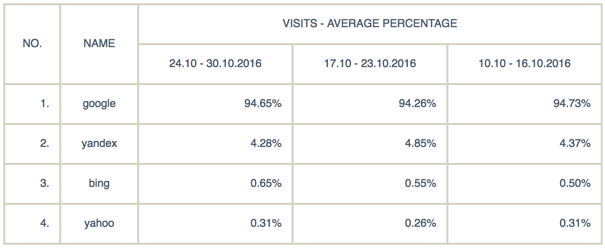
(Arama motorlarının Türkiye’deki kullanımlarına ait yüzdelik dağılım) Bugüne değin, arama motoru pazarında birçok oyuncu belirli dönemlerde yükselişler yaşayıp daha sonra bunu yitirse de yenilikçi yaklaşımıyla Google, kurulduğu günden itibaren güç kazanmaya devam etmiştir. Eğer internet dünyası yakın gelecekte büyük sürprizlerle karşılaşmazsa, aramanın lideri uzun bir süre değişmeyecek gibi görünüyor. * Enge, E., Spencer, S., & Stricchiola, J. C. (n.d.).
The Art of SEO: Mastering Search Engine Optimization (3rd ed.) ** WordStream, “The History of Search Engines - An Infographic“, http://www.wordstream.com/articles/internet-search-engines-history (Percentage distribution of search engines’ usage in Turkey) Heretofore, the market of search engines many players have temporarily risen in certain periods and then fell, Google continued to gain strength since its inception with its innovative approach. If the internet world does not face any big surprises in the near future, the leader of the search will not change for a long time. * Enge, E., Spencer, S., & Stricchiola, J. C. (n.d.). The Art of SEO: Mastering Search Engine Optimization (3rd ed.) ** WordStream, “The History of Search Engines - An Infographic“, http://www.wordstream.com/articles/internet-search-engines-history
c) Users’ Interaction with Search Engines
As a result of searching and asking questions, everyone wants clear answers and satisfying information. In response to that demand, search engines try to get us to the right information, either through the sites they list at the top or through direct answers with no need to visit a website at all. The technology behind giving the right answers to our questions improves year over year. For example, while Google's voice recognition wasn't common in Turkey and most mobile queries in 2014 and earlier were short, results-oriented searches, today it's possible to get accurate answers through voice search using much longer queries. The tools we use to search aren't limited to computers or smartphones anymore, either. Wearable smart products and smart home systems, which plenty of tech giants are chasing today, will also be among the tools we search from frequently in the future.
According to Morgan Stanley's report, 75 billion separate devices are expected to be connected to the internet worldwide by 2020. With this kind of diversification in the tools we can search from, it's clear we'll all keep satisfying our need for information through search engines. What we experience almost daily shows that the days when search engines just listed 10 blue links are long over. We all know search engines no longer work simply enough to just count how many words are in an article when evaluating content.
Search engines that assess content only on syntax (syntax) got left behind in the 2000s. These days, we see a semantic approach that tries to capture meaning by evaluating how words and sentences relate to each other. In other words, Google wants to grasp the implications a human brain draws when reading content. To understand this idea more clearly, let's work through an example and ask Google where our company, Zeo (formerly known as SEOzeo), was founded.
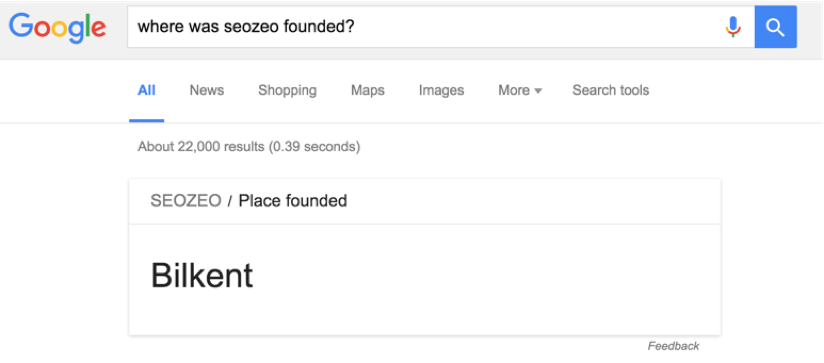
Google can easily answer that our company was founded at a technology development center in Ankara's Bilkent district, after querying its Knowledge Graph (ie Knowledge Graph). This simple example shows the kind of policy search engines follow when responding to information-driven searches. Let's look at another example, this time from e-commerce, and consider searches for a popular phone, the Samsung Galaxy S6 Edge. First, we need to understand what information a user searching "Samsung Galaxy S6 edge" actually wants:
            -A user may be doing preliminary research to learn about the product,
            -A user may want to reach the product page on Samsung's website,
            -A user may have already decided and want to buy the product,
Accordingly, Google should return a results page that can meet all three of these different needs. If the searcher's query doesn't spell out clear detail, Google usually selects 10 results that together address all the likely concerns and interests. Learning these search types, which we'll cover in more detail in the sections that follow, can help you approach Google's search results more critically. As professionals in a digital marketing world built around getting more effective metrics from big data and figures, we often overlook the people behind those figures.
According to a statement Google made when announcing its AI-supported search algorithm RankBrain, about 15% of the 3.5 billion searches made every day use terms that have never been searched on Google before. Producing that many unique queries, ones that haven't appeared among the nearly 4 trillion searches made so far, says something about the limits of human creativity. Even this data on its own shows how small a slice of the picture we're looking at when trying to identify the right keywords. So the foundation of a good SEO strategy shouldn't be built on keywords, it should be built on understanding what users actually need. Getting to know your target audience and building a website that can produce the right answers to their queries is one of the basic requirements of SEO.
d) Correctly Interpreting the Needs of Users, Understanding the Intent
To build a good SEO strategy, you first need to know your target audience and keep in mind that the people searching are real people. Understanding the underlying need behind a search from your target audience is one of the most discussed topics at SEO conferences today. As stated in the presentation given by Marcus Tober, founder of Searchmetrics, one of the world's leading SEO data providers, at our SEOzone conference in 2015, every user searches for a reason. Searchmetrics has grouped these reasons into 5 different subsets, based on its analysis of billions of tracked keywords:
- Requests: The user may want to satisfy a need through the search engine. Going back to our earlier example, a user searching "samsung galaxy s6 edge" may want to place an order directly.
- Questions: One of the most common search types is the query someone makes to clear up a question in their mind. If the user wants to know the phone's price, they'll search for that.
- Concerns: The user running the search may want to address a specific concern. Following the same example, someone planning to buy the phone might not be sure whether it will meet their needs for data storage.
- Problems: If a user who already bought the phone runs into an issue while using it, they may search Google for that problem to see how other users solved it.
- Smattering: Some users just want quick access to any information about the product. For example, someone curious about the price range might search "samsung galaxy s6 edge price," quickly browse the ads, and leave without clicking.
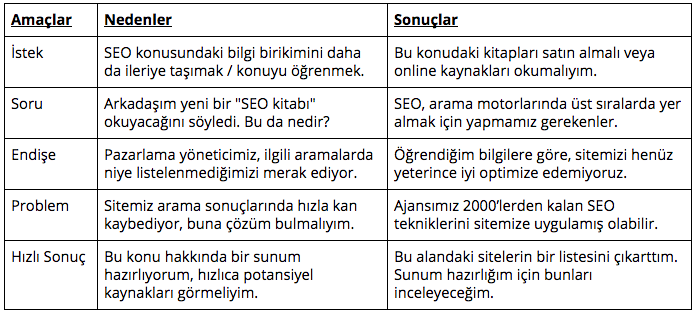
Here we can see that each type of user searches for a different purpose. We've established that different users have different reasons for searching. So it's not hard to guess that, once they complete these searches, they're each after a different kind of result. To look at this from another angle, let's reassess it quickly using a non-commercial search query. Take, for example, one of the searches that may have brought you here, the "SEO book" search: based on scenarios like these, you can analyze what your users actually intend so you can produce the right answers for them.
It's worth remembering that search engines want to bring the most relevant results to the queries users are looking for, just as we do. They also find the content that best fits a user's needs in half a second, drawing from an index of 60 trillion pages. If search engines, Google included, fail to meet their users' needs, they risk losing market share. That's exactly why they always want to bring their users the best possible organic search results.
i) Properly Classifying Queries of Users
We've always believed that giving users the best possible answer to their questions is our top priority at ZEO. So in this section, we'll first look at what users are actually trying to find on a page. Do the queries people use actually reflect their purpose when they search? One of the most widely accepted views on classifying keywords is that we can group them all into three categories:
- Informational queries, Searches to access information.
- Transactional queries, Searches with a commercial value.
- Navigational queries, Searches with a predetermined orientation.

The better you understand these keyword groups, the more effectively you can set priorities when building your SEO strategy. Informational Queries: searches aimed at reaching informative content on any subject. Across all search engines, this is the dominant and most diverse search type on the internet, even without a clear statistic to point to. The reason this search type has such large volume is that there's no real limit on people's desire to find answers to every kind of question and to access new information online. To better understand and internalize this, let's consider some searches a professional trying to improve their SEO skills might run during the day:
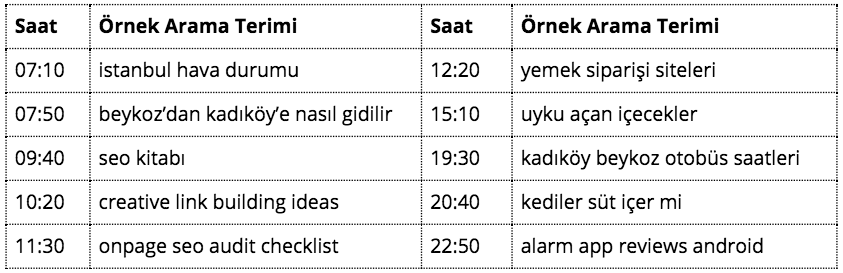
There are always great opportunities in this kind of search, where the main goal is simply to reach information. Even though these searches may not look like they create purchasing intent at first glance, they can produce profitable results once you communicate with a user whose needs you've correctly analyzed. For example, someone asking about the weather and directions before heading to work might not click on any site at all, since Google's own services answer the question directly. You could classify that as an information-driven search that produces no conversion at all. Of course, we also have plenty of examples of information-oriented searches that do lead to sales. Say a user searching for an "SEO book" is genuinely satisfied with the site they click through to in the results. If that site produced strong SEO-focused content, we can be fairly confident its consultancy services will catch that user's, or customer's, attention over the medium to long term.
On the other hand, someone looking for link-building ideas might want to buy a comprehensive training package if they come across one in this space. Or a consultant hunting for a checklist to spot gaps in their own SEO work might end up purchasing a report kit from another consultant with a strong track record in the field. Information-oriented searches don't carry as much potential as commercial queries, but their high volume and the ease of gaining a competitive edge from their sheer variety can turn them into a real advantage.

Navigational Queries: The habit of searching is undoubtedly one of the most important building blocks of internet culture. Instead of the address bar we used to rely on, we can now reach any site just by typing its brand name into a search engine. Reaching Facebook through our desktop devices this way is a straightforward example of a navigational query. Navigational queries don't always have to point to a website's homepage, either.
Searches that include a site or brand name, along with an associated page, are called precision navigational queries. For example, searching "Zeo's SEO book" on this page could also be considered a navigational query. To make this clearer, let's return to our earlier example of a professional trying to improve their SEO skills:
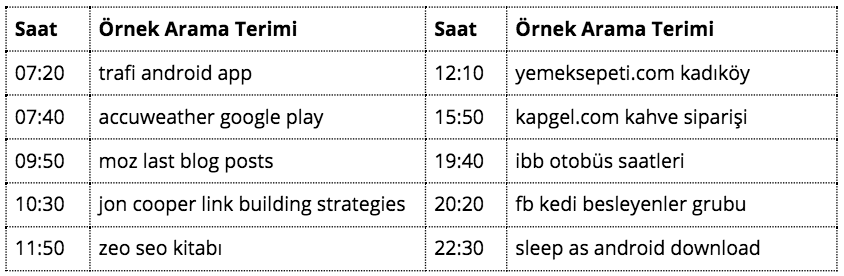
The conversion rate is very high here because navigational queries all come from users who already know what they want, or who arrived through a referral. But the only realistic way to get useful results from ranking in these kinds of searches is for the navigational query to actually point to your own site. In other words, it's almost impossible for Zeo to rank high in searches related to an SEO book written by Moz.com. Even in that scenario, it wouldn't take long for the searcher to realize the first result isn't what they're after, because they already know what they want. So in a case like that, you'd see very weak traffic gains.
That said, getting a lot of traffic from this kind of phrase for a well-known brand doesn't necessarily mean you'll always earn sales conversions from it. Take KapGel, a courier and delivery-ordering app, as an example: if it directs users straight to its homepage in response to a search related to ordering coffee (kapgel.com coffee order), it may not see the sales conversion it wants. It's normal to see a difference in reaction between a user who can immediately find out which coffee chains they can order from through KapGel, and one who just lands on the standard homepage. In this scenario, the company needs a page built to convince someone to order coffee by installing the app. Even though the user made this query wanting to reach that page, searches like this call for good content and a solid user experience to keep bounce rates low and conversions up.

Transactional Queries: for many brands, the most important SEO target is the transactional query. Don't assume, just because of the name, that the result of this kind of search has to be a purchase. While online purchasing is the top interaction goal for many companies, for a housing project the most important conversion might instead be a form filled out by a prospective buyer who wants more details before purchasing.
A query doesn't always need to be close to a financial outcome to count as transactional. A site like Quora, the world's largest question-and-answer hub, might focus entirely on growing its number of active participants even without an income model behind those searches. What matters here is that the interaction is aimed purely at the goals the company is trying to achieve. To assess this better, let's look at the kinds of interaction searches an SEO consultant might run during the day:
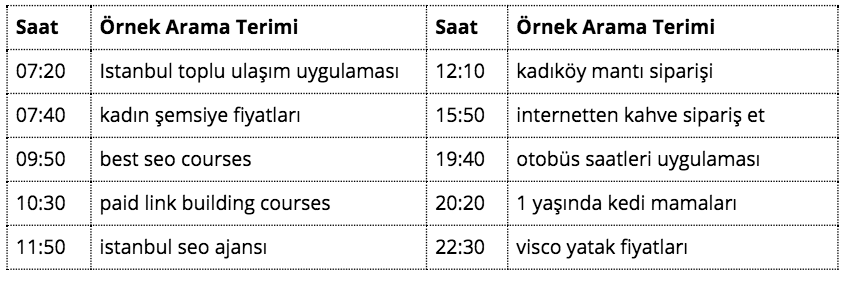
Transactional queries, which carry high commercial potential for a business, can often get confused with information-driven searches. Given where content marketing stands today, it's an undeniable fact that users seeking information are among the most important feeders into the purchasing funnel. That said, if you want quick conversions by driving traffic to your existing pages rather than creating new ones, you should focus on highly competitive phrases.
At the same time, going by the world average, the most expensive phrases you can buy on AdWords are transactional phrases. To illustrate how these groups tend toward conversion, it's easy to understand that someone searching "visco bed prices" right before going to bed isn't happy with their current bed and is thinking about buying a new one. Understanding these three groups correctly, and internalizing them, will help you get SEO right going forward. Since being able to spot a query's purpose the moment you see it will be one of your most valuable skills during keyword research, let's first look back at all our examples together:
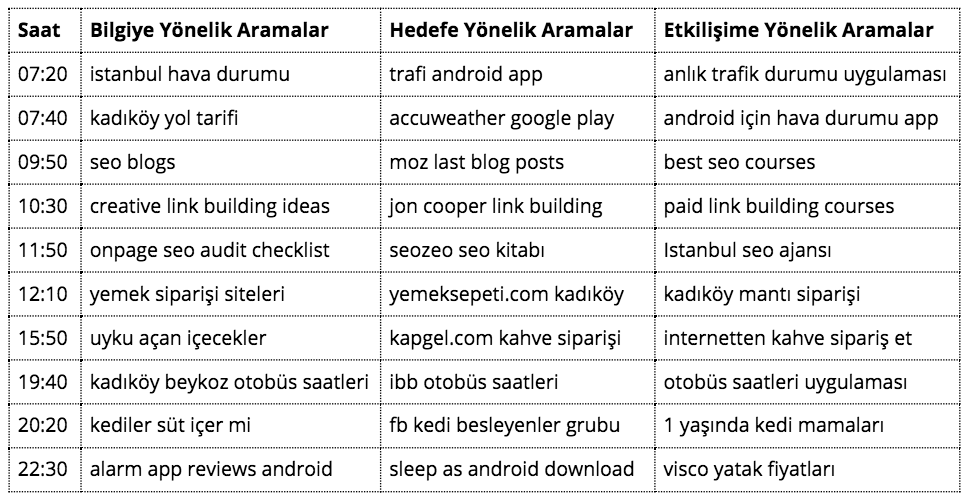
Looking at them side by side makes the distinctions between different, closely related query variations much clearer. Once you know which category a query belongs to, you need to be able to correctly understand what that category means for you. SWOT analysis, one of the most widely used methods in business investment analysis, lays out the strengths and weaknesses of a subject alongside its opportunities and threats. A similar analysis of the categories above is possible in SEO, too:
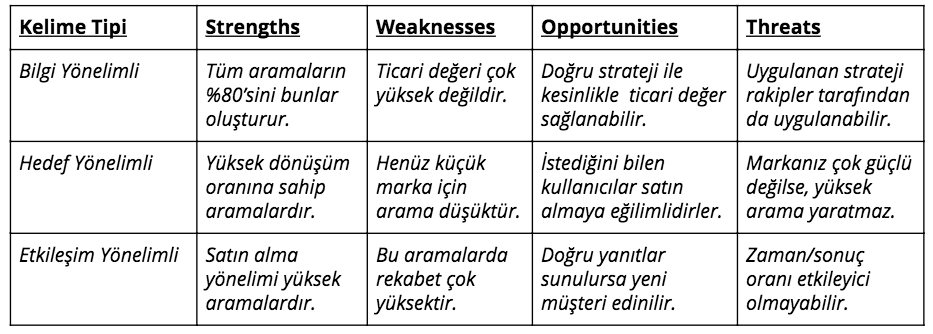
According to this analysis, a strategy weighted toward information-oriented searches tends to make more sense for a small brand, though a strategy for interaction-oriented searches can be developed alongside it. But if you're building an SEO strategy for a major airline, including the brand name, you may want to consider optimizing for targeted searches instead. We'll go into more detail on Google's approach to this in the keyword research section.
ii) Interpretation Systems of Search Engines for User Queries
As you'll see in more detail in the next section, the first step of a Google search is assigning meaning to the query you make. Google has completely changed how it perceives and evaluates queries in this respect. At the SMX West conference in California, held March 1-3, 2016, Paul Haahr, one of Google's engineers responsible for search ranking, gave one of the most informative presentations on search signals, sharing the most detailed information Google's search team has offered on the subject.
When you run a search on Google, your query goes through two processes called Query Processing and Query Understanding. During Query Processing, every semantically related word gets pulled together and listed. Google's semantic weighting engine does the correct weighting here. (I'd suggest reviewing the link for the detailed diagram) So when you produce content related to the White House, Google can only understand this through the semantic relationships it builds with phrases like Washington or US President in the content. As a natural result, achieving success in 2018 using the SEO techniques of the 90s, repeating "White House" over and over, has become very difficult.
On the other hand, when you run this search as a user, Google can easily tell whether you mean a white house or the White House as a proper name, based on your previous searches and general user habits, and it sets its rules accordingly when searching the index.
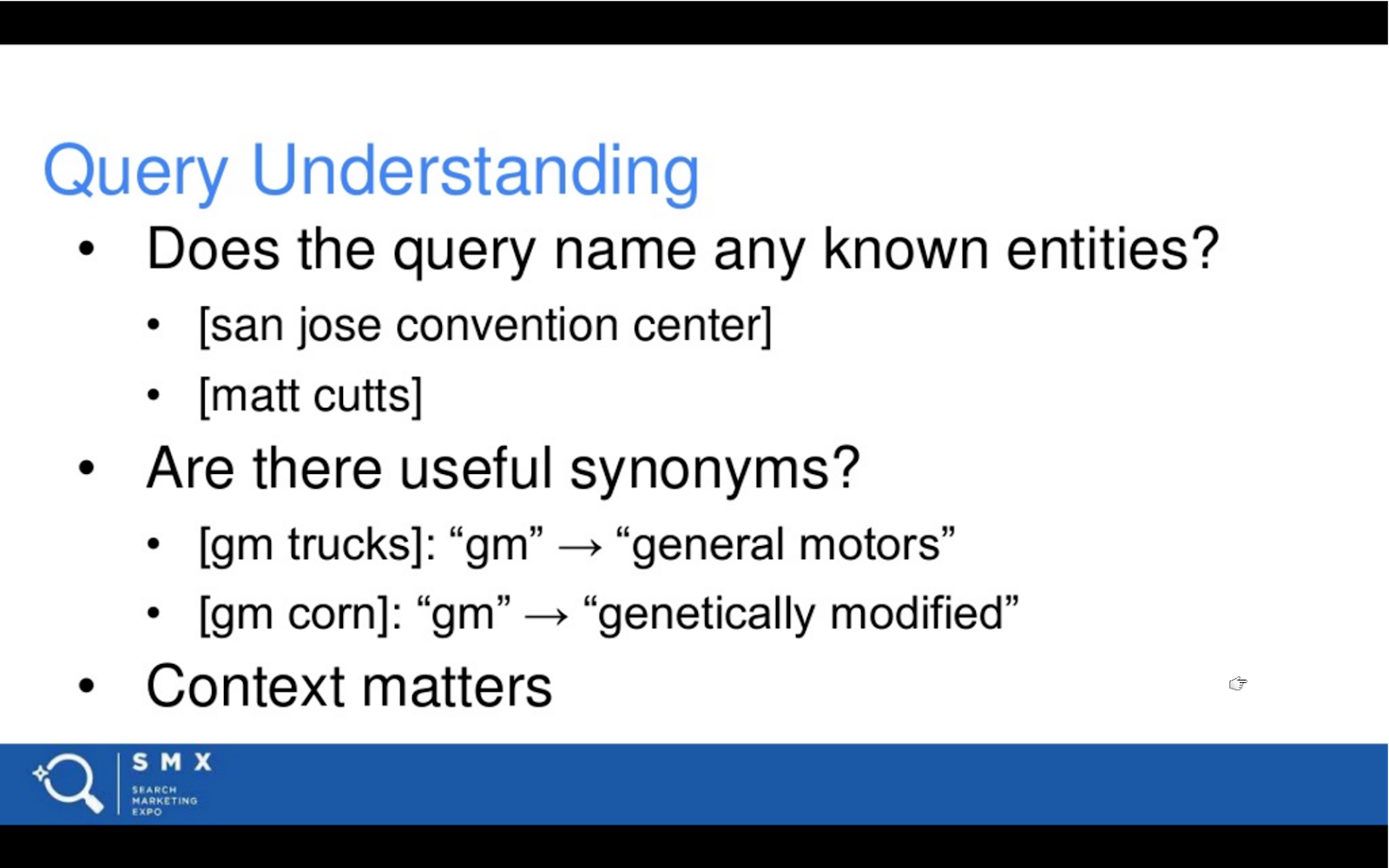
Once the processing step is done, the existing query needs to be expanded to make sense of it. Haahr's presentation used the examples of gm trucks and gm corn. While gm trucks means trucks made by General Motors, gm corn means genetically modified corn. In both cases, the abbreviation GM, combined with the word that follows it, creates sub-searches with completely different meanings. Google delivers the results you want thanks to processes like these, which happen in a few milliseconds, drawing on its effective evaluation of user data and the web index it has built up since its founding.
iii) Understanding User Needs Through Present Day Search Results
We now know Google has a fairly broad semantic index for making sense of our searches. We also know the three groups we use to understand the intent behind a query. So let's look at how this theory actually plays out in search engines:

The table above shows the results for all search types and how they're categorized. We've sorted the results Google listed into 4 different categories based on the search types mentioned earlier.
Let's go through the results one by one:
Encompassing Search: according to the standard classification, this search counts as information-oriented, but it's really encompassing because it holds many requests together. A user searching directly for "samsung galaxy s6 edge" could have many purposes, gathering information about the product, or buying it. In another scenario, the user already owns the product and might be looking for the manufacturer's official site. In the least likely case, a young tech enthusiast simply curious about how the product looks might have run this search. Looking at the table as a whole, three Google ads, one product ad group, and six different e-commerce sites listed in the organic results suggest that most of these queries were aimed at purchasing the product.
The two manufacturer sites were probably listed to answer users looking for product support. An information and experience-sharing site showed up directly in the results in this example to address users seeking information on the subject. Even though we can make these manual classifications and describe our approach to these queries, it's worth noting that giving such detailed responses to every request isn't easy once you consider that all rankings on the web are automated.
So when you build pages for inclusive queries, you need to focus on creating page types that can meet several user needs at once. In the search example above, Hepsiburada's top ranking likely comes from the opportunity to buy the product from stock across more than 10 different vendors, from hosting more than 100 comments about the product, from introducing the product with its own content, and from providing a product video, all of which give it richer content and a better buying experience than many of its competitors.
Informational Queries : in this query, we see that the "samsung galaxy s6 edge reviews" page lists review sites and comments from the official site where you can directly access product-related reviews. Google understands that we need to reach comments from experienced users with this query, so it prioritizes video reviews and sites with user reviews about the product. What's worth noting here is that Samsung takes the top spot by using both its domain authority and the strength of the comments section on its own website. It's a genuinely valuable achievement for a brand to rank at this level when it hosts its own product reviews on its site through this channel.
Looking at this query in detail, we see nine separate answers come from experience-review sites, and one comes from the product listing page on hepsiburada.com. Again, if we consider that hepsiburada.com hosts comment content more strongly than similar competitors, it's easier to understand why an e-commerce site is listed for a query related to comments.
Transactional Queries: in this search type, we'll analyze one of the most direct queries, "buy samsung galaxy s6 edge". Since this search includes a direct purchase phrase, we can see Google's approach favoring e-commerce sites, marked green in the table, as the best match for this query. Once we account for the ads marked in red as purely commercial sites, we see that Akakce.com, a price comparison engine, is marked in blue (which could also be considered e-commerce) because it provides product information. Beyond the Akakce.com result, even though it isn't a direct purchase site, the Samsung official site appears in the results too, since it lists official resellers and gives buyers the right referrals.
Navigational Queries: even though a targeted call like this isn't one you'll encounter often in the mobile phone industry, it's still one of the query types worth examining. A user who wants to search within Samsung's own site can query "samsung.com galaxy s6 edge" to reach the most relevant pages for the phone. In this case, the results we'd expect almost perfectly overlap with what we actually get, and every result points to Samsung's own site, shown in lilac in the table. All of these cases give us a good sense of how far Google has come in measuring our search intent. Building awareness that interprets the results of every query type, and Google's responses to them, to produce pages that give users the right answers, will add real value to you and your organization during your SEO work.
iv) The Future of Search: Interconnected and Communicable Queries
Everyone agrees that Google is one of the most powerful companies in the market today when it comes to understanding search queries. Thanks to advancing technology and machine learning, we're now waiting for Google to move beyond just understanding our queries and start engaging in dialogue with us. As we write this, in 2016, we can still see this only in a handful of queries, so let's take a brief look at it.
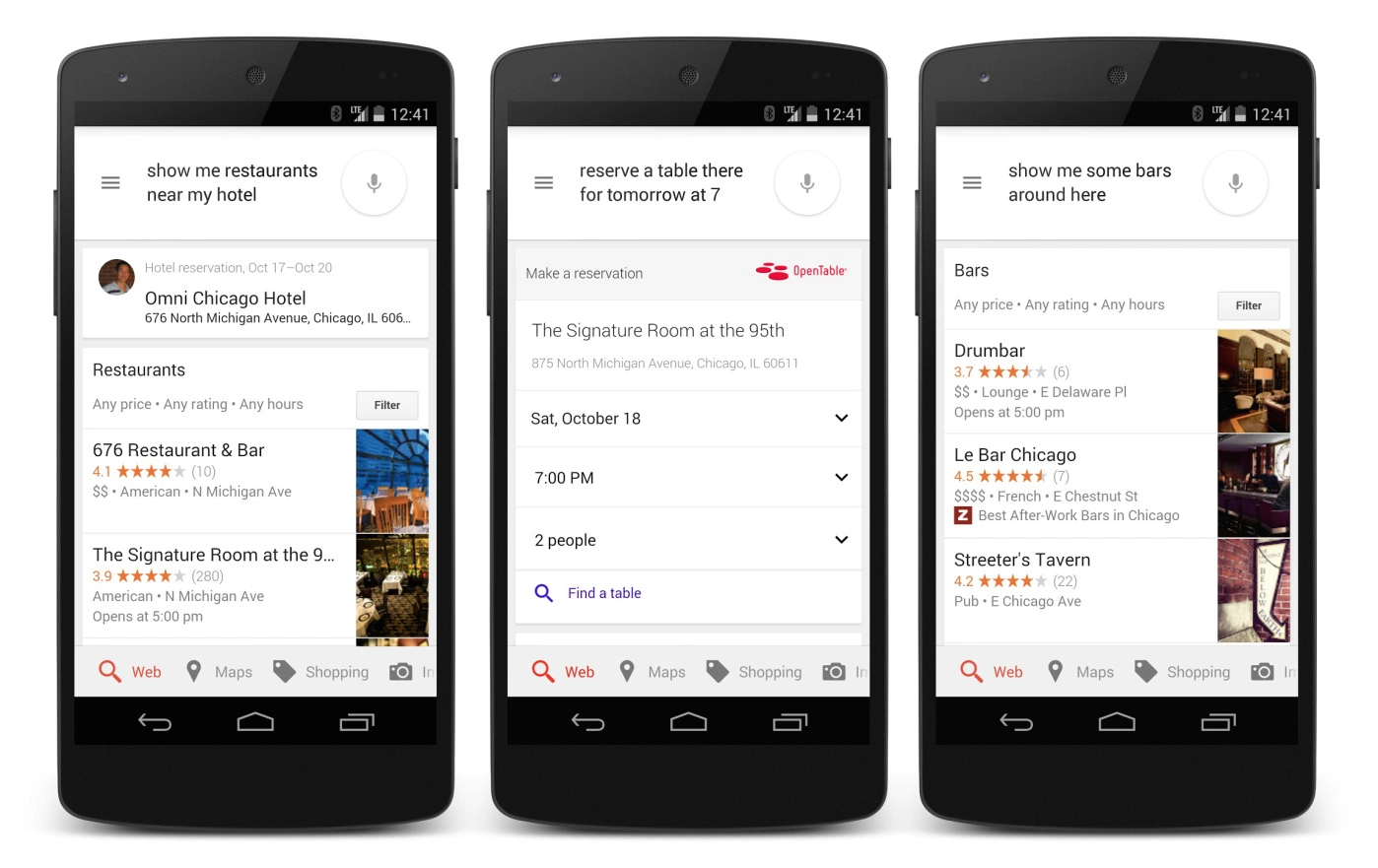
Say you're in Seattle to attend MozCon, an SEO conference. It's your first time visiting the city, and after the conference you search for restaurants near your hotel. At this point, Google already knows exactly where your hotel is, since the confirmation email for your reservation from Booking.com was sent through Gmail. Using that data, it lists all the restaurants within a 1 km radius of the hotel. As soon as you pick a restaurant, you want to book a table for 7 tomorrow evening. Your reservation goes through automatically via OpenTable, which connects with many top-tier restaurants across the US. If you want a drink afterward, you can quickly find bars near the restaurant just by asking.
All the search queries in these examples are information-oriented. But the clearest difference is that you don't have to specify which hotel you're searching around for a restaurant, or which restaurant you're searching around for a bar, these are interconnected queries. This technology is still under development and doesn't produce great results for Turkish at the time of writing, but given how fast Google's historical development has moved, it's not hard to imagine a future where computers and people communicate with each other this way.
e) Understanding the Nature of Revenue Models Arising From User’s Needs
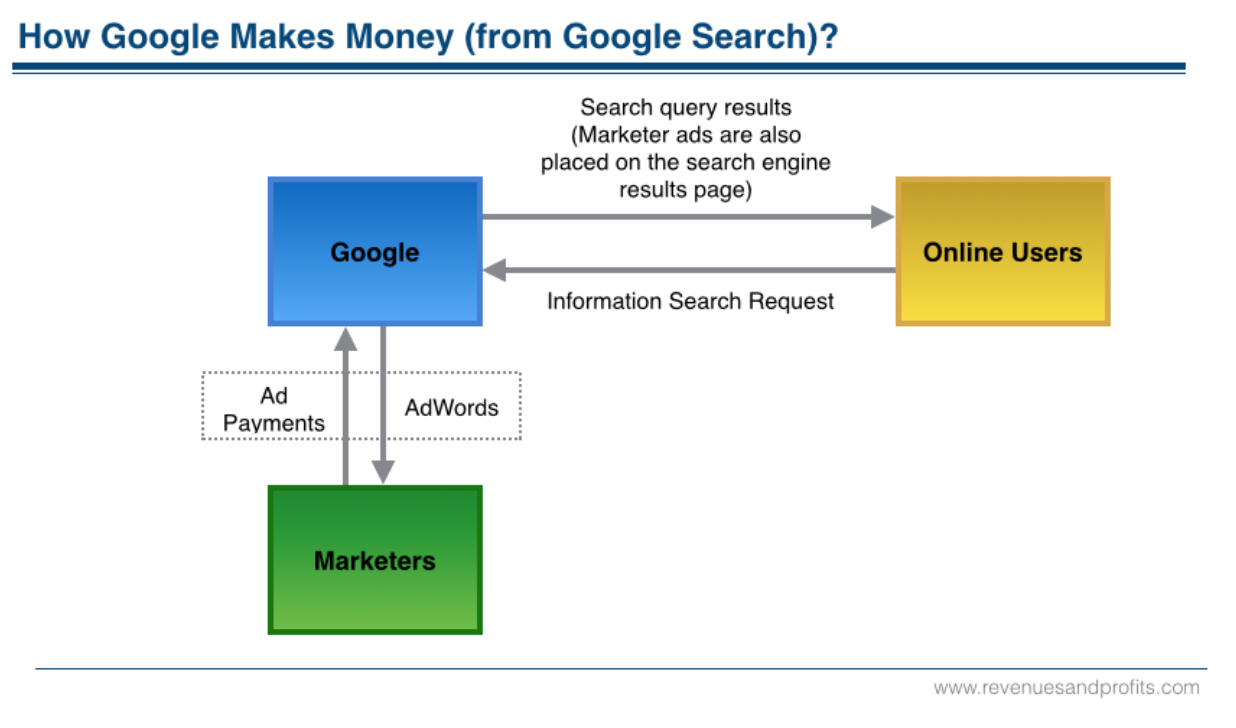
Even though search engines are committed to getting users the most accurate results as fast as possible, completely free of charge, they still need an income model to offset their consumption of material and human resources. At the top of these revenue models, of course, sits search engine advertising.
Looking back at how this developed historically, it's surprising to see how many search engines once rented out banner ads, even pop-ups, across every results page. AdWords, the innovative revenue model Google introduced, impressed every competing search engine with its vision. Through its Pay-per-click (PPC) system, advertisers pay for each visitor who arrives from a specific keyword search by taking part in a multivariate auction on the words they choose. When discussing the fundamentals of what would become Google's revenue model, in their doctoral dissertation on the PageRank algorithm, Google founders Sergey Brin and Larry Page, at Stanford University, wrote that their most important resource, in the long run, would be the advertising model. You can read how the dissertation, quoted below, conveys their thinking from 20 years ago:
 “Currently, the predominant business model for commercial search engines is advertising. The goals of the advertising business model do not always correspond to providing quality search to users. For example, in our prototype search engine, one of the top results for cellular phones is "The Effect of Cellular Phone Use Upon Driver Attention", a study which explains in great detail the distractions and risks associated with conversing on a cell phone while driving. This search result came up first because of its high importance as judged by the PageRank algorithm, an approximation of citation importance on the web [Page, 98]. It is clear that a search engine that was taking money for showing cellular phone ads would have difficulty justifying the page that our system returned to its paying advertisers. For this type of reason and historical experience with other media [Bagdikian 83], we expect that advertising funded search engines will be inherently biased towards the advertisers and away from the needs of the consumers.”
Google launched in 1998, and once its advertising model, AdWords, rolled out in 2000, that model grew rapidly and became one of the largest advertising platforms around. Working on a fairly simple principle, the system's basic job was to connect advertisers and users by showing results tied to the searched words. Usually placed at the bottom and top of Google's results page, these ads account for around 90% of all of Google's revenue. Because of this, AdWords, an enormously valuable revenue channel for Google, remains one of the biggest line items in many brands' budgets across a range of different channels, from new product launches to traditional advertising.
On this platform, where competing companies bid against each other in an auction for particular keywords, bids can climb well above $ 100 per search for some queries with very high commercial value. Given that, it shouldn't surprise us that banks raise their bids in sectors where every bank competes fiercely, like home loans, mortgages, or vehicle loans, depending on the potential earnings from the loan itself. Or in costly healthcare procedures like hair transplants, we see figures that can rival the credit sector, especially in the US market.
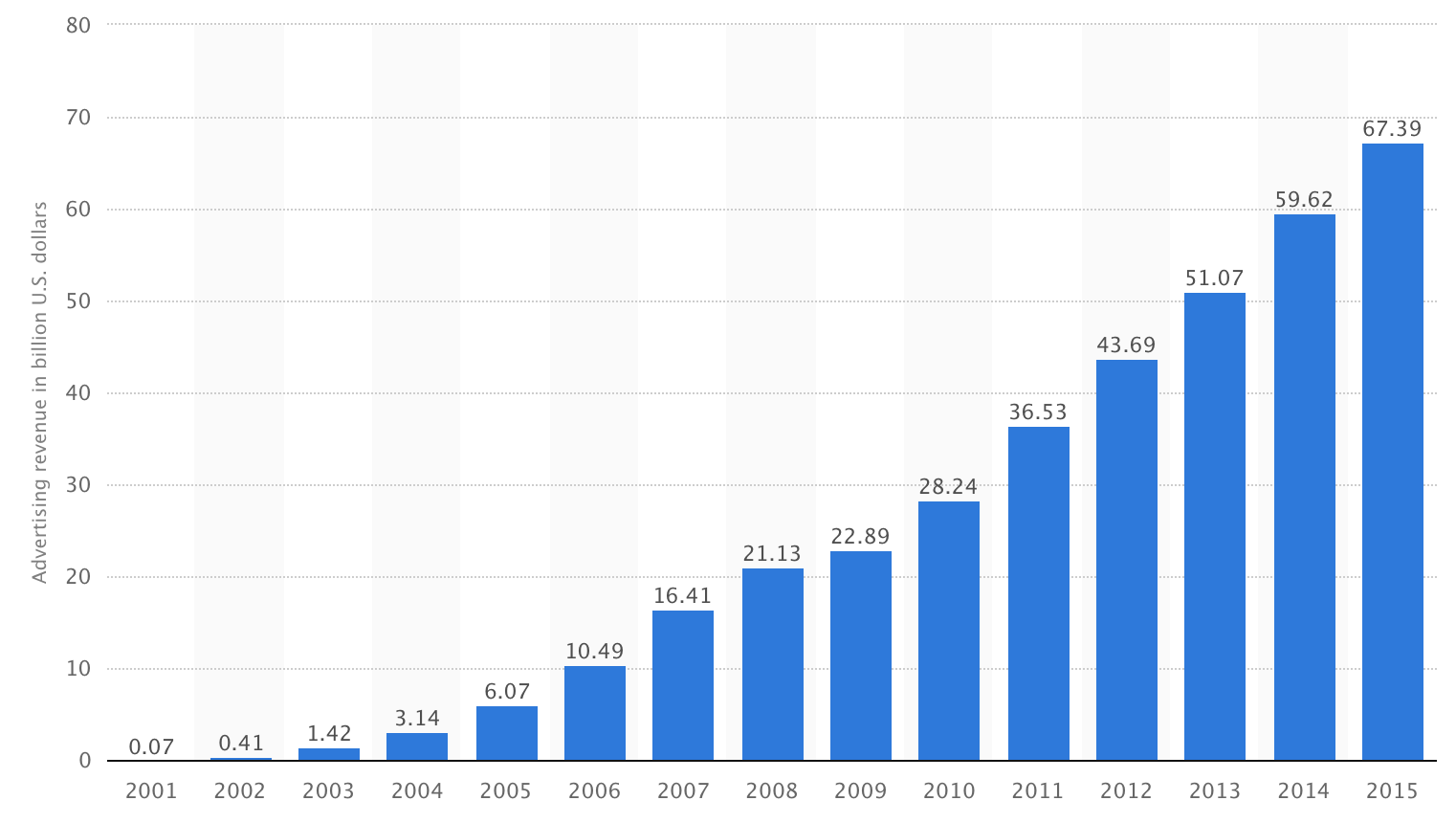
According to this survey published by Statista, Google's total advertising revenue in 2015 is estimated at around 68 billion USD. While Google earns its revenue from advertising as a business, organic search trends don't match the ad results, and there are meaningful differences in click-through rates between the two. The main reason is that Google's matching algorithm keeps improving, and users trust organic results more. Of course, we could also point to the higher click rate on organic results as coming from the more satisfying response, in terms of both content and user experience, that organic results tend to provide. If we look closely at the data from a range of different research companies; (***)
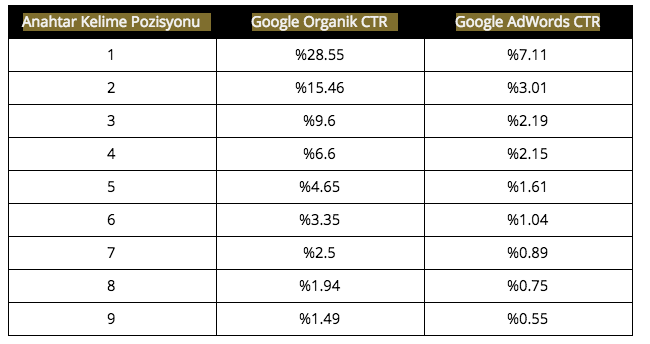
As the results show, even though users still prefer clicking organic search results, Google AdWords remains one of the soundest marketing investments many companies can make. The main reason is that you're only charged for traffic once a user is actually sent to your site, based on fully measurable data. While it's beyond the scope of what we cover here, it's worth knowing at least a little about this model to better understand Google's approach to analytics.
Even though it's a commercial model, what Google built for PPC advertising has inspired many business models since it launched, precisely because it takes such an ambitious approach to keeping the user as its priority. For example, if you try to sell home loans by advertising against a search for flowers, you could end up paying very high costs, since your ad page has very low relevance to that search. AdWords Quality Score, which reflects the value of your page, its related search, and your overall site quality, is one of Google's most important advances in protecting its advertising model's users, and it remains something of a mystery to many companies. Contrary to a common belief, there's also no correlation between your AdWords budget and your success in organic search.
Even though this belief is common in Turkish webmaster circles, plenty of data providers around the world today show that even brands spending millions of dollars a year on AdWords can still have very poor organic search performance. ****https://www.advancedwebranking.com/ctrstudy/ , http://www.accuracast.com , http://www.wordstream.com/average-ctr , https://chitika.com/google-positioning-value


