


A question has become increasingly common in digital marketing and SEO: How visible are we on AI platforms? Brands now want to know more than where they rank in Google results. They also want to understand how AI-powered search engines, chatbots and response systems perceive them, and how often those systems cite their content. Measurement methods and standards are still developing, but several technical factors already matter. One of the most important is structured data, which helps AI systems interpret content and brand information correctly. In this article, I will explain how structured data can affect AI visibility and outline the main actions brands can take.
What is Structured Data (Schema)?
Structured data, or schema, is a standardized markup method that helps search engines understand the content of a web page more accurately and consistently. It presents important page information in a clear, defined format.
Based on Schema.org standards and generally implemented in JSON-LD, structured data lets search engines process content types such as products, articles, organizations, authors, events and FAQs as parsable, interpretable fields. The content is no longer treated only as plain text. It becomes a classified data structure.
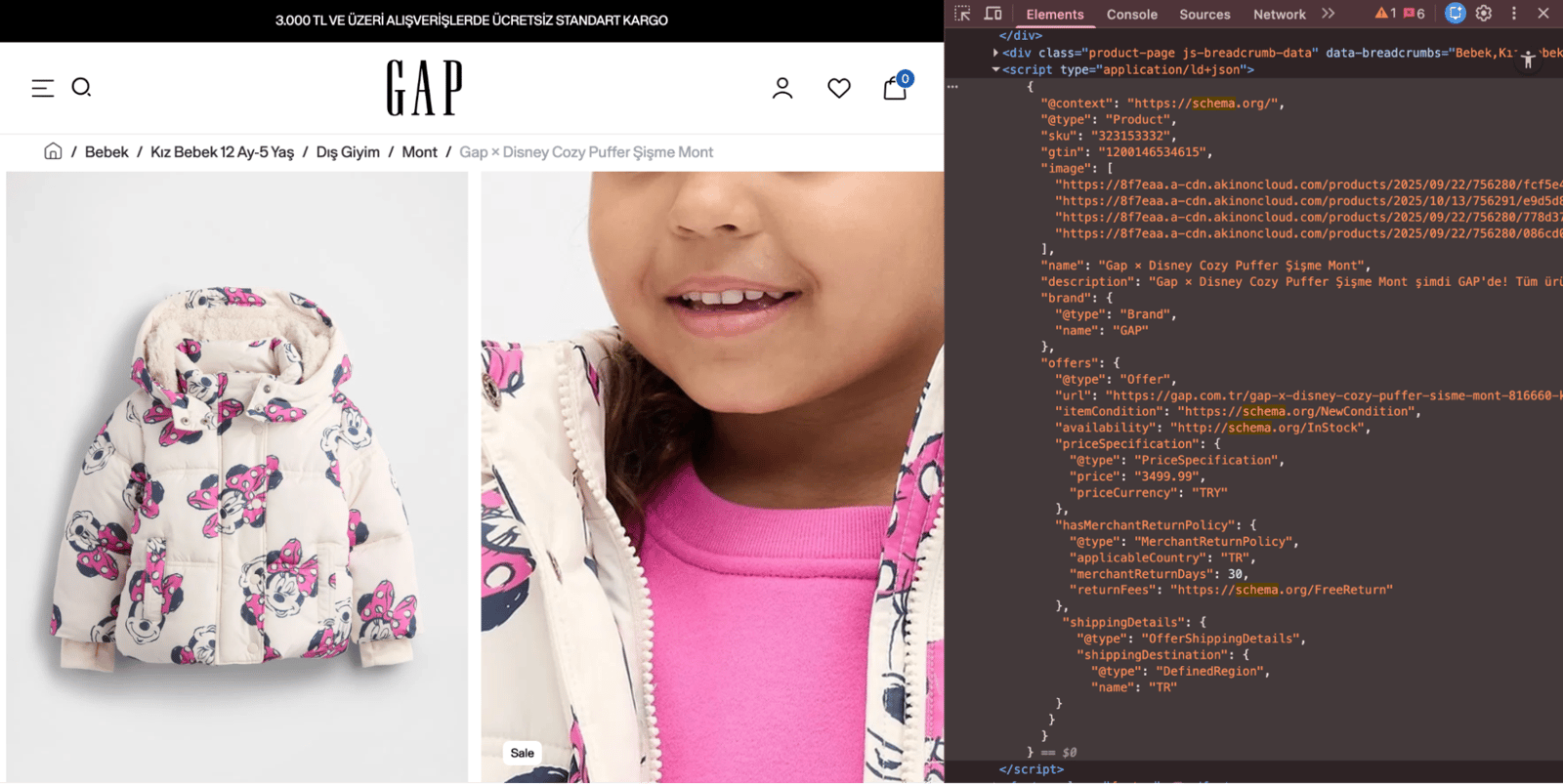
Below is an example of Product Schema in JSON-LD format. It defines product details through fields such as name, description, brand and price.
How Do AI Systems Read Structured Data?
Unlike traditional algorithms, AI systems can evaluate information as segmented, semantically tagged entities rather than as one block of text. Plain text may carry different meanings in different contexts, while schema markup clearly defines what each entity represents. This reduces the interpretation burden on AI models, which can positively affect AI impressions and increase the chance that the content will be cited as a reference.
Before an AI model uses a source as a reference, it needs confidence in both the information and the source's authority. Through its key-value structure, schema markup provides technical context that can support this assessment. Structured data helps content get classified more quickly, associated with the correct entities and interpreted consistently. As a result, the page becomes easier for AI systems to understand and has greater potential to serve as a reliable reference.
The table below summarizes how structured data use differs between traditional SEO and AI-oriented GEO:
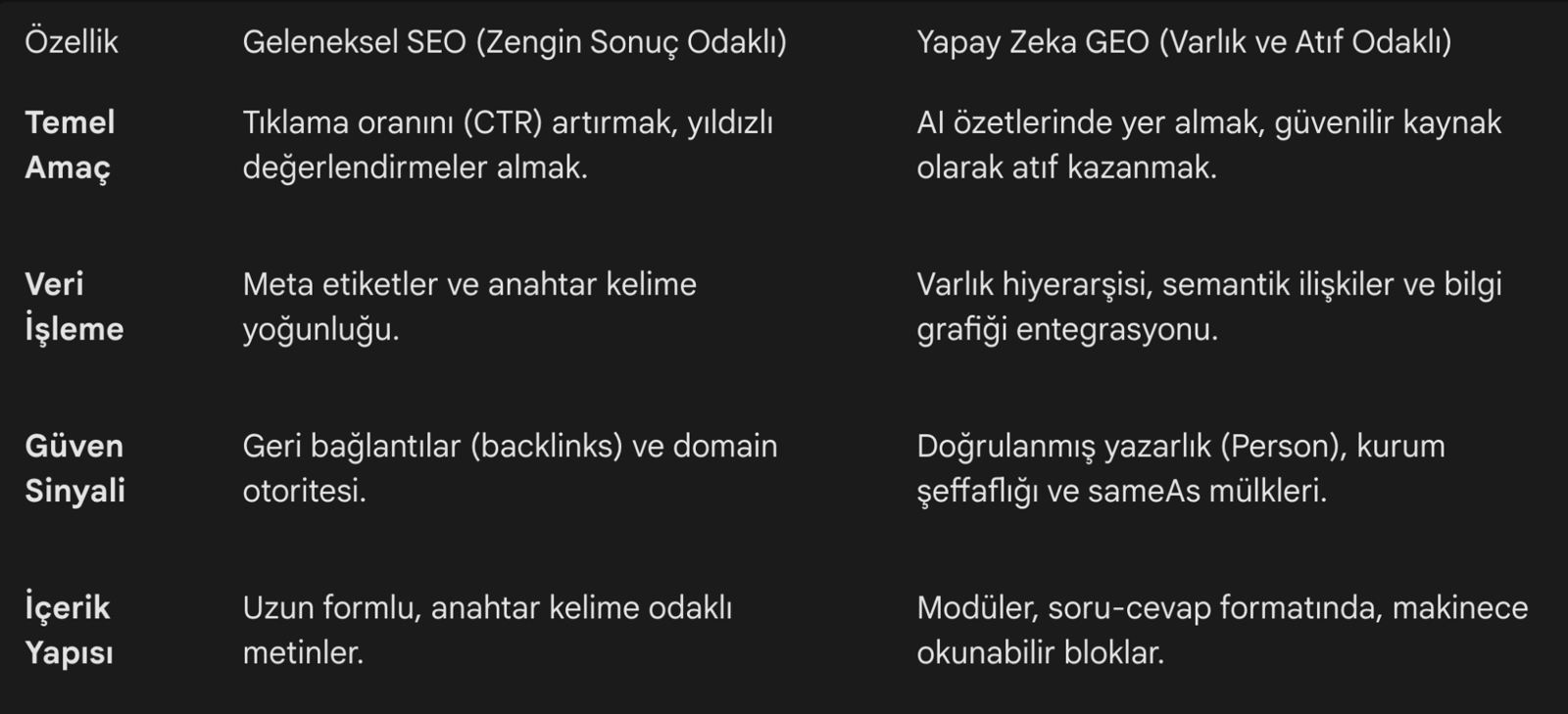
In short, structured data is no longer useful only for earning rich results in SEO. It is also a fundamental part of making a source understandable, verifiable and citable for AI systems.
How to Increase AI Visibility Using Structured Data?
1 - Enhancing Product Attributes in Product Schema
Marking up basic fields such as product name, description and price is now standard practice. In AI-based search experiences, the level of detail in product attributes can make the difference. Users may enter highly specific, intent-driven commercial queries such as “red wool sweater” or “waterproof outdoor shoes.” Pages that define distinguishing features such as color, material, size and pattern clearly in their schema give AI systems more information than pages limited to a name and price. This can help the systems interpret the page accurately and return results that better match the user's intent.
For example, a ChatGPT search for a red sweater may ask for details such as material, cut, gender and price. Providing these inputs in the schema can increase the probability of being cited on AI platforms.

Commercial queries also depend on purchasing and logistics information. Including availability, or stock status, and shipping details in the schema shows whether the product can be purchased and delivered. These fields are therefore highly recommended in Product Schema. When they are missing, products that are out of stock or have unclear shipping options may appear lower or may not be shown at all on AI platforms.
Below is an example of an advanced product schema.

Comprehensive product attributes do not guarantee rankings. They are still important for e-commerce sites because they help bots categorize each product more accurately.
Tired of reading?
You can also listen to this blog post as a podcast we created with Google NotebookLM on Spotify.
2 - Strengthening E-E-A-T Signals for Organization and Person
When AI systems evaluate content, they consider not only what was said but also who said it and what authority that person or organization has. E-E-A-T guidelines appear to apply to AI systems to some extent. Defining a digital identity with Organization or Person schema can therefore have a meaningful effect on AI visibility.
An Organization schema should include more than the brand name and logo. Fields such as legalName, url, contactPoint, address, foundingDate and sameAs help present the brand's identity clearly to AI bots. The sameAs field is particularly useful because it connects the brand to reliable third-party sources such as LinkedIn, Google Business Profile and Wikipedia. These links provide a verification layer and show that the brand is a defined entity in the digital ecosystem.
Person schema is important for content creators, expert writers and brand representatives. AI systems are more likely to cite content from people whose expertise is clearly defined than content from anonymous or unidentified sources. Going beyond the name field and adding attributes such as jobTitle, worksFor, knowsAbout, alumniOf and sameAs helps demonstrate the author's areas of competence and the context in which that expertise developed. This structure can make a decisive difference in AI visibility, especially for finance, health, law and trade content in the YMYL (Your Money Your Life) category.
Below is an example of an advanced person schema.

3 - FAQ Schema Usage & Question Optimization
Google's restrictions on FAQ rich results created the impression that this markup had lost its value. With the rise of GEO, however, FAQ Schema has become important again. As users ask long-tail questions on AI platforms, FAQ schema blocks can serve as efficient data sources for AI systems.
Instead of building FAQ sections only around high-volume keywords, focus more closely on user intent and the questions people may actually ask. For example, a brand selling marble and ceramic products could move beyond a broad question such as “What is marble?” A clear, scenario-based answer to “Is marble or ceramic safer for bathroom floors?” marked with FAQ Schema is more useful to AI systems.
4 - Enriching Article Schema
Article schema is a foundational markup that tells search engines and AI systems when content was published, when it was updated and who produced it. AI platforms tend to prioritize reliable, verifiable sources. Pages built around E-E-A-T principles, with the content, author and publisher information clearly represented in the schema, are easier for AI systems to understand and cite.
Current datePublished and dateModified fields are especially important for fast-changing subjects such as legislation, pricing and health. Marking updated content in the schema helps AI systems identify the most current and valid information, which can increase the likelihood of citation. The author information should also extend beyond a single author field. A detailed profile page supported by Person schema can define the author's expertise, institution and reliable third-party profiles. These details strengthen the author's authority and may help their content stand out on AI platforms.
5 - Using Speakable and VideoObject Schema
AI models can process audio, images and video alongside text. This makes it increasingly important to mark content as listenable and watchable as well as readable. Speakable schema can identify the most important sections for voice assistants and AI systems, helping content gain priority in voice search results and AI assistant responses. This signal can reinforce brand authority, particularly for guides designed for quick information access.
VideoObject schema gives video a more important role in an AI strategy. Rather than spending time analyzing an entire video, AI systems can use fields such as hasPart or key points to understand what is discussed at a particular second. Structuring video content this way increases the chance that an AI system will reference a specific segment as a direct answer. It also positions the content as a rich, accessible information source rather than only a wall of text.
6 - Schema-Content Consistency
For AI systems to treat structured data as a trust signal, the visible page content must match the data in the code. AI models validate information across multiple sources to reduce the risk of hallucination. If a price, technical specification or author detail in the JSON-LD differs from the visible text, the contradiction can negatively affect AI visibility. The page copy and schema should therefore remain consistent.
7 - Format Preference
Structured data can be added with methods such as Microdata or RDFa, but JSON-LD is the most widely recommended format for AI systems and modern search engines. Google officially supports and prioritizes it, and it has become a technical standard in AI visibility strategies.
Because JSON-LD provides a clean data block that is separate from the HTML, AI bots can process the content without being hindered by design complexity. This structure may increase the probability that a brand will be perceived as a reliable reference by helping AI models establish semantic links between data points.
Structured data now does more than support SEO. It is a fundamental part of helping AI systems understand a site correctly and assess it as a reliable source. Measurement tools in this area remain limited, so clear data is still difficult to provide. Even so, clean and understandable code makes a website easier for AI bots to interpret, just as it does for primary search engine bots such as Googlebot. By optimizing schema now, brands can begin working to increase AI citations before their competitors do.


