


Content Strategy & Research
Audience & Demand Research
See who you're writing for, the language they use, the questions they ask, and what holds them back before the team commits to a topic.
Before choosing topics, find out who will read them and what might move those readers to act. We bring together interviews, search behavior, CRM records, and support conversations to build a sourced view of what your audience needs. You walk away with a sourced view of who you are writing for, what they ask, and what stops them, with every claim traceable and every remaining assumption marked.

Some of the 500+ brands we've worked with
Selected brands we’ve worked with across industries.


On this page
How we run it
How we turn scattered evidence into a useful audience view
We first gather the available evidence, then narrow it into a brief people can use. Every published claim keeps its source attached.
Start with the decision
We define what is at stake, whether that's a content investment, repositioning, or sales enablement gap, and identify who needs the answer. Before research begins, the requesting stakeholder confirms that the brief addresses the real question rather than a stand-in for another one.
A concise brief defining the audience question and who will use the answer.

Gather the evidence you already have
Most teams already have useful material in interview transcripts, search demand data, CRM notes, and support tickets. We collect it, record when it was created, and identify the gaps. A strategist reads the material behind each group before deciding whether it belongs in the evidence set.
An organized evidence set with sources attached and gaps clearly marked.

Compare the sources
Search data and customer interviews may point in different directions. We examine where the sources reinforce one another and where the disagreement itself matters. A strategist determines whether a disagreement is a useful finding or simply a data issue.
A focused list of audience jobs, language, and barriers supported by more than one source.

Turn the patterns into a working brief
We turn the supported patterns into a practical brief covering who the audience is, what they are trying to achieve, how they describe it, and what prevents action. Before delivery, the strategist follows every draft claim back to the interview, record, or dataset that supports it.
An audience and demand brief designed for the teams that will use it.

Put the brief to work across teams
We review the brief with content, product, and sales together so all three teams work from the same interpretation. The brief owner confirms that content, product, and sales share the same reading before the findings are treated as settled.
A shared brief with a named owner and a clear trigger for review.



Sorting the evidence is fast. Reading it is the hard part.
Interview transcripts, support tickets, and CRM exports become easier to work with when agents group repeated language and prepare a first summary. We treat that output as an index into the material. A Zeo strategist reads the sources, works through conflicts between search behavior and customer interviews, and is accountable for every claim in the final brief. Private sales notes or product plans stay subject to your team's review before the brief reaches a wider audience.
What you get
The demand picture you get back
The brief captures the findings. The source trail behind it is what makes them dependable.
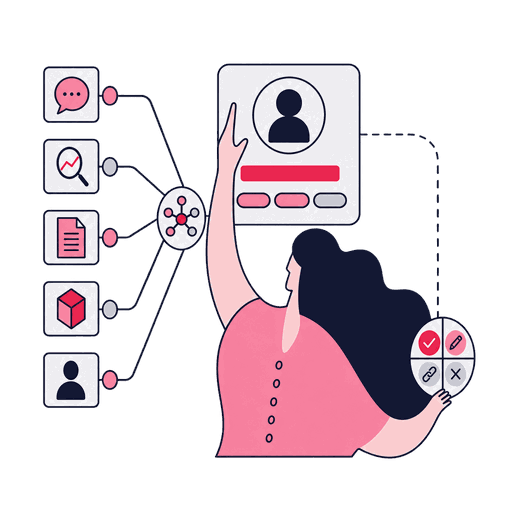
Audience and demand brief
A map of audience jobs, language, and barriers to action, with the supporting source shown for each finding.
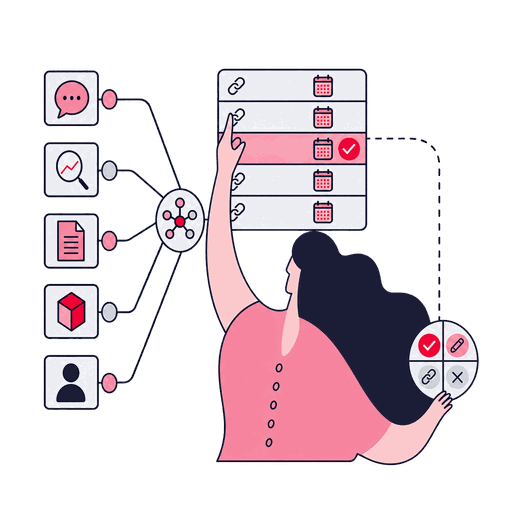
Evidence and source log
A dated, permission-aware record of every interview, dataset, and customer record used in the research.
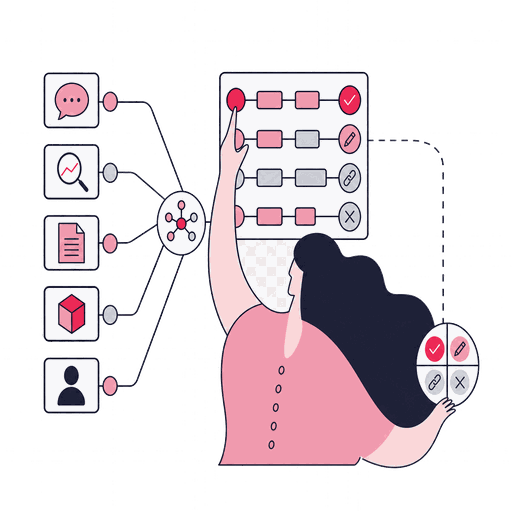
Cross-team walkthrough notes
Guidance for content, product, and sales, along with a clear split between confirmed findings and remaining assumptions.


We call it done when: every claim traces to a real source, the teams using the brief have reviewed it, and any remaining assumptions are clearly marked.
Who it fits
Start here when the audience is still unclear
This work gives topic selection a sound foundation. The evidence comes first and the content plan follows it.
A good fit when
- Your team is funding new content, but the audience case still rests on personas built from assumptions.
- Your organization already has interviews, search data, CRM records, or support tickets, but nobody has connected them.
- Product, sales, and content read the audience differently, so topic decisions keep starting from three competing views.

Better handled as other work when
- You already have a validated audience view and only need to choose the next topics. Keyword & Topic Research is the better fit.
- A persona workshop needs to turn the room's assumptions into findings, while this research keeps every audience claim tied to a source.
- You need the brief to guarantee a ranking or conversion. Audience evidence can guide a topic, but it cannot promise either result.
People who write and ship this content
Some of these consultants write the pages themselves. Others plan distribution or check how a piece performs once it's live, so the team below covers more than one stage of the work.

Didem Himmetli
Marketing Executive

Metehan Urhan
New Business & Partnership Manager

Gülşah Şahin Özkan
Senior SEO Analyst

Sinem Bakır Yavaş
Senior SEO Executive

Hande Parmaksız
SEO Manager

Sena Önder
Senior SEO Executive

Bensu Tınastepe
Senior SEO Analyst

Ali Özgün Öz
SEO Executive

Ruhan Tiryaki
Senior SEO Analyst

Mehmet Aktuğ
Co-Founder & COO

Yağmur Bayram
Sr. SEO Analyst

Emir Kağan Kahveci
SEO Analyst

Zafer Yıldız
Web Analytics Manager
Tools we use
Tools behind this work
 SparkToro
where the audience already spends attention, not just what they search
 AlsoAsked
the deeper People Also Ask tree behind the questions people actually ask
 Google Trends
checks whether interest is rising, seasonal, or already fading
 Notion
the working brief itself, shared with every team that needs it after
 Google Search Console
the exact search phrases real visitors already use to reach the site
Where this leads next
Where the research can lead next
Upstream
Content Audits
If you already have live pages, an audit shows which ones can contribute useful evidence and where a fresh start makes more sense.

Downstream
Competitor Content Analysis
Once your audience is clear, compare what competitors are already saying to those same people.
Complementary
Keyword & Topic Research
Use the brief to guide topic selection once you know who sits behind the search demand.


Start the work
Ready to understand who you are writing for?

Before we start