


SEO & Conversion Copywriting
Website Copywriting
Every page gives visitors a specific reason to continue and a clear next step.
Website Copywriting shapes the headlines, body copy, and microcopy that help visitors understand an offer and take the next step. It improves the language on pages your site already needs. Deciding which pages should exist belongs to Website Content Architecture. You walk away with approved copy on every page in scope, matched to its stated job, checked for accessibility and consistency, and measured on task completion.

Some of the 500+ brands we've worked with
Selected brands we’ve worked with across industries.


On this page
How we run it
How we write the copy across the site
Each step keeps individual pages aligned with one shared message architecture.
Trace the real visitor journeys
We trace how people experience each page after arriving from search, an ad, or a referral. Those visits start in very different places. The journeys become part of the copy brief only after a strategist matches them to the actual entry points.
A mapped set of visitor journeys by entry point.

Set one clear job for every page
Each page receives a stated purpose, such as informing, qualifying, or converting, which gives the copy a concrete standard to meet. The page owner signs off on each page's stated job before copy gets written against it.
A page-purpose matrix covering every page in scope.
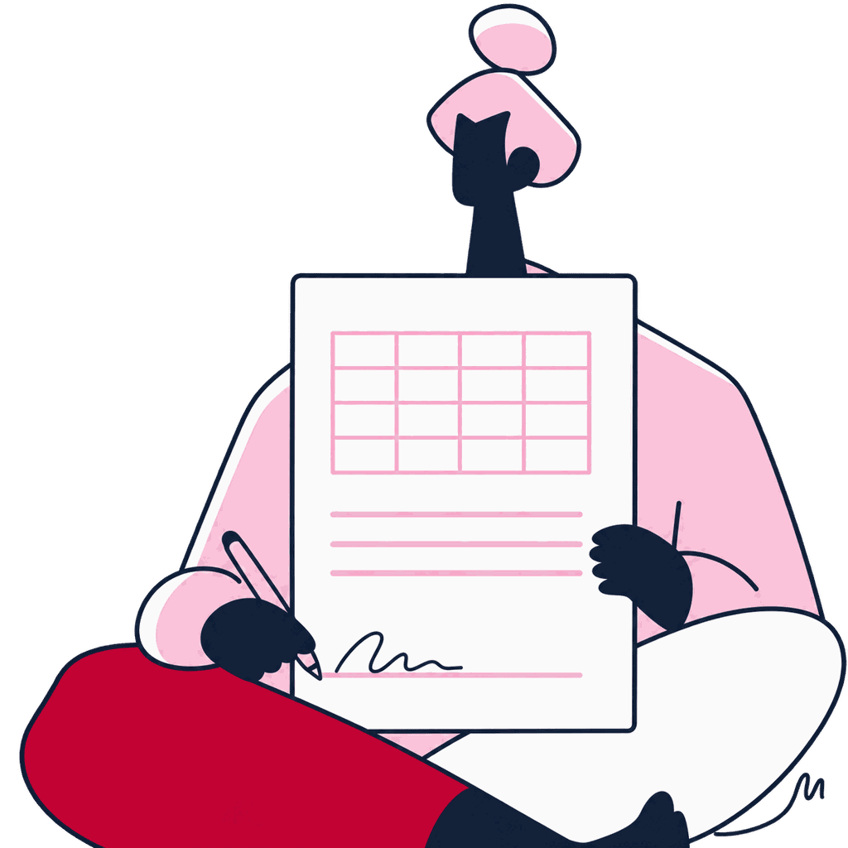
Agree the message architecture
We agree the core claims, proof points, and terminology once, so every page works from approved language rather than inventing its own version. A strategist approves the message architecture before any page copy gets drafted from it.
A message architecture with approved claims and terminology.

Draft each page against its job
We draft headlines, body copy, and microcopy against each page's stated job and the approved message architecture. An editor checks every page's copy against its stated job and the approved message architecture before it moves to review.
A full copy deck for every page in scope.

Review accessibility, UX, and consistency
We review the copy in its rendered layout, check how it works with assistive technology, and confirm that pages still agree once the full set is written. An editor confirms the copy holds up for assistive technology and against every other page before sign-off.
A reviewed copy deck with accessibility and consistency issues resolved.

Launch and measure task completion
After launch, we track whether visitors complete the task each page was designed to support. Time on page and bounce rate cannot answer that. The page owner reviews the task-completion data and decides whether a page needs another pass.
A launch with a task-completion measurement note attached.


Repeated microcopy is the easy part
Page purpose and the message pattern need an owner's approval first. Once those are set, agents can draft button labels, form instructions, and error messages across similar templates. The harder work happens between pages. An editor has to notice when two individually polished pages make different promises, then resolve the conflict with the right owner. Before launch, the full copy set is read against one message architecture and checked in its rendered layout, including with assistive technology. Copy that fails there is not ready.
What you get
What the team receives
The copy deck covers every page in scope. The purpose brief and dashboard keep the work accountable after launch.
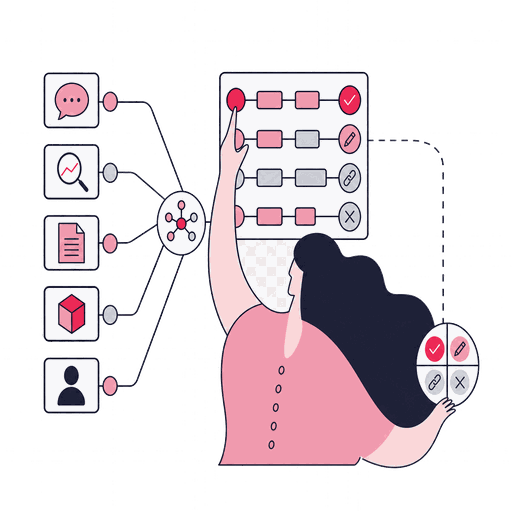
Page-purpose brief
What job every page in scope is supposed to do, mapped against how visitors arrive.

Website copy deck
The full set of headlines, body copy, and microcopy, written against the approved message architecture.
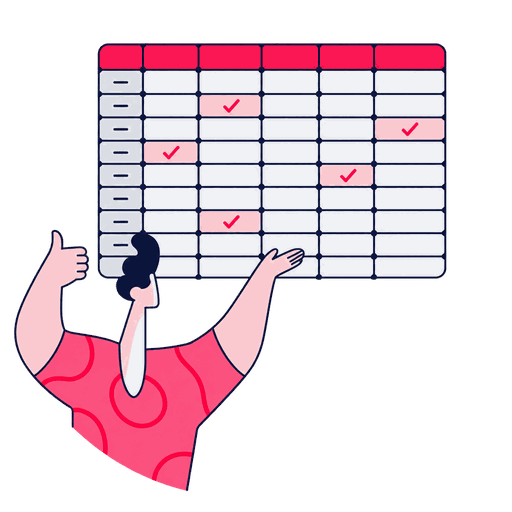
Task-completion dashboard
Whether visitors are completing each page's intended task, tracked after launch.


We call it done when: every page in scope has approved copy that matches its stated job, passes accessibility and consistency review, and is being measured on task completion.
Who it fits
The pages are right, but the language is getting in the way
This work focuses on the voice and persuasion within existing pages. Website Content Architecture decides which pages should exist and how they connect.
A good fit when
- The page structure makes sense, but the copy is not helping visitors take the intended next step.
- Visitors arrive from search, ads, and direct links with different context, but the copy addresses them as if they all started in the same place.
- Product claims and proof have been verified, but the headlines, body copy, and microcopy have not yet turned them into a clear next step.

Better handled as other work when
- You first need to decide which pages the site should have. That belongs to Website Content Architecture.
- The requested language would make claims the product cannot substantiate, so the relevant owner needs to settle the facts before a copy deck can be written.
- Pages currently contradict one another, and no owner is prepared to confirm which version is accurate.
- Visitors cannot find the right path through the site, so stronger headlines would leave the navigation problem untouched.
People who write and ship this content
Some of these consultants write the pages themselves. Others plan distribution or check how a piece performs once it's live, so the team below covers more than one stage of the work.

Metehan Urhan
New Business & Partnership Manager

Ezgi Gülsen Yaylı
SEO Manager

Sinem Bakır Yavaş
Senior SEO Executive

Sena Önder
Senior SEO Executive

Didem Himmetli
Marketing Executive

Gülşah Şahin Özkan
Senior SEO Analyst

Deniz İmre Temiztürk
Content Specialist

Ali Özgün Öz
SEO Executive

Ruhan Tiryaki
Senior SEO Analyst

Yağmur Bayram
Sr. SEO Analyst

Bensu Tınastepe
Senior SEO Analyst

Emir Kağan Kahveci
SEO Analyst

Mehmet Aktuğ
Co-Founder & COO
Tools we use
Tools behind this work
 WAVE
WAVEflags the accessibility errors the page's own review step names explicitly
 Grammarly
holds the site's terms and tone steady across every page in the rewrite, not just one
 Notion
the agreed message architecture every page's copy has to trace back to
 Airtable
the row-per-page tracker for a rewrite too large to hold in one document
 Google Analytics
measures whether visitors complete each page's job, the page's own definition of launch success
Where this leads next
Methods connected to Website Copywriting

Upstream
Brand Messaging & Storytelling
Worth settling first if your site copy currently disagrees with itself about what your company stands for.

Downstream
Landing Page Copywriting
The natural next step once your core site is solid and a specific campaign needs its own dedicated page.

Complementary
Content Audits
Useful in parallel if you're not sure which existing pages are even worth rewriting versus retiring.


Start the work
Do your strongest pages make different promises?

Before we start