


Follow the citation to its page
Citation & Source Tracking
See the exact URLs cited in the approved panel, the valid runs where they appeared and the support available in each linked passage.
We retain the prompt, platform, run conditions and full answer around every visible source. Each link is resolved to its final page before a reviewer checks the passage against the nearby claim. A brand mention remains a separate event. A dated inventory names exactly which pages get cited, how often, and whether each one backs up what the answer said. Content and SEO leads who already know the brand comes up in AI answers and need to know which pages are doing the work.

Some of the 500+ brands we've worked with
Selected brands we’ve worked with across industries.





































 MeteksanGlobalCase Study












On this page
From taxonomy to resolved source
From event taxonomy to a resolved source ledger
The collection repeats on a fixed schedule and the comparisons get prepared the same way every time. Named specialists approve the definitions, resolved sources, and final interpretation at each material step.
How we hold ourselves to it
- Domain versus exact page
- Redirects followed to the end
- Support verified against the passage
- No citation from a mention
Define the event taxonomy
Rules for mention, recommendation, domain citation, exact-page citation, and support are fixed before any data is collected. The measurement lead and client owner approve definitions, exclusions, and the counting base before collection.
Event dictionary with examples, exclusions, and the sample each rate is counted against.

Build and version the prompt panel
Real questions are stratified by intent, persona, market, and platform, with a paraphrase set held back for later checks. A research owner approves market, persona, and intent coverage.
Versioned prompt-family matrix with a set of paraphrases held back.

Capture repeated answer runs
The panel runs repeatedly, preserving every visible source and any failed capture. A monitoring operator audits completeness and excludes only runs covered by the validity rule.
Raw answer-and-source corpus with full run metadata.

Resolve domains to exact cited pages
Redirects and canonicals get followed down to the exact URL, duplicates get merged, and unintended destinations get flagged. A source analyst validates URL identity and the client's web owner confirms owned-page intent.
Exact cited-page inventory linked to each event.

Audit citation context and support
Each answer claim gets compared with its cited passage and labeled full, partial, contradictory, or indeterminate support. A calibrated reviewer approves support labels and abstains where the source can't decide.
Annotated citation-support sample with reviewer rationale.
Reconcile citations with referrals
Visible source exposure gets joined to tagged referral traffic without assuming one caused the other. The client's analytics owner approves the reconciliation and any outcome interpretation.
Citation baseline plus a prioritized source-gap brief.



The source ledger you get
A source ledger your team can act on
The source ledger lets another specialist replay the prompt, resolve the URL and challenge the support label. Every finding also names its owner and the decision it supports.
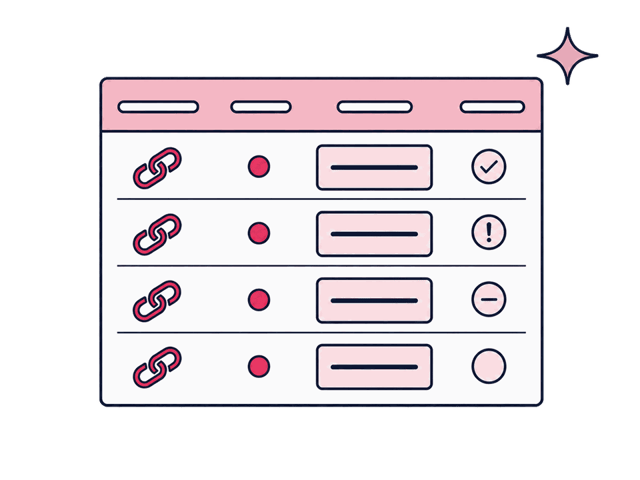
Platform-specific mention baseline
A dated mention, recommendation, and citation baseline for each scoped platform and prompt family.
Citation source portfolio
The exact owned and third-party pages exposed as sources, ranked by concentration, support quality, and landing fit.
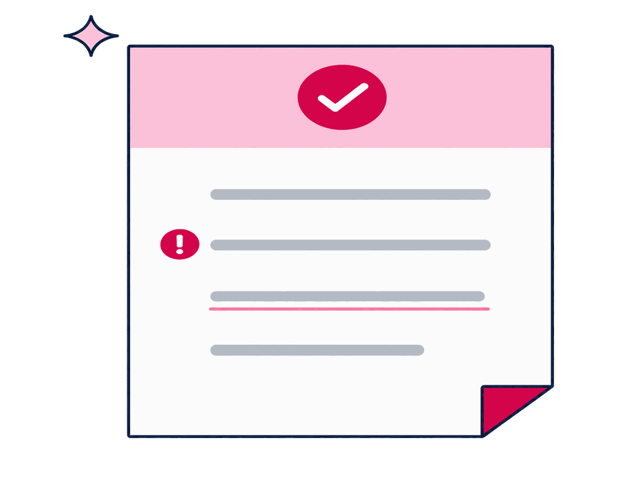
Source-gap findings
The material cases where a source is missing, wrong, weak, or fails to support the nearby statement, prioritized by evidence and reach.

Rates with visible run counts
Rates stay attached to the sample size and slice that produced them, so the team can interpret each change.

The tracking protocol, written down
The exact prompts, event rules, and URL-resolution logic in one document, so next quarter's run starts from this protocol rather than a fresh interpretation of it.


The page behind the citation
A citation map needs exact URLs and valid runs
The method follows visible sources from the answer to the final URL and the supporting passage. It suits teams that already see brand mentions and now need a reliable source record.
A good fit when
- Mentions count as recommendations before review — A brand mention becomes endorsement or visibility success before anyone classifies the answer.
- The domain is visible, but the page is missing — A cited domain is visible, yet the exact URL, redirects, and support for the nearby claim are still unknown.
- A citation rate circulates without its sample — Eligible runs, prompt families, platforms, and failed captures were never recorded.
- No repeatable prompt panel has been documented — Questions, personas, markets, and platforms are not fixed or versioned, so the rate cannot be read.
- Answer wording must separate mention types — We label neutral occurrences, comparative mentions, and explicit recommendations, then retain the excerpt.
- Each exposed source must resolve beyond its domain — We follow redirects to the exact URL, merge duplicate variants, and flag pages outside the intended landing set.
- Citation rates blend unlike prompt segments — We split each family by intent, persona, market, and platform before calculating its rate.
- Each citation needs context — We check its position, attached statement, and whether the exact page supports that statement.

Better handled as other work when
- You want unreviewed links counted as performance — We exclude navigation links, unsupported citations, duplicate URLs, and one-off answer screenshots until review.
- One event must prove an outcome — Training data can yield mentions. Citations can sit by unrelated claims. Neither proves recommendation, support, traffic, or cause.
- You need unreviewed links in the citation rate — Navigation links, unsupported citations, and duplicate URLs stay out until a reviewer approves them.
People who watch how AI cites a brand
GEO work starts with recording what AI answers actually say about a brand today, then moves to the parts you can influence. The consultants below work on the specific capability this page covers.

Hande Parmaksız
SEO Manager

Sinem Bakır Yavaş
Senior SEO Executive

Sena Önder
Senior SEO Executive

Zafer Yıldız
Web Analytics Manager

Ali Özgün Öz
SEO Executive

Bensu Tınastepe
Senior SEO Analyst

Gülşah Şahin Özkan
Senior SEO Analyst

Ruhan Tiryaki
Senior SEO Analyst

Yağmur Bayram
Sr. SEO Analyst

Emir Kağan Kahveci
SEO Analyst

Metehan Urhan
New Business & Partnership Manager

Ataberk Yüzat
SEO Executive

Deniz İmre Temiztürk
Content Specialist
Tools we use
Tools behind this work
 Profound
runs the versioned panel on schedule and retains the full answer around each visible source
 Peec AI
exposes cited URLs per model, so a source portfolio can be read platform by platform
 Otterly.AI
logs every cited domain and URL daily, kept as its own event apart from a mention
 Ahrefs
stores the raw AI response and surfaces citations as linked URLs, separate from mentions
 Screaming Frog
follows each exposed link through redirects and canonicals to the exact cited page
 Airtable
the resolved source ledger itself, one row per citation event
Nearby methods and services
Canonical capability
AI Visibility Monitoring & Answer Accuracy
Read the capability page for the full Operate-stage picture. This method owns only the citation-tracking slice of it.

Sibling method
Brand Mention & Share-of-Model Tracking
Pair mention share with this method's citation-level view to see how much of the sampled conversation includes the brand.

What happens after the citation
AI Referral & Assisted Conversion Measurement
Once a source starts getting cited, this method follows the visit it sends through to an actual outcome.


A domain is not the page that was cited
See which pages sit behind the citations
