


Knowledge-Grounded AI Agents
A grounded agent must keep source authority, caller identity, citation support, and permission to act as separate decisions throughout its loop.
An internal document can support an answer without authorizing the next action. We build the agent around named source owners, identity-aware retrieval, visible citations, freshness and abstention rules, then keep tool authority in a separate control path. One agent path stays inspectable in four parts, so answers, source access, abstention, and action authority can each be accepted or refused on their own.

Some of the 500+ brands we've worked with
Selected brands we’ve worked with across industries.







 GeneraliGlobalCase Study









 OdeabankGlobalCase Study








































 Albaraka TürkGlobalCase Study




























On this page
The run order, and who signs each step off
How we work
We settle source authority before building retrieval. Citation, freshness, abstention, instruction handling, and action permission each get their own test.
Register the source and its authority
With each source owner, we record the audience, access rule, sensitivity, freshness expectation, and the claims or decisions that source may support. The source owner decides each entry's permitted use and freshness rule.

Build retrieval around identity
We connect ingestion, retrieval, context assembly, and citations to the caller's identity. Uncertainty, abstention, and stale-source behavior are handled in the same working slice. Your platform owner accepts the retrieval and access rules for each identity.
Test support before action
The test set covers unsupported claims, missing citations, conflicting or stale material, unauthorized retrieval, instruction-bearing documents, and attempts to turn evidence into an unapproved action. Critical grounding and authority failures go to your agent owner for a decision.
Assign freshness and exception work
Before handoff, we assign review, update, retirement, monitoring, exception, and escalation duties to named people, with a path for disputed or unavailable material. The source owner accepts the cadence, exceptions, and response path.


Named artifacts you keep
What you get
You receive four working records. Source authority, retrieval design, test evidence, and ongoing freshness ownership each remain independently reviewable.

Policy
Source authority and permitted-use register
The approved source set with owners, audiences, access rules, authority status, sensitivity, freshness expectations, and permitted uses.
Architecture document
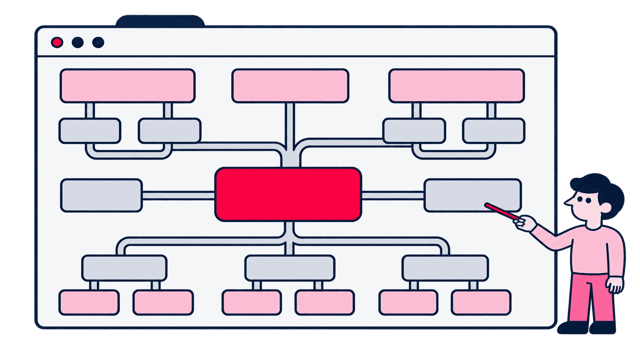
Identity, retrieval, and citation design file
The working design for ingestion, retrieval, context assembly, identity, citations, uncertainty, abstention, and a separate action-permission path.
Test evidence
Grounding and action-authority findings report
Typical and adverse cases covering source support, unauthorized retrieval, stale material, retrieved instructions, citations, abstention, and action authority.
Playbook
Freshness ownership and source-exception notes
The assigned source update, review, retirement, monitoring, exception, and escalation duties after handoff.


Scope and honest limits
When to bring us in
This build fits an agent that works from changing internal knowledge, especially when sources differ in authority, audience, access, or freshness.
A good fit when
- Teams disagree about which internal document is current, so the agent can cite a source without anyone knowing whether it carries authority.
- Retrieval already returns useful material, but identity rules and stale-source handling change between paths, making the same question behave differently.
- A source owner can define authority, yet the agent owner still lacks a grounded test trace for accepting the behavior that follows.
- Source entries list audience and access today, but permitted use and freshness expectations are not tied to the owner who must settle them.
- Caller identity controls retrieval, yet citations, abstention, and stale-source behavior still vary as the agent assembles context.
- Retrieved documents can carry instructions into the agent loop, but no tested control keeps that text from being treated as a command.
- The agent has answer tests, while source support and permission to act are still scored together and can hide an authority failure.

Better handled as other work when
- You want the document estate treated as equally trusted. Each identity instead needs an approved source and access rule.
- Supporting evidence should grant tool authority on its own. The agent's action permission must remain in a separate owner-approved control path.
- You need Zeo to own source updates or run the production agent after handoff. Those ongoing duties require a separate operating scope.
If one of these is closer to your situation, start here instead: Explore AI agent development
Engineers who ship production AI
This is the part of Zeo that writes and ships code. Our senior engineers build agents, chatbots, and RAG pipelines, along with the automation and data work around them, and they keep operating those systems once they're live. We've worked with more than 500 brands since 2011.







Tools we use
Tools behind this work
 Cohere
the reranker separating a merely similar document from one that actually supports the answer
 LlamaIndex
the retrieval framework connecting a chunk back to its source and its identity scope
 Weaviate
the vector store enforcing an identity's retrieval scope at the query level
 Voyage AI
the embedding model determining whether the right source is even found
 Ragas
Ragasthe groundedness score turning 'does this citation support the claim' into a metric
 Langfuse
the trace recording which document version an agent actually used for a given answer
 Lakera Guard
the retrieval-content check catching an instruction embedded in a retrieved document
Adjacent work
Where this leads

Build
Custom AI Agent Development
Grounding settles what the agent may say and cite. Turning that into a job it can finish alone needs a loop, stop conditions, and a first-use rollback plan.
Build
AI Agent Tool & API Integration
We keep the action path separate from the evidence path. What that separate path actually contains, from the allowlist and idempotency to a rehearsed rollback, is specified call by call.

Assurance
AI Agent Evaluation & Reliability
Abstention and citation behavior can drift between runs on identical questions. Repeating the grounding cases against one build, with calibrated graders, shows whether the abstention rule actually holds.


Next step
Ground the first agent job in owned sources

Before you decide