


AI Product Discovery & Prototyping · A controlled pilot in real work
AI Pilot & MVP Development
A pilot earns a scale decision only when representative users do real work, controls and support operate around the slice, and exit criteria are agreed before usage evidence starts arriving.
A controlled group does real work with an operable product slice. What the pilot records about quality, adoption, support demand, cost, and incidents becomes the evidence behind the scale, revise, or stop decision. By decision day, the controlled product slice has run under its operating plan, and the quality and incident scorecard and evidence pack tell your pilot owner whether to scale, revise, or stop.

Some of the 500+ brands we've worked with
Selected brands we’ve worked with across industries.







 GeneraliGlobalCase Study









 OdeabankGlobalCase Study








































 Albaraka TürkGlobalCase Study




























On this page
The run order, and who signs each step off
How we work
One decision hangs over the pilot. Under the conditions actually observed, does this product slice deserve a larger commitment?
Agree the cohort and the way out
Hypothesis, target users, workflow, production-like conditions, and control owners get fixed first, together with the evidence that will trigger scale, revision, or a stop. Your pilot owner decides which evidence would trigger scale, revise, or stop.

Make the slice operable
The smallest useful increment has to complete the target job with controls, a support path, and observability switched on. Features outside that job wait their turn. Your product owner approves what stays out of the pilot slice.

Follow the real work
Representative users do their actual tasks. We track task results, critical failures, adoption, support demand, and operating issues, and we keep checking that the cohort still represents the intended use. Your support owner decides which incidents pause the pilot.
Decide with the limits on the table
Evidence goes up against the agreed exit criteria, unresolved operating assumptions get written down, and the owner makes the next commitment on that basis. Your pilot owner makes the scale, revise, or stop call.



Named artifacts you keep
What you get
Two things change hands. The operable slice itself, and the record of how it behaved when real work ran through it.
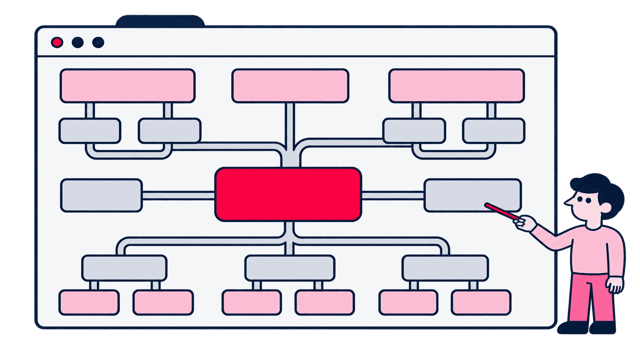
Architecture document
Controlled pilot product slice and configuration file
The controlled product slice configured for the agreed users, workflow, data, and production-like environment.
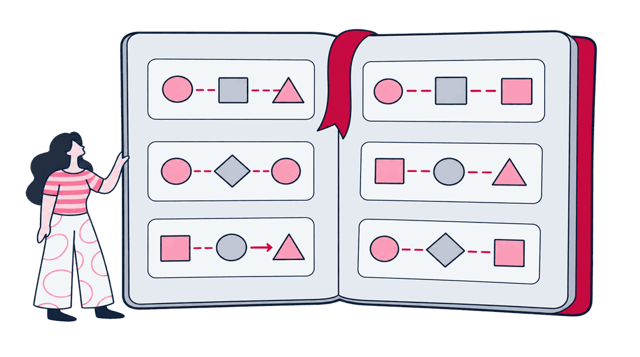
Playbook
Pilot access, rollback, and support plan
The pilot configuration, access rules, known limits, support path, rollback conditions, and operating responsibilities.
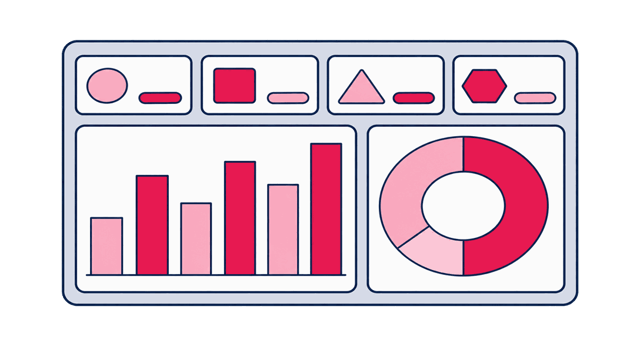
Dashboard
Pilot quality, usage, and incident scorecard
One shared view of task results, critical failures, workflow completion, adoption, support demand, and incident status.
Decision record
Pilot exit criteria and next-commitment evidence pack
Tested hypothesis, exit criteria, findings, open issues, operating assumptions, and the recommended next commitment in one pack.


Scope and honest limits
When to bring us in
The moment for a pilot is when the prototype looks promising and nobody can yet say how it will hold up in daily work, or what it will demand from the people supporting it.
A good fit when
- The hypothesis is settled, but daily use and the effort to operate the product slice are still unknown.
- A representative group can use the product under production-like conditions while access stays closed to everyone else.
- Exit criteria are still being debated when the first user is due to start, so product, support, and control owners cannot judge the same pilot.
- The pilot cohort is named, but the target workflow and production-like integration are not yet fixed around the hypothesis.
- The product slice works in a demo, yet nobody has exercised its controls, user guidance, support path, and observability in one run.
- A staged release is needed because nobody has defined how quality, usage, or incident evidence will trigger scale, revision, or a stop.
- Pilot usage is being tracked, but quality, incidents, support demand, and operating effort are not collected against the exit criteria.

Better handled as other work when
- You need a company-wide launch before the pilot owner has reviewed the exit criteria. The controlled cohort cannot support that broader decision.
- You want week-one excitement or demo quality treated as lasting adoption. The exit review needs sustained use from the full pilot period.
- You need permanent production operation, broader data access, or downstream remediation. Those commitments sit beyond this controlled pilot.
If one of these is closer to your situation, start here instead: Browse the application development offerings
Engineers who ship production AI
This is the part of Zeo that writes and ships code. Our senior engineers build agents, chatbots, and RAG pipelines, along with the automation and data work around them, and they keep operating those systems once they're live. We've worked with more than 500 brands since 2011.






Tools we use
Tools behind this work
 OpenAI
runs the operable product slice the pilot group actually works from
 LiteLLM
keeps the pilot's model calls swappable if a provider issue hits mid-run
 Langfuse
the trace behind every pilot session a task-success review has to reconstruct
 Datadog
the incident and support-demand record the scale-or-stop case is built on
 Helicone
the per-request cost and latency ledger the exit case cites directly
 Guardrails AI
the output check running on the pilot's real traffic, not a pre-launch test
Adjacent work
Where this leads

Build
AI Proof of Concept Development
Initial isolated algorithm experiments are upgraded into integrated software builds connected to real enterprise data stores.

Advisory
AI Product Discovery & Experience Design
Interactive prototypes establish the human-in-the-loop workflows and user experience patterns implemented in the pilot release.
Build
Custom Generative AI Application Development
Successful pilot validation provides the baseline architecture and verified user acceptance criteria for production-scale engineering.


Next step
Let real work judge the product

Before you decide