


Zeo delivery method
Launch Support & Live Monitoring
One timeline, one set of live checks, and every alert ending in an owned fix, hold, or rollback backed by recovery evidence.
The first hours after a migration are noisy by design, so the real question isn't whether an alert fires but whether the evidence behind it is strong enough to act on. We open a live command center before launch, watch cohorts by route and template as the release goes out, and turn every alert into an owned decision, fix it, hold it, or roll it back, backed by evidence rather than a hunch. We verify the live release, catch material regressions early, and turn each alert into an owned fix, hold, or rollback decision.

Some of the 500+ brands we've worked with
Selected brands we’ve worked with across industries.
























 MeteksanGlobalCase Study





 VisperaGlobalCase Study














On this page
Stages and gates
How we do it
The team works from one timeline and a shared set of live checks. An incident closes only when recovery evidence supports the decision.
Open the command center before launch
We confirm the exact version, owners, communication channel, baseline cutoff, protected routes, monitoring sources, check sequence, and rollback authority. Before the clock starts, we confirm who holds rollback authority for the window and that they are reachable on the channel.
One live plan where every critical check and consequential decision has a reachable person beside it.

Test immediately before and after release
We run critical legacy URLs, destinations, redirects, canonicals, robots, hreflang, sitemaps, rendered pages, analytics, forms, and capacity checks around the release moment. A person reviews any smoke-test failure before the launch is called clean, since a passed battery with one unreviewed failure isn't the same as a passed launch.
A timestamped smoke-test ledger tied to the exact version that is live.
Watch cohorts by route and template
We stream crawl, response, log, error, analytics, and search signals by protected route and template, with each source's expected latency visible. The launch lead judges when a warning on the health board has stopped being expected post-launch noise and needs an owner.
A health board that distinguishes expected movement, sparse data, warnings, and incidents that need action.
Reproduce the alert before blaming the release
A specialist tests representative live URLs, checks planned changes and reporting delay, and links the symptom to a component, or leaves the cause explicitly open. Nothing counts as a validated incident until an engineer has reproduced it on live URLs and said whether the release is genuinely the cause or the question is still open.
A validated incident with severity, first occurrence, affected cohort, evidence, owner, and next checkpoint.

Fix, roll back, or hand off with proof
The smallest reversible response is tested against the original failure and protected journeys. We close only after repeated healthy evidence, then transfer the remaining watchlist. A person decides whether the release should hold, be rolled back, or be fixed forward, and that decision is what closes the incident.
A go, hold, rollback, or handoff record with recovery evidence and a next owner.



AI runs the checks and groups the noise; people validate incidents and decide the release.
AI compiles the launch checklist from the release manifest and cross-checks it against the protected-route list, runs the full smoke-test battery against the exact live version in parallel and timestamps every result against the release marker, streams and groups crawl, log, error, and analytics signals by protected route and template with each source labelled by expected latency, clusters incoming alerts that share a symptom, cohort, or first-occurrence time, and reruns the failing checks and protected-journey suite after each candidate fix. It closes nothing. We do not use crawler-only behavior, hidden redirects, or selective masking to make a failed route look healthy, muting an alert, widening a threshold, or deleting failed evidence never closes an incident, and we will not promise zero volatility or instant search-system processing after a migration.
Deliverables and acceptance
What you get
Four live artifacts keep the launch from turning into a chat thread archaeology project.

Playbook
Launch command center
Dashboard
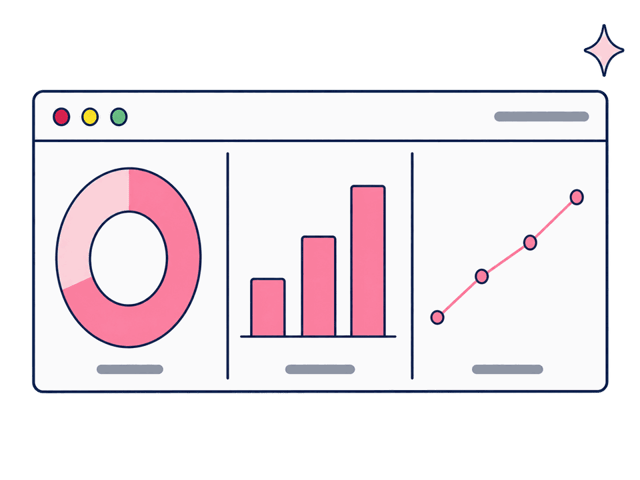
Severity-based health board

Tracking plan
Validated incident timeline
Audit report
Go, hold, rollback & handoff log


We call it done when: The command center, health board, incident timeline, and decision log are done when the active version, baseline, protected cohorts, checks, owners, decision authority, communication route, and rollback action are current and visible, every alert carries its source, baseline, cohort, first occurrence, severity reason, confidence, owner, and next check, every incident links symptom, release component, action version, protected-journey tests, recovery evidence, and residual risk, and every consequential decision names its evidence, authority, timestamp, scope, observation window, and next owner.
Fit and readiness
When you need this
This is for launches where someone can act when the dashboard turns red.
A good fit when
- Your migration changes routes, templates, tracking, rendering, locales, or platform behavior in one release window.
- SEO, engineering, analytics, product, and release teams need one timeline and a clear path from alert to owner.
- A material failure has to trigger an evidence-backed hold or rollback decision while the launch window is still open.

Better handled as other work when
- You only want a passive launch dashboard and nobody has the authority to pause, fix, or roll back the release.
- The exact release, prelaunch baseline, critical route set, and live crawl or log feeds cannot be aligned before launch.
If one of these is closer to your situation, start here instead: SEO Migration
We call it done when: Critical SEO and user routes pass on the live release, every confirmed incident has an owner and recovery evidence, rollback calls are written down, false alarms are understood, and the remaining watchlist has a clear handoff instead of fading into silence.
The specialists behind this SEO work
Zeo's SEO work goes back to 2006, when we started what we call the first SEO blog in the MENA region. The consultants shown here are doing that work today, matched to what this page covers.

Samet Özsüleyman
SEO Manager

Yiğit Konur
Founder & Chief Strategy Officer

Zafer Yıldız
Web Analytics Manager

Hande Parmaksız
SEO Manager

Ezgi Gülsen Yaylı
SEO Manager

Metehan Urhan
New Business & Partnership Manager

Sinem Bakır Yavaş
Senior SEO Executive

Bensu Tınastepe
Senior SEO Analyst

Gülşah Şahin Özkan
Senior SEO Analyst

Ruhan Tiryaki
Senior SEO Analyst

Aybüke Göktuna
Senior SEO Analyst

Emir Kağan Kahveci
SEO Analyst

Mehmet Aktuğ
Co-Founder & COO

Deniz İmre Temiztürk
Content Specialist

Ataberk Yüzat
SEO Executive
Tools we use
Tools behind this work
 Sitechecker
alerts on live changes across the protected route watchlist
 Screaming Frog
runs the live route, redirect, directive, and sitemap smoke checks
 PageSpeed Insights
spots release-time performance regressions on representative templates
 WebPageTest
reproduces launch incidents with request, render, and timing evidence
 Google Search Console
tracks delayed discovery and indexing signals after live checks pass
 Google Analytics
checks live entrances, events, forms, and critical journey continuity
 Weglot
smoke-tests localized routes and language handoffs during the launch
Where this fits
Related services
SEO Migration
Pre-Migration Technical Audit
Real-time launch monitoring verifies that critical fixes identified during pre-migration testing are correctly deployed to production.

SEO Migration
Redirect & URL Mapping
Live traffic logs track 301 redirect map execution, catching 404 loops, misdirected paths, and trailing slash discrepancies immediately.

SEO Migration
Post-Migration Traffic Recovery
Launch-day diagnostic telemetry provides the incident data and crawl logs used to troubleshoot organic traffic fluctuations post-migration.


Next step
Prepare the launch room before launch day

Before we start