


Content Strategy & Research
Editorial Calendar Planning
Build a publishing schedule that reflects real capacity, visible dependencies, and clear ownership.
Editorial Calendar Planning turns a prioritized backlog into a schedule the team can realistically deliver. Topics are sequenced against writer, expert, reviewer, launch, and channel constraints so tradeoffs are visible before deadlines start slipping. You walk away with a schedule that matches real capacity, every entry owned, dependencies visible, and the tradeoffs agreed before a deadline forces them.

Some of the 500+ brands we've worked with
Selected brands we’ve worked with across industries.


On this page
How we run it
How the backlog becomes a working schedule
The workflow brings priorities, capacity, dependencies, distribution, and ownership into one schedule that can be reviewed against delivery.
Bring every competing priority into one backlog
We combine business priorities, audience needs, launches, seasonal opportunities, and hard deadlines so the team is choosing from one backlog rather than several hidden lists. When priorities collide, the producer determines which list earns the slot.
A single prioritized backlog instead of five competing lists.

Test the backlog against real capacity
We map writer availability, expert time, review bandwidth, and channel-specific production needs. Those constraints determine what can fit in the period. The producer chooses the scenario that matches the team’s actual bandwidth, even when another looks better on paper.
A capacity plan that's honest about what the team can deliver.

Sequence work and expose dependencies
We place priorities against available capacity and make dependencies visible, including interviews required before drafting and launches that set a fixed publishing window. Your team supplies the context, and the producer resolves each dependency conflict before the calendar locks.
A working editorial calendar with dependencies visible.

Standardize the production brief
A shared brief gives every item the same starting information and review expectations, regardless of who writes it. An editor approves the brief template before it goes into rotation.
A brief template the whole team can reuse without reinventing it each time.

Assign the distribution handoff
Each calendar entry records its distribution channels and the person responsible for moving it into each one. A named channel owner is confirmed for every entry before the calendar counts as final.
A distribution matrix tied to the calendar.

Compare the schedule with actual delivery
At the end of each cycle, we record what shipped, what moved, and why. The next plan is adjusted from that delivery pattern. The delivery pattern goes to the producer, who decides whether the next cycle needs fewer commitments. Tighter deadlines rarely fix it.
A cycle-time and delivery note feeding the next planning round.



Capacity models inform the schedule
A large backlog is easier to test when agents model several capacity scenarios and flag likely scheduling conflicts. Those models cannot negotiate between two important priorities or confirm that an expert’s apparent availability is real. Your team works through those tradeoffs with a Zeo producer, who builds the final sequence and is accountable for its realism. When the requested cadence exceeds the available bandwidth, that constraint appears in the calendar before production begins.
What you get
What makes the calendar usable
The schedule is supported by a prioritized backlog, capacity assumptions, dependencies, owners, and a shared production brief.
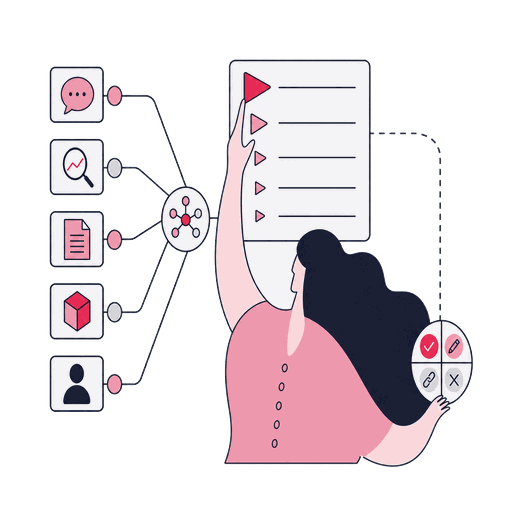
Prioritized backlog with capacity assumptions
A ranked backlog matched to the writer, expert, reviewer, and production capacity available in the planning period.
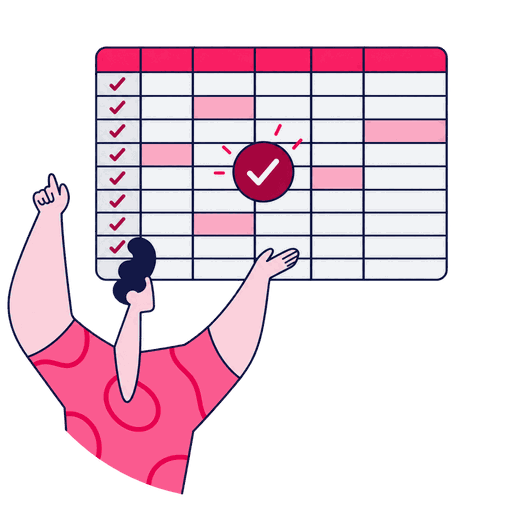
Editorial calendar
A publishing schedule with dependencies, named owners, review windows, and fixed or flexible dates clearly marked.
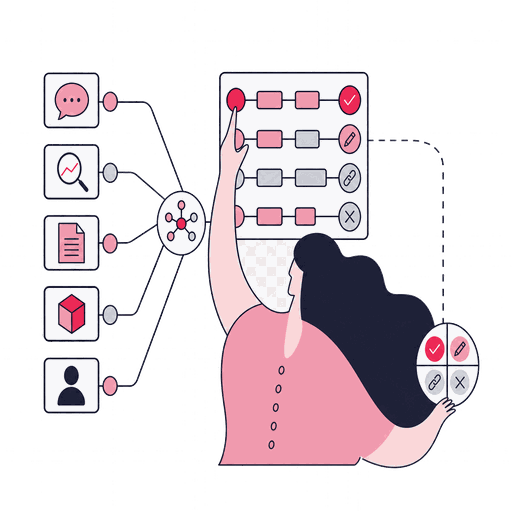
Shared brief and distribution matrix
A reusable production brief paired with the channels, handoff owner, and distribution requirements for each item.


We call it done when: the calendar reflects real capacity rather than a wish list, every entry has an owner, and the team agrees it is actually deliverable.
Who it fits
A backlog needs a deliverable sequence
This method decides what can be published when. It assumes the backlog has already been shaped and broadly prioritized.
A good fit when
- The backlog is larger than the team's production capacity, so the tradeoffs need to be explicit.
- Launch dates, seasonal opportunities, and expert availability keep colliding without a clear owner for the decision.
- Several channels rely on the same production team, so one release window keeps displacing another before anyone records the tradeoff.

Better handled as other work when
- Dates are expected before anyone checks who can write, review, and approve each piece, so the schedule ignores the capacity that will govern delivery.
- The backlog still has no agreed priority, so scheduling it now would give dates to work the team has not yet decided deserves attention.
- The calendar is expected to preserve cadence after capacity or launch plans change, but those constraints are what determine the fit.
People who write and ship this content
Some of these consultants write the pages themselves. Others plan distribution or check how a piece performs once it's live, so the team below covers more than one stage of the work.

Didem Himmetli
Marketing Executive

Yiğit Konur
Founder & Chief Strategy Officer

Metehan Urhan
New Business & Partnership Manager

Sinem Bakır Yavaş
Senior SEO Executive

Sena Önder
Senior SEO Executive

Bensu Tınastepe
Senior SEO Analyst

Gülşah Şahin Özkan
Senior SEO Analyst

Ali Özgün Öz
SEO Executive

Ruhan Tiryaki
Senior SEO Analyst

Mehmet Aktuğ
Co-Founder & COO

Yağmur Bayram
Sr. SEO Analyst

Emir Kağan Kahveci
SEO Analyst

Zafer Yıldız
Web Analytics Manager
Content we've produced on this topic
Tools we use
Tools behind this work
 Asana
Asanatests the backlog against real writer and expert capacity, dependencies included
 Airtable
the calendar itself: planned date next to actual date, slippage never hidden
 Notion
the standardized brief template every deliverable gets filled into
 Buffer
the distribution queue a finished piece hands off into
Where this leads next
What feeds into the schedule

Upstream
Topic Cluster Strategy & Content Architecture
Know which pages are worth building before you schedule them. This picks up once the architecture is set.

Downstream
Expert Interview & Knowledge Capture
Once a piece needs expert input, this is how that knowledge gets captured on the calendar's timeline.

Complementary
Original Research Planning
A study that needs months of fieldwork has to be slotted into this calendar early, which is why the two get planned side by side.


Start the work
Put a realistic publishing plan behind the backlog

Before we start