


SEO Content Writing & Editorial Programs
Long-Form Content & Guides
Give readers one well-organized guide that explains the whole subject in useful depth.
Long-Form Content & Guides explains a complex subject in one organized resource, with the sections, examples, and navigation a single article cannot support. Its length follows the reader's learning needs rather than a word-count target. You walk away with one guide whose sections each name a source, a structure tested against how a reader learns the subject, and an accessible page live.

Some of the 500+ brands we've worked with
Selected brands we’ve worked with across industries.





































 AVVAGlobalCase Study












On this page
How we run it
How the guide gets built
We define the scope and learning sequence before drafting, then build each section on that structure.
Draw the topic's real boundaries
We map what the guide needs to cover, what belongs in a different piece entirely, and what the reader needs to know before starting. Before the outline moves forward, a subject-matter expert checks that the scope matches what the reader needs.
A scoped topic with clear edges and an entry-knowledge assumption.
Design the section structure
We sequence the sections so each one depends on what came before, and decide where an example, a diagram, or an expert quote earns its place. An editor decides where an example or diagram improves the sequence rather than adding one to every section by default.
A section-by-section outline with sources and visual needs marked.

Gather the evidence
We pull from primary sources and subject-matter interviews, and keep track of anything that's disputed or still uncertain. When sources disagree, a subject-matter expert decides what belongs in the guide because sorting research is not the same as resolving it.
A research base with sources attached to every non-obvious claim.

Write and edit for navigation
We draft section by section, add the diagrams and internal links that help someone jump to what they need, and edit for accuracy and flow. Every internal link and citation must land at its stated destination before an editor calls the section finished.
A navigable draft with sourcing and internal links in place.

Verify and package for reuse
We confirm accessibility, check every citation, and prepare shorter pieces such as an excerpt or checklist from the completed guide. A subject-matter expert re-checks the sections most likely to age fast before the guide is called done.
A published guide plus a short derivative kit.



Your experts settle what the material actually means
Interview transcripts and source documents pile up quickly on a long guide, especially when they explain the same point differently. AI can sort that material and mark the disagreements. It does not settle which account is correct or fill a research gap with an invented example. The subject-matter expert resolves the disputed points, the writer shapes the approved material, and the expert checks the finished guide for depth and accuracy.
What you get
What the guide leaves behind
You receive the finished guide together with the research and structural plan that support it.
Research dossier
The sourced material and expert input the guide draws from, organized by section.

Published guide
The complete, navigable piece, organized and sourced for readers who follow it from start to finish or go directly to one section.

Derivative kit
A checklist, summary, or excerpt built from the same guide for email or social use.


We call it done when: every section has a named source, the structure has been checked against the reader's path through the subject, and the accessible guide is live.
Who it fits
Some subjects need more than a blog post
This fits a subject with a genuine internal structure, such as a sequence of steps, connected subtopics, or a skill learned in stages. A question with one direct answer needs a shorter format.
A good fit when
- The topic has sections that genuinely build on one another, so a reader needs the earlier explanation before the later material makes sense.
- Readers need worked examples and internal navigation, because one uninterrupted article would make the useful section difficult to find and apply.
- Subject-matter experts can explain several connected angles, but a shorter article would leave their examples and disputed points without enough room.
- The subject loses necessary nuance in a shorter piece, so readers need a sourced sequence of sections they can follow.

Better handled as other work when
- A word-count target is driving the brief, so extra sections would add length without giving the reader another question, example, or decision to work through.
- The subject is one focused question with a direct answer, so a shorter article can resolve it without a table of contents or staged learning path.
- Facts across the proposed guide will age at different speeds, but nobody is available to own the refresh triggers and keep each section accurate.
People who write and ship this content
Some of these consultants write the pages themselves. Others plan distribution or check how a piece performs once it's live, so the team below covers more than one stage of the work.

Yiğit Konur
Founder & Chief Strategy Officer

Metehan Urhan
New Business & Partnership Manager

Hande Parmaksız
SEO Manager

Can Mutioğlu
Senior SEO Executive

Sinem Bakır Yavaş
Senior SEO Executive

Gülşah Şahin Özkan
Senior SEO Analyst

Bensu Tınastepe
Senior SEO Analyst

Ali Özgün Öz
SEO Executive

Ruhan Tiryaki
Senior SEO Analyst

Mehmet Aktuğ
Co-Founder & COO

Yağmur Bayram
Sr. SEO Analyst

Emir Kağan Kahveci
SEO Analyst

Zafer Yıldız
Web Analytics Manager
Tools we use
Tools behind this work
 Ahrefs
maps which subtopics rival long-form guides cover that ours would otherwise miss
 Clearscope
checks the draft's depth against what's already ranking for the whole topic
 Grammarly
the pass that checks whether one section still flows into the next
 Notion
the section outline that keeps one long document reading as a single argument
 Google Search Console
watches the published guide for the ranking decay that triggers a refresh
Where this leads next
Methods connected to Long-Form Content & Guides

Upstream
SEO Blog Writing
If the topic turns out to be one focused question, a single article might do the whole job.
Downstream
Pillar Pages & Topic Clusters
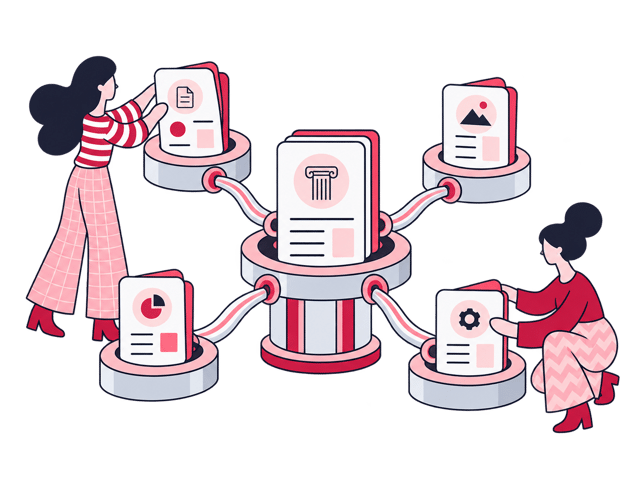
Once the depth is proven here, splitting it into a hub with its own supporting pages can serve more distinct searches.

Complementary
White Paper & Research Report Writing
When a guide's subject calls for original analysis rather than a synthesis of what's already known, a white paper is the method built for that case.


Start the work
Does your subject need more than a single article?

Before we start