


Model Customization & Fine-Tuning · Advisory
Fine-Tune vs RAG vs Prompting Assessment
The intervention should follow the observed failure and update pattern, after prompting, RAG, fine-tuning, and combined options face the same constraints and bounded tests.
A weak answer alone cannot tell you whether the system needs a better prompt, retrieval, fine-tuning, or a change elsewhere. We trace the failure and update patterns first, then test the smallest credible intervention class before recommending what, if anything, to build. You receive a tested option scorecard, rejected alternatives, unresolved exceptions, and a recorded next gate that may recommend a build, more evidence, or stopping.

Some of the 500+ brands we've worked with
Selected brands we’ve worked with across industries.







 GeneraliGlobalCase Study









 OdeabankGlobalCase Study








































 Albaraka TürkGlobalCase Study




























On this page
The run order, and who signs each step off
How we work
We diagnose the problem before putting an intervention on the table.
Find the pattern behind the failures
We group representative examples by failure type, update need, criticality, and current baseline. That separates recurring causes from a pile of unrelated weak answers. Your product owner confirms which failure clusters matter most to fix.

Remove the options that do not fit
Prompting, retrieval, fine-tuning, and combined approaches go against the diagnosed patterns, data needs, dependencies, portability, cost, latency, and refresh burden. Impractical options leave the list here. Your engineering lead confirms which options are practical under current constraints.

Test the smallest credible short list
Our team runs bounded experiments on representative and adverse cases. The point is to learn whether a lighter intervention is sufficient and to record the exceptions that remain. Your product owner reviews exceptions before ranking the short list.

Decide whether anything should be built
The decision record sets out the recommendation, rejected alternatives, unresolved questions, owner, and next review or stop point. Implementation begins only under a separately approved scope. Your product owner approves, rejects, or requests more evidence on the recommendation.



Named artifacts you keep
What you get
You receive the reasoning behind the recommendation, including the options that looked attractive but did not survive the evidence.
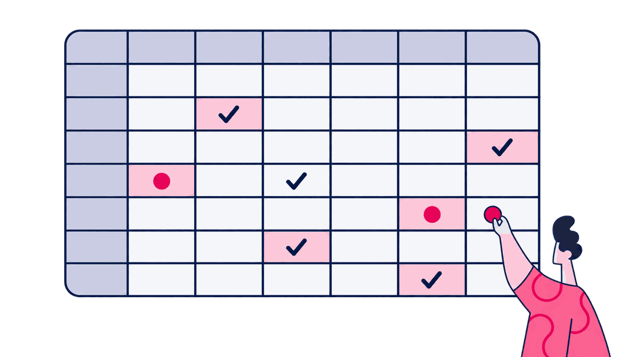
Matrix
Observed-failure option scorecard and experiment plan
Prompting, RAG, fine-tuning, and combined options placed against the observed failures and constraints.
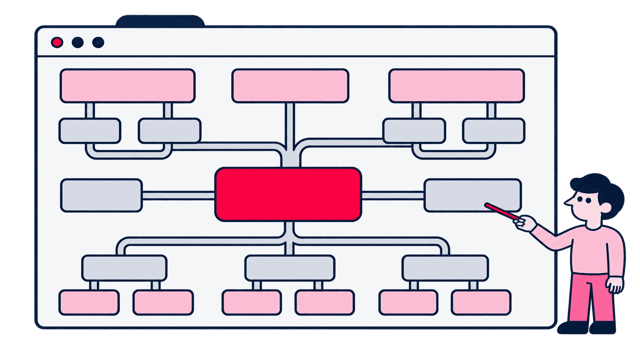
Architecture document
Baseline evidence and intervention-dependency map
Representative examples, baseline evidence, assumptions, open questions, data needs, and system dependencies behind the assessment.
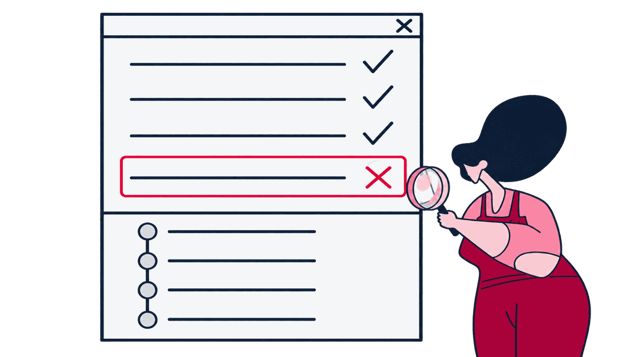
Test evidence
Adverse-case findings and unresolved-exception report
Experiment results by important case and failure type, with adverse examples and critical exceptions kept visible.
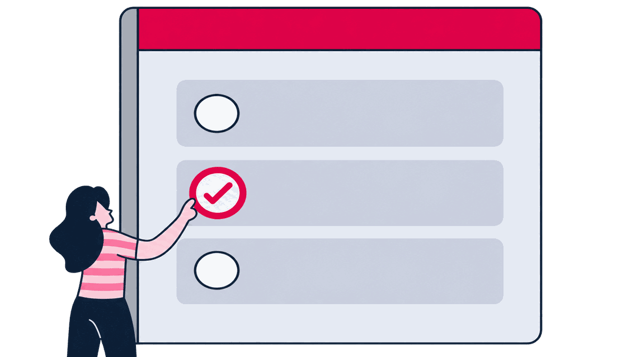
Decision record
Recommended option, rejected alternatives, and handoff log
The recommendation, rejected alternatives, conditions, unresolved items, accountable owner, and next gate.


Scope and honest limits
When to bring us in
Run the assessment before a tuning program, retrieval stack, or prompt rewrite becomes an implementation commitment without evidence that it matches the real problem.
A good fit when
- Teams reproduce weak answers, but they disagree whether knowledge, instructions, task behavior, or system design causes them.
- Update frequency, latency, cost, data rights, and maintenance point in different directions, so the preferred intervention remains hard to defend.
- Representative failures and a baseline exist, yet nobody has compared the smallest credible options against the same acceptance checks.
- Prompting, RAG, fine-tuning, and combined designs are under debate, but no failure-and-update analysis shows which class matches the problem.
- Evidence, dependencies, constraints, assumptions, and exception cases sit in separate notes, so the options cannot be compared on one basis.
- A short list looks plausible, while bounded experiments and adverse cases have not shown whether the lightest intervention is sufficient.
- A recommendation is due, but the rejected alternatives, open conditions, accountable owner, and next decision gate have not been recorded.

Better handled as other work when
- You want the fashionable or internally favored technique selected first. This assessment routes the observed failure pattern before any technique is chosen.
- You need the selected option built now. The assessment tests the short list, while implementation waits for its experiment and scope approvals.
- You expect one technique to remove every quality, safety, cost, or maintenance trade-off. Each option keeps a burden that the decision must carry.
If one of these is closer to your situation, start here instead: Explore model customization
Engineers who ship production AI
This is the part of Zeo that writes and ships code. Our senior engineers build agents, chatbots, and RAG pipelines, along with the automation and data work around them, and they keep operating those systems once they're live. We've worked with more than 500 brands since 2011.







Tools we use
Tools behind this work
 OpenAI
the underlying model both the prompting and fine-tuning candidates run on
 LlamaIndex
builds the actual RAG candidate the comparison tests, not a theoretical one
 PromptLayer
versions every prompting variant tested, so that candidate gets a fair shot
 Braintrust
runs prompting, RAG, and fine-tuning candidates through the same test cases
 Ragas
Ragasisolates whether a weak RAG answer is a retrieval problem or a model problem
 Unsloth
runs a cheap fine-tuning pass so that option can be tested, not assumed
Adjacent work
Where this leads

Build
Fine-Tuning Dataset Curation
When evaluation indicates fine-tuning is necessary, dataset curation gathers and formats the required domain training examples.

Build
LLM Fine-Tuning & Model Customization
Assessment findings that mandate model weight modifications lead directly into supervised fine-tuning execution.

Build
Domain Adaptation
Comparative evaluations determine whether custom terminology is best addressed through vocabulary adaptation or external context retrieval.


Next step
Diagnose the failure before choosing the fix

Before you decide