


The answer boundary is written down
Knowledge-Grounded Chatbots
What makes a knowledge chatbot trustworthy is not how plausible an answer sounds. Every answer has to carry approved source support, audience access, and a defined path to clarification or silence.
An answer can sound plausible even when the source is unapproved or off-limits to the person asking. We build the chatbot around an approved source register, visible citations, access-aware retrieval, and clear rules for asking a follow-up or giving no answer. The chatbot's answer flow cites its source, filters retrieval by the caller's identity, and gives no answer when no registered source supports the question.

Some of the 500+ brands we've worked with
Selected brands we’ve worked with across industries.







 GeneraliGlobalCase Study









 OdeabankGlobalCase Study








































 Albaraka TürkGlobalCase Study




























On this page
The run order, and who signs each step off
How we work
We follow one question from caller identity to cited answer. The same review covers source approval, access, clarification, refusal, freshness, and conversation repair.
Decide what can support an answer
With source owners, we list the material the chatbot may use, its accountable owner, permitted audiences and channels, access rules, review needs, and the gaps that require clarification or silence. Each source owner approves the entry, audience, and freshness rule.

Keep access attached
We carry source and permission metadata through ingestion and indexing. Retrieval filters by caller identity, the answer cites its support, and an unclear or unsupported question follows the approved clarification or no-answer path. The identity filters and retrieval rules need the access owner's approval.

Test answers and silence
We run ordinary and unclear questions, cases with no support or stale material, and cross-audience attempts. Reviewers inspect claim support, citations, authorization leakage, no-answer choices, clarification, and conversation repair. Every flagged measure failure goes to the source and access owners for acceptance or rejection.

Hand over the source routine
We tie source updates, review checks, no-answer handling, retention, approvals, and rollback to named people. The routine sets the next review and what happens when support, access, or freshness fails. The source and service owners accept the duties, review cadence, and release limits.



Named artifacts you keep
What you get
The four records let reviewers trace source authority, audience access, answer behavior, and the work that follows a source change.
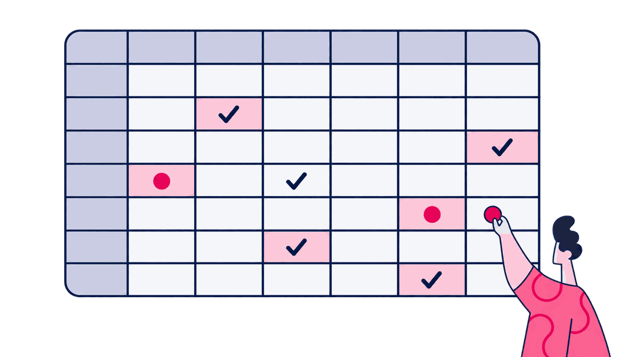
Matrix
Source, audience, and freshness register
For every source, it records the owner, approved audiences, access rule, intended use, and freshness requirement.
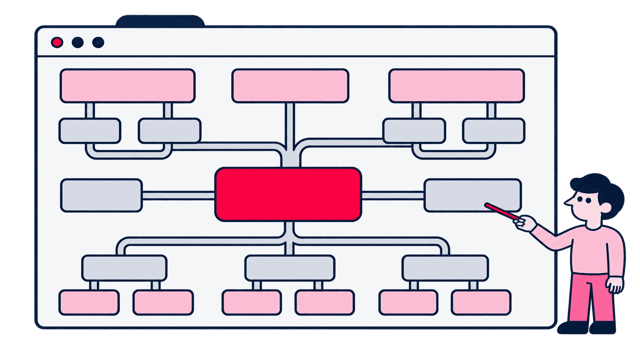
Architecture document
Identity-filtered retrieval and citation map
A working map from ingestion and indexing through identity filtering, retrieval, citations, conversation context, clarification, and abstention.
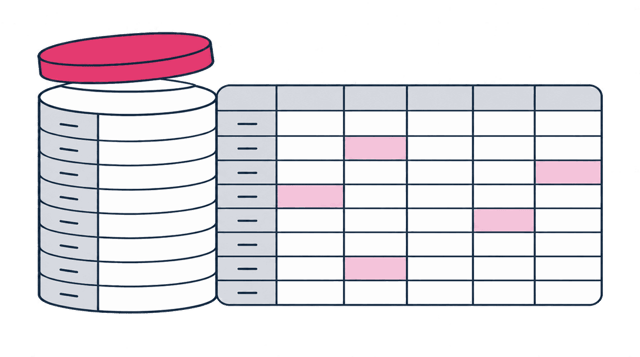
Dataset
Support, access, and no-answer test report
Representative questions with expected support, citations, access behavior, freshness, clarification, no-answer choices, and repair.
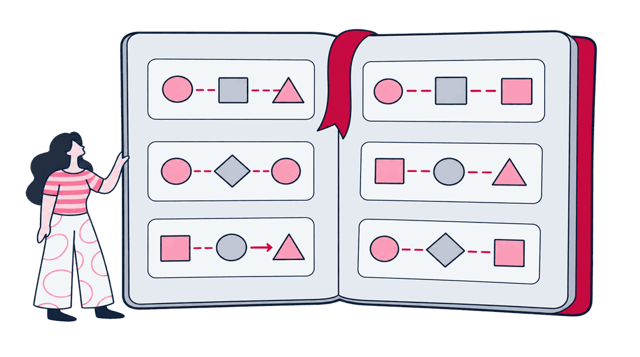
Playbook
Freshness checks and reversible-release notes
The agreed update checks, freshness owner, no-answer response, human verification, approval gates, retention, and reversible rollout.


Scope and honest limits
When to bring us in
This build works when source and access owners can draw the answer boundary, name its audience, and agree when the chatbot should stay silent.
A good fit when
- Source owners can confirm which material is current, but the chatbot still lacks a register showing which audiences may rely on each source.
- Audience rules exist for each channel, yet callers can retrieve passages without a trace back to the access decision that allowed them.
- Real questions show unsupported answers, but no-answer and clarification choices still differ before the source owner releases the chatbot.
- Approved sources have named owners, while freshness and audience rules still need to follow each item through ingestion and retrieval.
- The chatbot returns citations, but identity filtering and the no-answer path can break when a question is unclear or unsupported.
- Conversation tests cover ordinary questions, yet stale support and cross-audience leakage remain invisible until someone reads the trace.
- A source owner can approve release, but verification gates and a reversible rollout are not recorded in one operating plan.

Better handled as other work when
- You want the chatbot to answer from unregistered material. Every response instead needs support the caller is permitted to retrieve.
- An automated score should replace source-owner judgment. Named access and release owners keep final approval.
- You need Zeo to find and maintain source content or run the chatbot after release. That ongoing work requires a separate service scope.
If one of these is closer to your situation, start here instead: See the broader chatbot service
Engineers who ship production AI
This is the part of Zeo that writes and ships code. Our senior engineers build agents, chatbots, and RAG pipelines, along with the automation and data work around them, and they keep operating those systems once they're live. We've worked with more than 500 brands since 2011.







Tools we use
Tools behind this work
 LlamaIndex
keeps every retrieved passage linked to its approved source
 Weaviate
combines semantic retrieval with access and source metadata filters
 Sentence Transformers
provides self-hosted embeddings for sensitive or specialized knowledge corpora
 Ragas
Ragastests grounded answers, relevant retrieval, and correct silence behavior
 Langfuse
shows query, filters, passages, answer, citations, and evaluation together
 Guardrails AI
enforces citation, answerability, and response-shape rules before delivery
Adjacent work
Where this leads
Build
Enterprise AI Chatbot Development
A grounded answer flow is one part of a chatbot service. The journeys, response voice, channel permissions, and staged release around it are decided separately.
Build
Customer Service AI Agent & Assistant Development
Citing a source is not the same as changing an account. Once an answer turns into a permitted action, it needs a policy stop and a human queue behind it.

Build
Voice AI Assistant Development
A spoken answer cannot show its citation link. On voice the same missing-support case has to become a clarifying question or a handoff inside one turn.


Next step
Bring the sources behind the answers

Before you decide