


Policy design · Acceptable AI use
AI Policy & Acceptable-Use Design
An acceptable-use policy works only when employees can classify a real task, find the required verification or stop condition, and route an unresolved case to a named person who can close it.
An employee has a routine task, an unfamiliar tool, and a policy full of principles. We write the decision they need at that moment: approved, conditional, or prohibited use, with the required verification and a route for cases the rule cannot settle. Your policy owner receives approved, conditional, and prohibited-use rules, tested role paths, edge-case examples, and an exception plan that keeps unresolved requests visible.

Some of the 500+ brands we've worked with
Selected brands we’ve worked with across industries.







 GeneraliGlobalCase Study









 OdeabankGlobalCase Study








































 Albaraka TürkGlobalCase Study




























On this page
The run order, and who signs each step off
How we work
We work from the situations employees already debate. Representative users then apply the draft while there is still time to repair unclear rules.
Collect the real decisions
We gather representative roles, tools, data situations, and ordinary or difficult cases. Principles remain in the working set only when they help someone choose an action, approval route, verification step, or stop. Your policy owner decides which scenarios the policy must handle before drafting begins.
Write the boundary beside the use
Each use is classified as approved, conditional, or prohibited. The rule also states the relevant data, action, intellectual-property, verification, approval, or stop condition so the reader does not have to infer it. Your policy owner and qualified reviewer approve the wording and meaning of every rule boundary.
Watch users apply the draft
Representative employees work through common and difficult scenarios. We note where they choose the wrong route, hesitate, disagree, or cannot find the exception path the policy was meant to provide. Your policy owner decides which ambiguity requires the rule to be rewritten.
Make exceptions visible and closeable
The exception process names the decision owner, required evidence, acknowledgement, escalation route, and the condition that should trigger a policy update. The status should remain visible until someone closes it. Your policy owner assigns the people who close exceptions and approves the route.



Named artifacts you keep
What you get
The policy is handed over with the decision aids and tested examples people need at work, plus a record for the questions that still require human judgment.

Policy
AI policy set and acceptable-use rules
Approved, conditional, and prohibited-use rules with their data, action, intellectual-property, and verification boundaries.
Decision record
Role and use-case approval path map
A path from role and use case to the relevant approval, verification, restriction, exception, or stop.
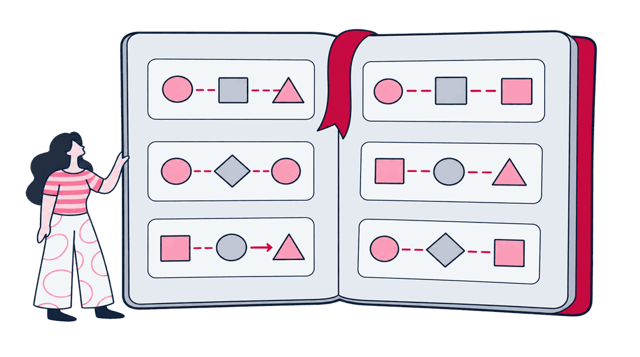
Playbook
Approved-tool conditions and edge-case example file
Worked examples of how the rules apply, including approved-tool conditions and the edge cases that caused disagreement.
Decision record
Exception request, acknowledgement, and escalation plan
The request, evidence, owner, decision state, acknowledgement, escalation, and policy-update steps for unresolved use.


Scope and honest limits
When to bring us in
Reach for this when staff know a policy exists but still cannot decide how to handle a task, tool, or data type.
A good fit when
- Your policy states principles, but an employee facing a routine task still cannot tell whether the AI use is approved, conditional, or prohibited.
- A broad ban pushes useful and risky AI use out of sight, so the policy owner loses the cases that still need a decision.
- Employees settle exceptions in chat, but the request, evidence, and responsible decision owner disappear when the conversation ends.
- Different roles use the same AI tool for different tasks, yet the policy has not tested the difficult scenarios each role actually faces.
- A rule mentions sensitive data or intellectual property, but employees cannot see the action, verification, or stop condition attached to it.
- The policy lists approved and prohibited uses, yet nobody can find what makes a conditional use acceptable in daily work.
- Employees can read the rule, but scenario testing has not shown whether they find the right acknowledgement, exception, or escalation route.

Better handled as other work when
- You need this policy to supply legal approval or interpret your obligations. Qualified reviewers make those calls, while the policy records the rules they approve.
- You want a fixed approved-tool list to stand in for the whole policy. Tools change, while data, action, verification, and exception boundaries still need rules.
- You need monitoring or enforcement systems built beyond the agreed design. This work defines the policy and route, while those controls require separate scope.
If one of these is closer to your situation, start here instead: Explore governance support
Advice from people who build
We've worked with more than 500 brands since Zeo started in 2011. The people helping you decide where AI fits, and where it doesn't yet, are senior engineers and strategists who build and operate production AI systems. The advice stays grounded in work that actually shipped.







Tools we use
Tools behind this work
 Notion
the page each approved/conditional/prohibited rule gets written into, beside its use
 Airtable
the base holding every real decision collected before a rule got written
 Credo AI
the regulatory policy-pack library a use boundary gets checked against
Adjacent work
Where this leads
Advisory
AI System Inventory & Risk Classification
Acceptable use rules define allowed tool categories, while the inventory enforces tracking and approval for every newly adopted system.

Advisory
AI Governance Framework Design
Policy guardrails provide operational boundaries that the broader governance framework monitors and audits on a recurring cadence.
Assurance
AI Risk & Impact Assessment
Violations of acceptable use thresholds trigger mandatory impact assessments to quantify exposure and implement technical controls.


Next step
Write the rules people need

Before you decide