


AI Data & Annotation · Operational controls
Data Quality, Lineage & Observability for AI
A data signal that leaves your team hunting for the source is not yet operational. We trace each one from the changed source through the affected AI consumer to an accepted response owner.
A dashboard can show that something changed and still leave the team hunting for the source, the affected AI consumer, and the person who should respond. We trace important data changes from the source signal to the AI system affected and the person expected to act, with thresholds, dependencies, incidents, and follow-up evidence kept together. Your operating team receives a signal-to-consumer scorecard, accepted thresholds, named response owners, and a handoff brief for the next observability review.

Some of the 500+ brands we've worked with
Selected brands we’ve worked with across industries.














 MeteksanGlobalCase Study




 VisperaGlobalCase Study























On this page
The run order, and who signs each step off
How we work
A signal is useful only if the team can follow it to the changed data, understand which consumer is exposed, and act. We connect that path and rehearse it under the selected conditions.
Establish the baseline
We identify the critical rules and signals, their sources, affected AI consumers, who is responsible for responding to them, current constraints, representative examples, and available baseline evidence. Your data owner confirms which data paths and response owners are in scope.

Instrument observable behavior
We connect quality, lineage, freshness, drift, and incident signals across the agreed paths so a change can be traced from source to consumer. Your operations owner approves which signals connect to which consumers.
Test changes and regressions
We run a scoped change experiment, analyze dependencies and failure cases, then use regression and load testing to examine the controls and response behavior. Your operations owner accepts or sends back each regression result.

Operationalize the response
We record accepted thresholds, response steps, who owns each one, open gaps, and the evidence needed to review or close a signal after handoff. The operations owner accepts the thresholds and response steps for handoff.


Named artifacts you keep
What you get
The operating package shows what changed, where the signal came from, which consumer may be affected, who responds, and what evidence closes or escalates the incident.
Dashboard
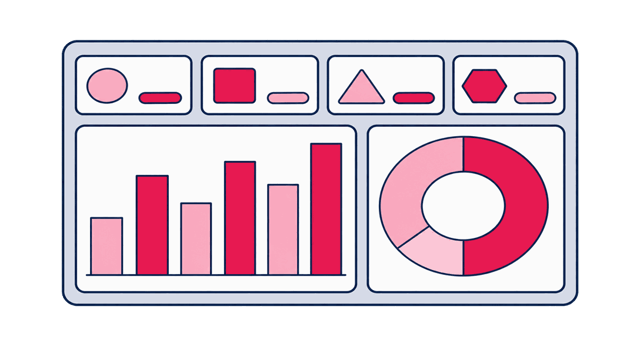
Signal-to-consumer controls and response scorecard
Brings the critical rules, lineage, freshness, drift, incident signals, affected consumers, and response ownership into one operational view.
Architecture document
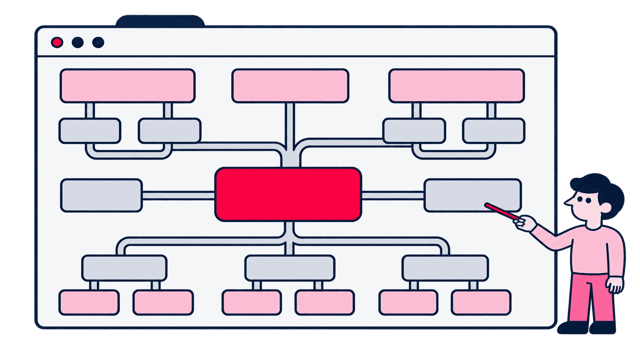
Signal dependency and assumption register
Records the selected data paths, baseline evidence, upstream and downstream dependencies, assumptions, constraints, and unresolved gaps.
Test evidence
Change, regression, and load-behavior findings
Captures the change experiment, dependency analysis, regression and load results, response behavior, and exceptions accepted by the owner.
Decision record
Accepted thresholds and response-owner handoff brief
Records the accepted controls, thresholds, response steps, the owners responsible for each, open gaps, and the next review gate.


Scope and honest limits
When to bring us in
Use this work when dashboards show that something changed, yet the team still has to hunt for the source, the affected AI consumer, and who should be responding to it.
A good fit when
- Your quality or freshness signals fire, but the team cannot trace them to the AI consumer whose behavior may change.
- Incident signals are visible, but who owns the response and how an alert reaches them stays unclear.
- A threshold needs acceptance before an alert can drive action, yet baseline evidence and response authority sit with different owners.
- Quality, lineage, freshness, and drift appear in separate views, so an incident has no single path from source signal to response owner.
- A data path has known sources and consumers, but its dependencies, assumptions, and unresolved gaps are not kept in one traceable record.
- A bounded change experiment shows observable behavior, while regression or load results still lack accepted thresholds and response steps.
- Exceptions are accepted during evaluation, but operating ownership and the handoff evidence needed to close them remain unclear.

Better handled as other work when
- You need the response process run indefinitely after handoff. Ongoing monitoring and incident ownership belong in separately scoped operations.
- You want unrelated upstream systems added to the operating view, but those data paths sit outside the selected observability boundary.
- You need a fixed promise for freshness, detection speed, or alert accuracy, while the experiment only supports the conditions actually tested.
If one of these is closer to your situation, start here instead: Explore AI Data Services
Engineers who ship production AI
This is the part of Zeo that writes and ships code. Our senior engineers build agents, chatbots, and RAG pipelines, along with the automation and data work around them, and they keep operating those systems once they're live. We've worked with more than 500 brands since 2011.






Tools we use
Tools behind this work
 Datadog
the alert chain connecting a source signal directly to the person expected to act
 Arize Phoenix
the drift detector catching silent AI-specific data change a general monitor misses
 Langfuse
the trace connecting an upstream data signal to the specific AI run it influenced
 DVC
DVCthe prior version a regression gets diffed against to isolate what changed
 Feast
Feastthe dependency map showing which AI systems actually consume a changed feature
Adjacent work
Where this leads

Build
AI Dataset Collection
A drift signal tells you the incoming records no longer look like the ones you trained on. Closing that gap means re-opening the sampling plan and the sources it drew from.

Operations
Data Annotation & Labeling
When a quality signal keeps firing on the same class, the fault is often the definition rather than the data. Confirming that means re-running gold tasks and checking where annotators disagreed.

Build
AI Data Preparation & Validation
An alert that fires after a model is already serving is expensive. Several of the same checks, from schema validity to duplicates and contamination, run cheaply before a version is accepted.


Next step
Make every critical signal lead somewhere

Before you decide