


Inspectable production behavior · LLMOps & AI Observability
AI Trace & Quality Monitoring
Monitoring has to instrument observable production events around operator decisions, with privacy limits, traceable signal sources, calibrated alerts, and a named response path.
We instrument the behavior you can inspect, including inputs, outputs, retrieval, tool calls, state, policies, and outcomes, then connect quality signals to alerts and response owners. We do not claim access to hidden model reasoning. Production event maps, sampled quality views, alert thresholds, and an incident-response plan give your monitoring owner an operating loop they can rehearse.

Some of the 500+ brands we've worked with
Selected brands we’ve worked with across industries.














 MeteksanGlobalCase Study




 VisperaGlobalCase Study























On this page
The run order, and who signs each step off
How we work
We anchor the design in the decisions your operators need to make, then instrument only the events that support them.
Map critical behavior
We follow representative production paths through the application, retrieval, model, tools, and policies. This shows which events must exist and which data should stay out of telemetry. Your privacy specialist confirms which data must stay out of telemetry.
Connect signals and reviews
We define quality signals, SLOs, sampling, human review queues, dashboards, and issue routing around the mapped events. Your monitoring owner approves which signal gets a response owner.
Calibrate alerts
We test alert thresholds against representative incidents and review false positives, missed events, and severe slices separately. Your operator decides which alert rule is precise enough to keep.
Rehearse the response
We run an incident rehearsal, check the handoff from detection to triage, and set the trend-review and continuous-evaluation links. Your monitoring owner confirms they can act on the alert evidence.


Named artifacts you keep
What you get
These deliverables give your team what it needs to collect the right events, review quality, and respond when a signal changes.
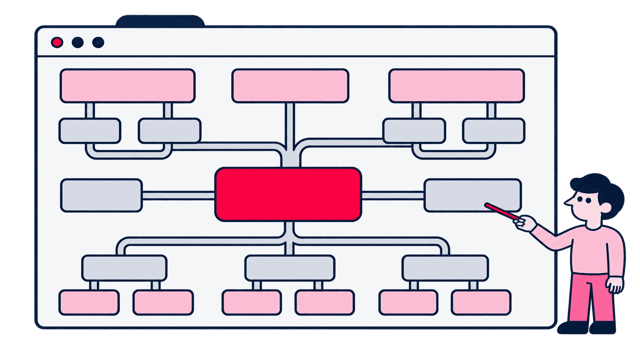
Architecture document
Production trace event and retention map
A map of the approved events, fields, sources, relationships, sampling rules, and retention boundaries.
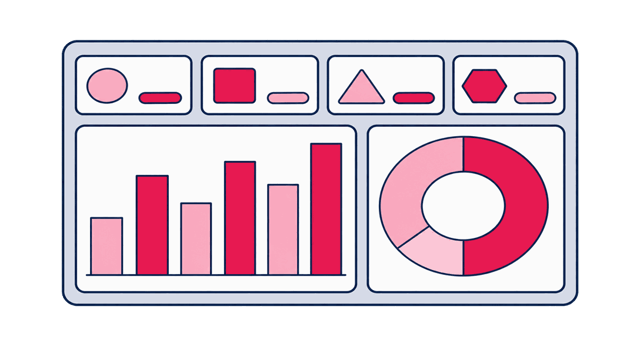
Dashboard
Sampled quality views and review-queue brief
A dashboard specification plus the queue, sampling, and review rules behind each quality view.
Decision record
Alert thresholds, routing, and operator-response plan
Thresholds, severity rules, destinations, escalation paths, and the action expected from each alert.
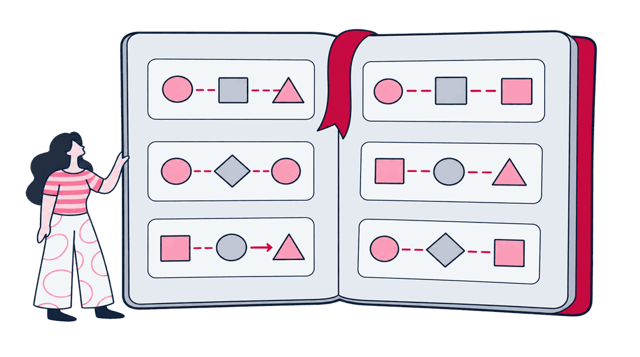
Playbook
Privacy limits and incident-response plan
The collection limits, incident steps, review cadence, and links between production monitoring and continuous evaluation.


Scope and honest limits
When to bring us in
Choose this when your team needs production visibility into an AI system and evidence for acting on quality changes.
A good fit when
- A critical production request reaches retrieval, model, tools, and policies, but the team cannot reconstruct the event path that produced its outcome.
- Quality reviews rely on scattered logs and manual checks, so a missed or severe slice can stay invisible to the monitoring owner.
- Alerts fire, but operators distrust their precision and cannot tell which response or escalation path should follow.
- The inputs and outputs are logged, yet retrieval, tool, state, policy, and outcome events do not share one trace and retention boundary.
- Quality signals and SLOs exist, but sampling rules, review queues, dashboards, and alert routing are not tied to response owners.
- The incident examples are available, although alert thresholds have not been calibrated against false positives, missed events, and severe slices.
- Telemetry is being collected, but privacy limits, retention rules, response ownership, and review cadence are not agreed around the trace schema.

Better handled as other work when
- You need hidden model reasoning reconstructed, while this work instruments only observable inputs, outputs, events, policies, and outcomes.
- You need a guarantee that every failure will be observed or prevented, although monitoring covers only instrumented paths and tested incidents.
- You need us to run the production support function beyond the agreed monitoring scope, but this engagement hands the operating loop to your owners.
If one of these is closer to your situation, start here instead: View the parent service
We operate the systems we test
It's hard to test a system well if you've never had to keep one running. We operate production AI ourselves, so our evaluation, security testing, and LLMOps work starts from what actually breaks. The people on it are senior engineers, and Zeo has been doing client work since 2011.







Tools we use
Tools behind this work
 Traceloop
instruments the observable AI path from input through tools
 Langfuse
connects traces, sessions, prompts, evaluations, and review outcomes
 Confident AI / DeepEval
converts quality criteria into repeatable monitored evaluation signals
 Ragas
Ragasadds groundedness signals for retrieval-dependent production behavior
 Arize Phoenix
clusters failing traces into patterns reviewers can investigate together
 Datadog
routes calibrated AI signals into production alerts and incidents
Adjacent work
Where this leads

Operations
AI Cost & Latency Optimization
End-to-end trace telemetry identifies expensive and slow pipeline steps, providing data for targeted caching and prompt compression.

Operations
AI Production Readiness & Release Engineering
Distributed tracing verifies that latency budgets and error handling mechanisms hold up under pre-launch load tests.
Build
LLMOps & Model Lifecycle Platform Implementation
Real-time invocation logs feed telemetry back into LLMOps platforms to trigger automated dataset curation for fine-tuning.


Next step
See how the system behaves in production

Before you decide