


Model API engineering · AI Integration & Platform Engineering
LLM API Integration
A model API belongs behind an application-owned contract that contains provider behavior while testing data boundaries, failures, budgets, and consequential retries together.
We connect your application to model APIs through a contract the product owns. Provider quirks stay behind that boundary while schemas, secrets, structured output, retries, fallbacks, budgets, and operating signals are tested together. Your application team can call the tested adapter while provider behavior stays behind explicit boundaries, and the support signals say when to retry, fall back, escalate, or stop.

Some of the 500+ brands we've worked with
Selected brands we’ve worked with across industries.







 GeneraliGlobalCase Study









 OdeabankGlobalCase Study








































 Albaraka TürkGlobalCase Study




























On this page
The run order, and who signs each step off
How we work
First we define what the application may send, receive, and do. Then we build the provider call and start pushing on the paths most likely to break that contract.
Define the model-call contract
We set the input and output schemas, data classes, authentication, secret handling, provider constraints, expected errors, and the application behavior each valid response may trigger. Your application owner approves the permitted data paths before build starts.

Keep the provider behind one boundary
Validation, structured output, retries, rate-limit handling, caching, fallbacks, and budgets sit behind an interface owned by the application. Provider-specific fields stay out of unrelated product code. The interface boundary ships once your engineering lead signs off on it.
Make the failure paths run
Representative flows face malformed responses, timeouts, provider errors, degraded quality, load, failover, and repeated requests. Any path that could duplicate consequential work gets its own inspection. Your engineering lead reviews any retry path that could duplicate a consequential action.

Give support signals they can act on
Cost, latency, errors, retries, and schema validity become operating signals. The runbook connects each signal to its owner, support action, and conditions for fallback, escalation, or stopping the flow. Your application owner accepts the support runbook and escalation conditions.


Named artifacts you keep
What you get
The application team receives a documented contract and tested operating behavior. Provider details that are likely to change stay contained behind it.
Architecture document
Application contract and model-API schema map
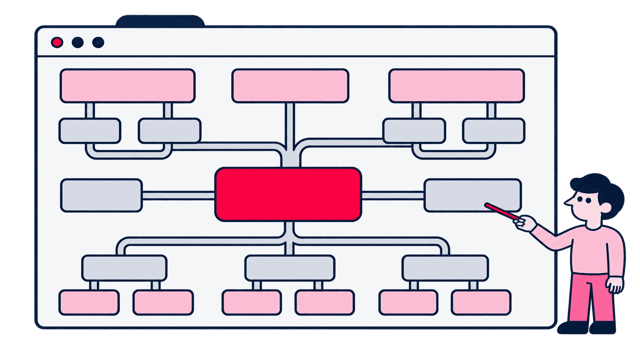
The application contract, provider interface, input and output schemas, authentication path, validation rules, and error model.
Matrix
Approved data-flow and secret-boundary map
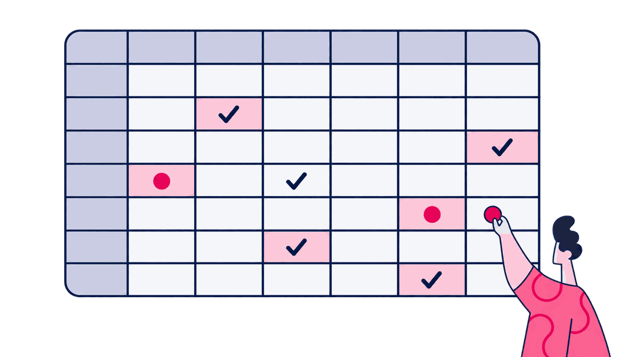
The approved paths for data, identity, secrets, logs, caches, and provider calls across environments.
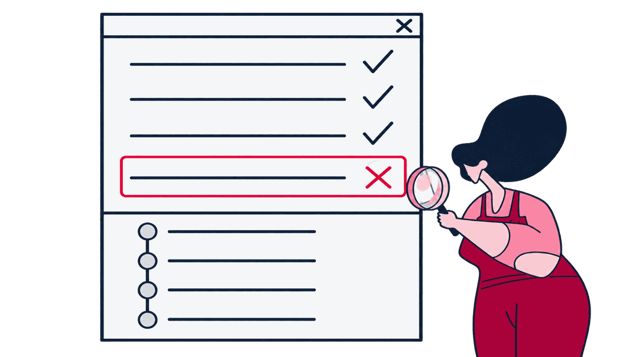
Test evidence
Schema, provider-error, and fallback findings report
Reproducible cases for schema failures, provider errors, timeouts, retries, failover, quality regression, load, and duplicate actions.
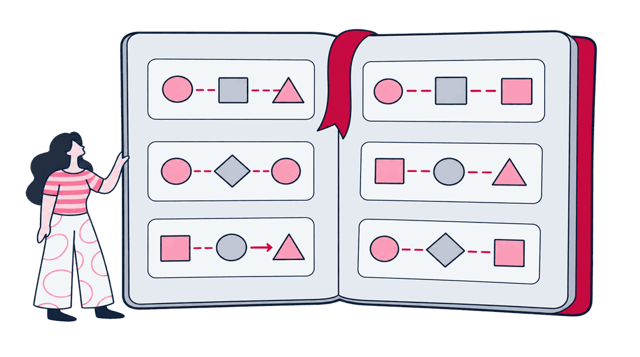
Playbook
Cost, latency, and provider-change support notes
Request budgets, operating signals, alerts, fallback conditions, support actions, ownership, and provider-change checks.


Scope and honest limits
When to bring us in
A prototype call has worked. Now it needs to become an application boundary engineers can test, support, and, where the use case permits, move between providers.
A good fit when
- A prototype model call works, but the rest of the application still lacks stable schemas for outputs, errors, and fallback behavior.
- Sensitive data and secrets cross several environments, yet the application owner cannot show which provider boundary each request stays inside.
- Latency alters the user flow, but retries and provider changes still hide whether a consequential action repeats.
- Input and output schemas exist in the prototype, but authentication and secret paths are not tied to an application-owned provider boundary.
- The prototype validates structured output, while retry, caching, fallback, and request budgets behave differently under provider errors.
- Normal responses pass tests, but malformed output, failover, load, and duplicate actions still leave no failure record engineers can reproduce.
- Cost and latency signals are collected, yet support owners cannot connect them to a fallback, escalation, or stop condition in the runbook.

Better handled as other work when
- Sensitive data must cross an unapproved provider boundary. The responsible application owner first needs to authorize that data path.
- Retry and fallback should be treated as safe before duplicate actions are tested. Consequential paths need their own failure evidence.
- You want us to run the integration in production or to procure the provider. Both are ongoing responsibilities that need a scope of their own.
If one of these is closer to your situation, start here instead: Return to application development
Engineers who ship production AI
This is the part of Zeo that writes and ships code. Our senior engineers build agents, chatbots, and RAG pipelines, along with the automation and data work around them, and they keep operating those systems once they're live. We've worked with more than 500 brands since 2011.






Tools we use
Tools behind this work
 Pydantic AI
validates structured model output against the schema the app contract promises
 Outlines
constrains generation to a schema at decode time for the strictest output cases
 LiteLLM
the contract boundary that keeps provider quirks from leaking into the app
 OpenRouter
the tested fallback route to another provider when the primary model fails
 Helicone
surfaces the cost, latency, and error signals this page says must be accurate
 Guardrails AI
checks model output against the integration's data-path and secrets rules
Adjacent work
Where this leads

Build
Enterprise AI Integration
Single-endpoint API integrations expand into comprehensive enterprise middleware managing load balancing, caching, and fallback providers.

Build
AI Proof of Concept Development
Basic API connectivity enables rapid functional prototyping to test prompt performance against sample user queries.

Build
AI Pilot & MVP Development
Hardened API connections with streaming responses and structured error handling form the backbone of functional pilot software.


Next step
Define the model boundary early

Before you decide