


AI Use-Case Feasibility Assessment
A model demo answers one question. Whether the case survives value, data, model behavior, integration, risk, and daily operation answers another, and only the second one decides funding.
A model demo answers one question. Whether the use case works as a business decision answers another. We test one specific case across value, data, model behavior, integration, risk, and daily operation, and the evidence lands on one of four calls. Proceed, run an experiment, prepare the missing conditions, or stop. The use-case owner signs one of four calls, proceed, experiment, prepare, or stop, with the feasibility evidence and the assumptions behind it attached to that call.

Some of the 500+ brands we've worked with
Selected brands we’ve worked with across industries.







 GeneraliGlobalCase Study









 OdeabankGlobalCase Study








































 Albaraka TürkGlobalCase Study




























On this page
The run order, and who signs each step off
How we work
The use case gets tested as a connected business and operating decision. Isolated model performance is an input, never the answer.
Agree on the decision charter
The use-case boundary, intended value, users, decision owner, constraints, and the evidence needed to choose among four outcomes all get settled first. Your use-case owner confirms the boundary before the feasibility case is assembled.

Map the dependencies
Data, model options, integration paths, operating responsibilities, and risks come under examination, together with the assumptions connecting them. Which dependency can invalidate the case remains a decision for the use-case owner.

Test representative cases
Representative and adverse cases run against the agreed acceptance conditions. Exceptions and unresolved evidence get recorded as they appear. The use-case owner decides which critical result controls the outcome.
Issue the outcome
The chosen outcome goes on record with its conditions, residual risks, owners, and the next experiment, preparation task, or stop point. Acceptance of the outcome and ownership of the next action stay with your use-case owner.



Named artifacts you keep
What you get
Each artifact shows the decision owner why the use case earned its outcome and what remains unresolved.
Decision record
The proceed, experiment, prepare, or stop dossier
The recommended outcome, supporting rationale, conditions, residual uncertainty, and next action for this specific use case.
Matrix
Feasibility evidence and the assumptions behind it
The sources, open assumptions, option dependencies, and questions that could change the feasibility result.
Test evidence
Tested-case readout and the exceptions it raised
The tested cases, observed behavior, acceptance results, and exceptions across the feasibility dimensions.
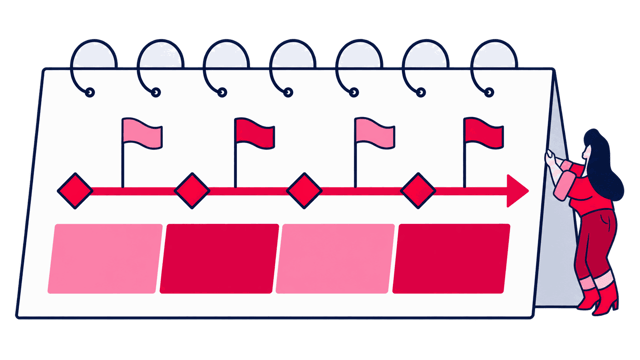
Roadmap
Sign-off note for the feasibility outcome
The accepted outcome, assigned owners, conditions, remaining risks, and next review or stop point.


Scope and honest limits
When to bring us in
Reach for this when a promising use case still carries feasibility questions nobody has answered. Enthusiasm and unanswered questions tend to grow together.
A good fit when
- A demo already works, but nobody has checked whether the use case survives your real data, the systems it must integrate with, and the people who would run it daily.
- Enthusiasm for the use case is growing faster than the answers, while the open feasibility questions have not been written down anywhere.
- The person who would sponsor the build is genuinely open to stopping it, so a negative finding is worth as much to them as a positive one.
- Value, data, model behavior, integration, risk, and daily operation each look plausible alone, but nobody has weighed them against each other.
- You have partial evidence, a shortlist of options, and a rough sense of the dependencies, yet nothing that survives a challenge from finance or engineering.
- There is no agreed test for what would count as acceptable behavior, so every discussion about the exceptions restarts from scratch.
- A decision is expected soon, but nobody has written what the next step should be under each possible outcome.

Better handled as other work when
- You need the build itself. This work decides whether to start, and the engineering and ongoing operation are separate commissions.
- A regulator or certification body has to accept the outcome. The dossier records what we tested, and turning that into approval is your qualified authority's call.
- You want a guaranteed return, a promised accuracy figure, or an assurance that deployment carries no risk. Feasibility work produces none of the three.
If one of these is closer to your situation, start here instead: View the parent service
Advice from people who build
We've worked with more than 500 brands since Zeo started in 2011. The people helping you decide where AI fits, and where it doesn't yet, are senior engineers and strategists who build and operate production AI systems. The advice stays grounded in work that actually shipped.

Elif Naz Akan Karakoç
Senior SEO Executive

Yiğit Konur
Founder & Chief Strategy Officer

Didem Himmetli
Marketing Executive

Burak Pehlivan
Co-founder & CEO

Ataberk Yüzat
SEO Executive

Mehmet Aktuğ
Co-Founder & COO

Aybüke Göktuna
Senior SEO Analyst
Content we've produced on this topic
Tools we use
Tools behind this work
 Airtable
keeps every assumption, exception, owner, and decision call attached
 OpenRouter
checks whether feasibility survives an alternative model or provider
 Braintrust
tests representative cases and failure slices against agreed rubrics
 Jupyter
reruns feasibility assumptions across value, data, cost, and operations
Adjacent work
Where this leads

Advisory
Use-Case-Specific AI Readiness
Feasibility evaluations establish whether a proposed initiative's technical complexity matches the specific operational readiness of the business unit.
Assurance
Data Readiness for AI
Feasibility assessments verify whether the training or retrieval data required for a specific initiative actually exists and meets quality bars.

Assurance
Enterprise AI Maturity Assessment
Individual initiative evaluations inform the broader organizational maturity score across technical, governance, and delivery dimensions.


Next step
Choose the next move with evidence

Before you decide