


Zeo delivery method
Core Web Vitals & Speed
A field baseline you can still defend six weeks later, one fix shipped at a time, and a named person deciding whether each one stays.
A perfect lab score doesn't always mean real visitors feel the difference, so we track down what's genuinely slow for the people actually using the site. We reproduce the real-user pattern in the lab, rank the culprits by the impact they actually have, and ship one fix at a time, checking that checkout, forms, and accessibility still work after each one. We fix what the data actually points at, without breaking what pays the bills.

Some of the 500+ brands we've worked with
Selected brands we’ve worked with across industries.
























 MeteksanGlobalCase Study





 VisperaGlobalCase Study














On this page
Stages and gates
How we do it
Nothing moves on opinion here. Each stage runs on measured evidence, and a person signs off before anything ships.
Agree what matters
We pick the templates, journeys, devices, and regions that actually define your real-user speed question, while agreeing in advance on what remains out of scope. Our performance lead and your team agree on the final template and journey list, and put a name against everything explicitly out of scope.
A scoped baseline with named owners and stop conditions attached.

Reproduce it in the lab
We take the field's slowest real journeys and reproduce them under controlled lab conditions using the same device, network, and cache each time, so server, rendering, and third-party costs can be told apart. Whether a trace is clean enough to diagnose from, or still too noisy to trust, is our performance lead's call.
A bottleneck list backed by traces anyone can rerun, with the shaky ones flagged instead of hidden.

Find and rank the real culprits
Agents cluster repeated patterns across traces, component inventories, and release history, and link every candidate back to its raw evidence. Our performance lead tests the high-impact and edge cases before anything gets ranked. Our performance lead hand-tests the highest-impact and most awkward edge cases, and pulls any cluster that does not hold up before ranking.
A list ordered by user impact, effort, and how reversible each change is.

Ship one fix at a time
We release one bounded, reversible change and run it past functional, accessibility, analytics, and conversion checks before it reaches everyone. The regression results go to our performance lead, who approves the rollout percentage and the rollback trigger before anything reaches everyone.
A live fix with a clear rollback path, tested on real journeys before it scales.

Watch what actually happened
We compare lab traces immediately and field results over the following weeks, while checking that conversion did not decline during the observation period. The keep, adjust, or roll back call belongs to our performance lead, who writes down the reasoning so nobody has to reconstruct it later.
A documented decision to keep, adjust, or roll back the change.



AI does the measuring and the re-running; a person decides what ships and what comes back out.
AI cross-references traffic volume against existing field-data coverage to shortlist the templates that carry real-user risk, reruns the same journey across the device, network, and cache permutations needed to isolate server, rendering, and third-party cost, clusters repeated failure signatures back to their raw evidence, runs the functional, accessibility, analytics, and conversion regression checks before anyone opens the release candidate manually, and compares the post-release field distribution against the baseline continuously. It does not decide. We do not sell a single synthetic score as your users' experience, we do not strip functional, consent, analytics, or accessibility behavior to move a number, and we do not promise a pass-by date when field traffic, platform ownership, or a third party is outside our control.
Deliverables and acceptance
What you get
Things you can act on. Nobody needs another slide deck about performance.

Brief
Performance baseline

Decision matrix
Bottleneck evidence

Prioritized backlog
Prioritized fix backlog

Audit report
Release validation report


We call it done when: The baseline, bottleneck evidence, fix backlog, and validation report are done when the baseline names one owner, one scope, and one exclusion list, every finding traces to a real lab run or field sample with anything shaky flagged, every backlog item has an owner, a test that proves it, and a pull-back condition, and the report states what moved in the field and the lab, whether conversion held, and what happens next.
Fit and readiness
When you need this
Good enough for a lab test isn't good enough for a real visitor.
A good fit when
- You want one team clearly responsible for real-user speed across your busiest templates.
- You need proof that lab results and real visitor experience actually line up, and a clear read on where they don't.
- You don't have a real performance baseline yet, or nobody agrees on what counts as fixed.

Better handled as other work when
- You just want a single lab number, without splitting it by template, device, geography, or traffic.
- You want speed fixes that skip checking checkout, forms, accessibility, and analytics before they ship.
If one of these is closer to your situation, start here instead: Technical SEO
We call it done when: You end up with a real baseline, an evidence pack behind every fix, a backlog engineers can genuinely execute, and a report on what happened after launch. Somebody is named for the next decision.
The specialists behind this SEO work
Zeo's SEO work goes back to 2006, when we started what we call the first SEO blog in the MENA region. The consultants shown here are doing that work today, matched to what this page covers.

Sena Önder
Senior SEO Executive

Mehmet Aktuğ
Co-Founder & COO

Hande Parmaksız
SEO Manager

Ezgi Gülsen Yaylı
SEO Manager

Sinem Bakır Yavaş
Senior SEO Executive

Metehan Urhan
New Business & Partnership Manager

Elif Naz Akan Karakoç
Senior SEO Executive

Gülşah Şahin Özkan
Senior SEO Analyst

Ali Özgün Öz
SEO Executive

Aybüke Göktuna
Senior SEO Analyst

Burak Pehlivan
Co-founder & CEO

Ozan Ketenci
VP of Consulting & Strategy

Zafer Yıldız
Web Analytics Manager

Can Mutioğlu
Senior SEO Executive

Didem Himmetli
Marketing Executive
Content we've produced on this topic
Tools we use
Tools behind this work
 PageSpeed Insights
field and lab readings for representative slow templates
 WebPageTest
repeatable waterfalls, filmstrips, and simulated third-party failure conditions
 GTmetrix
request-level comparisons before and after each bounded fix
 Pingdom
synthetic alerts for uptime and recurring speed regressions
 Google Search Console
template-group field trends across mobile and desktop users
 Google Analytics
conversion guardrails for checkout, forms, and protected journeys
Where this fits
Related services

Technical SEO
Crawl & Index Optimization
Server response times and rendering performance optimizations directly increase search engine crawl budget and page processing capacity.
Technical SEO
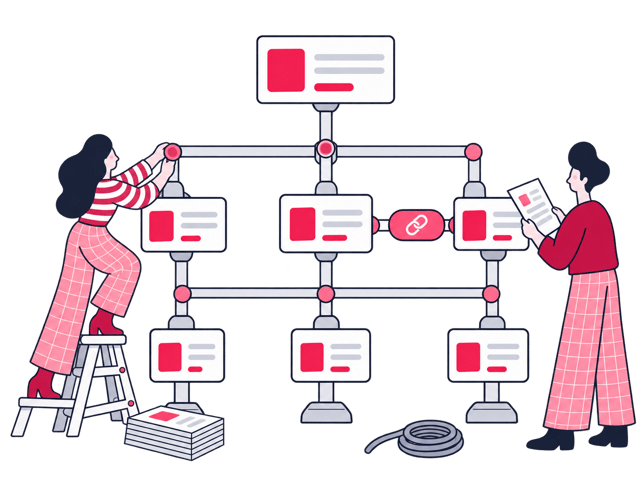
Site Architecture & Internal Linking
Lightweight page templates and streamlined DOM structures ensure deep architectural links are discovered quickly by web crawlers.
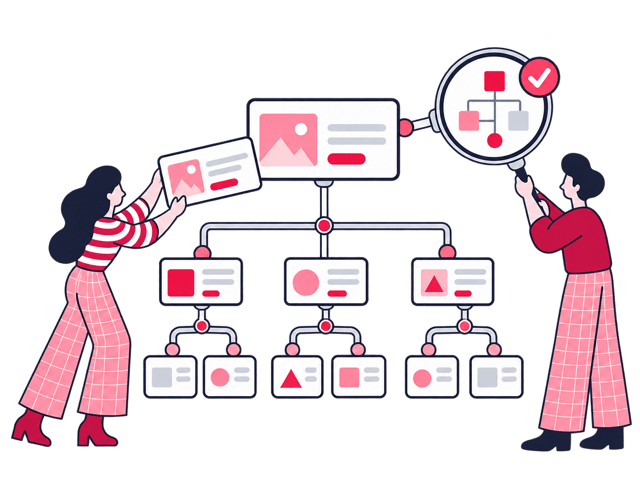
Technical SEO
Structured Data & Rendering
Optimizing server-side HTML delivery guarantees that JSON-LD structured schema renders without delaying visual content or layout stability.


Next step
Review your Core Web Vitals with us

Before we start